Reducing Thermal Loss and Optimising Combustion in Aluminium Drying Processes
A metal recycling facility operating a rotary dryer for aluminium processing was experiencing inconsistent burner performance and substantial thermal inefficiencies. The facility engaged a thermal engineering consultancy to conduct a comprehensive site survey to quantify process variables, including airflow, combustion stability, and thermal energy distribution during the treatment of three distinct aluminium feedstocks.
The Challenge: Process Variability and Efficiency Loss
The client operated a rotary dryer to process recycled aluminium of varying particle sizes, ranging from superfines to coarse materials. Operational data suggested that the system was struggling with thermal control. The burner load fluctuated significantly to maintain set point temperatures, and emissions performance was suboptimal, particularly when processing finer materials that required longer residence times.
The facility needed an objective assessment of the drying process to determine the root cause of these performance issues. The primary objectives of the audit were to:
- Quantify heat losses across the dryer shell.
- Analyse the impact of material particle size on energy demand.
- Evaluate combustion performance and emission generation.
- Assess airflow and pressure drops across the filtration system.
The Investigation and Data Collection
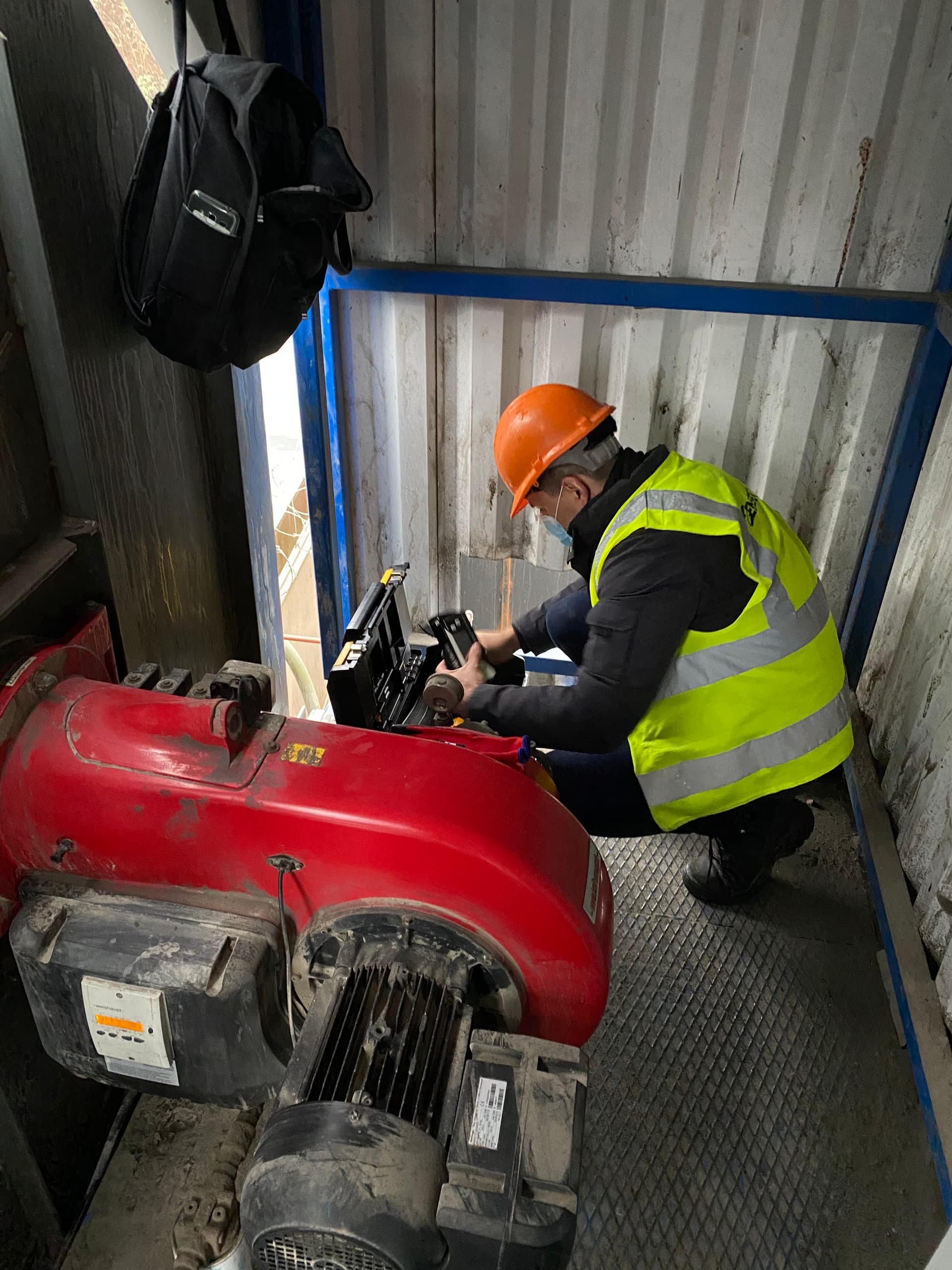
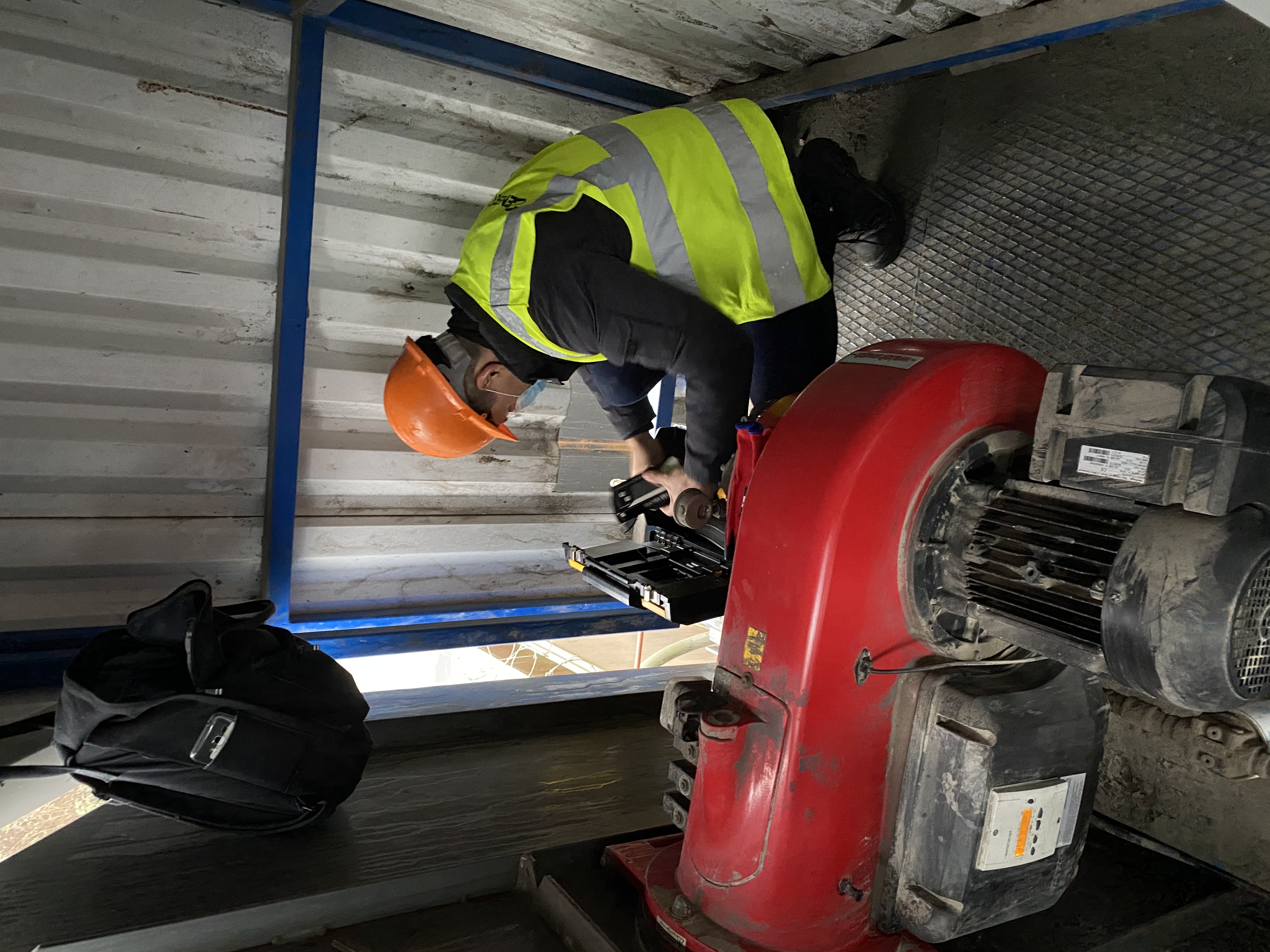
The project lead and the technical specialist conducted a detailed site visit, gathering empirical data across three production runs. The team utilised a range of calibrated instrumentation to establish a baseline for the process:
- Flow Measurement: Using Pitot tubes and bi-directional anemometers to measure airflow at the dryer exhaust and filtration unit.
- Thermal Mapping: Deploying K-type thermocouples and data loggers to track temperature profiles across the dryer barrel, burner room, and filter outlet.
- Combustion Analysis: Utilising gas analysers to measure combustion gases and verify burner air intake performance.
The team monitored three distinct batches of material, each weighing 3,000 kg, representing superfine (0-6 mm), fine (4-12 mm), and coarse (12-35 mm) particle sizes. By capturing this data, the consultancy aimed to model the heat and mass balance of the system accurately.
Diagnostic Findings
The investigation revealed that the process was hindered by two main factors: excessive thermal leakage and poor flame management.
Thermal Energy Loss
The audit identified that the dryer shell was entirely uninsulated. The surface temperatures of the barrel were consistently high, resulting in substantial, avoidable heat loss. Based on the operational data gathered at an ambient temperature of 8 degrees Celsius, the team calculated the annual heat loss from the barrel surface.
| Parameter | Measured Value |
|---|---|
| Dryer Diameter | 1,250 mm |
| Dryer Length | 6,000 mm |
| Surface Area | 24 m² |
| Heat Flux | 307 W/m² |
| Annual Heat Loss | 45,832 kWh/pa |
The calculation revealed an annual heat loss of 45,832 kWh. The technical report author noted that applying thermal insulation to the dryer shell would not only reduce the energy requirement for the process but also stabilise the internal temperatures, allowing for more consistent burner control.
Combustion Performance and Flame Quenching
The analysis of the burner system highlighted that the flame was being adversely affected by the design of the internal flights. These flights were forcing the material too close to the burner flame, causing the diesel flame to quench prematurely.
Quenching a diesel flame through contact with cold material streams generates soot and particulate emissions, which significantly reduces the efficiency of the heat exchange process.
The current system lacked a flame pre-establishment region, meaning the burner was exposed to cold streams from the dryer outlet. This direct contact prevented the flame from being fully established, leading to inefficient combustion and fluctuating burner loads.
Recommendations for Process Optimisation
Following the data analysis, the consultancy provided a suite of recommendations to improve the thermal efficiency and operational stability of the recycling plant.
Design and Structural Improvements
To address the heat losses, the team recommended the installation of high-performance thermal insulation on the dryer barrel. This upgrade would reduce the heat demand, allowing for a more stable flame and potentially lower fuel consumption.
Regarding combustion, the consultancy advised a redesign of the dryer internal flights to prevent material from interfering with the flame path. Furthermore, the installation of a flame tube was suggested to ensure the flame is fully established before it interacts with the dryer environment. This design change would mitigate soot formation and stabilise emissions.
Process Control and Filtration
The audit observed a consistent increase in pressure drop across the filtration system throughout the production runs. To manage this, the team recommended the integration of an automated cleaning cycle triggered by pressure differential thresholds, which would require the installation of dedicated sensors. Additionally, the technical specialist advised that the temperature control loop requires re-tuning to handle the inherent volatility of the drying process, although this would be significantly more achievable once the primary heat losses from the barrel were eliminated.
Conclusion
The site visit and subsequent analysis provided the client with a clear understanding of the thermal bottlenecks within their aluminium recycling operation. By addressing the uninsulated barrel surfaces and redesigning the combustion flight arrangements, the facility can expect a substantial reduction in energy consumption and improved consistency in drying performance.
This engagement demonstrated that identifying specific, measurable process variables - such as airflow, heat flux, and residence time - is essential for effective process engineering. With these findings, the facility is now equipped to move forward with targeted upgrades to achieve a more energy-efficient and reliable production cycle.

Managing Director — EnerTherm Engineering
Dr. François Pierrel is Managing Director of EnerTherm Engineering with over two decades of expertise in thermal design, heat transfer, and industrial energy optimisation. He holds a PhD in Heat Transfer from Cranfield University and a Post-Doctorate from Heriot-Watt University.
