Stabilising Exothermic Reaction Temperatures: Cement Plant CO2 Capture
Operational Challenge
A cement manufacturing company was operating a mixer system designed to capture carbon from industrial flue gas by carbonating cement-based dust (CBD). This process is inherently exothermic, relying on the hydration and carbonation of lime components to sequester CO₂. However, the operational team observed that the reaction temperature within the mixer frequently exceeded optimal levels, which directly hindered the CO₂ uptake capacity of the material.
To improve the efficiency of the the thermal recovery project, the client engaged a thermal engineering consultancy to perform a rigorous thermodynamic evaluation. The primary objective was to understand the reaction kinetics, quantify heat losses from the mixer vessel, and evaluate potential cooling strategies, such as introducing heat exchanger technology for the incoming flue gas and utilising chilled water injection.
Modelling Methodology
The engineering team commenced the study by developing a high-fidelity process model, detailed in the project final report. The model was designed to simulate the mixer as a reaction vessel, accounting for the specific timeline of events including water addition, cement-based dust loading, and gas flow injection. This required the integration of reaction kinetics for both lime hydration and carbonation phases.
Input data for the simulation included the composition of the cement-based dust, drawing from specific data recorded in the material sample identifier. By utilising DoE techniques, the team simulated various operational scenarios, adjusting variables such as ambient temperature, mixture load, and gas flow rates to observe the impact on reactor temperature and CO₂ uptake.
Thermal and Heat Loss Analysis
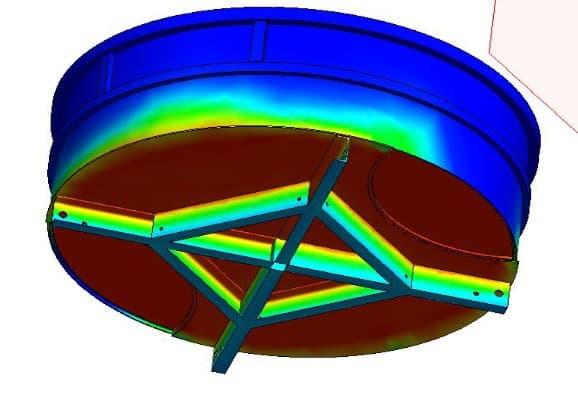
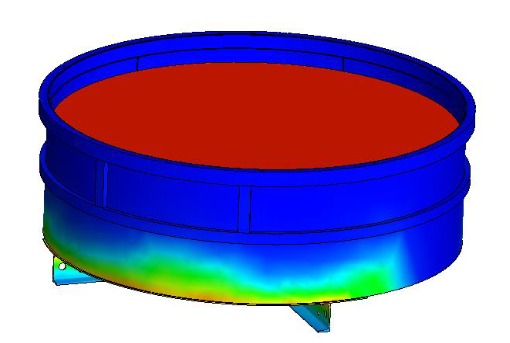
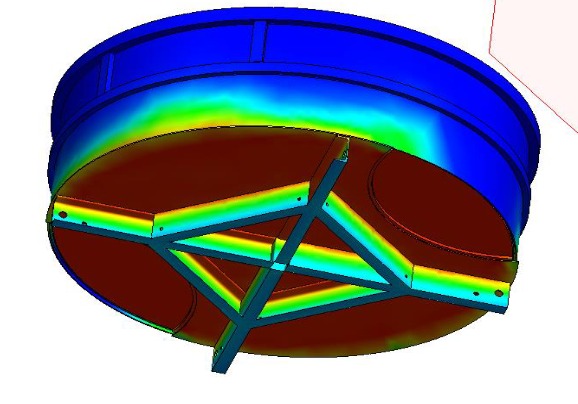
A critical component of the study was the evaluation of the mixer heat loss. Using geometric data provided by the manufacturer, the consultancy constructed a heat loss model to determine how much thermal energy was escaping the system. This analysis was essential, as the internal temperature of the mixture needed to be maintained within a specific range to favour carbonation.
| Component | Estimated Loss (kW) |
|---|---|
| Mixer Lid | 5.76 |
| Main Mixer Body | 16.94 |
| Total System Loss | 22.70 |
The total heat loss was evaluated at approximately 22 kW. While this value provided a baseline for the steady-state simulation, the team noted that heat losses would naturally fluctuate during the batch process, influenced by the exothermic reaction, loading cycles, and water additions.
Findings and Thermodynamic Constraints
The simulation revealed several constraints inherent to the carbonation process. The team identified that the solubility of CO₂ in water decreases significantly as temperatures rise from 15 C to 60 C. Consequently, the use of hot flue gas during the reaction was found to be detrimental, as it slowed the rate of dissolution and effectively limited the overall carbonation rate.
Furthermore, the reaction between calcium silicates and CO₂ was identified as a dissolution-precipitation process, highly sensitive to moisture content. The model demonstrated that the hydration and carbonation reactions caused rapid temperature increases. For instance, the hydration of 400 kg of CBD and 340 kg of water could push the final temperature towards 98 C, absent of any thermal loss. This elevated temperature was sufficient to evaporate free water in the capillaries of the grains, effectively arresting the carbonation reaction prematurely.
Proposed Optimisation Strategies
Based on the findings in the project interim report and subsequent modelling, the consultancy proposed a multi-faceted approach to control the reaction environment and maximise CO₂ sequestration:
- Flue Gas Pre-cooling: Implementing a heat exchanger to reduce the temperature of the incoming flue gas before it enters the reactor. This prevents the heat-driven reduction in CO₂ solubility.
- Water Temperature Control: Utilising chilled water injection to manage the peak exothermic temperatures during the hydration phase.
- Predictive Control Systems: Transitioning from simple set-point control to a neural-network model. By feeding real-time site data into the established DoE backbone, the client could enable the programmable logic controller (PLC) to adjust cooling dynamically based on the reaction progress.
Future Development
To further refine the control capabilities, the project lead and the project consultant recommended expanding the simulation scope. This includes the development of a transient batch model that incorporates all reaction kinetics, coupled with CFD analysis of the multiphase flow inside the mixer. Such an approach would allow the team to evaluate the impact of agitation and particle size on heat generation, leading to an even more precise control algorithm.
The engagement successfully provided the client with a robust theoretical framework for their carbon capture process. By shifting from reactive troubleshooting to predictive thermal management, the client is now positioned to maximise the CO₂ capture potential of their cement-based dust recycling process.

Managing Director — EnerTherm Engineering
Dr. François Pierrel is Managing Director of EnerTherm Engineering with over two decades of expertise in thermal design, heat transfer, and industrial energy optimisation. He holds a PhD in Heat Transfer from Cranfield University and a Post-Doctorate from Heriot-Watt University.
