BS EN 16247 Energy Audits: What UK Plants Must Cover
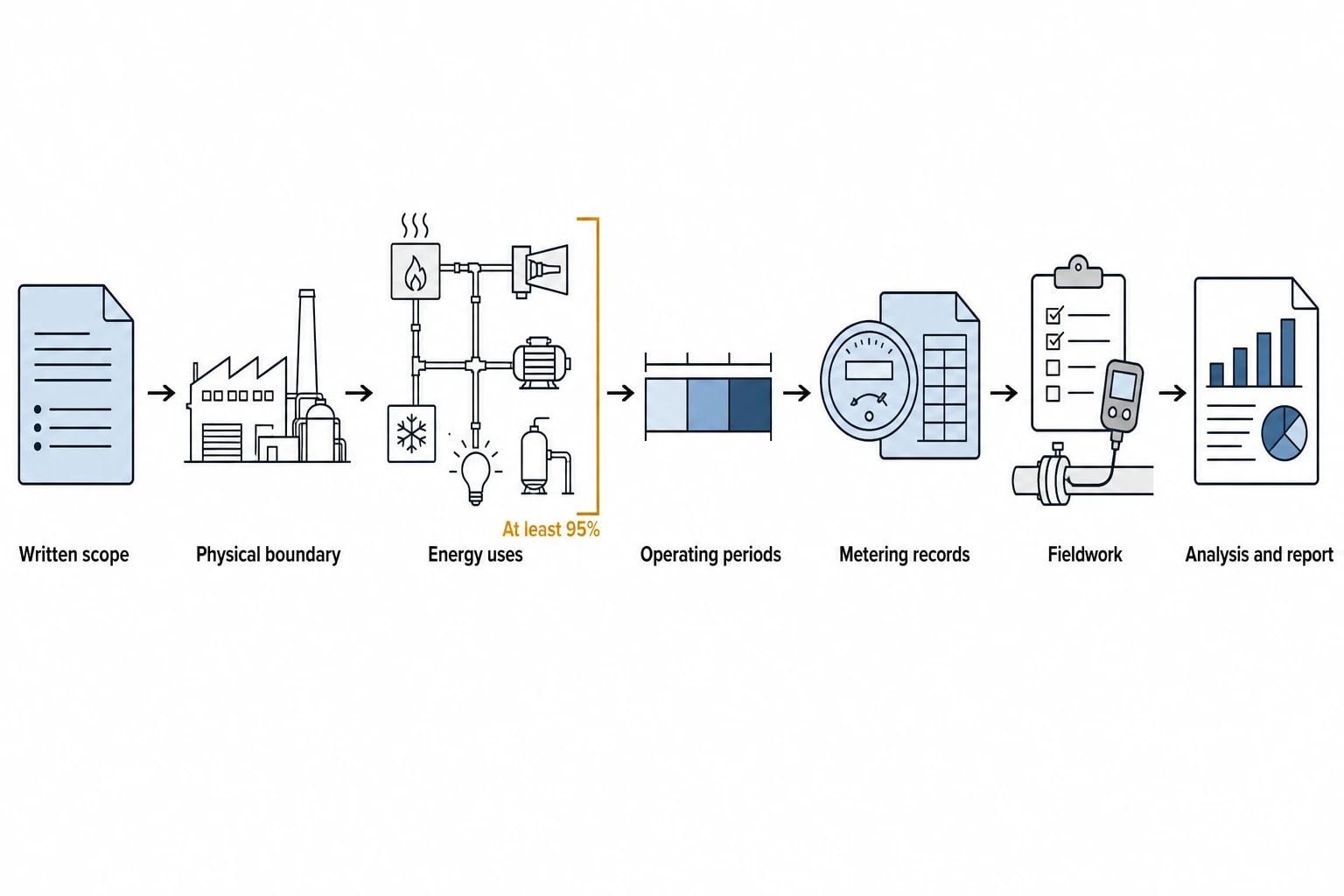
The 2022 standard and ESOS Phase 3 require coverage of at least 95% of site energy use.
BS EN 16247-1:2022 is the current UK general-requirements standard for energy audits. It gives industrial sites a common method for converting utility data, production records and field observations into a clear account of energy use and a prioritised programme of improvement work.
For energy-intensive manufacturers, that structure matters. A site total can hide waste in a furnace exhaust, a poorly controlled steam pressure-reducing station, damaged insulation, an oversized pump, refrigeration running at an unnecessarily low setpoint, or high weekend base load. Chemical processing, food and beverage, pharmaceutical, paper and pulp, and automotive plants need an audit that follows energy through the production system rather than stopping at annual gas and electricity invoices.
BS EN 16247 is also a useful framework for organisations preparing for the Energy Savings Opportunity Scheme, known as ESOS. It is not the only valid audit methodology, but UK Government guidance identifies BS EN 16247 and ISO 50002 as good-practice approaches.
What BS EN 16247-1:2022 covers
BS EN 16247-1:2022, Energy audits. General requirements, specifies common requirements, methodology and deliverables for audits across organisations, energy forms and uses. It replaced BS EN 16247-1:2012.
It covers agreement of the audit, data collection, fieldwork, analysis, reporting and the final meeting. It also addresses auditor competence and the need for confidentiality, objectivity and transparency.
Define the audit boundary before the site visit
A plant should agree the audit scope in writing before the auditor begins analysis. The boundary should identify the buildings, process areas, production lines, utilities and operating periods covered.
That definition avoids a familiar failure: a report examines the boiler house and a principal production line, yet excludes compressed air, refrigeration, effluent treatment, cooling towers, warehouse heating or electricity used during idle periods.
A well-defined brief should cover:
- Organisational and physical site boundaries.
- Energy carriers, including electricity, natural gas, LPG, fuel oil, biomass, imported steam and purchased heat.
- Production assets and utility systems.
- Normal, low-load, start-up, shutdown, cleaning and changeover operation.
- Existing metering, records and known data gaps.
- Site safety procedures, access arrangements and confidentiality controls.
- The report audience and intended use of recommendations.
Annual consumption establishes the scale of the opportunity, but rarely explains operational causes. A dryer may perform acceptably during one product campaign and poorly during another because feed moisture, throughput, exhaust conditions or cleaning requirements have changed. The audit plan should identify representative operating periods before fieldwork begins.
Build a traceable energy-data record
Invoices are useful for reconciling total consumption, but do not provide enough resolution for an industrial energy audit.
The audit team should obtain interval electricity data where available, fuel-meter readings, steam-generation and condensate-return records, compressed-air data, production volumes, shift schedules and operating hours. These records allow the auditor to allocate energy to meaningful uses and test whether the site total agrees with sub-metering.
Supporting documents often include process flow diagrams, pipework and instrumentation diagrams, equipment lists, boiler combustion records, maintenance histories, alarm trends, control setpoints and utility-distribution drawings.
Data quality needs active attention. An unexplained difference between a billing total and an internal meter may point to a faulty meter, an unmetered load, a reporting-period mismatch or an incorrectly defined boundary. The audit report should record material data gaps and explain any estimates used.

Identify where your plant is losing energy and quantify the savings potential — our audits map every heat source, sink, and waste stream in your facility.
Why BS EN 16247-3:2022 matters for industrial processes
BS EN 16247-3:2022, Energy audits. Processes, supplements the general requirements for sites where industrial processes account for a significant share of energy use. It replaced BS EN 16247-3:2014 and should be applied alongside Part 1.
Part 3 directs attention to energy used in production processes, energy needed to maintain process conditions and the utility systems that support production. This matters because the source of waste often sits outside the equipment that appears to be underperforming.
Assess direct process energy and utility demand together
A furnace, oven, reactor or dryer is one part of an energy system. Its performance is affected by combustion settings, loading practice, air ingress, exhaust losses, heat-transfer surfaces, product residence time and control stability. Supporting utilities can also add substantial demand.
A useful process audit should examine the areas below.
| Audit area | What the audit should establish | Typical evidence |
|---|---|---|
| Direct process energy | Energy used by furnaces, ovens, dryers, reactors, extruders and thermal-treatment plant | Fuel and electricity meters, batch records, temperatures, throughput |
| Indirect process energy | Energy used for washing, separation, transfer, product conditioning and heat exchange | Steam and hot-water data, process conditions, operating procedures |
| Steam and hot water | Generation, distribution, pressure reduction, condensate return and end-use demand | Boiler records, pressure logs, steam-trap surveys, condensate data |
| Motor-driven systems | Pump, fan, compressor and motor loading, including variable-demand operation | Electrical data, flow, pressure, control settings and run hours |
| Refrigeration and cooling | Refrigeration plant, chilled water, cooling towers and process-cooling demand | Temperatures, compressor loading, condensing conditions and maintenance records |
| Heat losses | Losses from surfaces, leaks, flues, vents, drains and unproductive running | Field observations, thermal inspection and infrared survey where suitable |
A heat-treatment line may use excessive gas because doors do not seal, burners operate with unsuitable excess air, transfer conveyors lose heat or loading practice leaves capacity unused. A distillation system may offer an opportunity for heat recovery, but its immediate loss may come from steam supplied at a pressure above process demand. Both findings matter, but they produce different projects.
Use energy-performance indicators that match the process
Energy intensity gives operational context to consumption. A plant may track kWh per tonne, steam per batch, gas per tonne of dried product, compressed-air electricity per unit of output, or kWh per production hour.
The chosen indicator must reflect the process. A single site-wide kWh-per-tonne figure can mislead where grades vary in moisture content, specification, batch size or thermal-treatment requirement. Separate indicators may be needed for distinct production families or lines.
The auditor should record factors affecting comparison, including ambient conditions, product moisture, line speed, downtime, operating temperature and run length. This supports later verification after a measure has been implemented.
What fieldwork should test on a thermal plant
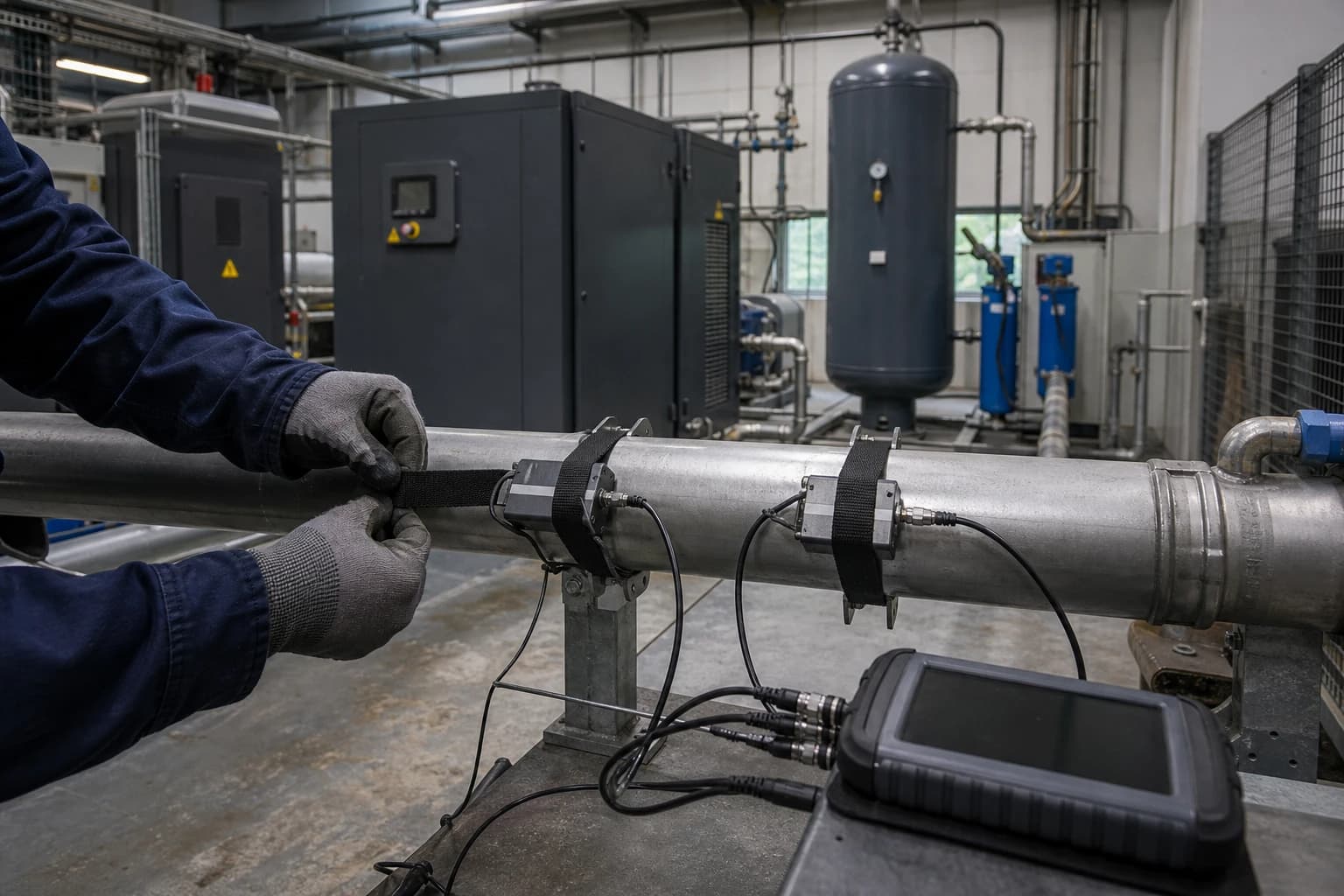
The site visit turns a plausible opportunity into an engineering recommendation. BS EN 16247 requires site investigation, while Part 3 places process conditions and operational practice at the centre of the review.
Follow energy from supply to useful duty
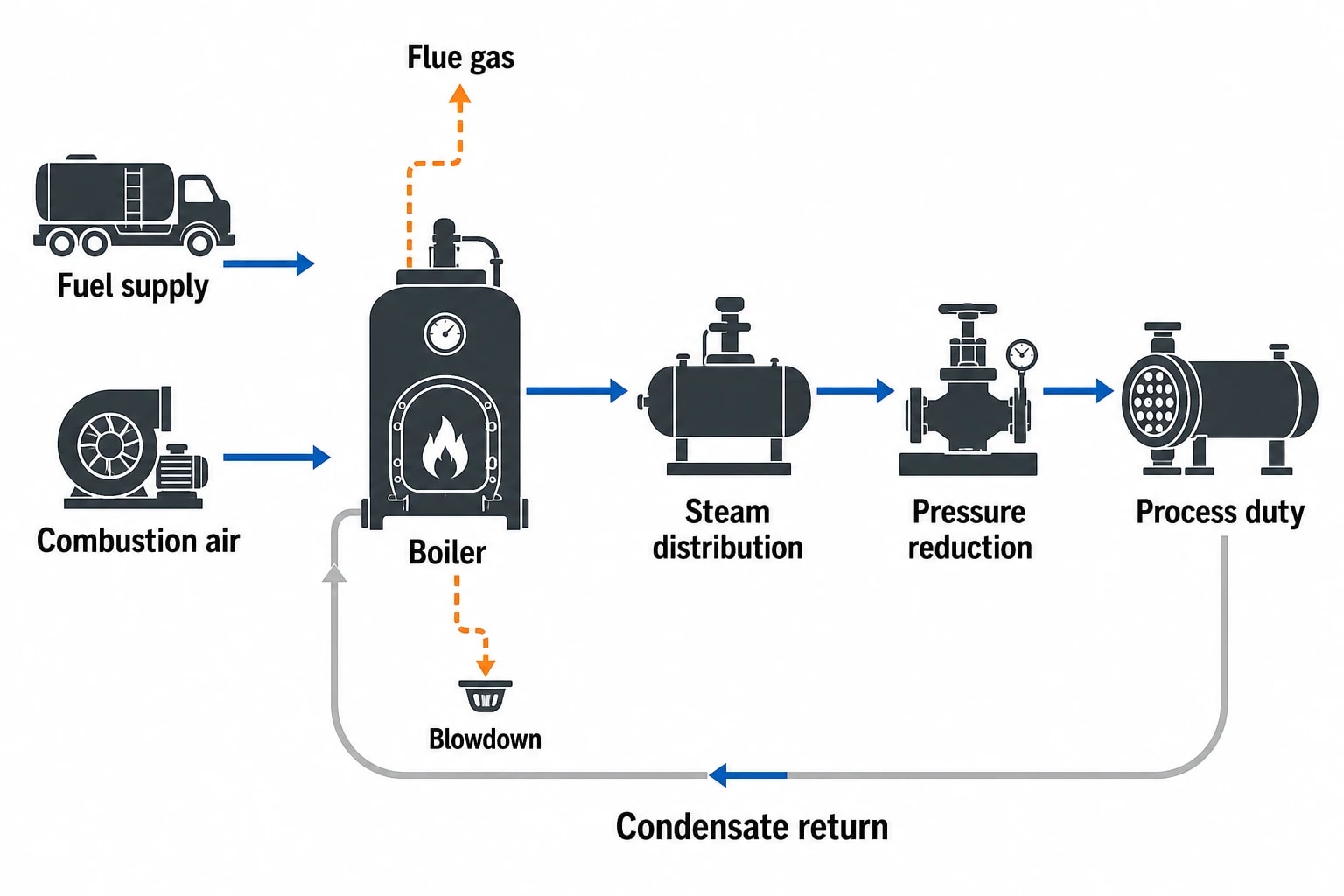
Thermal fieldwork should follow energy from fuel or electricity supply to useful process duty, then identify where it leaves the system without serving production.
For a steam system, the review may follow fuel into the boiler, combustion air and flue gas, steam generation, distribution, pressure reduction, end use, condensate collection and blowdown. For an oven or dryer, it may cover firing, air supply, product loading, exhaust, leakage, heat transfer and cooling.
Auditors should look for conditions such as:
- Steam leaks and failed steam traps.
- Damaged insulation on pipework, valves, flanges and vessels.
- Open oven doors and degraded furnace seals.
- High stack or exhaust temperatures.
- Excessive purging, venting or bypass operation.
- Equipment operating without product.
- Cooling-water, compressor or fan controls that do not follow process demand.
- Compressed air used for cooling, cleaning or agitation where another method could suit the task.
Operators and maintenance engineers should join relevant sections of the walkround. They can explain why a bypass remains open, why a pressure has been increased, or why an asset must run during non-production hours.
Use a measurement plan to close important gaps
Existing meters seldom answer every question. A measurement plan should state what will be measured, where, why, by whom, with which instrument and over what period.
Typical measurements include electrical load, gas flow, steam pressure, air pressure, temperature, flow rate, flue oxygen, stack temperature, condensate return, compressed-air leakage and process run time.
Duration matters. A brief reading on a batch process can capture cleaning, warm-up or an unusual production condition instead of normal operation. The plan should reflect the production cycle and record measurement limitations.
The report should state the confidence level of its calculations. A saving estimate based on incomplete operating data can remain worthwhile, provided the recommendation includes the investigation required before investment approval.

Identify where your plant is losing energy and quantify the savings potential — our audits map every heat source, sink, and waste stream in your facility.
How a BS EN 16247 energy audit should present heat-loss projects
An audit report should identify opportunities in a form that maintenance, production and capital-approval teams can act upon. Broad statements such as “improve boiler efficiency” do not provide enough information for delivery.
Define the measure and its operational constraints
Each recommendation should name the asset or system, describe the observed condition, specify the proposed change, identify the expected energy effect and record implementation constraints.
For example, a project could specify repair of insulation defects on a boiler blowdown vessel and exposed steam valves, followed by verification of reduced surface temperatures. That gives the site a clear scope, owner and verification method.
Common thermal opportunities include repairing insulation, improving oven or dryer sealing, reviewing combustion control, reducing excessive steam pressure, improving condensate return, recovering heat from exhaust or process streams, optimising warm-up procedures and reducing unproductive standby operation.
Larger heat-recovery measures may require process-safety review, hygienic-design review, space assessment, utility-integration work and production trials. The audit should make these dependencies clear, especially in pharmaceutical and food plants where product protection and cleaning regimes shape the feasible design.
Rank opportunities with transparent assumptions
The project register should distinguish operating changes, maintenance actions, modest capital work and larger engineering projects. Ranking should consider energy and cost savings, capital cost, implementation timing, safety, product quality, production risk and verification method.
Cost and savings figures need a visible basis. Where an estimate depends on expected run hours, throughput, gas price or a measured temperature, the report should say so. Investment teams can then update the business case without rebuilding the technical logic.
Interactions also need attention. Reducing extraction-fan speed may cut electricity use, but the revised setting must maintain capture performance and required environmental or occupational controls. Reducing steam pressure can lower distribution losses, provided the remaining pressure still serves the most demanding process or sterilisation duty.
How BS EN 16247 supports ESOS Phase 4 compliance
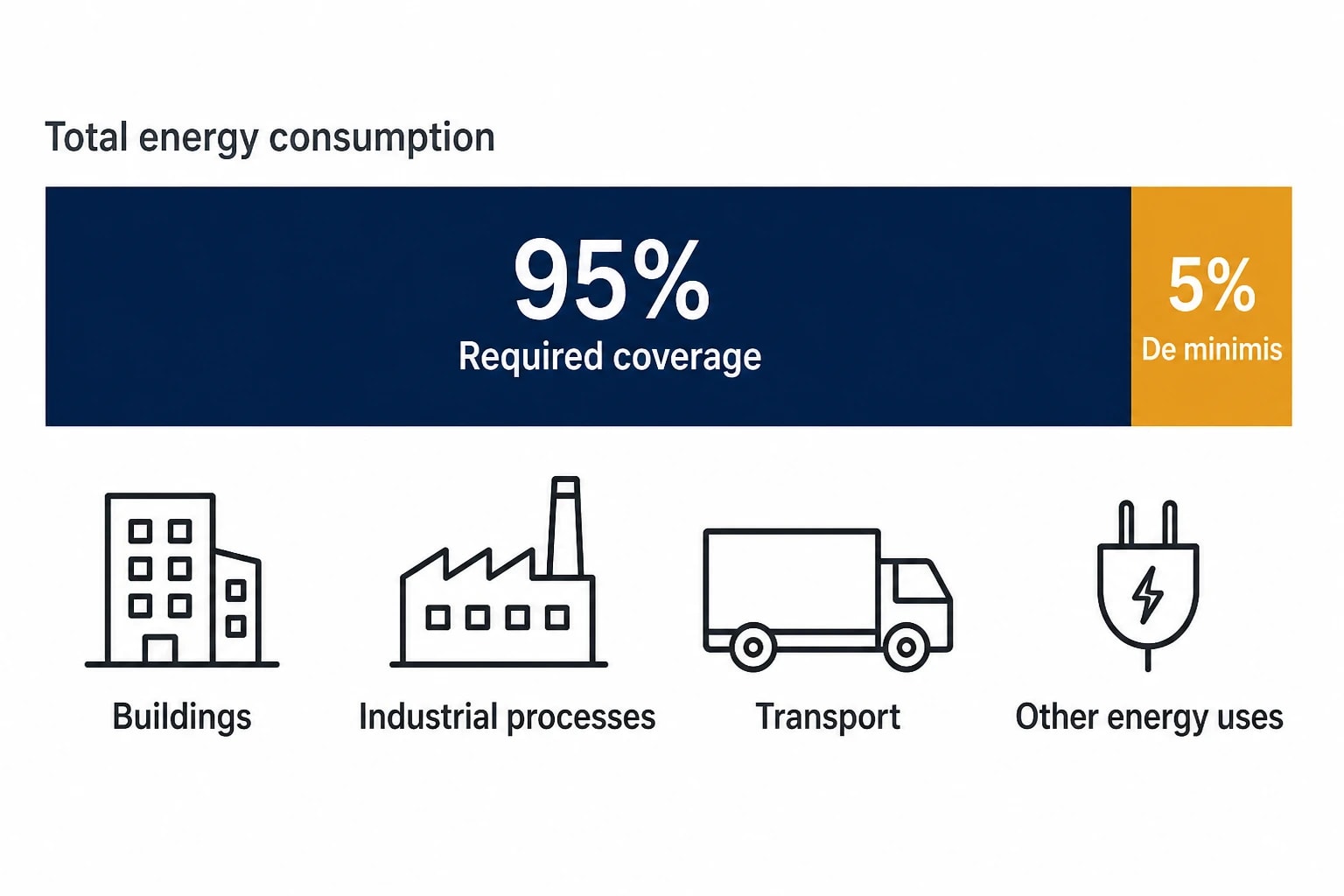
ESOS applies to qualifying large UK organisations and requires assessments of energy used in buildings, industrial processes, transport and other energy uses. The Energy Savings Opportunity Scheme Regulations 2014, as amended, provide the legal framework.
The Phase 4 compliance notification deadline is 5 December 2027. A qualifying organisation must ensure that assets and activities covered by an energy audit or alternative compliance route account for at least 95% of total energy consumption. The remaining maximum 5% is de minimis energy consumption.
For a manufacturing group, this cannot be achieved by reviewing only its largest gas consumer. The calculation must account for the organisation’s wider energy use, then identify which buildings, industrial processes, transport operations and other uses fall within the required coverage.
Map the audit method to the statutory evidence
ESOS does not prescribe a single audit standard. Government guidance identifies BS EN 16247 and ISO 50002 as good-practice methodologies, while allowing a different approach that meets ESOS minimum requirements.
An ESOS energy audit must use verifiable energy data, analyse consumption and efficiency, identify energy-saving opportunities and include site visits. A BS EN 16247 audit provides a strong structure for these activities, but the organisation and its lead assessor must still map the work against the applicable ESOS reporting requirements.
The organisation should retain an evidence pack as work progresses. It should include scope decisions, energy data, calculations, site-visit records, audit reports, methodology, recommended measures, assumptions and sign-off records.
Connect audits to the action plan
Sites that submitted a Phase 3 action plan must provide their second annual progress update by 5 December 2026. This record should show measures implemented against action-plan commitments and estimate achieved energy savings where relevant.
Plant audit work should support that reporting while creating a defensible Phase 4 project pipeline. Measures identified by an audit do not deliver savings until owners, budgets, outage windows and verification methods are assigned.
A practical commissioning brief for UK plants
A purchasing specification should require an audit aligned with BS EN 16247-1:2022 and, where process energy is material, BS EN 16247-3:2022. The brief should state the site boundaries, priority production areas, energy carriers, available data, safety controls and expected deliverables.
It should also request representative fieldwork, a metering and data-gap review, an energy breakdown, suitable energy-performance indicators and a prioritised register of opportunities. For ESOS work, the brief should explain how the audit will support the corporate coverage calculation, evidence pack and compliance report.
Consumption monitoring can then track base load, process energy intensity and the effect of implemented projects. EnerTherm Engineering’s Ecolog consumption-monitoring and process-optimisation services can support this work by helping sites identify, analyse and reduce energy waste across complex thermal systems. Where an audit identifies several interacting hot and cold streams, pinch analysis may provide the detailed assessment needed to develop a heat-recovery project.
A BS EN 16247 energy audit gives a UK plant a structured account of where energy enters, where it supports production and where it is lost. Its commercial value comes from converting those findings into assigned, funded and measured engineering work.
This article reflects the independent analysis and editorial opinion of EnerTherm Engineering. Product names, trademarks, and brands mentioned belong to their respective owners. EnerTherm Engineering is not affiliated with, endorsed by, or a licensee of any third-party software or product mentioned unless explicitly stated.

Technical Manager — EnerTherm Engineering
John Naranjo is Technical Manager at EnerTherm Engineering, bringing specialist expertise in chemical and environmental engineering. He recently led the implementation of Omni Vision, EnerTherm's real-time energy and utility monitoring platform. He holds an MSc in Environmental Engineering from the University of Huelva and a BSc in Chemical Engineering, with memberships in both the Energy Institute and IChemE.
