How a Thermal Efficiency Audit Reveals Process Heat Loss
How UK manufacturers document process-heat losses for ESOS assessments
A thermal efficiency audit is a structured assessment of how an industrial site supplies, transfers, uses and loses heat. It produces measured evidence for fuel-saving improvements.
A furnace shell running hotter than expected, an oversized exhaust fan, a steam trap passing live steam, or a dryer exhausting air at excessive temperature can consume fuel without improving production. These losses often remain hidden within a plant’s total gas or electricity bill. A thermal efficiency audit separates useful process heat from avoidable loss, then ranks projects by energy impact, cost, operational practicality and production risk.
For UK manufacturers, this work also supports compliance evidence. ESOS Phase 4 requires qualifying large organisations to identify significant energy consumption and assess practical energy-saving opportunities. Process heat deserves close attention in chemical, food and beverage, paper, automotive and pharmaceutical operations, where boilers, ovens, dryers, kilns, thermal-oil systems and steam networks can dominate site energy use.
What does a thermal efficiency audit measure?
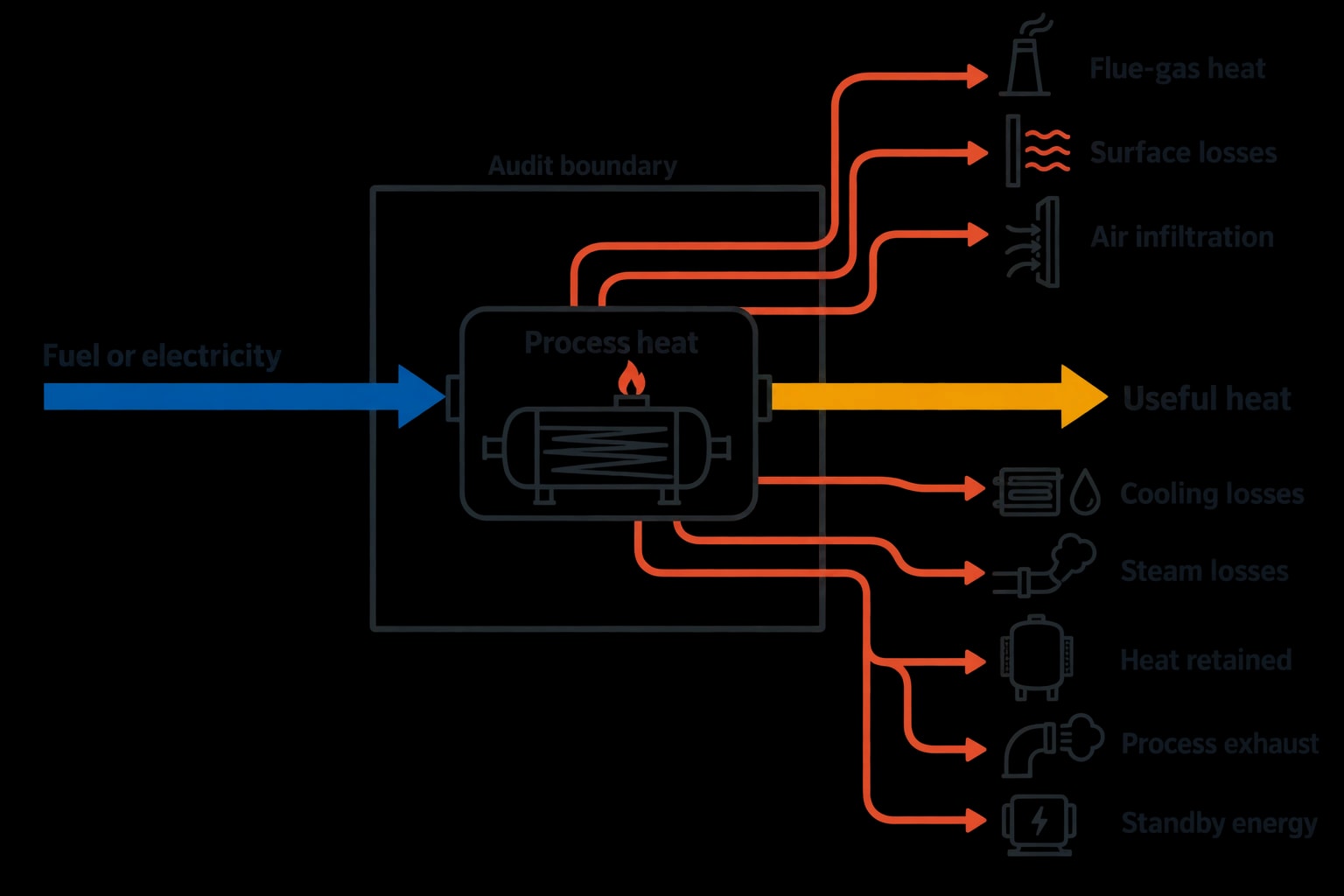
A thermal efficiency audit follows energy from the incoming fuel or electrical supply to the process duty. It establishes how much heat reaches the product or process, how much supports the operation, and where the remainder leaves the system.
The scope may cover one high-energy asset, such as a curing oven, or an interconnected system including a boiler house, steam distribution network, process heaters, heat-recovery equipment and condensate return.
Useful heat versus heat loss
Useful heat is energy transferred into material or a process for a defined purpose. Examples include heating a product, evaporating water, maintaining reactor temperature, sterilising a vessel or melting metal.
Losses arise where energy leaves without contributing to that duty. The main categories are usually:
- Flue-gas or exhaust heat
- Radiation and convection from hot surfaces
- Air infiltration and heat loss through openings
- Cooling-water, cooling-air or jacket losses
- Steam leaks, failed steam traps and flash-steam losses
- Heat retained in fixtures, refractory, conveyors or furnace structure
- Hot-product discharge where recovery is feasible
- Excessive ventilation or process exhaust
- Standby, idling and warm-up energy
A heat-loss result must be tied to operating conditions. A kiln during production, a batch reactor during heat-up and a packaging-line oven in standby have different thermal profiles. Annual savings estimates therefore need production hours, throughput, product mix and shutdown periods alongside measured energy data.
The audit boundary matters
A narrowly defined boundary can make an asset appear efficient while shifting losses outside the calculation. For example, a furnace may have acceptable combustion performance but require excessive cooling water because of refractory damage. A dryer may operate at its intended temperature while upstream dewatering leaves an unnecessary moisture load.
The audit boundary should include the equipment that creates, distributes and rejects heat where those parts affect process duty. This prevents a project team selecting a local improvement that increases total site energy use.
Identify where your plant is losing energy and quantify the savings potential — our audits map every heat source, sink, and waste stream in your facility.
How a thermal efficiency audit is planned
BS EN 16247-1:2022 sets common requirements, methodology and deliverables for energy audits. ISO 50002-1:2025 provides an international framework for general energy-audit requirements and guidance. Both support a disciplined process: agree the objective, establish scope, collect data, inspect the site, analyse findings and report usable opportunities.
Start with the production question
The first question is not whether a boiler or oven is efficient in isolation. It is what process outcome the heat must achieve.
A good audit brief identifies:
- Product and throughput measures, such as tonnes, batches, litres or square metres
- Required temperatures, residence times and quality limits
- Fuel, electricity, steam, thermal oil and compressed-air inputs
- Process heat assets and control setpoints
- Normal, peak, low-load and standby operating modes
- Recent changes to products, recipes, schedules or maintenance practice
- Constraints on shutdowns, hygiene, safety and validation
This creates an operational baseline. Gas consumption per tonne may rise because equipment has deteriorated, but it can also rise because throughput has fallen while standby demand remains fixed. The distinction determines the right remedy.
Build a site heat map before detailed testing
Site utility bills and half-hourly electricity data establish the broad pattern. Sub-metering then identifies the areas that justify field work. In many plants, thermal meters are incomplete or installed only at major utility headers, so an audit may combine permanent data with temporary instruments.
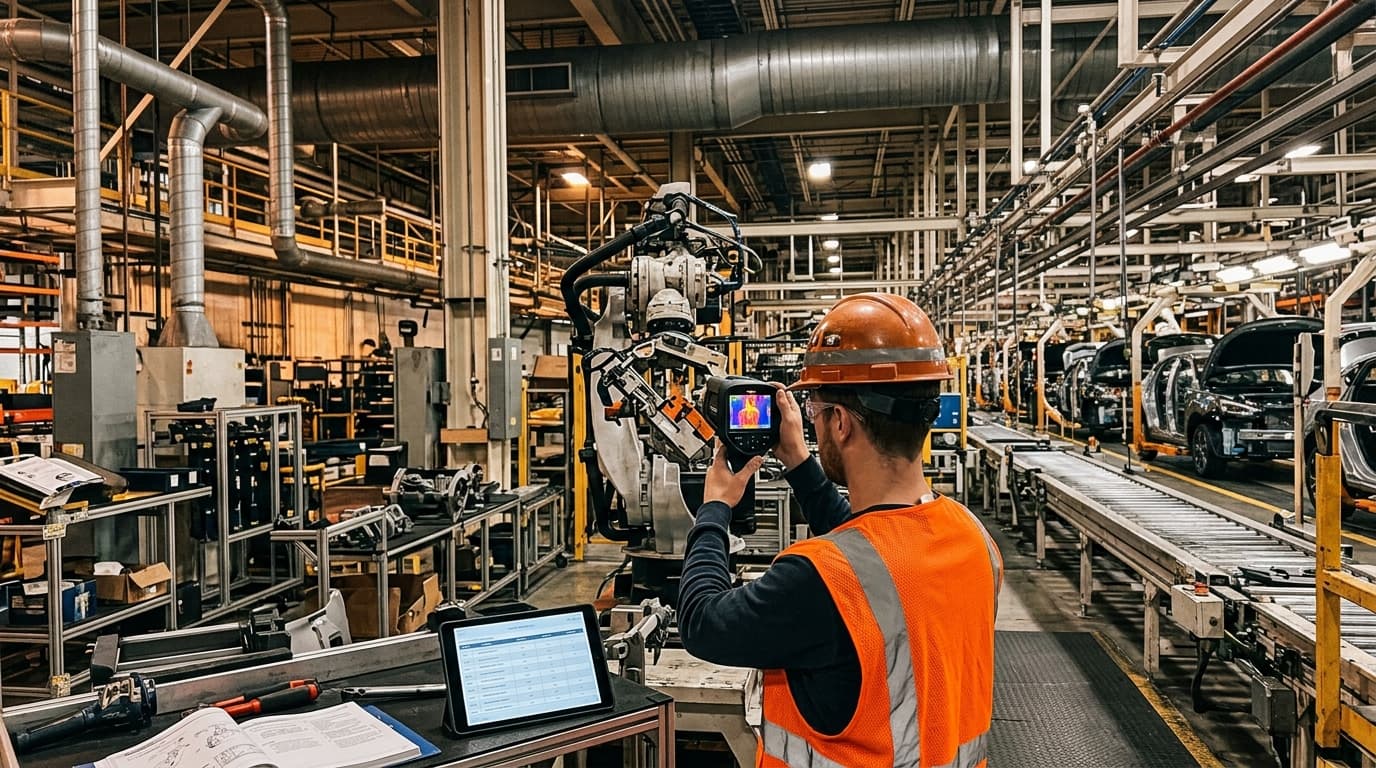
Typical measurements include fuel flow, steam flow, condensate return, stack temperature, oxygen concentration, combustion-air temperature, surface temperature, ambient temperature, exhaust airflow, differential pressure and product moisture. Data logging across a representative production cycle is more useful than a single spot reading.
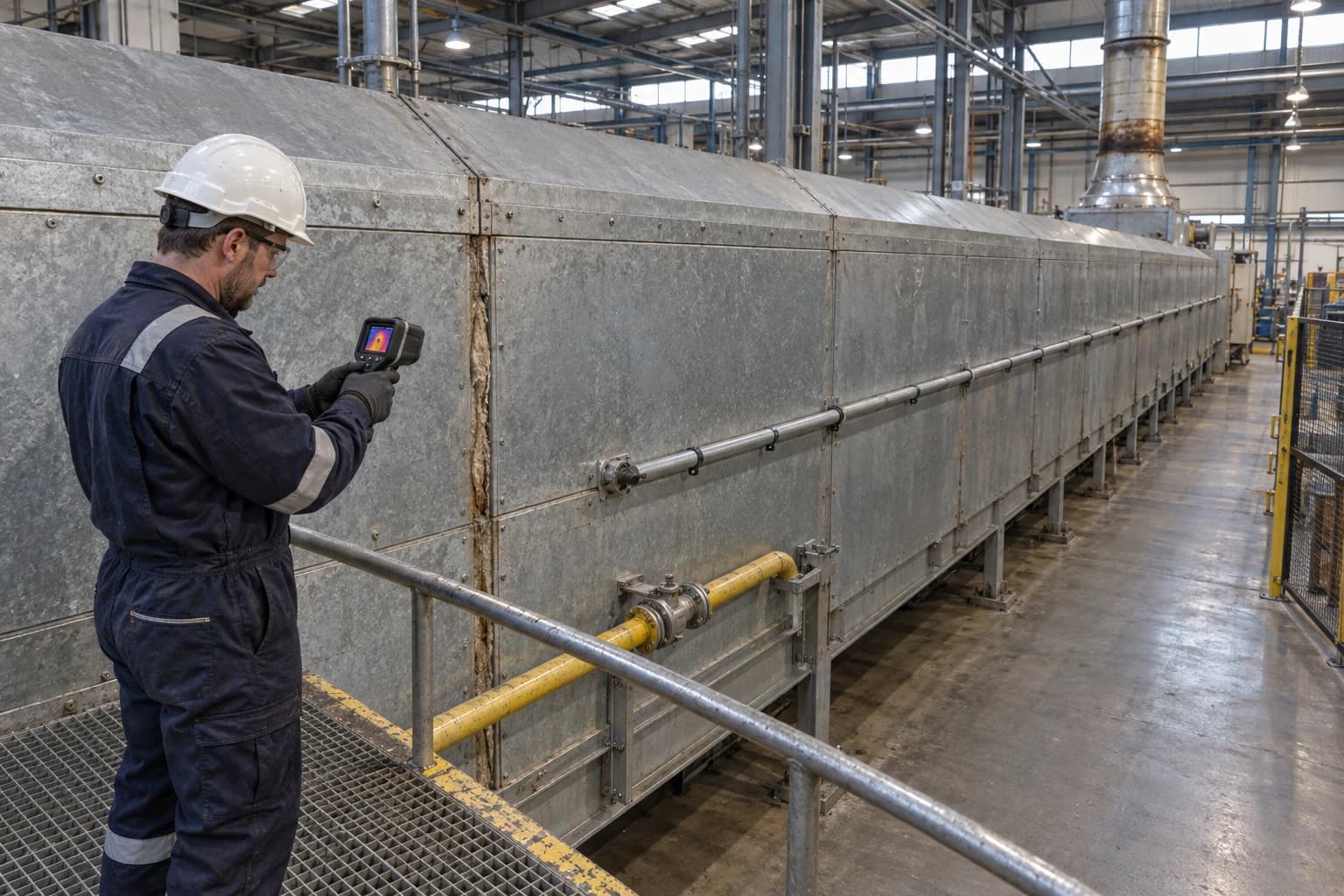
Infrared thermography can identify damaged insulation, refractory hot spots and uninsulated valves or flanges. It should support, rather than replace, contact temperature checks and an understanding of surface emissivity. A bright metal surface can give misleading infrared readings if camera settings and measurement methods are unsuitable.
Where process heat loss is usually found
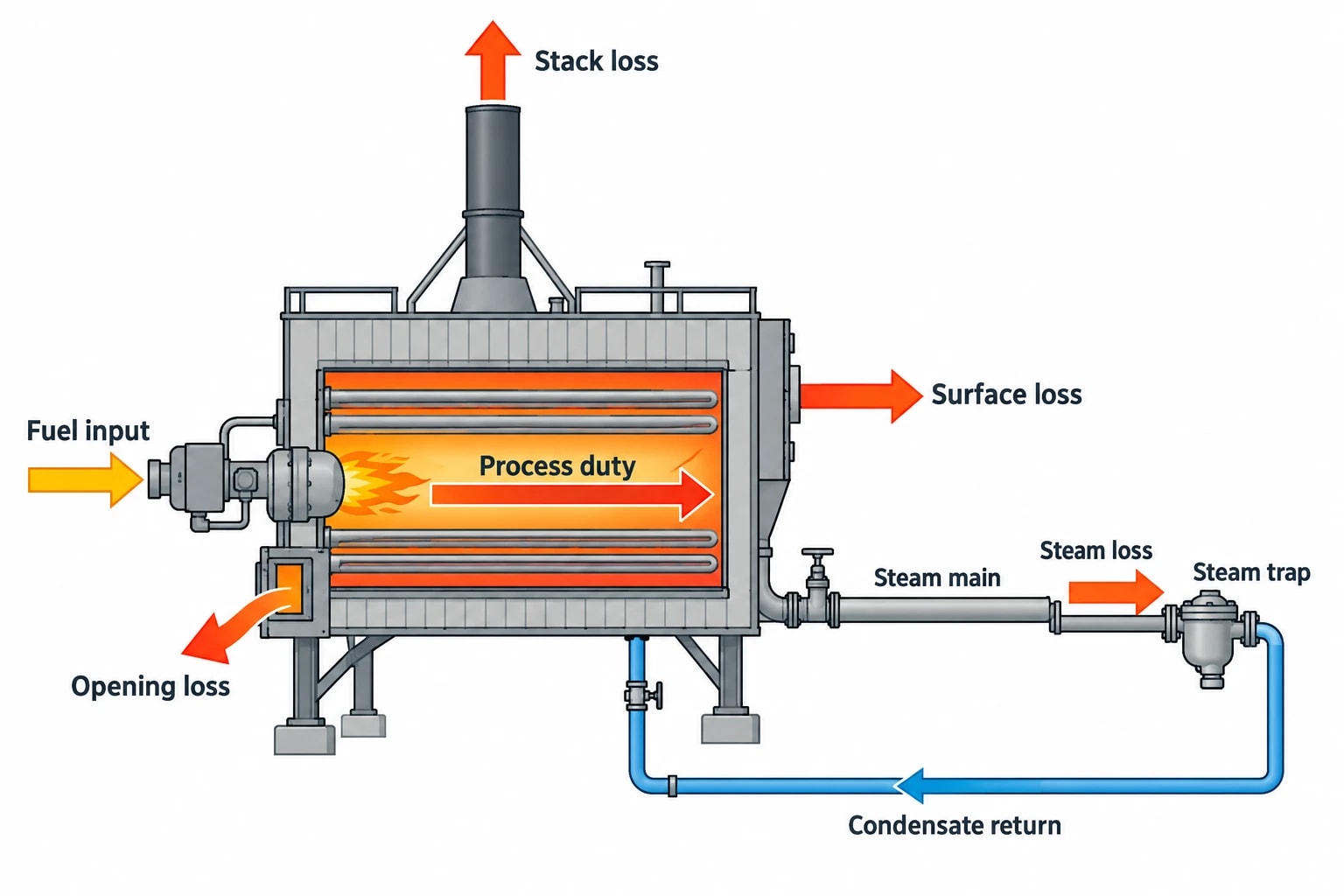
Heat loss has a physical route. Field inspection, measurement and operating history identify which route matters most on a specific line.
Combustion and flue-gas losses
Fuel-fired equipment sends heat out through the stack when combustion products leave at elevated temperature. High flue-gas temperature can indicate limited heat recovery, excess combustion air, air infiltration, fouled heat-transfer surfaces, poor load matching or a process that does not recover available waste heat.
Combustion testing helps determine oxygen and carbon-monoxide conditions, but results require engineering judgement. Reducing excess air can reduce stack losses, while inadequate air can create carbon monoxide, unstable flames and safety hazards. Burner adjustment must remain within the equipment manufacturer’s requirements and the site’s combustion-safety procedures.
Potential measures include burner tuning, combustion-air control, flue-gas recirculation where suitable, recuperation, economisers, load preheating and better furnace-pressure control. The viability of recovery depends on the receiving heat sink. Recovered heat at a temperature unsuitable for the process has limited value.
Surface, opening and infiltration losses
A hot shell, pipe, valve or tank loses heat through radiation and convection. Poor insulation condition, wet insulation, missing removable covers and refractory damage can raise those losses substantially. Surface-temperature surveys identify candidates for repair, but the audit should also consider accessibility, maintenance frequency, weather exposure and the risk of trapping moisture against a pipe.
Openings can be more damaging than they look. Furnace doors, conveyor slots, charging apertures and dryer entrances release hot gases and draw in cooler air. The resulting infiltration increases the heat required to maintain setpoint and may disrupt temperature uniformity.
Many lower-cost improvements concern operating discipline: door-open duration, interlocks, loading practice, seals, pressure control and shutdown routines. These measures require production ownership because the best energy case can fail if it slows material handling or affects product quality.
Steam and hot-water distribution losses
A thermal efficiency audit should trace steam from generation to point of use. Insulated mains can coexist with losses at valves, strainers, flange pairs, condensate receivers and failed steam traps. A leaking steam trap can also raise flash-steam discharge, make-up-water demand and boiler blowdown requirements.
The review should examine steam pressure at each major user, because a higher header pressure can increase distribution losses and create unnecessary throttling at process equipment. Pressure reduction must account for control stability, sterilisation duty, heat-transfer area and production requirements.
Condensate recovery often provides value beyond heat retention. Hot condensate reduces the energy needed to raise feedwater temperature and water-treatment demand. The practical limit may be contamination risk, return-line back pressure, flash-steam management or the location of the boiler house.

Identify where your plant is losing energy and quantify the savings potential — our audits map every heat source, sink, and waste stream in your facility.
Turning measurements into a heat-loss case
A thermal efficiency audit does not require a formula in every report. It requires a defensible balance between energy supplied, useful process duty and major loss paths. The analysis should state assumptions clearly, distinguish measured values from estimates and identify uncertainty where instruments or operating data are limited.
Compare like with like
Useful comparisons account for the conditions that drive heat demand. A paper dryer should be compared across basis weight, moisture content and production rate. A food process may require separate baselines for different recipes, batch sizes or cleaning cycles. A paint-curing oven should account for line speed and product loading.
Suitable energy performance indicators may include:
| Process or asset | Useful comparison measure |
|---|---|
| Batch reactor | Fuel or steam per batch, adjusted for recipe and batch mass |
| Industrial oven | Energy per m² coated, cured or dried product |
| Paper dryer | Thermal energy per tonne of saleable paper and moisture removed |
| Food evaporator | Steam per tonne of water evaporated |
| Boiler house | Fuel per tonne of steam, plus condensate-return rate |
| Thermal oil circuit | Fuel per tonne of product or production hour at defined load |
The audit should explain whether a loss is continuous, intermittent or tied to a particular mode. A 24-hour steam leak may merit earlier action than a larger loss that occurs for one hour each week.
Rank opportunities by decision value
An actionable report identifies the asset, loss mechanism, estimated annual energy saving, carbon impact, capital cost range, implementation period, operational dependencies and simple payback or approved investment metric.
A useful prioritisation groups opportunities as follows:
- No or low-capital actions, such as insulation repairs, burner tuning, steam-trap replacement, control-setpoint review and shutdown discipline.
- Medium-capital improvements, such as variable-speed exhaust control, damper repairs, condensate recovery upgrades and heat-exchanger cleaning or replacement.
- Major projects, such as waste-heat recovery, furnace refurbishment, process redesign, electrification or new drying technology.
The largest heat loss does not automatically produce the first project. A high-temperature exhaust may offer significant recovery potential, but the project can depend on a year-round heat sink, corrosion-resistant equipment, outage time and control changes. A smaller insulation repair may save less energy but proceed quickly with minimal disruption.
How thermal audits support ESOS and EU energy obligations
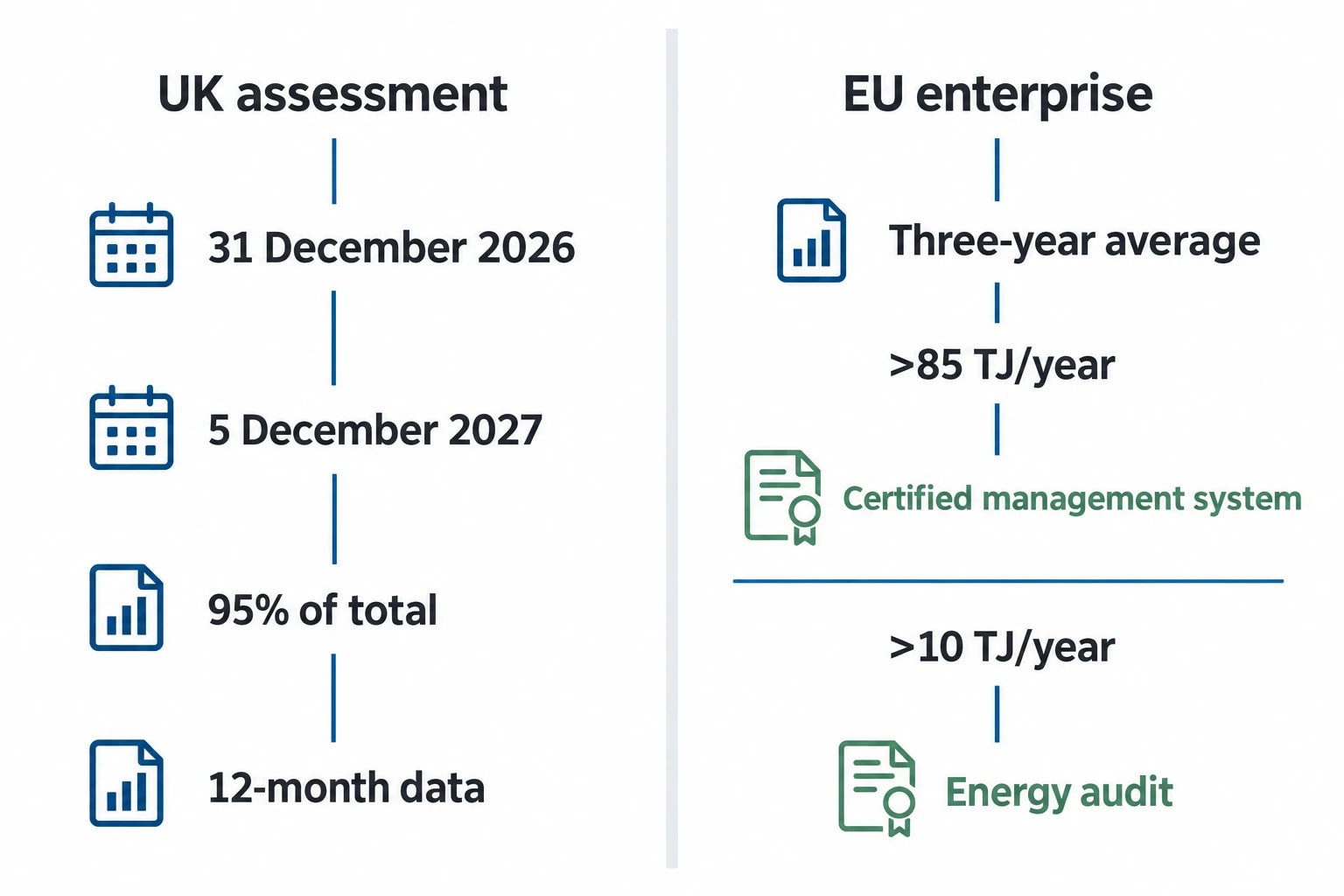
The Energy Savings Opportunity Scheme Regulations 2014, SI 2014/1643, require qualifying large UK organisations to complete ESOS assessments. For Phase 4, the qualification date is 31 December 2026 and the notification deadline is 5 December 2027.
ESOS assessments must establish total energy consumption, identify areas of significant energy consumption covering at least 95% of that total, calculate energy-intensity ratios and identify energy-saving opportunities. An ESOS-compliant audit must use, so far as reasonably practicable, verifiable 12-month energy-consumption data, include site visits and analyse consumption and efficiency.
A thermal efficiency audit supplies evidence for industrial process heat where it represents significant energy use. The audit’s equipment register, meter data, site records, heat-loss findings, assumptions and project calculations can form part of the ESOS evidence pack. The reporting process also benefits from a clear record of measures completed since the preceding compliance date.
For plants operating in EU Member States, Directive (EU) 2023/1791, Article 11, requires Member States to ensure that enterprises averaging more than 85 TJ per year across all energy carriers over the preceding three years implement a certified energy-management system. Enterprises averaging more than 10 TJ per year that do not implement an energy-management system are subject to energy audits. National transposition measures set the local compliance route, so operators should check the relevant Member State requirements.
Making audit findings stick on the plant floor
An audit report has value when its assumptions can be revisited after implementation. Site teams need to know the baseline, production adjustment, meter location and person responsible for each action.
Verify savings after the change
Verification should compare post-project performance with the pre-project baseline under comparable operating conditions. A project that reduces exhaust temperature may also alter product moisture, line speed or reject rate. Those production effects belong in the result.
Permanent consumption monitoring helps move thermal efficiency from an occasional study to a managed operating measure. EnerTherm Engineering’s Ecolog consumption monitoring and process optimisation solutions provide plant teams with ongoing visibility of utilities and process energy, helping them identify actions for operators or building-management systems to implement during validated change windows.
Use the audit as a project pipeline
The most productive thermal audits leave behind more than a list of defects. They create a ranked pipeline: urgent repairs, operational changes, metering improvements, planned-capital projects and longer-term process opportunities.
That sequence gives energy managers a credible basis for budget requests and gives plant engineers a practical route from a hot surface, a high stack temperature or a poor condensate-return rate to a measured improvement in fuel use.
This article reflects the independent analysis and editorial opinion of EnerTherm Engineering. Product names, trademarks, and brands mentioned belong to their respective owners. EnerTherm Engineering is not affiliated with, endorsed by, or a licensee of any third-party software or product mentioned unless explicitly stated.

Managing Director — EnerTherm Engineering
Dr. François Pierrel is Managing Director of EnerTherm Engineering with over two decades of expertise in thermal design, heat transfer, and industrial energy optimisation. He holds a PhD in Heat Transfer from Cranfield University and a Post-Doctorate from Heriot-Watt University.
