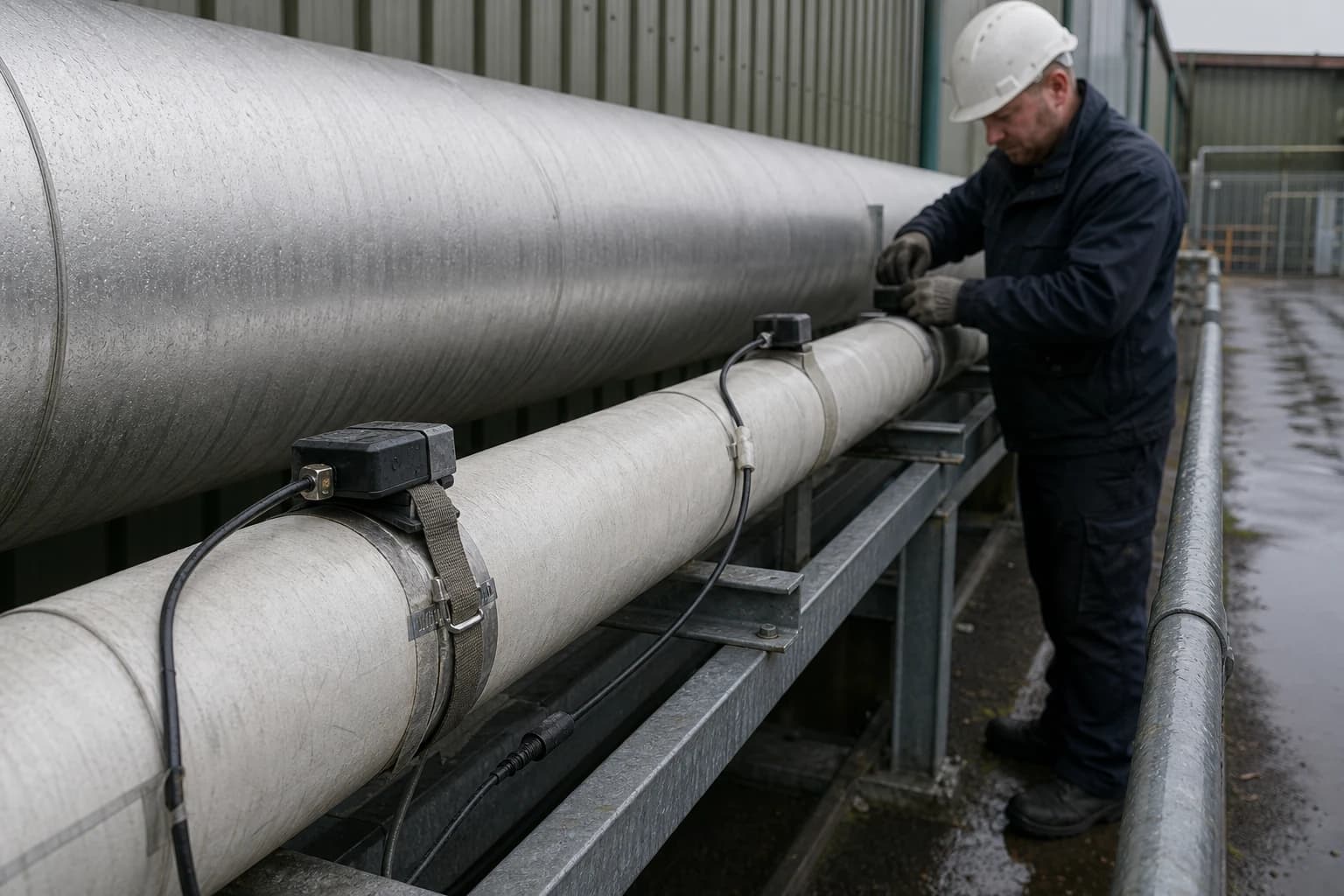
Can Heat Recovery Systems Tap the UK's 48 TWh Waste Heat?
A Pinch Analysis cost test for matching industrial waste-heat sources to sinks.
A UK government-commissioned study identified 48 TWh/year of industrial waste-heat sources across eight heat-intensive sectors, but estimated that only 11 TWh/year was technically recoverable and around 7 to 8 TWh/year met its economic tests. The study makes the scale clear. It also gives plant managers an important warning: waste heat is not a single accessible fuel reserve.
Heat recovery systems can capture a meaningful share of the opportunity where a continuous heat source matches a credible heat sink, the recovered heat displaces purchased fuel, and the equipment can operate without compromising production. The strongest business cases usually sit inside the factory boundary, where heat does not need a long network and a boiler, heater or steam system supplies the avoided energy.
For UK chemical, food and beverage, refinery, paper and pulp, pharmaceutical and power-generation sites, the financial question is narrower than the national headline. Which stream is releasing heat? Which process needs it? For how many annual operating hours do both streams coincide? The answers determine whether a project saves fuel or merely moves heat through additional equipment.
The UK’s 48 TWh waste-heat opportunity needs careful reading
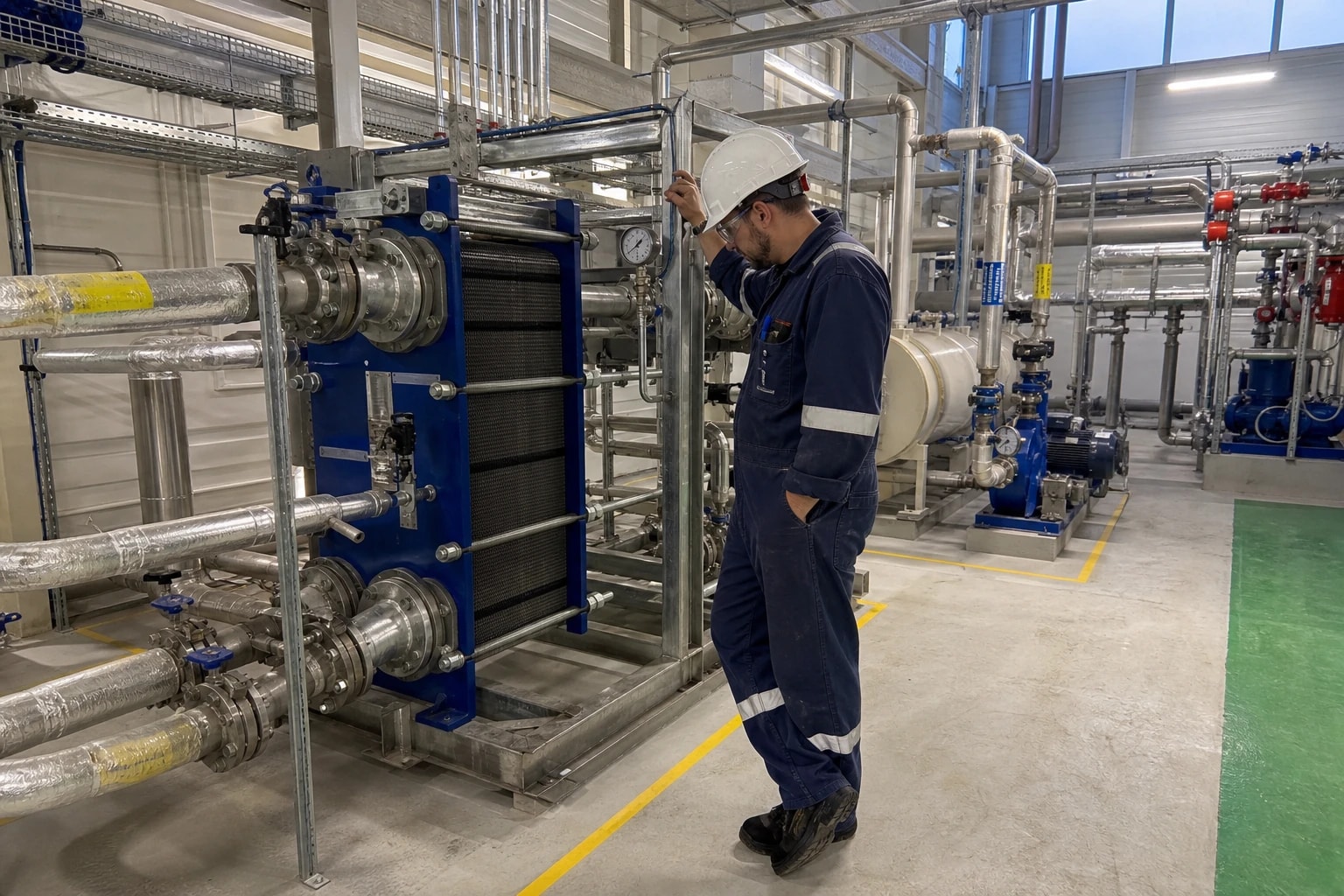
The 48 TWh/year figure covers identified industrial waste-heat sources in oil refining, iron and steel, food and drink, pulp and paper, chemicals, glass, cement and ceramics, plus power generation. It is a source inventory, not a forecast of energy that heat recovery systems can deliver to useful loads.
The original Element Energy, Ecofys and Imperial College analysis found several different opportunity levels:
MeasureEstimate in the studyMeaningIndustrial waste-heat sources48 TWh/yearHeat identified across the assessed sectorsTechnical potential11 TWh/yearProjects that could recover useful heat under the study assumptionsEconomic potential7 to 8 TWh/yearProjects where annual benefits outweighed annual costs under the stated discount-rate assumptionsCommercial potential5 TWh/yearProjects meeting a two-year payback constraint
Those distinctions matter in capital approval. A hot exhaust may contain a large quantity of energy, yet provide little useful value if the temperature is too low, the available sink is seasonal, or throughput falls when recovery equipment would operate.
The study also modelled opportunities ranging from measures that met commercial payback expectations to cases dependent on substantial heat-network development. Its figures date from 2014, so they should frame the national opportunity rather than substitute for a current site survey. Fuel prices, plant configurations, carbon costs and production patterns will change the value of any individual project. The final report remains useful because it identifies the physical and commercial constraints that still govern heat recovery.
Heat demand dominates the industrial energy bill
The UK Industrial Decarbonisation Strategy states that 70% of UK industrial energy demand is for heat, with around 35% associated with steam systems. That policy context explains why recovery projects often start with boiler loads, steam pressure reduction, hot-water circuits, preheating duties and drying processes.
A recovery project that cuts gas use at a boiler house can generate a direct, metered saving. A project that creates low-grade warm water without a reliable consumer creates a design obligation. The difference is central to the investment case.

Pinch analysis identifies the thermodynamic minimum energy requirement of your process — then designs the heat exchanger network to achieve it.
How heat recovery systems create financial value
A heat recovery system earns its keep by displacing an energy input that the site would otherwise buy or generate. In many plants, that means natural gas for a boiler, thermal-oil heater or direct-fired process. In others, it means electricity used by refrigeration, hot-water production or a heat pump.
Start with the avoided fuel, not the heat source
Process teams should identify the heat sink before settling on technology. A clean, hot flue-gas stream is attractive, but its value depends on demand for heat at a lower temperature at the same time.
Useful sink candidates include:
Boiler feedwater and combustion-air preheat
Make-up water heating
Process-water heating and cleaning-in-place duties
Drying-air preheat
Product, solvent or raw-material preheat
Low-pressure steam generation
Heat-pump supply to a lower-temperature process circuit
The avoided fuel must account for the efficiency of the displaced equipment. Recovering heat into boiler feedwater does not save fuel on a one-for-one energy basis because the boiler has losses. Conversely, supplying a heat pump may create an electricity cost that belongs in the calculation.
Operating hours decide the annual return
Nameplate heat duty can mislead. A 24-hour process may feed a batch operation that needs heat for only part of the shift. A heat source can disappear during cleaning, maintenance, low production or a product-grade change.
An appraisal should use logged process data where possible, with normal, minimum and maximum cases for:
Source flow, temperature and pressure
Sink flow, required temperature and allowable temperature rise
Simultaneous operating hours
Planned shutdowns and campaign changes
Boiler or heater load displaced in each operating state
Electricity consumption of pumps, fans, controls and heat pumps
Annual operating hours multiply or destroy the benefit of a modest temperature difference. A smaller recovery duty that runs through most of the year can outperform a larger duty available only during short production campaigns.
Pinch Analysis prevents heat recovery systems from chasing the wrong duty
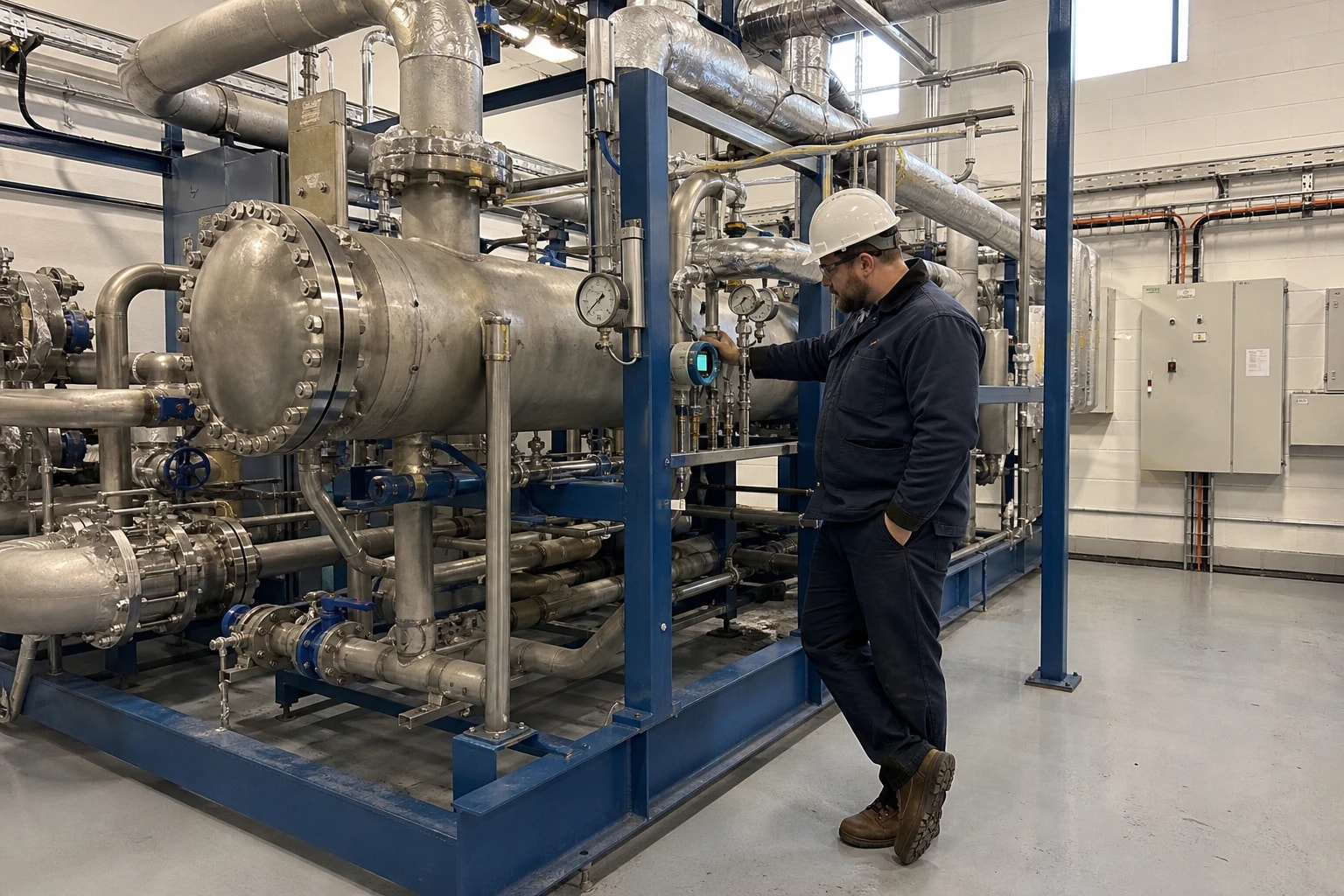
Pinch Analysis provides the discipline needed to assess source-sink matching before plant teams commit to a heat exchanger, heat pump or new utility connection. It treats process streams as an integrated thermal system and identifies the practical target for reduced hot and cold utility demand.
Set the energy target before designing equipment
A Pinch Analysis begins with reliable stream data: supply temperature, target temperature, heat-capacity flow rate, phase change, pressure constraints and operating availability. The analysis establishes the minimum hot and cold utility targets for the selected temperature approach.
That step matters because a local exchanger can look attractive while increasing utility use elsewhere. For example, recovering heat into a stream that should instead receive heat from another process stream can leave a better opportunity unused. A network view identifies the order in which duties should be matched.
The selected minimum temperature approach affects capital and operating cost. A tighter approach can recover more heat but demands more exchanger area, raises sensitivity to fouling and may become difficult to control. A wider approach reduces recovery but can produce a smaller, more maintainable installation. There is no universal optimum.
Match heat quality as well as heat quantity
Temperature determines heat quality. High-temperature exhaust can support preheating, steam generation or other demanding duties. Low-temperature condenser cooling water may still be valuable for wash water, space heating or heat-pump input, but it cannot directly replace high-pressure steam.
Heat pumps can extend the reach of heat recovery systems where the source is below the temperature required by the sink. The appraisal must then include electrical input, seasonal or operating-point performance, refrigerant selection, maintenance requirements and the capability of the receiving process to accept the heat. A heat pump should serve a defined demand, not rescue an otherwise stranded heat source.
What the full cost-benefit analysis should include
Capital cost goes far beyond the exchanger purchase price. A dependable assessment captures the tie-ins, downtime, controls and operating changes needed to make recovered heat useful on a live industrial site.
Cost or benefit areaItems to assessFuel benefitFuel avoided, boiler or heater efficiency, annual operating hours and contract price exposureElectricity effectPumping power, fan duty, heat-pump consumption, drives and control equipmentProcess equipmentHeat exchangers, ducting, pipework, valves, insulation, supports and drainageInstallationCivil work, access, lifting, shutdown tie-ins, commissioning and contingencyReliabilityBypass arrangements, spare parts, cleaning access, inspection and production-loss riskFinancial evaluationMaintenance cost, asset life, tax treatment, hurdle rate, payback, net present value and sensitivity cases
Fouling can overturn an attractive paper saving
Fouling deserves explicit treatment in food, paper, chemical and refinery applications. Deposits on exchanger surfaces reduce heat transfer, increase pressure drop and can raise pumping energy. Corrosive condensate, particulate-laden exhaust and viscous process fluids add material-selection and maintenance costs.
Design teams should define expected fouling resistance, cleaning method, isolation points, safe access and the performance trigger for cleaning. A plate heat exchanger may provide compactness and high heat-transfer performance on clean services. Shell-and-tube equipment can offer greater tolerance and mechanical cleanability in other duties. Selection follows the fluid, pressure, temperature, hygiene and maintenance regime.
A bypass is often a sound production safeguard. It allows the core process to keep operating if the recovery system requires cleaning or repair. The bypass has a cost, but a project whose failure interrupts production carries a much larger hidden liability.
Pumping power is part of the energy balance
Long pipe runs and narrow exchanger channels can erode savings. Pumping power, fan pressure drop and control-valve losses should be based on the intended operating flow, not an optimistic nominal condition. Where a site considers recovery from flue gas, the impact on draught, burner operation, condensate handling and corrosion control requires equally close review.
A financial model should test realistic sensitivity cases. Lower throughput, increased fouling, higher maintenance cost and a reduced fuel price can all extend payback. Conversely, a heat sink that remains available during most production hours may improve the result substantially. Management decisions are stronger when the model identifies the conditions under which a project still meets its return threshold.

Pinch analysis identifies the thermodynamic minimum energy requirement of your process — then designs the heat exchanger network to achieve it.
Delivering a heat recovery project without disrupting production
The most valuable heat-recovery projects become part of the operating plant, not an isolated energy-saving package. That requires process ownership from the first survey through commissioning.
Build the evidence before the design freeze
A practical development sequence is:
Map hot and cold streams using current operating data, including batch cycles and shutdown patterns.
Establish the Pinch Analysis targets and shortlist feasible source-sink matches.
Confirm fluid quality, fouling risk, pressure constraints, hygiene requirements and available plot space.
Develop the preferred exchanger network, controls, bypasses and tie-in plan.
Test the business case against operating and price sensitivities.
Install during an appropriate shutdown, commission against agreed performance criteria and retain a measurement plan.
The source and sink should be assessed during representative production, not only during a favourable trial condition. Temporary flow and temperature logging often exposes cycles that a process flow diagram cannot show.
Controls protect product and recovery performance
A recovery loop changes thermal dynamics. Temperature control, minimum-flow protection, alarm limits and isolation philosophy need to protect product quality and plant safety ahead of energy performance. The control narrative should define what happens during a source trip, sink trip, fouling event, heat-demand reduction and power failure.
Commissioning should establish a baseline for fuel use, recovered duty, pump electricity and process temperatures. Teams can then distinguish a genuine fall in recovery performance from a change in throughput or product mix.
ESOS and ISO 50001 turn project data into continual improvement
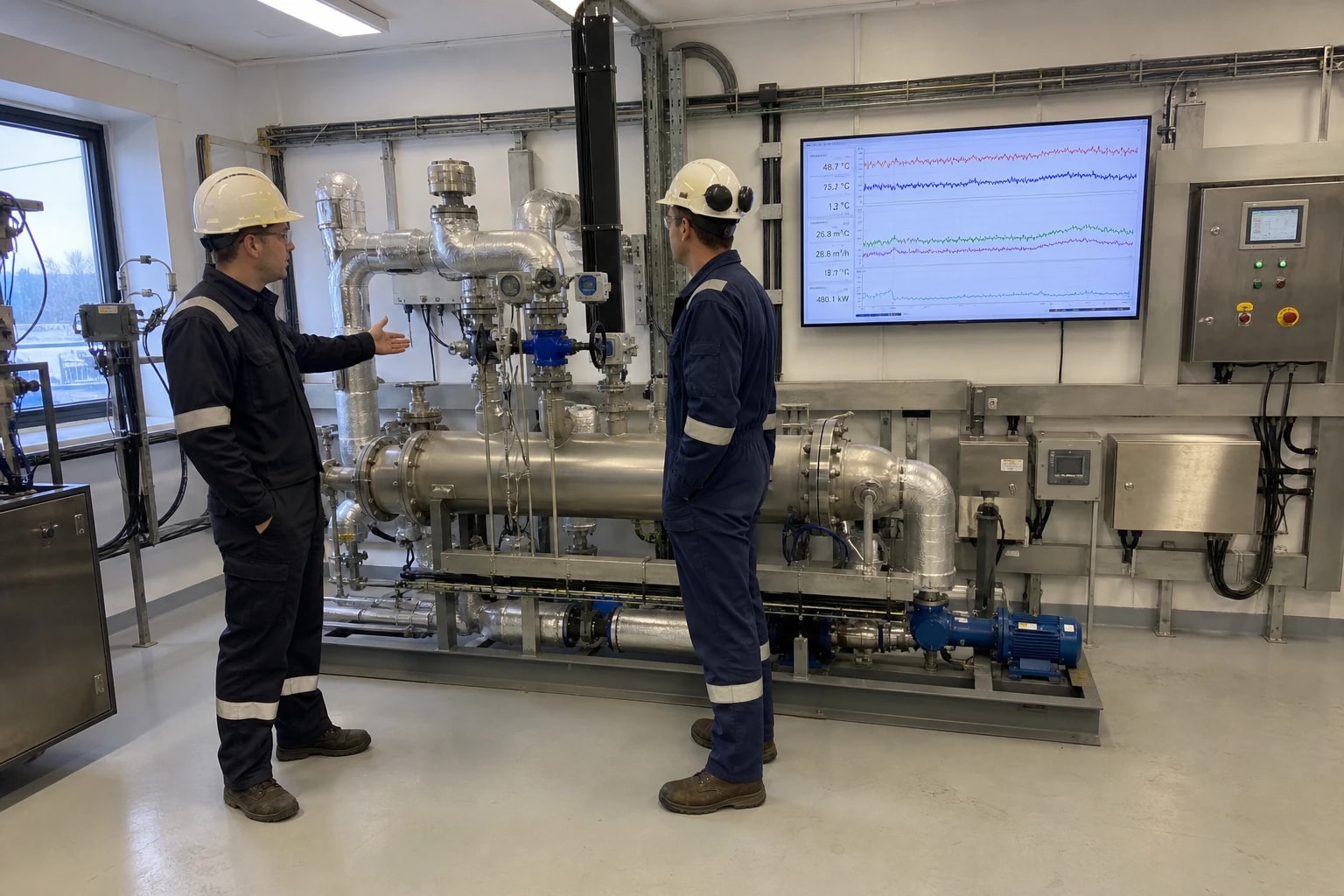
The Energy Savings Opportunity Scheme Regulations 2014 provide a driver for measured energy opportunities. The Environment Agency administers the UK scheme, and the government states that the ESOS Phase 4 compliance notification deadline is 5 December 2027. Current ESOS guidance also says Phase 4 guidance and reporting-system changes are planned ahead of that date.
Heat recovery systems fit naturally within a site energy assessment because they link a quantified energy-saving measure to identifiable process loads. Good project records can support both compliance activity and capital governance: baseline consumption, calculation assumptions, metered results, action-plan status and evidence of savings persistence.
For organisations operating an energy management system, BS EN ISO 50001:2018+A1:2024 provides the relevant management-system framework for energy performance and continual improvement. The UK publication incorporates ISO Amendment 1:2024 and CEN/CENELEC endorsement A1:2024. The publication record confirms that designation, while ISO’s amendment page records the underlying international amendment.
The practical test is straightforward. Measure the recovered heat, measure the additional electricity and compare the adjusted result with a documented baseline for equivalent production. That makes the saving credible to operations, finance and auditors.
The answer lies in site-specific heat matching
Heat recovery systems can tap part of the UK’s 48 TWh industrial waste-heat resource. They will not tap it through a single technology or investment rule. The government study’s technical and economic estimates show why: accessible value emerges only after temperature, timing, distance, operating hours, equipment condition and investment criteria have been assessed together.
The best projects recover heat into a nearby, durable demand and displace a known fuel load. Pinch Analysis supplies the thermal target. Detailed engineering addresses fouling, pressure drop, controls and maintainability. Metering demonstrates that the fuel saving survived contact with production.
For EnerTherm Engineering clients, that sequence supports heat-exchanger network optimisation and system design that seeks lower thermal energy use without placing production continuity at risk. The 48 TWh headline establishes the opportunity. A disciplined site energy balance identifies the share that can pay for itself.
This article reflects the independent analysis and editorial opinion of EnerTherm Engineering. Product names, trademarks, and brands mentioned belong to their respective owners. EnerTherm Engineering is not affiliated with, endorsed by, or a licensee of any third-party software or product mentioned unless explicitly stated.

Managing Director — EnerTherm Engineering
Dr. François Pierrel is Managing Director of EnerTherm Engineering with over two decades of expertise in thermal design, heat transfer, and industrial energy optimisation. He holds a PhD in Heat Transfer from Cranfield University and a Post-Doctorate from Heriot-Watt University.
