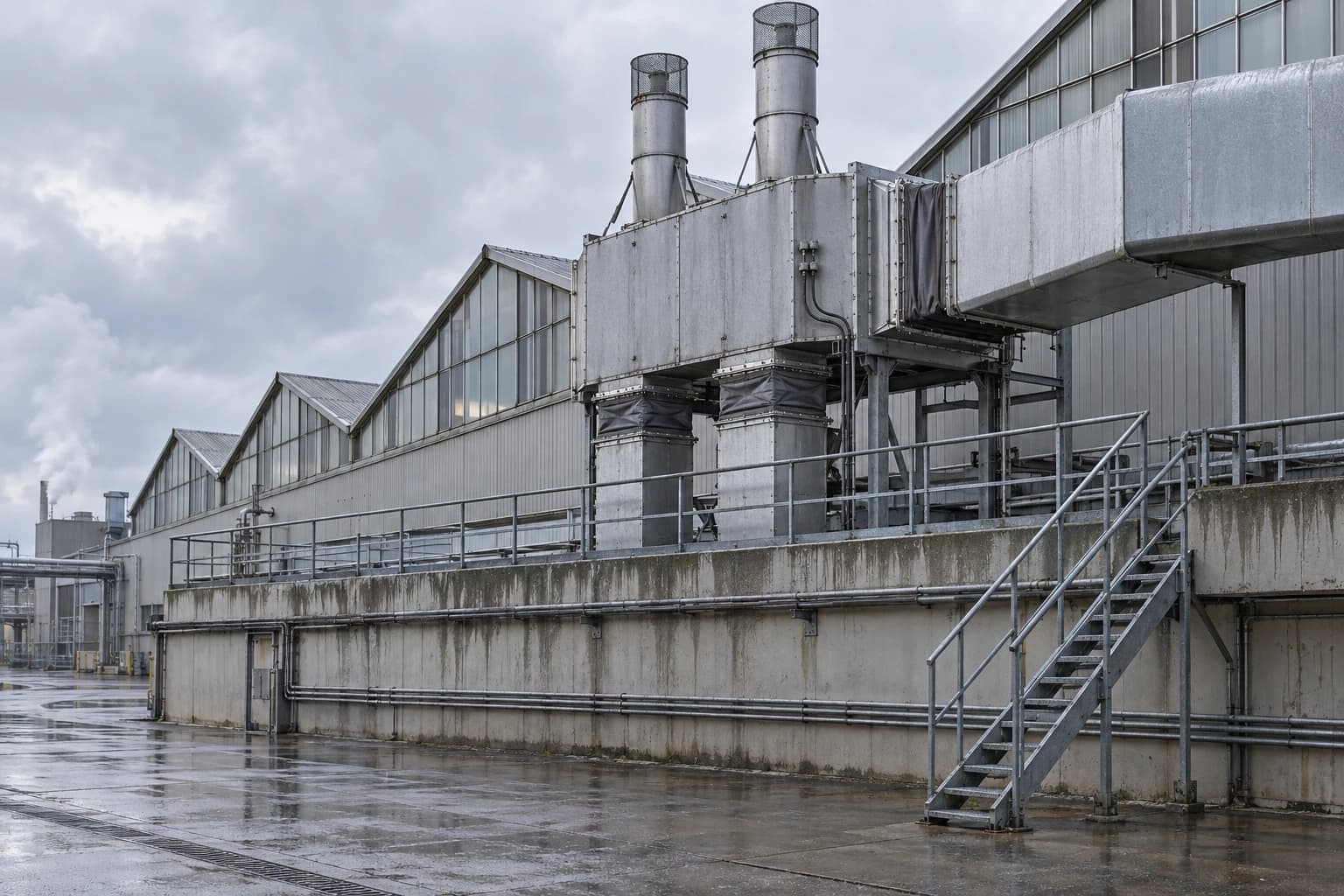
Process Integration Can Cut Electricity Use by up to 12%
DESNZ estimates 6-12% electricity savings from heat recovery and integration.
Process integration systematically matches heat sources with heat demands across a plant, reducing the external utility energy required.
A March 2026 Department for Energy Security and Net Zero assessment puts a figure against that principle. For the UK paper and pulp sector, its waste-heat recovery and heat-integration measure estimates fuel-for-heat savings of 9%, with a range of 6% to 12%.
The assessment reports electricity savings of -1%, with a range from -3% to 3%. The 12% figure therefore relates to fuel for heat, not electricity. That distinction matters for investment cases, Scope 1 and 2 reporting, and project selection in plants where steam, fired heat and electrical loads interact.
For chemical processing, food and drink, pharmaceuticals and metals, process integration identifies where recovered heat has more value inside the process than at the cooling tower, condenser or stack.
What process integration measures
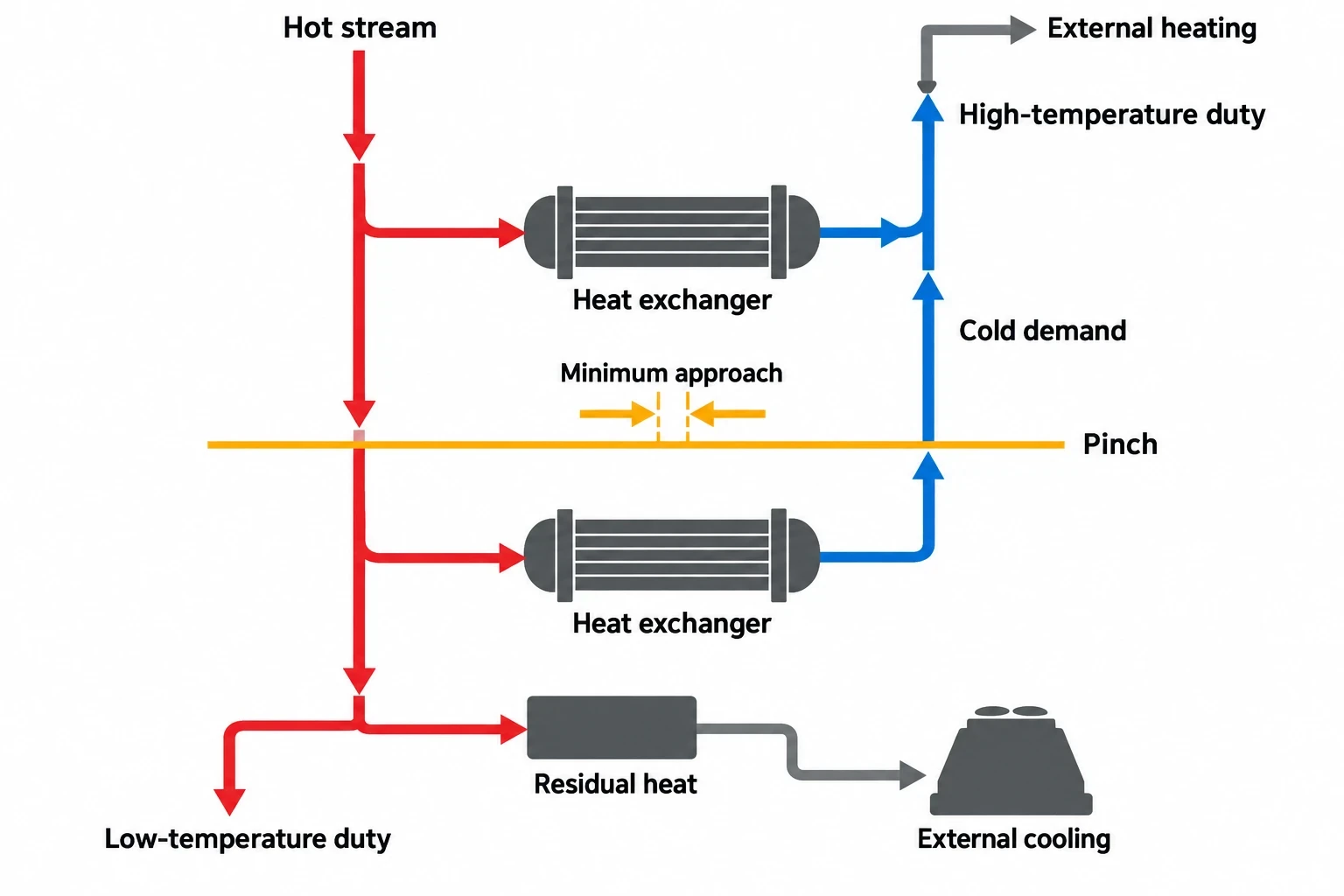
Process integration treats the plant as connected heat sources, heat demands and utilities. A hot stream may need cooling before storage, separation or discharge. A cold stream may need heating before reaction, evaporation, drying or distillation. Process integration tests whether those duties can be matched before site steam, thermal oil, refrigeration or cooling water supplies the balance.
Pinch Analysis is the established method for setting thermodynamic targets. It examines the temperature and heat duty of process streams, then identifies the minimum external heating and cooling utilities required under the chosen design conditions.
The pinch point sets the energy target
The pinch is the temperature region that constrains maximum feasible heat recovery for a defined set of streams and a chosen minimum temperature approach. Heat-exchanger network design follows three practical rules:
- Avoid transferring heat across the pinch.
- Avoid using external heating below the pinch.
- Avoid using external cooling above the pinch.
Breaking these rules increases utility demand. They are screening tools, not a substitute for detailed engineering. A feasible project still needs checks on pressure drop, fouling, controllability, layout, maintenance access, process safety and production flexibility.
Heat quality matters as much as heat quantity
A large low-temperature heat flow may have limited use if the nearest demand requires steam at a higher temperature. Conversely, a modest high-temperature stream can displace valuable boiler duty or provide reboiler heat.
The paper and pulp assessment describes heat integration as cascading available heat from the highest to the lowest quality, then finding a use for residual waste heat such as warm water and moist air. The principle directs engineers to preserve high-grade heat for the highest-temperature practical demand before assigning lower-grade heat to preheating, washing, air heating or other low-temperature duties.

Pinch analysis identifies the thermodynamic minimum energy requirement of your process — then designs the heat exchanger network to achieve it.
Why the DESNZ 12% figure needs careful interpretation
The DESNZ estimate is a sector-level model input for paper and pulp. It is not a guaranteed site saving or a universal electricity reduction from heat integration. The report grades confidence in the saving range as red, its lowest category, while grading the capital-cost range amber.
Heat-recovery projects contain site-specific variables that a national assessment cannot resolve: operating hours, product mix, batch campaigns, exchanger cleanliness, distance between source and sink, production constraints and the marginal efficiency of the existing utility system.
The reported savings and cost range
| Measure in the DESNZ paper and pulp assessment | Central estimate | Range | Confidence |
|---|---|---|---|
| Electricity saving | -1% | -3% to 3% | Red |
| Fuel-for-heat saving | 9% | 6% to 12% | Red |
| Average-site CapEx, 2024 prices | £2.0m | £1.5m to £2.5m | Amber |
An electricity increase can be credible where recovered heat is upgraded with a heat pump, mechanical vapour recompression, fans, pumps or control equipment. A scheme can still reduce fuel use and operational emissions while increasing electrical demand. Engineers should model electricity and thermal fuel separately, then assess operating cost, carbon effects and utility capacity.
Avoid applying a sector average to a single plant
A site may exceed the 6% to 12% fuel-for-heat range where a high-duty source and sink operate continuously at compatible temperatures. Another may find that a promising exchanger match fails because the source is intermittent, the cold demand is seasonal or a shutdown window is unavailable.
The question is not whether a site can reproduce an average. It is whether its data supports a technically feasible, operable and financially justified heat-recovery target.
How Pinch Analysis identifies heat-recovery opportunities
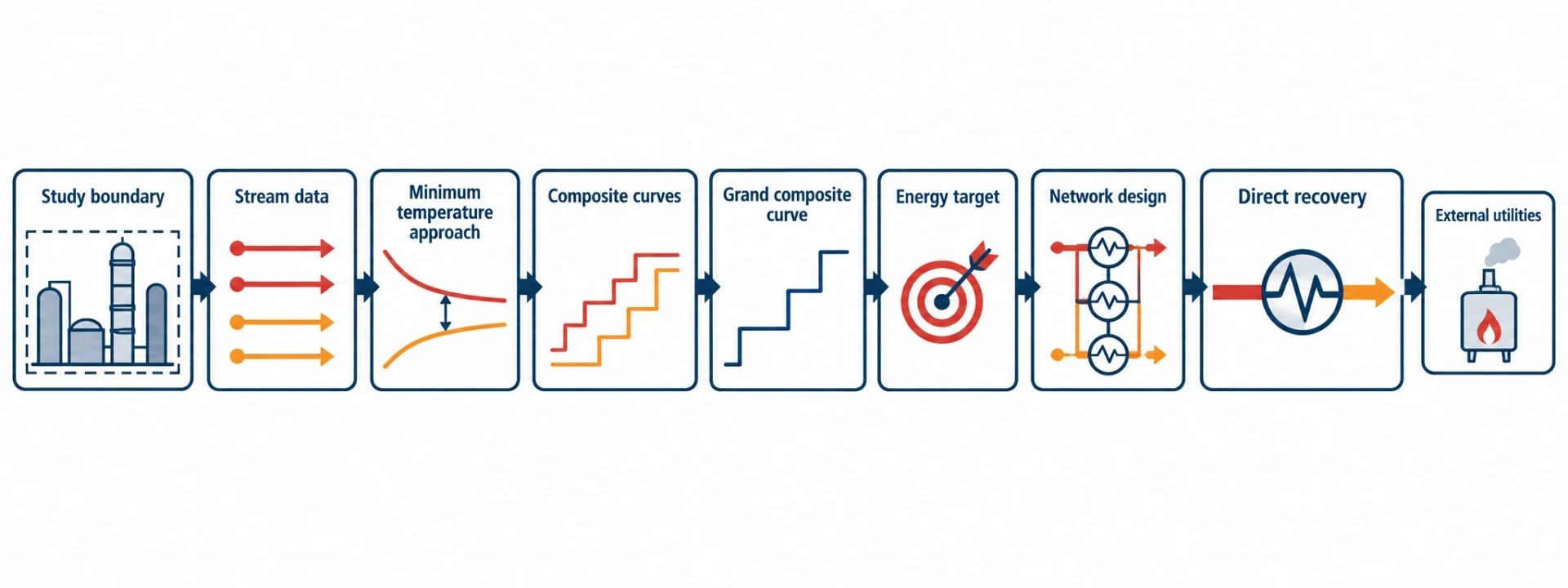
A useful study starts with a boundary: a distillation train, dryer island, paper machine and hood system, evaporation train, furnace and preheat section, or the whole site utility system. Too narrow a boundary can hide the best match. Too broad a boundary can overlook physical distance, control ownership and maintenance reality.
Build reliable stream data first
For each process stream, the engineering team needs more than nominal design values. The data set should capture normal, turndown, start-up and campaign conditions where they materially affect a match.
Typical inputs include:
- Supply and target temperature.
- Heat duty or enthalpy change.
- Phase change and latent-heat duties.
- Flow variability and operating hours.
- Allowable pressure drop.
- Fouling tendency, solids content and cleanability.
- Chemical compatibility and contamination risk.
- Existing control arrangements and trip conditions.
- Physical location, elevation and available pipe routes.
This work often exposes gaps in plant measurement. Steam, condensate, cooling-water and process-flow measurements should reconcile with production data before informing a multi-million-pound heat-exchanger network decision. A heat balance that closes at only one operating point produces weak targets.
Set the minimum temperature approach deliberately
The minimum temperature approach sets the trade-off between exchanger area and utility saving. A small approach temperature can increase recovered heat but require larger exchangers, more surface area and greater exposure to fouling. A large approach can reduce capital cost while leaving recoverable energy unused.
The target should reflect the service. Clean liquid-to-liquid duties can tolerate a tighter approach than dirty exhaust gas, slurry or condensing-vapour services. Where a source has severe fouling potential, bypass facilities, isolation, cleaning access and a realistic maintenance interval may matter more to the investment case than a favourable pinch target.
Move from target to network
Composite curves and the grand composite curve establish the energy target. Network design then selects exchanger matches, duties and utility connections that meet it.
A workable design usually gives priority to:
- Direct process-to-process recovery where the source and sink are compatible.
- Recovered heat used in the process at the nearest suitable temperature level.
- Reuse of condensate, flash steam or hot-water loops that reduce boiler and deaerator duty.
- Utility-system changes after process heat recovery has been tested.
This order prevents a common error: installing a heat pump or new steam-generation capacity before assessing whether an existing process stream can meet the demand directly.
Where process integration delivers practical savings
The physical form of the opportunity differs by sector, but the method remains consistent.
Chemical and pharmaceutical processing
Distillation, reaction, drying and solvent recovery often create both high-temperature cooling duties and substantial reboiler or feed-preheat demands. Candidates include feed-effluent exchangers, hot reactor-effluent recovery, condenser heat for lower-temperature preheating, and reboiler duty reduced through improved column integration.
Batch operations require extra care. Two streams may match on a process-flow diagram yet rarely operate at the same time. Thermal storage, intermediate hot-water loops or revised scheduling may make a match usable, but each adds capital cost and control requirements.
Food and drink manufacturing
Pasteurisation, cooking, evaporation, refrigeration and cleaning systems can generate recoverable heat. Warm process water and refrigeration condenser heat often suit wash-water preheating, inlet-water heating or low-temperature process demands.
Product-safety requirements govern the design. Heat-exchanger selection, segregation, clean-in-place requirements and validation protocols must preserve the hygienic boundary. A theoretically attractive match has little value if it introduces unacceptable product risk or frequent production interruptions.
Metals, minerals and high-temperature manufacturing
Kiln, furnace and dryer exhausts can support combustion-air preheat, feed preheating or drying duties. These projects need detailed assessment of particulate loading, corrosion, deposition, pressure drop and equipment independence.
A government-backed feasibility study for a UK ceramics manufacturer considered using kiln exhaust heat to offset dryer gas demand and potentially generate electricity. It identified recurring realities of such projects: distributed heat sources, physical distance between source and sink, access restrictions and the need for dryers to operate independently of kilns.

Pinch analysis identifies the thermodynamic minimum energy requirement of your process — then designs the heat exchanger network to achieve it.
Designing for operation, safety and maintenance
Heat recovery changes process behaviour. It can alter available temperature driving force, utility demand, condensate return, control-valve authority and responses to production-rate changes. These effects need review before procurement.
Control and resilience
A heat exchanger that transfers recovered heat during normal operation may need a bypass, supplementary utility supply or controlled changeover during source loss. The control philosophy should define the response to fouling, cleaning, low load, trips and start-up.
For a site with a steam turbine or combined heat and power plant, reduced steam demand can also change electricity generation, steam-pressure balance and export arrangements. Utility modelling must reflect this interaction. Treating recovered heat as an isolated reduction in boiler fuel can overstate the commercial saving.
Hazardous-area and process-safety review
Chemical and fuel-processing projects require formal management of change. New exchangers and pipework can introduce blocked-in liquid, thermal expansion, cross-contamination routes, altered relief scenarios and changes to hazardous-area equipment requirements.
The Dangerous Substances and Explosive Atmospheres Regulations 2002 apply where dangerous substances could create fire, explosion or similar risks. Design reviews should address relevant process hazards before construction, rather than treating them as a commissioning-stage issue.
Maintenance economics
Fouling affects performance and operating cost. A network that gives an impressive first-week energy result but loses heat-transfer performance between shutdowns will disappoint.
The specification should state fouling allowances, inspection access, cleaning method, isolation strategy and performance tests. Plant teams also need clear ownership of cleaning intervals and a way to distinguish lost heat recovery from changing production conditions.
Turning a Pinch Analysis into an investable project
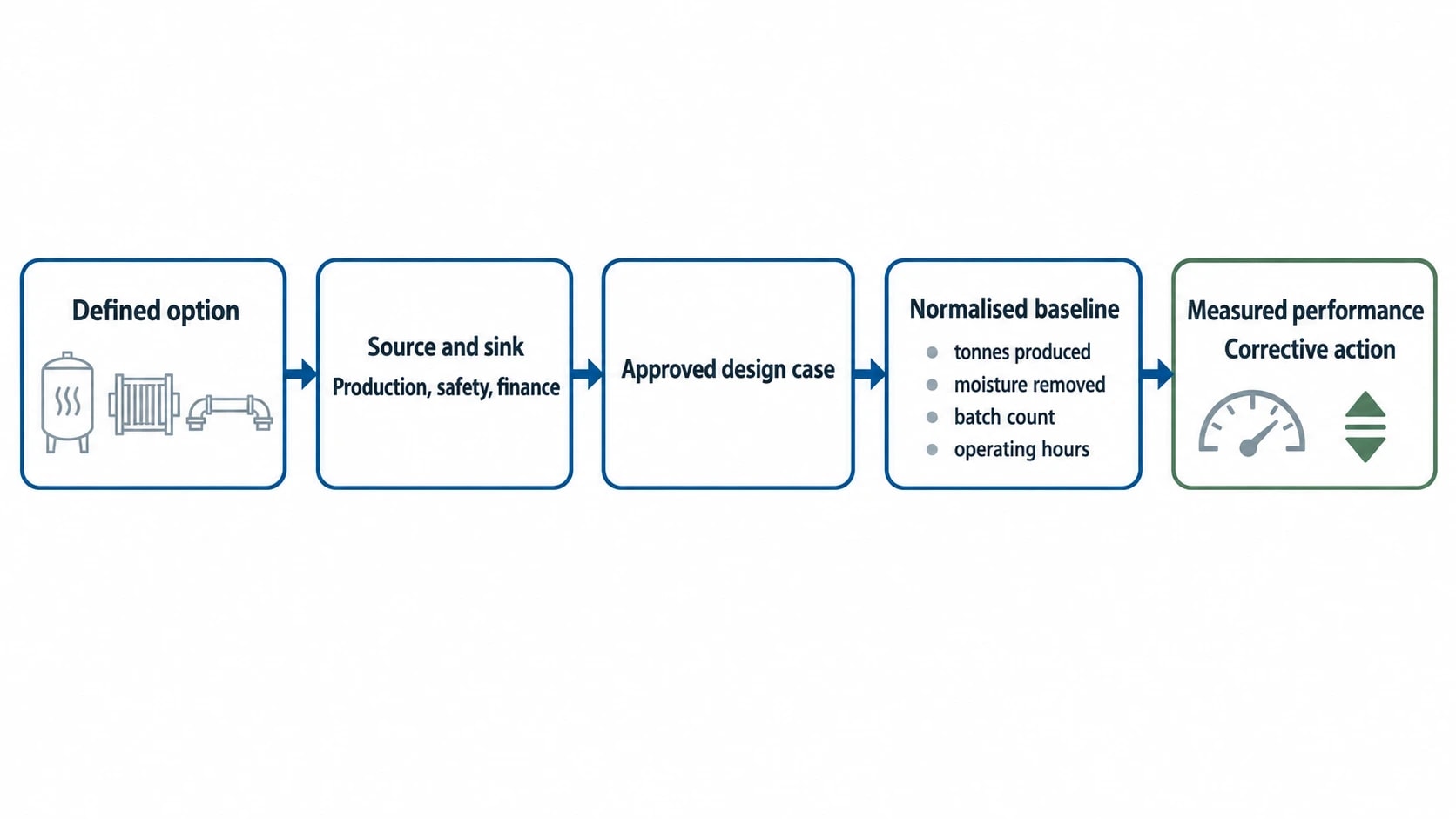
A study becomes investable when the target becomes a small set of defined options supported by production, safety and financial evidence.
Rank opportunities by value and deliverability
A practical shortlist separates low-disruption modifications from projects needing a major outage, new pipe racks, utility changes or process-control work. Each option should show:
- Annual heat recovered and utility displaced.
- Electricity added or avoided.
- Fuel, carbon and maintenance effects.
- Capital cost, installation window and production risk.
- Required process-safety and operability changes.
- Metering points and acceptance-test criteria.
The strongest early projects often have a clear source and sink, short pipe runs, compatible operating schedules and no reliance on a narrow production condition.
Use measurement to sustain the result
BS EN ISO 50001:2018+A1:2024 provides a useful structure for making heat integration an enduring energy-management activity. Its emphasis on energy baselines, significant energy uses, measurement and continual improvement suits projects whose savings depend on exchanger condition, product mix and operator decisions.
For a heat-recovery scheme, an energy baseline should be normalised against the process variables that drive demand, such as tonnes produced, moisture removed, batch count, grade, ambient conditions or operating hours. Teams can then compare measured performance with the approved design case and act when heat recovery falls away.
ESOS deadlines give heat integration added urgency
The Energy Savings Opportunity Scheme Regulations 2014, SI 2014/1643, as amended, place process-energy evidence under greater scrutiny. ESOS Phase 3 participants must submit their annual action-plan progress update by 5 December 2026. The Phase 4 notification of compliance deadline is 5 December 2027.
Phase 4 assessments must include energy-saving opportunities and report energy savings achieved during the compliance period. Participants must also review action plans, identify measures not implemented and explain why.
This article reflects the independent analysis and editorial opinion of EnerTherm Engineering. Product names, trademarks, and brands mentioned belong to their respective owners. EnerTherm Engineering is not affiliated with, endorsed by, or a licensee of any third-party software or product mentioned unless explicitly stated.

Managing Director — EnerTherm Engineering
Dr. François Pierrel is Managing Director of EnerTherm Engineering with over two decades of expertise in thermal design, heat transfer, and industrial energy optimisation. He holds a PhD in Heat Transfer from Cranfield University and a Post-Doctorate from Heriot-Watt University.
