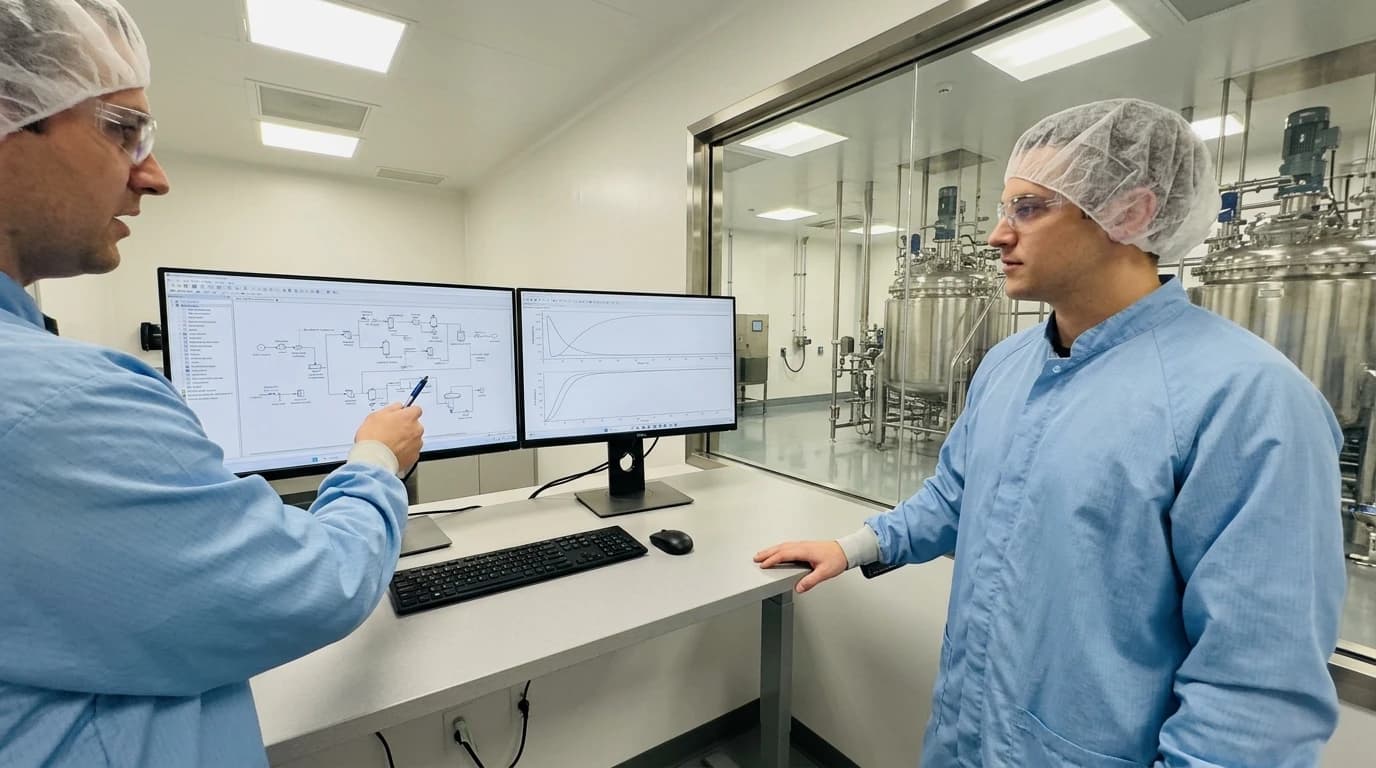
Choosing Pharmaceutical Process Simulation Software
Comparing Aspen Plus, gPROMS, and DWSIM for GMP-compliant batch process modelling.
Developing a single new active pharmaceutical ingredient (API) can exceed £1.5 billion in research and development costs, whilst up to 30% of process optimisation schedules are delayed by scale-up bottlenecks during technology transfer. These inefficiencies usually stem from a mismatch between laboratory-scale chemistry and commercial-scale plant operations. In pharmaceutical manufacturing, batch operations dictate production. Unlike continuous petrochemical systems, a batch reactor undergoes transient phases: charging raw materials, heating, running exothermic or endothermic reactions, cooling, and discharging the final mixture. Selecting the correct pharmaceutical process simulation software is vital to bridge the gap between empirical laboratory discovery and commercial production.
Evaluating Pharmaceutical Process Simulation Software: A Technical Selection Guide
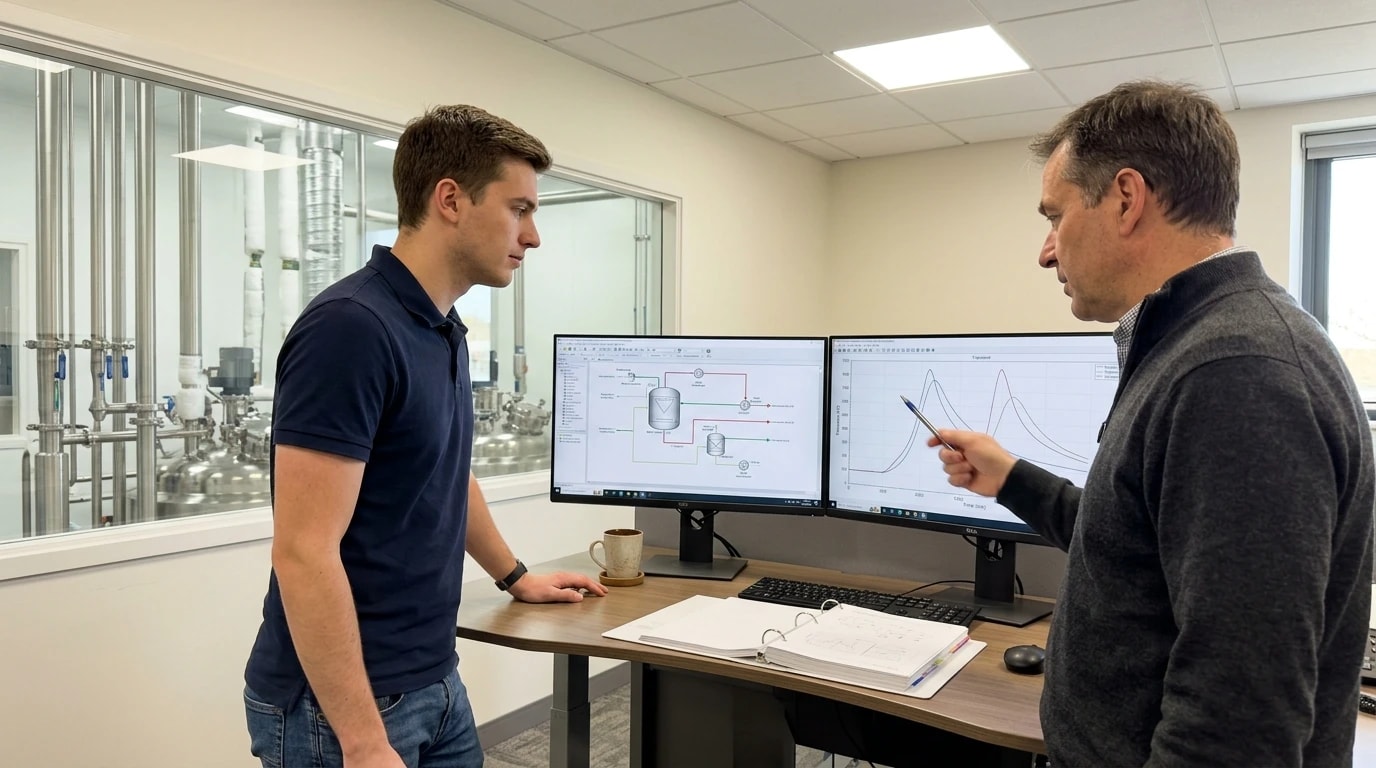
Selecting the right simulation software requires process engineers to assess how well a platform models both thermodynamic equilibrium and time-dependent batch dynamics.
Weaving Batch Dynamics into Thermodynamic Models
The dynamic nature of pharmaceutical batch operations creates time-varying mass and energy balances that standard steady-state simulations cannot accurately predict. During initial heating or exothermic reaction phases, thermal demand on clean utility systems — such as Water for Injection (WFI), purified water, and clean steam — spikes dramatically. Oversizing these systems to accommodate brief peak loads leads to excessive capital expenditure (CAPEX) and ongoing energy waste. Conversely, undersizing them results in pressure drops and temperature deviations that can compromise batch sterility or product quality.
By implementing specialised pharmaceutical process simulation software, process design engineers can map these dynamic thermal profiles. High-fidelity dynamic models allow teams to calculate species-level mass balances and precise heat transfer coefficients across the entire batch cycle. This predictive capability enables the optimisation of heat-exchanger networks, the minimisation of peak steam demands, and the implementation of energy integration strategies that directly lower carbon emissions (CO₂e) and operational costs.
Overcoming the Limits of Continuous Flowsheet Paradigms
Historically, process engineers relied on steady-state flowsheet simulators designed for continuous chemical plants. Whilst these systems excel at continuous vapour-liquid calculations, they struggle to model the discrete, recipe-driven behaviour of pharmaceutical facilities. Technology transfer managers require models that can adapt as a drug candidate moves from laboratory glass flasks to pilot-scale vessels, and ultimately to multi-product commercial sites.
Applying dedicated pharmaceutical process simulation software mitigates technology transfer risks. It replaces empirical trial-and-error runs with a virtual environment where engineers can test scale-up parameters, analyse heat transfer limits, and establish robust control strategies. This predictive approach ensures that when a recipe is transferred to a commercial facility, the physical constraints of the reactors, condensers, and utility lines have already been validated mathematically.

Map every energy and material flow in your process with detailed heat and mass balance calculations — the foundation for any optimisation or design project.
Flowsheet Simulators versus Equation-Based Modelling Platforms
Process simulation platforms generally fall into two categories: sequential-modular flowsheet simulators and equation-based modelling engines. Understanding the structural differences between these architectures is essential when selecting pharmaceutical process simulation software for specific applications.
Traditional Flowsheet-Based Simulators for Solvent Recovery
Traditional flowsheet-based simulators, such as Aspen Plus and HYSYS, are designed around a sequential-modular architecture. In this setup, the software calculates the mass and energy balances of individual unit operations sequentially, passing the output of one block as the input to the next.
This architecture is highly efficient for continuous systems, such as multi-column distillation networks and large-scale solvent recovery plants. Because pharmaceutical API synthesis requires large quantities of organic solvents, solvent recovery is a major area for process optimisation. Simulating solvent-swap steps, vacuum distillation, and reactive distillation requires highly accurate thermodynamic calculations. Flowsheet simulators are equipped with extensive physical property databases and advanced thermodynamic equations of state, making them highly effective for these liquid-vapour equilibrium calculations.
However, when engineers attempt to model time-varying batch reactions, sequential-modular simulators require complex workarounds. Simulating a batch reactor in a sequential-modular environment often involves creating pseudo-continuous recycle loops or writing custom scripts to handle dynamic changes. This increases model complexity, making it difficult to validate and maintain under strict regulatory guidelines.
Siemens gPROMS FormulatedProducts for Advanced Solids and Crystallisation
In contrast, Siemens gPROMS FormulatedProducts represents a different class of software: equation-based modelling. Rather than solving unit operations in sequence, gPROMS translates the entire process flowsheet into a large system of non-linear algebraic and differential equations, solving them simultaneously.
This equation-based approach is highly suited for the complex physical phenomena found in pharmaceutical formulations. Siemens gPROMS FormulatedProducts provides dedicated libraries for API crystallisation, membrane filtration, chromatography, spray drying, and dry granulation.
In API manufacture, crystallisation is a critical step that determines the physical properties of the drug substance. Factors such as particle size distribution (PSD), polymorph selection, and crystal habit directly affect downstream processes and therapeutic efficacy. Traditional flowsheet simulators treat solids as inert components, but gPROMS FormulatedProducts models the kinetic mechanisms of nucleation, crystal growth, agglomeration, and breakage using population balance equations. This allows scientists and engineers to optimise the crystallisation process to achieve the target particle size, reducing the risk of filter blocking or poor tabletting performance during downstream manufacturing.
Recipe-Driven Scheduling and Discrete-Event Simulation Alternatives
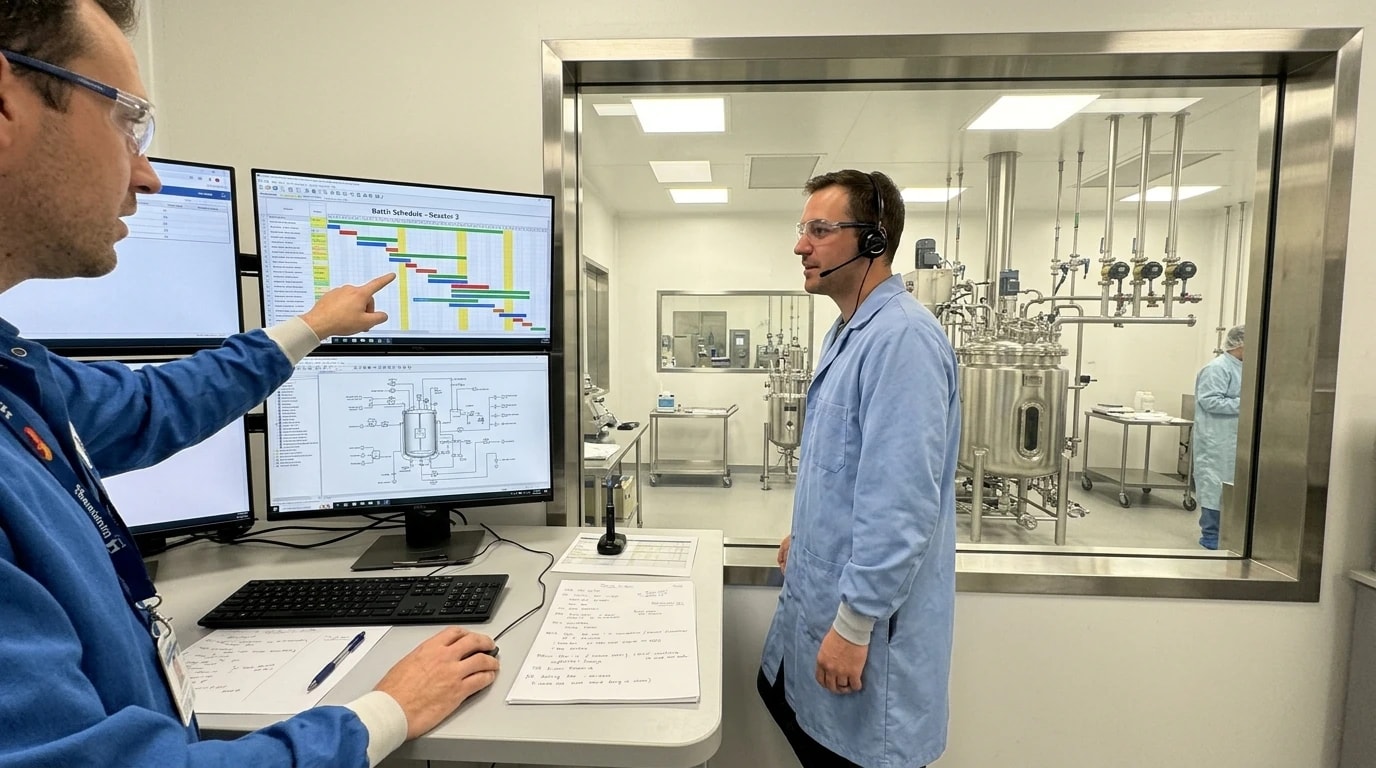
Whilst flowsheet and equation-based tools excel at detailed thermodynamic and physical modelling, they do not address the logistical challenges of operating a multi-product batch facility. For these applications, technology transfer managers and simulation specialists utilise recipe-driven, discrete-event simulation software.
SuperPro Designer: Recipe-Centric Design and Cycle Time Optimisation
SuperPro Designer, developed by Intelligen, Inc., is widely regarded as an industry standard for modelling batch and semi-continuous operations in bioprocess and pharmaceutical manufacturing. Unlike continuous simulators, SuperPro Designer operates on a recipe-centric architecture.
In this system, a process is defined as a series of unit procedures. Each unit procedure contains a sequence of specific operations, such as charging solvent, heating, reacting, pulling vacuum, and cleaning the vessel. The software propagates these operations through a dynamic scheduling engine, generating detailed Gantt charts that map out equipment occupancy over time.
This allows lead process design engineers to:
- Identify scheduling bottlenecks where multiple recipes compete for the same equipment.
- Optimise cycle times and calculate the maximum annual batch throughput of a facility.
- Model clean utilities and raw material consumption profiles over time, helping to size utility generation and storage systems accurately.
- Model and forecast auxiliary operations, such as cleaning-in-place (CIP) and sterilisation-in-place (SIP), directly within the production timeline to support regulatory compliance and operational readiness.
INOSIM: Dynamic Logistics and Production Planning
For facilities with highly complex logistical constraints, INOSIM provides advanced capabilities for building dynamic digital twins. Multi-product pharmaceutical facilities often share mobile vessels, raw material storage, and transfer lines across several concurrent production lines. Managing these resources manually is highly prone to errors, leading to costly batch delays.
INOSIM addresses this by simulating the dynamic logistics of the plant. The software models the exact physical constraints of the facility, such as pipe routing, pump capacities, and operator availability. Using intelligent heuristics, the platform identifies optimal resolutions for scheduling conflicts and recommends executable production schedules. This enables operational teams to review and implement adjustments during validated change windows, helping them to adapt quickly to changing raw material availability or unexpected equipment downtime whilst keeping production lines efficient and compliant.
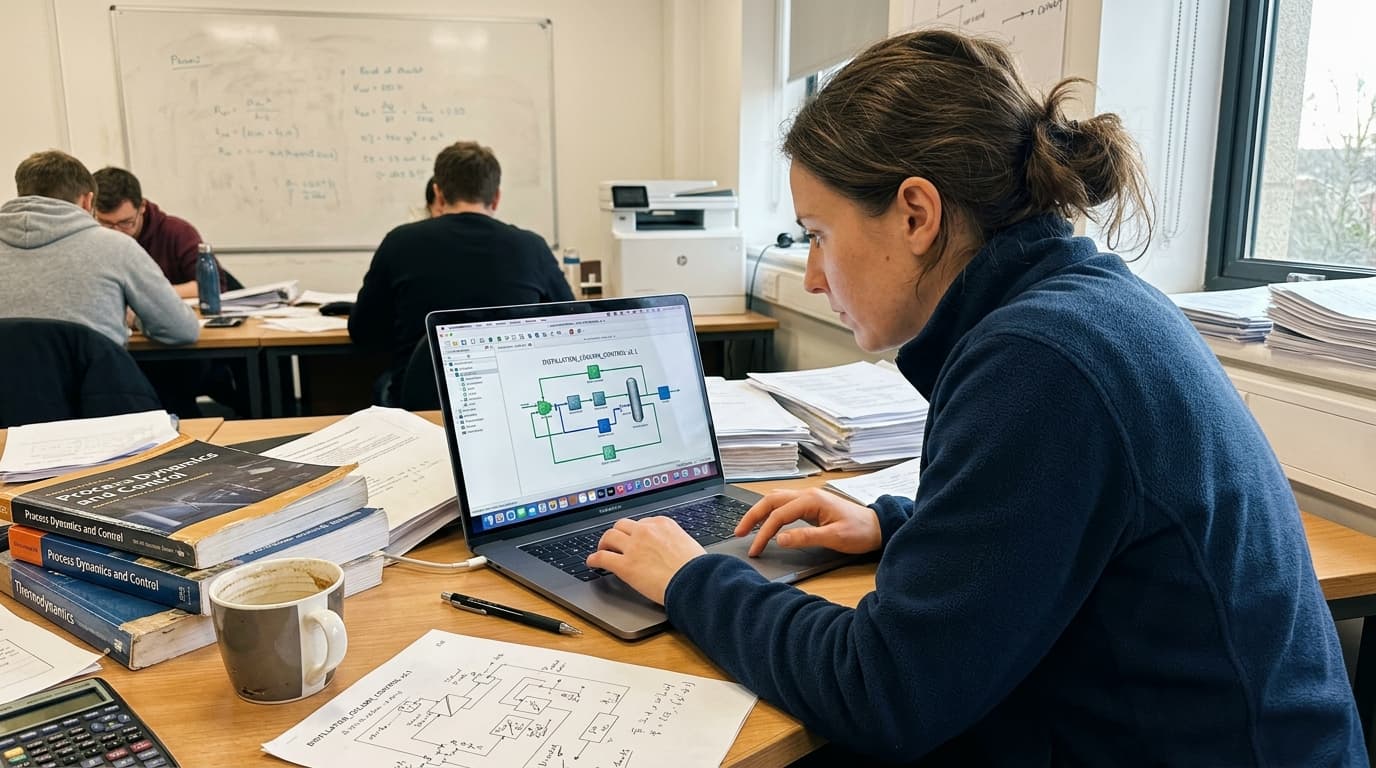
Map every energy and material flow in your process with detailed heat and mass balance calculations — the foundation for any optimisation or design project.
Budget-Friendly and Open-Source Alternatives
The high licensing fees of enterprise-grade process simulators can be a significant barrier for smaller pharmaceutical start-ups, generic drug manufacturers, and academic research groups. For these organisations, open-source tools offer a viable pathway to rigorous thermodynamic modelling.
DWSIM: CAPE-OPEN Compliance and Thermodynamic Rigour
DWSIM is a powerful, free, open-source process simulator distributed under the GNU General Public Licence (GPL) v3. It stands out as an effective alternative to commercial platforms for steady-state and dynamic thermodynamic calculations.
A key technical advantage of DWSIM is its CAPE-OPEN compliance. This standardisation allows process engineers to import external thermodynamic property packages, unit operations, and custom reaction models directly into the DWSIM environment. It supports multiple operating systems, including Windows, Linux, macOS, and mobile platforms, making it highly accessible for distributed engineering teams.
Implementing UNIQUAC and NRTL Models in DWSIM
In pharmaceutical API synthesis, solvent-swap operations are standard steps used to replace a high-boiling reaction solvent with a low-boiling crystallisation solvent. Simulating these steps requires highly accurate vapour-liquid-liquid equilibrium (VLLE) calculations.
Process design engineers can configure DWSIM to utilise the Non-Random Two-Liquid (NRTL) or Universal Quasi-Chemical (UNIQUAC) activity coefficient models. These thermodynamic frameworks are essential for accurately predicting the non-ideal behaviour of polar organic solvent mixtures. By implementing these models in DWSIM, engineers can:
- Model multi-component batch distillation columns to optimise solvent recovery rates.
- Calculate the exact temperature and pressure profiles required to prevent product degradation during vacuum distillation.
- Establish precise mass and energy balances for solvent-swap steps without the need for expensive commercial software licences.
This ensures that even budget-conscious engineering projects can achieve high levels of thermodynamic rigour during the early stages of process design.
Regulatory Compliance and Software Validation in GMP Environments
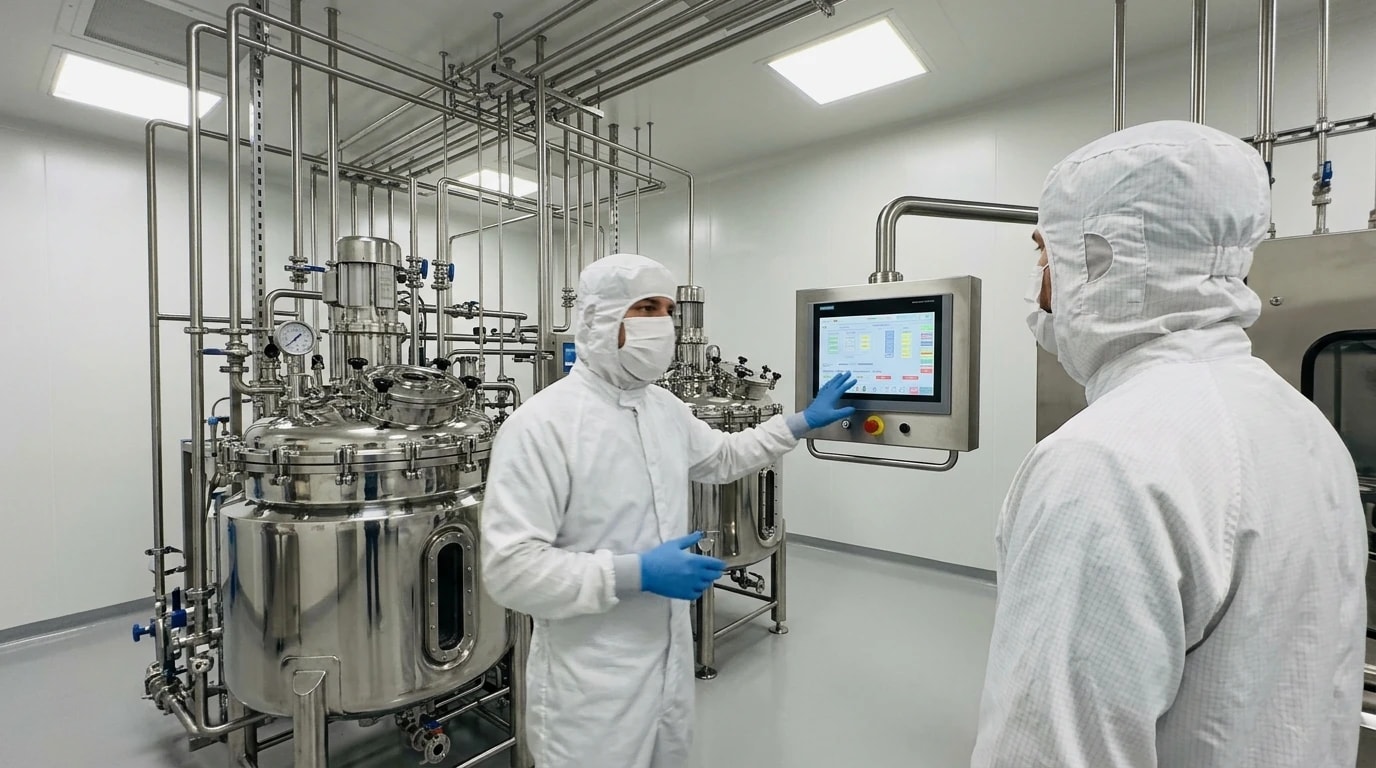
Any pharmaceutical process simulation software used to make GMP-critical decisions must comply with strict international regulatory standards. These models often define critical process parameters (CPPs), validate clean utility capacities, or establish the design space for Quality by Design (QbD) filings. Consequently, the software must be validated to ensure data integrity and traceability.
Categorising Simulation Software under GAMP 5
The International Society for Pharmaceutical Engineering (ISPE) GAMP 5 Second Edition (2022) guidelines provide the standard framework for validating computerised systems in the life sciences industry. Under GAMP 5, software applications are classified into distinct categories that dictate the depth of validation required:
- GAMP Category 3 (Non-Configured Products): Standard, off-the-shelf software or systems used as supplied, with no business-process configuration. For example, a basic installation of DWSIM or Aspen Plus used for generic physical property lookups. Validation at this level typically focuses on verifying the software's functional performance for its intended use.
- GAMP Category 4 (Configured Products): Software platforms that are configured to represent specific user workflows, reaction kinetics, solvent databases, or unit operation configurations. Most process simulation models fall into this category. Validation requires detailed operational qualification (OQ) to prove that the configurations accurately reflect the physical process.
- GAMP Category 5 (Custom/Bespoke Software): Systems that incorporate custom-written code, such as bespoke user-defined thermodynamic equations, advanced scripting, or custom-coded unit operations. This requires extensive lifecycle validation, including code reviews, comprehensive structural testing, and detailed performance qualification (PQ).
To comply with EU GMP Annex 11 (2011) (computerised systems) and US FDA 21 CFR Part 11 (1997) (electronic records), the software must also maintain secure, time-stamped audit trails, control user access via electronic signatures, and ensure data integrity under the ALCOA+ principles.
Integrating Models into EnerTherm's 11-Step Validation Methodology
To streamline this transition from engineering calculations to regulatory validation, a systematic methodology is required. EnerTherm Engineering utilises a proprietary 11-step engineering methodology that standardises the transition from initial data acquisition to a validated process simulation.
This structured process ensures that all mass and energy balances are fully traceable:
- Initial Data Acquisition: Collecting existing plant documentation, including Piping and Instrumentation Diagrams (P&IDs), historical PLC/SCADA logs, and physical layout data.
- System Boundaries Definition: Defining the exact scope of the simulation, such as a single batch reactor or an entire clean utility loop.
- Species-Level Mass Balance Formulation: Detailing all chemical components, solvents, and reaction intermediates.
- Thermodynamic Model Selection: Choosing the appropriate activity coefficient models (such as NRTL or UNIQUAC) for highly non-ideal mixtures.
- Base Flowsheet Construction: Building the initial steady-state or dynamic model in the selected simulation software.
- Data Reconciliation and Parameter Calibration: Calibrating model parameters against empirical laboratory or pilot-scale batch data.
- Sensitivity Analysis: Evaluating the impact of variable parameters, such as cooling water inlet temperatures or agitation speeds.
- Pinch-Point and Energy Integration Analysis: Identifying heat recovery opportunities to reduce steam and chilled water consumption.
- Simulation Verification: Ensuring that the mathematical models converge correctly and without numerical errors.
- Validation Reporting and Impact Assessment: Documenting the simulation findings to support formal IQ/OQ/PQ validation activities under EU GMP Annex 15 (2015) guidelines.
- Single-Source-of-Truth Generation: Producing final Process Flow Diagrams (PFDs) with embedded stream tables, Sankey energy maps, and formal change control documentation.
By applying this 11-step methodology, engineering teams can integrate findings from pharmaceutical process simulation software into existing validation protocols, ensuring inspection readiness and rapid technology transfer.
Selection Matrix for Lead Process Design Engineers
Selecting the right software package requires balancing technical requirements, licensing costs, and regulatory complexity.
Feature Comparison of Leading Process Simulators
To provide a direct comparison, the table below outlines the core capabilities, primary strengths, and target applications of the leading pharmaceutical process simulation software options available.
| Software Platform | Primary Modelling Architecture | Key Strengths | Best Pharmaceutical Use Case | Cost and Licensing |
|---|---|---|---|---|
| Siemens gPROMS FormulatedProducts | Equation-based simultaneous solver | Advanced mechanistic models, API crystallisation, population balances, solids processing | Formulation development, API crystallisation, dynamic digital twins | Premium Enterprise Licence |
| Aspen Plus | Sequential-modular flowsheet | Vast thermodynamic databases, rigorous solvent-swap and vapour-liquid equilibrium (VLE) models | Large-scale solvent recovery, continuous reactive distillation | Premium Enterprise Licence |
| SuperPro Designer | Recipe-centric scheduling | Gantt chart-based resource tracking, CIP/SIP scheduling, economic cost of goods (COG) analysis | Batch process scheduling, dynamic clean utility sizing, capacity debottlenecking | Mid-Tier Commercial Licence |
| INOSIM | Discrete-event dynamic simulation | Complex plant logistics, intelligent heuristics for schedule forecasting, dynamic digital twins | Multi-product batch schedule simulation, resource conflict identification, material flow logistics modelling | Mid-Tier Commercial Licence |
| DWSIM | Sequential-modular / CAPE-OPEN | Free and open-source, CAPE-OPEN compliant, reliable NRTL/UNIQUAC thermodynamics | Budget-conscious solvent recovery design, early-stage mass/energy balances | Open-Source (GNU GPL v3) |
By evaluating these technical capabilities against the specific needs of the manufacturing process, technology transfer managers and lead design engineers can ensure they select the optimal pharmaceutical process simulation software to drive efficiency, compliance, and rapid commercialisation.
This article reflects the independent analysis and editorial opinion of EnerTherm Engineering. Product names, trademarks, and brands mentioned belong to their respective owners. EnerTherm Engineering is not affiliated with, endorsed by, or a licensee of any third-party software or product mentioned unless explicitly stated.

Managing Director — EnerTherm Engineering
Dr. François Pierrel is Managing Director of EnerTherm Engineering with over two decades of expertise in thermal design, heat transfer, and industrial energy optimisation. He holds a PhD in Heat Transfer from Cranfield University and a Post-Doctorate from Heriot-Watt University.
