
Comparing Pinch Analysis Energy Efficiency Consultancies
Evaluating process integration specialists to cut UK plant heat waste by 10-30% for ESOS.
With the UK’s Energy Savings Opportunity Scheme (ESOS) Phase 4 qualification date set for 31 December 2026, energy-intensive manufacturing plants face immediate pressure to cut thermal energy consumption. Because large UK industrial undertakings are legally mandated to conduct comprehensive energy audits, Operations Directors and Energy Managers must look closely at how their sites use heat.
For sectors such as chemical processing, pharmaceuticals, oil refining, and food manufacturing, simple utility upgrades are no longer sufficient to meet decarbonisation goals. Achieving the deep reductions required by the UK Government’s Industrial Decarbonisation Strategy demands a systematic approach to process integration.
Choosing the right partner to execute these thermal efficiency retrofits is a critical procurement decision. Engaging an expert consultancy to perform a Pinch Analysis remains the standard method for identifying viable heat recovery projects.
This comparative analysis examines the different classes of consultancies offering these services, helping site leaders select the most appropriate partner for their specific operating requirements.
Why Generic Energy Audits Fail in Heavy Manufacturing
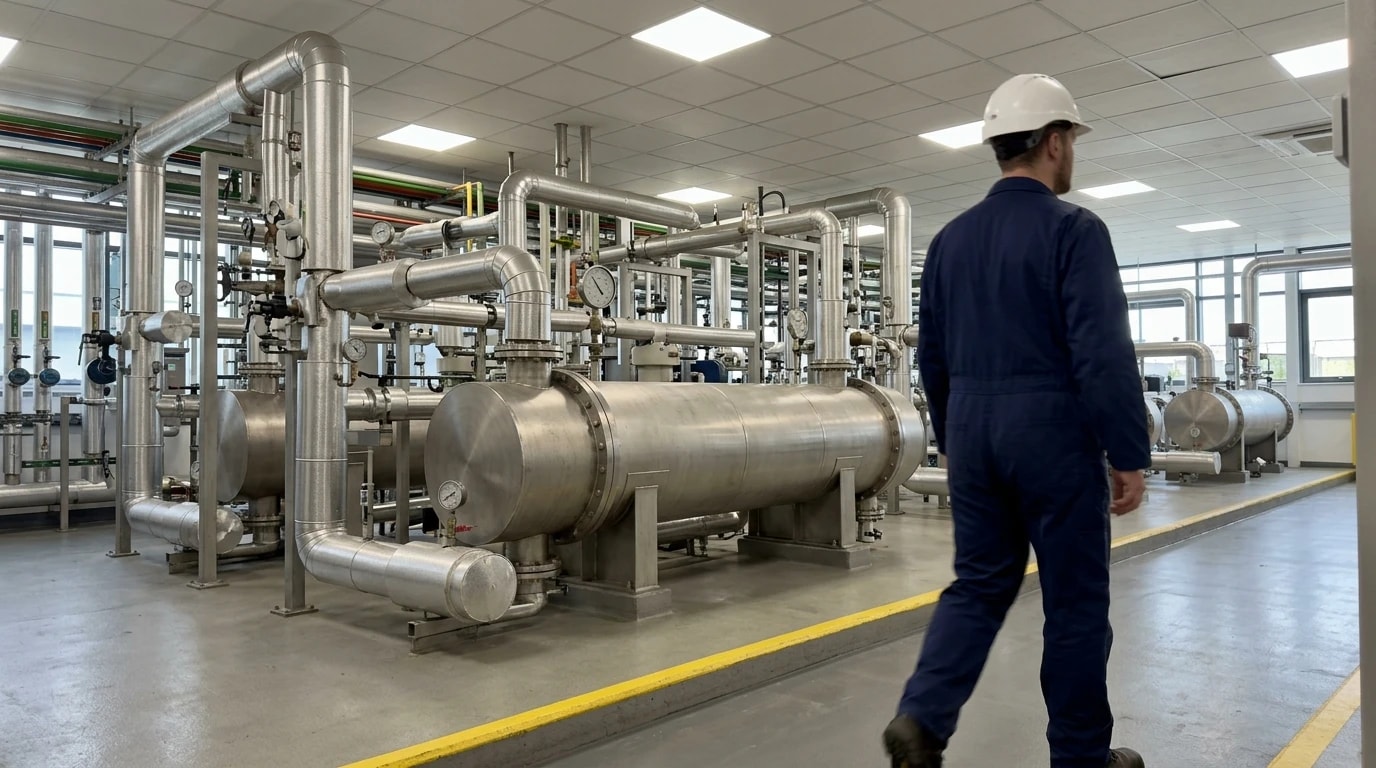
Most large industrial sites are familiar with standard commercial energy audits. However, these high-level assessments rarely yield the deep thermal savings required to transform process plant operating expenditure.
The Compliance Focus of Standard Audits
Generic audits conducted for ESOS compliance often focus on quick-win auxiliary systems. Consultants typically evaluate lighting, building fabric, heating, ventilation, air conditioning (HVAC) systems, and corporate vehicle fleets.
While these assessments satisfy regulatory checklists, they ignore the complex thermodynamic interactions occurring inside the main process boundary. For a chemical plant or oil refinery, more than 80% of total energy use is consumed as thermal energy in reactors, distillation columns, and steam networks. Standard auditors simply lack the specialised chemical engineering capabilities required to model and modify these systems.
Why Process Integration Demands More than Checkboxes
To uncover significant thermal savings, an engineer must analyse the entire process as a single thermodynamic system. This method, known as process integration, assesses how individual hot streams (which need cooling) can directly transfer heat to cold streams (which need heating).
Without this systemic view, plants often make the mistake of installing localised heat recovery loops that inadvertently restrict the efficiency of downstream processes. Selecting a qualified energy efficiency consultancy ensures that process modifications are designed with an understanding of site-wide thermal dynamics.

Pinch analysis identifies the thermodynamic minimum energy requirement of your process — then designs the heat exchanger network to achieve it.
The Principles of Pinch Analysis and Process Integration
Pinch Analysis is the industry-standard methodology for designing heat exchanger networks to minimise external utility consumption. Originally pioneered by Dr Bodo Linnhoff and the research team at Linnhoff March, this technique establishes thermodynamic limits for energy recovery before any physical equipment is designed.
Hot and Cold Composite Curves Explained
The core of the methodology involves constructing Hot and Cold Composite Curves. Process engineers plot temperature against enthalpy for every stream in the plant that requires heating or cooling.
- The Hot Composite Curve represents the total available heat source profile across the plant.
- The Cold Composite Curve represents the total heat sink requirements.
By plotting these curves on a single temperature-enthalpy diagram, engineers determine the maximum possible heat recovery through overlap. The point where the two curves come closest together is the Pinch Point. This temperature difference determines the minimum external heating and cooling required.
The Golden Rules of Pinch Technology
Once the pinch temperature is identified, the design of the heat exchanger network must adhere to three strict thermodynamic rules:
- No heat should be transferred across the pinch.
- No external cooling should be applied above the pinch.
- No external heating should be applied below the pinch.
Violating any of these rules introduces systemic inefficiencies, causing the plant to draw more fuel or cooling water than thermodynamically necessary. Experienced heat exchanger network optimisation engineers use these constraints to identify exactly where existing plant configurations are losing heat.
Comparing Consultancy Categories: Giants, Vendors, and Specialists

When purchasing industrial energy efficiency consultancy services, site leaders typically choose between three distinct categories of service providers. Each group offers different strengths, pricing structures, and implementation methodologies.
1. Global Multi-Disciplinary Engineering Giants
These large organisations handle massive infrastructure and civil engineering projects. They possess thousands of employees and offer wide-ranging environmental services.
- Typical Providers: Global engineering consultancies such as Jacobs, Wood, Sweco, and AECOM.
- Strengths: These firms offer immense resource capacity and can manage large, multi-discipline capital projects from concept through to construction. They are highly capable of managing regulatory compliance across complex corporate structures.
- Weaknesses: Because their business models rely on large-scale engineering hours, their overheads are high. Their internal process departments are often focused on greenfield projects, meaning they sometimes lack the highly specialised, agile capabilities required to troubleshoot legacy, brownfield process plants.
- Suitability: Best suited for complete greenfield refinery builds or multi-billion pound chemical complex expansions where Pinch Analysis is a small subset of a massive engineering, procurement, and construction (EPC) contract.
2. Process Simulation and Software Vendors
These organisations are built around proprietary simulation software packages used to model chemical plant heat balances.
- Typical Software Systems: Many process design teams utilise software tools such as Aspen HX-Net from Aspen Technology, SUPERTARGET from Linnhoff March, or UniSim ExchangerNet from Honeywell. Some simulation companies also provide high-level advisory consulting alongside their software licences.
- Strengths: They have direct access to sophisticated thermodynamic databases and predictive modelling software. Their mathematical models of ideal process conditions are highly accurate.
- Weaknesses: Software-led consulting can focus heavily on idealised scenarios. In practice, legacy manufacturing sites possess severe physical layout limitations. A software model might suggest matching a hot stream on one side of a refinery with a cold stream 300 metres away, ignoring the massive pressure drops, piping costs, and thermal losses involved.
- Suitability: Best for preliminary feasibility studies or research and development projects where physical implementation constraints are not the primary concern.
3. Specialised Thermal and Process Integration Consultants
These are boutique, partner-led engineering firms focused entirely on thermal engineering, steam systems, and thermodynamic process optimisation.
- Typical Providers: Specialised consultancies such as EnerTherm Engineering, Pinchco, and the PinCH Centre.
- Strengths: These specialist providers bridge the gap between complex thermodynamic theory and practical mechanical installation. Because they focus exclusively on thermal utilities and process integration, their engineers possess deep field experience with steam networks, heat recovery boilers, and heat exchanger retrofits. They design with physical piping, spatial limitations, and plant downtime constraints in mind.
- Weaknesses: They have smaller team sizes compared to global engineering giants, meaning they do not typically act as general EPC contractors for large civil construction works.
- Suitability: Highly suited for Operations Directors and Energy Managers in active manufacturing plants who need realistic, actionable engineering packages to reduce fuel bills and hit Net Zero targets.
| Evaluation Metric | Global Engineering Giants | Software-Centric Vendors | Niche Thermal Specialists |
|---|---|---|---|
| Primary Project Focus | Large-scale civil & EPC projects | Software licence sales & high-level models | Practical process retrofits & thermal utility designs |
| Pinch Analysis Expertise | Generalist process engineers | Highly theoretical software specialists | Highly experienced process integration engineers |
| Brownfield Implementation Realism | Moderate - often prefers standard replacements | Low - software models ignore physical layout | High - designs consider space, piping, and downtime |
| Project Agility & Speed | Slow - heavy administrative processes | Moderate - software-driven timelines | Fast - rapid engineering and deployment |
| Cost-to-Benefit Ratio | Low to Moderate (due to high overheads) | Moderate (tied to licence packages) | Very High (focused on rapid OPEX payback) |

Pinch analysis identifies the thermodynamic minimum energy requirement of your process — then designs the heat exchanger network to achieve it.
Key Evaluation Criteria for Selecting a Pinch Partner
Industrial site leaders must evaluate prospective providers against several technical requirements to ensure the selected energy efficiency consultancy can deliver measurable financial savings.
Operational Site Integration Experience
The most common failure point in pinch consulting is a lack of operational field experience. Process plant thermal efficiency retrofits require an understanding of how modifying a heat exchanger network impacts daily plant operations.
Prospective consultants must demonstrate a strong track record of working in live, high-hazard manufacturing environments. They must understand how process modifications affect start-up sequences, plant shutdown procedures, and process control feedback loops. Ask candidates to share anonymised case studies of completed heat recovery projects that successfully transitioned from design to physical operation.
Software Independence and Analytical Rigour
While software tools are essential for managing the large data sets associated with industrial processes, a consultancy must not be dependent on a single software package. The best process integration consulting firms employ engineers who understand the core mathematical algorithms behind the software.
This deep understanding allows them to manually adjust parameters when software models produce unfeasible stream splits or excessive heat exchanger counts. They should be capable of performing sensitivity analyses on parameters like the minimum approach temperature (ΔTmin), balancing capital costs against ongoing utility expenses to find the true economic optimum.
Mechanical and Utility System Competency
A successful Pinch Analysis does not stop at the process boundary. The heat recovery network must integrate with the plant's utility systems.
The chosen consultancy must demonstrate expertise in industrial steam system optimisation services. They should understand how process heat recovery affects the site steam balance, boiler feedwater systems, and condensate return loops. If a heat recovery project reduces steam demand, the consultant must be able to calculate how this affects the operating efficiency of the central boiler house or any co-generation assets on site.
Decision Framework for Industrial Site Leaders
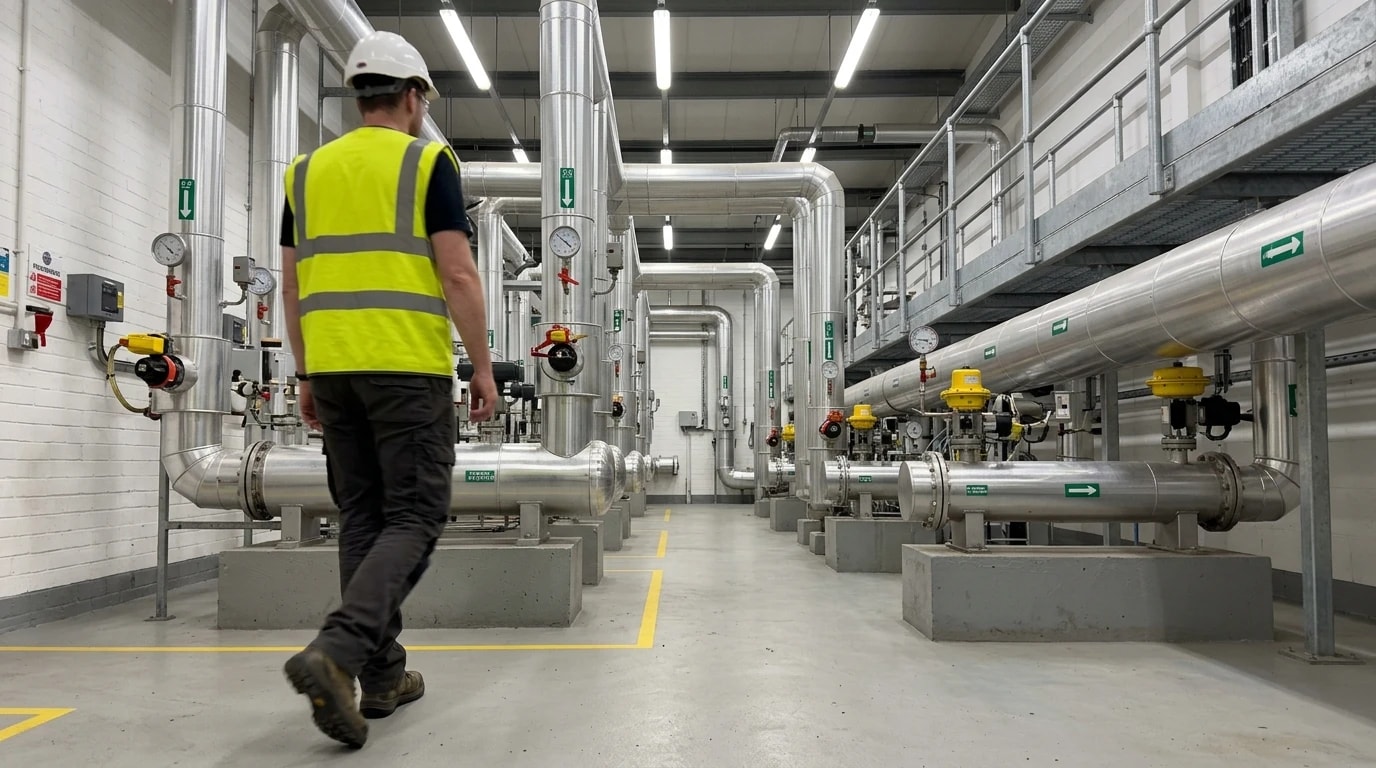
To select the most appropriate energy efficiency consultancy, procurement teams should follow a structured evaluation process.
Step 1: Define the Project Boundaries and Scope
Before contacting consultants, determine whether the project is driven solely by regulatory compliance or by a strategic need for OPEX reduction.
- If the primary objective is compliance with the 95% energy coverage requirement of ESOS Phase 4, a standard compliance auditor may be sufficient.
- If the goal is a step-change reduction in utility bills and carbon emissions, a specialised process integration firm is required.
Step 2: Assess Internal Data Availability
The success of a Pinch Analysis depends on the quality of the stream data.
If the plant lacks up-to-date heat and mass balances, the consultancy must have the capability to perform site measurements and data extraction. This initial phase can represent up to 60% of the total project duration. Ensure the prospective consultancy has a clear methodology for gathering and validating this foundational data.
Step 3: Evaluate Project Deliverables
Review the proposed deliverables of each bidding consultancy. A high-quality engineering package must include more than just composite curves and theoretical savings estimates.
The deliverables should include:
- A detailed process flow diagram of the proposed heat exchanger network.
- Sizing specifications for new heat exchangers, pumps, and piping.
- A comprehensive hydraulic analysis confirming that the existing process pumps can handle the new piping runs and pressure drops.
- A phased capital investment roadmap showing the payback period for each recommended modification.
Implementation: Turning a Pinch Study into Verified OPEX Savings
The ultimate goal of engaging an energy efficiency consultancy is to achieve lasting reductions in plant operating costs.
From Theoretical Targets to Physical Piping
A high-quality study must provide a clear path to physical construction. The consultant must work alongside the plant's operations team to identify the most opportune times to install the retrofitted equipment, such as during scheduled maintenance shutdowns. They must also design the network with bypass piping to allow individual heat exchangers to be isolated for cleaning and maintenance without shutting down the entire process line.
Integrating Utilities and Steam Networks
True efficiency is achieved when the process and utility systems are optimised together. By combining process plant thermal efficiency retrofits with steam system optimisation, plants can achieve massive energy reductions.
For example, integrating a high-temperature heat pump into the grand composite curve can allow low-grade waste heat to be upgraded to useful process steam, displacing fossil fuel consumption entirely. Choosing a partner with deep expertise in both process pinch and utility systems ensures these complex interactions are successfully engineered.
This article reflects the independent analysis and editorial opinion of EnerTherm Engineering. Product names, trademarks, and brands mentioned belong to their respective owners. EnerTherm Engineering is not affiliated with, endorsed by, or a licensee of any third-party software or product mentioned unless explicitly stated.

Senior Process Engineer — EnerTherm Engineering
Masab Javed is a Senior Process Engineer at EnerTherm Engineering with extensive expertise in chemical process design, decarbonisation, and sustainable industrial solutions. He holds an MSc from TUM School of Management and a BEng in Chemical Engineering from NUST, with experience spanning ammonia production, CO2 capture, and semiconductor manufacturing optimisation.
