Heat Integration for Oil Refining Cuts Steam by up to 40%
Redesigning CDU preheat trains for a 10-15°C approach to cut UK carbon tax costs.
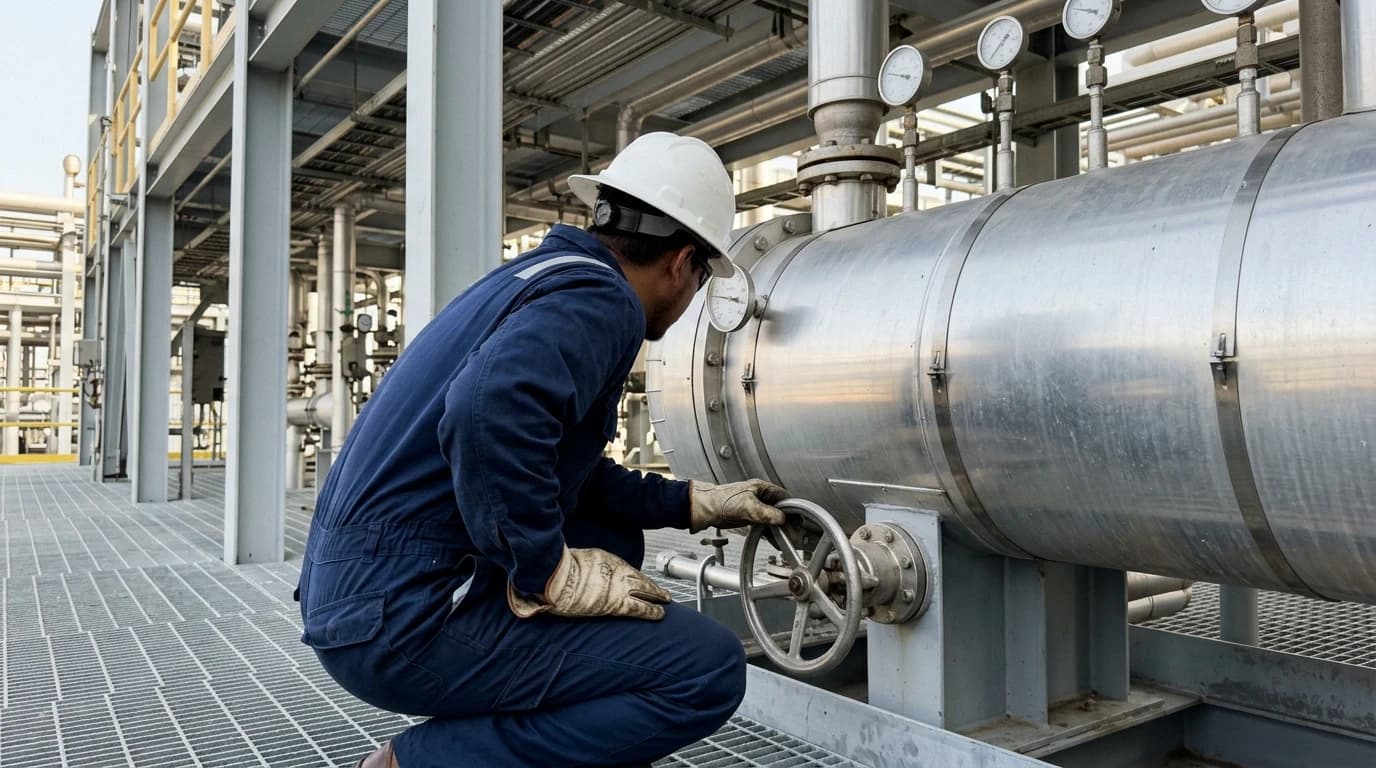
Heat integration for oil refining is a process engineering methodology that systematically analyses thermal streams within a refinery to maximise waste heat recovery and minimise external utility consumption. Crude oil refining represents one of the most energy-intensive sectors globally, with single sites consuming vast quantities of thermal energy to separate crude oil into valuable products. To address this energy demand, process engineers rely on Pinch Analysis, a rigorous thermodynamic method that establishes baseline energy targets before designing or modifying physical equipment.
What is Heat Integration for Oil Refining?
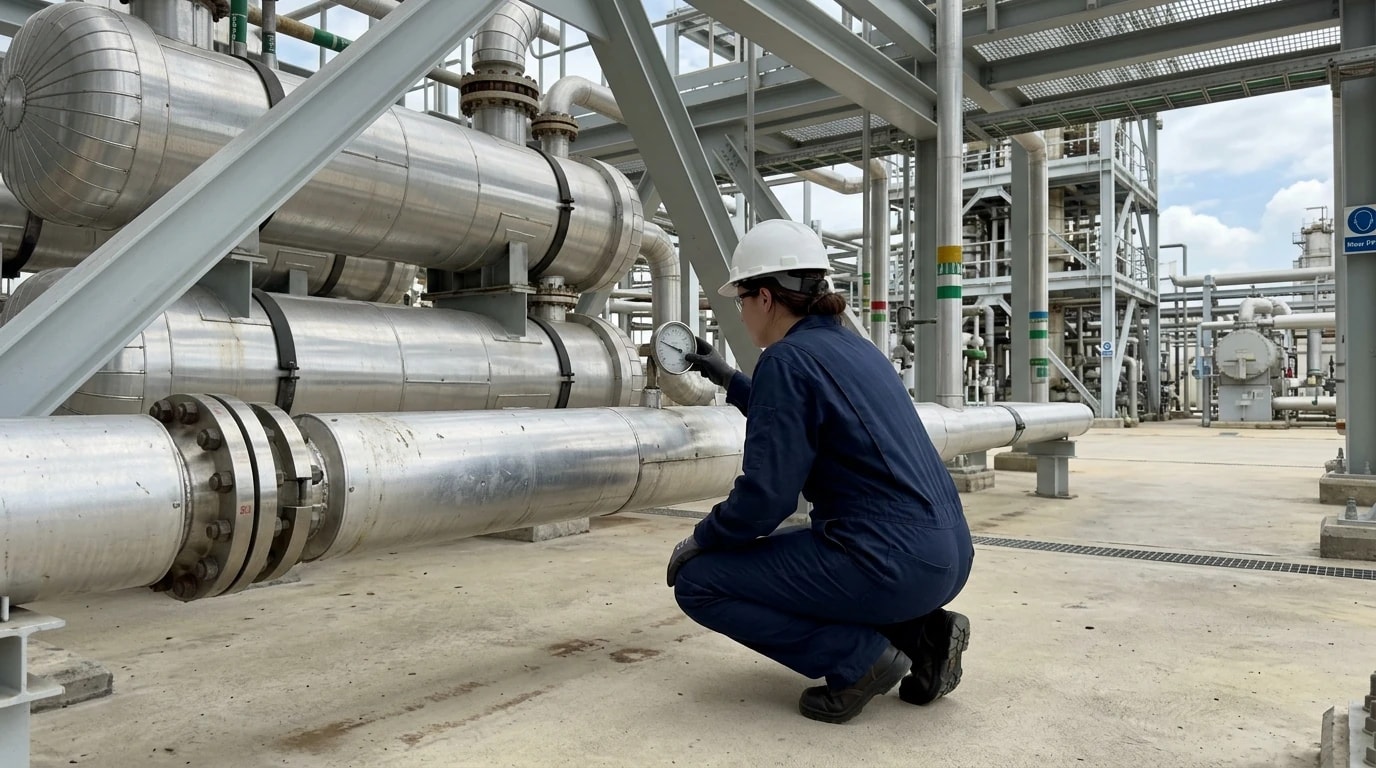
In any refining process, crude oil must be heated to extreme temperatures while various distilled fractions must be cooled before storage or downstream processing. Heat integration for oil refining bridges these opposing thermal requirements, allowing hot product streams to directly preheat the cold crude feed.
Core Thermodynamic Principles of Pinch Technology
The core of Pinch Analysis involves characterising every thermal stream in a process as either a hot stream requiring cooling or a cold stream requiring heating. By extracting temperature and enthalpy data from heat balances, engineers construct hot and cold composite curves that represent the cumulative heating and cooling profiles of the entire process. Superimposing these curves on a temperature-enthalpy diagram reveals how closely they approach one another. This closest point of approach defines the minimum temperature approach (ΔTmin), which acts as the primary tool for balancing capital and operating costs.
Identifying the Process Pinch Point
The temperature level where the composite curves reach their closest approach is the pinch point. This thermodynamic threshold divides the process into two distinct zones. Above the pinch, the system has a heat deficit and requires only heating utilities. Below the pinch, the system has a heat surplus and requires only cooling utilities. To avoid thermodynamic inefficiencies, engineers must adhere to three fundamental rules:
- Do not transfer heat across the pinch point.
- Do not use cold utilities above the pinch point.
- Do not use hot utilities below the pinch point.

Pinch analysis identifies the thermodynamic minimum energy requirement of your process — then designs the heat exchanger network to achieve it.
The Crude Distillation Unit (CDU) Energy Challenge
Crude distillation represents the first and most energy-intensive processing step in any petroleum refinery. Crude Distillation Units (CDU) and Vacuum Distillation Units (VDU) process the entire incoming crude slate, making them the primary focal points for energy conservation initiatives.
Energy Inefficiencies in Conventional Preheat Trains
These units typically account for 30% to 40% of the total energy required across an entire refinery site. Large quantities of fuel gas or fuel oil burn in fired heaters to vapourise the heavy fractions of the crude. To limit fuel gas usage, refineries deploy complex preheat trains to warm the incoming cold crude feed. These trains consist of a series of shell-and-tube heat exchangers that recover thermal energy from hot product streams, such as atmospheric residue, diesel, kerosene, and naphtha, as well as circulating reflux loops. Despite these systems, conventional preheat trains suffer from performance degradation, fouling, and sub-optimal stream matching, resulting in unnecessarily high heater inlet temperatures and high steam demand.
Thermodynamic Barriers in Crude Separation
Crude oil is a complex mixture of thousands of hydrocarbon compounds with boiling points ranging from below 0°C to over 600°C. Separating these fractions requires precise temperature control. If the crude is under-heated, valuable light distillates remain in the bottom residue, reducing refinery margins. If the crude is overheated, thermal cracking occurs, which produces unwanted gas and deposits coke on the inside of the furnace tubes. Heat integration ensures that the crude enters the fired heater at the optimal target temperature (typically 280°C to 290°C), minimising the thermal load on the furnace and preventing localised overheating.
Applying Pinch Analysis for Preheat Train Design
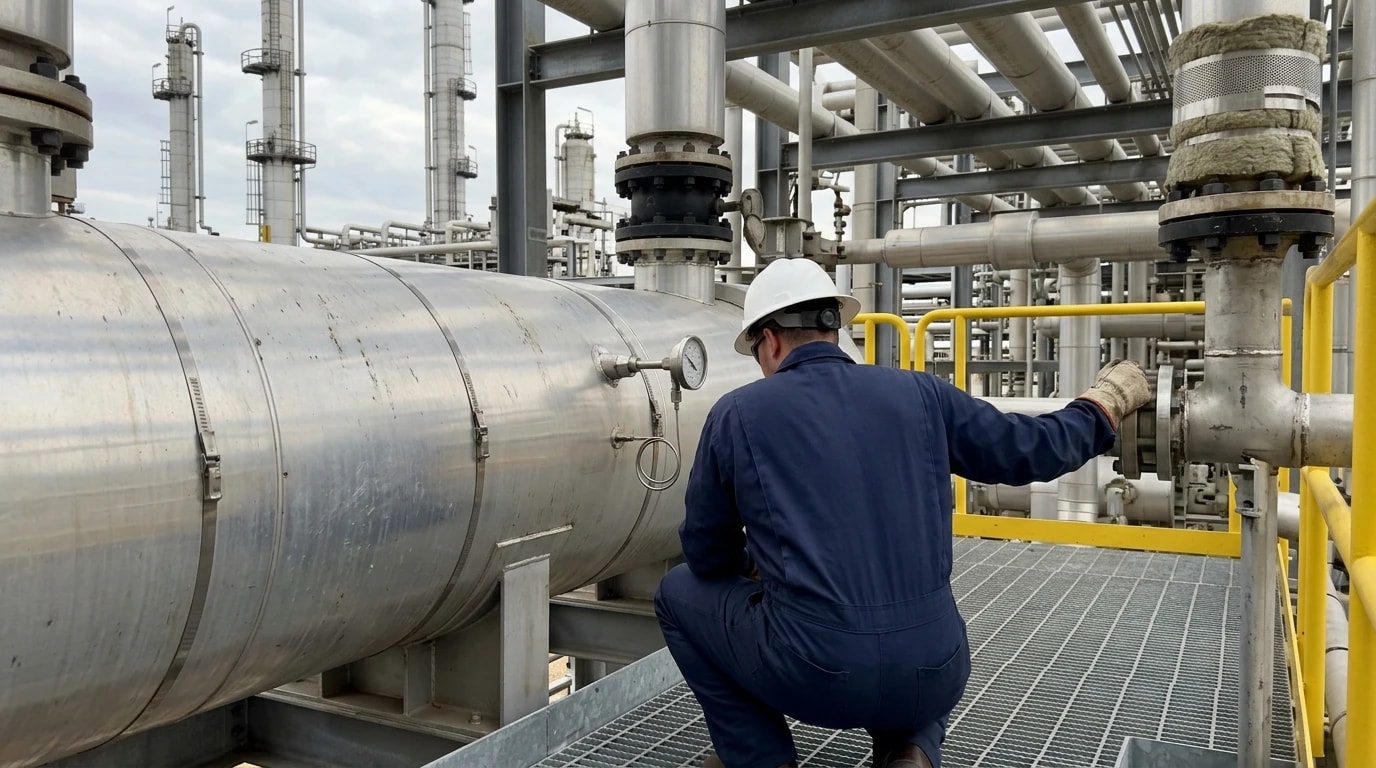
Applying Pinch Analysis to a crude preheat train allows process engineers to systematically identify and correct performance-limiting bottlenecks. By defining the thermodynamic targets of the system, engineers can design a heat exchanger network that minimises fuel and steam consumption while staying within physical space and economic limits.
Selecting the Optimal Minimum Approach Temperature
In refinery heat integration, choosing the right minimum temperature approach is a critical design step. Process engineers typically target a ΔTmin of 10°C to 15°C for CDU preheat trains. This range represents an economic optimum. Reducing the temperature approach below 10°C increases heat recovery, but the driving force for heat transfer becomes very small. This small driving force requires a dramatically larger heat exchanger network surface area, which increases capital expenditure. Conversely, setting the approach temperature above 15°C reduces capital costs but increases the requirement for expensive external utilities.
Eliminating Across-the-Pinch Heat Violations
Many existing refineries operate with historical design errors where heat is transferred across-the-pinch. An across-the-pinch violation occurs when a heat exchanger matches a hot stream from above the pinch with a cold stream from below the pinch. This mistake cools a stream that should remain hot and warms a stream that should remain cold, creating a double penalty:
- The system must supply extra hot utility (such as high-pressure steam or fuel gas) to make up for the lost heat above the pinch.
- The system must supply extra cold utility (such as cooling water or air cooling) to remove the excess heat below the pinch.
By using Pinch Analysis, engineering teams can locate these violations on a grid diagram and systematically redesign the network to eliminate them, reducing utility demands. Specialised thermal engineering consultancies, such as EnerTherm Engineering, provide tailored Pinch Analysis and thermal design services to help refiners execute these complex retrofits, ensuring that revamped preheat trains achieve their design targets without operational setbacks.
Retrofitting Legacy Heat Exchanger Networks
Retrofitting legacy networks differs fundamentally from designing grassroots plants. In a grassroots project, process designers have full flexibility to place heat exchangers in any sequence. In contrast, retrofitting an existing CDU-VDU requires managing physical constraints such as plot space, structural steel loads, and piping runs. Thermal design teams typically use process simulation software and thermal rating tools, such as Aspen HYSYS, KBC Petro-SIM, or AVEVA PRO/II, to evaluate the performance of existing shell-and-tube exchangers. They must ensure that shifting stream paths does not exceed the maximum allowable pressure drop on either the shell or tube side, as high pressure drops can bottleneck the feed pump and reduce overall refinery throughput.

Pinch analysis identifies the thermodynamic minimum energy requirement of your process — then designs the heat exchanger network to achieve it.
Advanced Process Modifications: Steam and Power Reductions
While classic Pinch Analysis focuses on adjusting the heat exchanger network around existing columns, advanced process integration combines thermal pinch principles with physical column modifications. A notable development published in February 2026 by Engineers India Ltd introduces a configuration that decouples the distillation steps to achieve major energy savings.
Decoupling Stripping and Rectification
In conventional CDUs, stripping steam is injected directly into the bottom of the column to lower the partial pressure of light hydrocarbons and assist vapourisation. However, this steam travels up the column, diluting the hydrocarbon vapours, increasing pressure drop, and lowering the temperature at which valuable heat can be recovered. The innovative configuration resolves this by decoupling stripping and rectification sections using a dedicated flash drum. This arrangement enables steam-free rectification within the main fractionator. Light fractions flash off early in the drum and bypass the fired heater entirely, which prevents unnecessary superheating and reduces vapour-liquid traffic inside the main column.
Closed-Loop Wash Oil Recirculation Systems
To prevent coking and contamination of heavy vacuum gas oil (HVGO) with metals and asphaltenes, vacuum columns incorporate a wash zone above the flash zone. Standard units use a portion of the cold HVGO product as wash oil, which degrades heat recovery and reduces distillate yield. The modern configuration incorporates a closed-loop high-temperature wash oil recirculation system sourced from condensed stripper vapours. This design eliminates hydrocarbon dilution and maintains higher tray temperatures, which improves heat integration. When implemented together, these advanced process modifications achieve up to 40% steam savings and 16% power reductions in major CDU-VDU configurations.
The diagram below outlines the process flow of this integrated decoupled CDU-VDU configuration:
Thermodynamic Analysis of Decoupled Distillation
When stripping steam is removed, the thermodynamics of the column change. In a traditional steam-stripped column, the presence of steam lowers the operating temperature required to vapourise light components. However, this benefit comes at the cost of latent heat loss when the steam is condensed in the overhead system. Decoupling the stripping section allows the rectification column to operate under purely dry conditions. This dry operation raises the temperature of the side-draw products, such as diesel and gas oil, which increases the temperature of the streams available for preheating the crude. This higher temperature driving force significantly improves the efficiency of the preheat train, allowing the heat exchanger network to recover more heat and reduce the fired heater duty.
Regulatory Drivers: Net-Zero, UK ETS, and CBAM
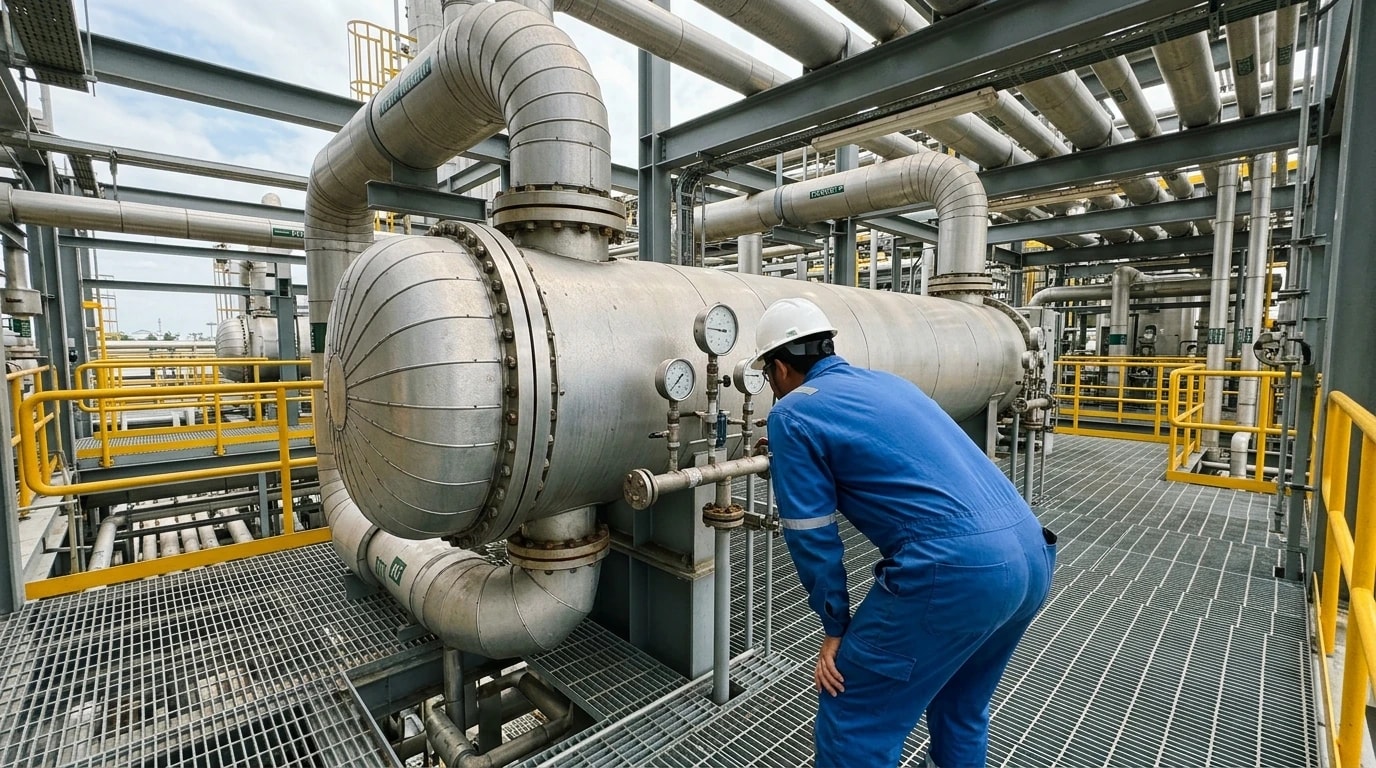
Refinery heat networks operate under highly demanding commercial and environmental constraints. Modern integration and retrofit projects are increasingly driven by the UK's commitment to net-zero emissions, rising UK carbon pricing, and border tariffs.
Decarbonisation Pressures and Carbon Pricing
The UK's legally binding commitment to achieve net-zero carbon emissions by 2050 requires energy-intensive industries to systematically eliminate emissions. To enforce this, the UK government operates the UK Emissions Trading Scheme (UK ETS), which applies a direct carbon price to stationary industrial emitters. For the 2026 reporting year, the UK ETS civil penalty carbon price is set at £49.41 per tonne of CO₂. Because a significant portion of refinery emissions comes from steam generation in gas-fired or fuel-oil-fired boilers, cutting steam demand through heat integration directly reduces carbon tax liabilities. Under the UK ETS, free allowance allocations are scheduled to decrease by 2.8% in 2026, which rapidly increases the financial exposure for inefficient refineries.
CBAM Compliance and International Competitiveness
To prevent carbon leakage, where industrial production shifts to countries with weaker climate policies, the UK government is introducing the Carbon Border Adjustment Mechanism (UK CBAM), which will come into force on 1 January 2027. The European Union has also fully implemented its definitive EU CBAM regime as of 1 January 2026. These mechanisms apply a carbon tariff to carbon-intensive imports. In this regulatory environment, European and UK refiners must minimise their process emissions to remain cost-competitive against global producers. Improving thermal efficiency through process integration is a direct path to lowering the carbon intensity of refined products, protecting refiners from border tariffs and domestic penalties.
Preparing for the 2027 UK CBAM Deadlines
Although refined petroleum products are excluded from the initial phase of the UK CBAM—which applies to aluminium, cement, ceramics, fertiliser, glass, hydrogen, iron, and steel—the broader European and global refining sector is rapidly aligning with these carbon accounting practices. UK and European operators relying on high-temperature fired heaters and high-pressure steam must establish robust emissions reporting. Implementing advanced process integration is a proven path to lowering Scope 1 emissions, ensuring refiners can deliver competitive, low-carbon intensity products to downstream industrial customers who are directly subject to CBAM compliance.
Operational and Economic Paybacks of Modern Heat Networks
The operational and financial paybacks of modern heat integration are highly compelling, as demonstrated by the validation of the decoupled CDU-VDU configuration on a major crude processing facility.
OPEX and Carbon Emissions Savings
The decoupled configuration with advanced heat integration was validated on a 172,000-bpd Bombay High crude facility. The project yielded annual operational expenditure savings of $2.05 million by reducing energy demands. Furthermore, the modifications cut the refinery's carbon dioxide footprint by 24,000 metric tonnes per year (equivalent to 52.9 million pounds of CO₂ annually). These savings help refiners meet tight environmental compliance targets while improving refinery gross margins.
Secondary Technical and Reliability Benefits
Beyond direct utility and carbon savings, the integrated design improves refinery operability and reliability. By eliminating steam in the CDU and VDU rectification zones, the top dew point of the column rises by 18°C to 27°C. This higher dew point prevents water from condensing early on the upper fractionation trays, which dramatically reduces acid condensation and under-deposit corrosion in the column overhead systems.
Additionally, the lower vapour traffic reduces the load on overhead condensers, cutting cooling water and demineralised water consumption by 15%. In the vacuum distillation unit, the closed-loop high-temperature wash oil recirculation system ensures consistent wetting of the wash bed. This prevents coking, minimises slop formation, and boosts high-value Heavy Vacuum Gas Oil (HVGO) yields by 2% to 3%, even when processing heavy or variable crude slates.
| Performance Metric | Conventional CDU-VDU | Integrated Decoupled Configuration | Operational Impact |
|---|---|---|---|
| Steam Consumption | Base Load (100%) | Up to 40% Reduction | Lower boiler fuel usage and reduced Scope 1 emissions |
| Power Requirements | Base Load (100%) | Up to 16% Reduction | Reduced electricity bills and lower utility infrastructure load |
| Water Consumption | Base Load (100%) | Up to 15% Reduction | Lower condenser duties and demineralised water savings |
| CDU Top Dew Point | Standard | 18°C to 27°C Increase | Mitigates overhead acid condensation and under-deposit corrosion |
| HVGO Product Yield | Base Yield | 2% to 3% Increase | Higher conversion rate of heavy residue to valuable distillates |
The physical construction advantages are equally significant. By reducing the steam demand, the overall vapour-liquid traffic in the columns is lowered. This allows for smaller column diameters and downsized overhead condenser systems, reducing the weight of the steel structures by up to 4%. For grassroots projects, this translates directly to lower initial capital expenditure, while for retrofit projects, it debottlenecks existing columns and extends the operating window. Process integration, underpinned by Pinch Analysis, is no longer just a method to save a small portion of fuel; it is a critical strategy to modernise refining infrastructure for a low-carbon economy.
This article reflects the independent analysis and editorial opinion of EnerTherm Engineering. Product names, trademarks, and brands mentioned belong to their respective owners. EnerTherm Engineering is not affiliated with, endorsed by, or a licensee of any third-party software or product mentioned unless explicitly stated.

Managing Director — EnerTherm Engineering
Dr. François Pierrel is Managing Director of EnerTherm Engineering with over two decades of expertise in thermal design, heat transfer, and industrial energy optimisation. He holds a PhD in Heat Transfer from Cranfield University and a Post-Doctorate from Heriot-Watt University.
