How Automotive Audit Services Cut Costs by up to 19%
Comparing BS EN 16247 compliant audits with an average payback period of 1.9 years.
Automotive manufacturing facilities across the UK and Europe face escalating energy costs and tightening regulatory mandates to reduce Scope 1 and Scope 2 carbon emissions. Assembly plants operate complex, energy-intensive utility systems, where thermal and electrical demands fluctuate based on production schedules, shifting vehicle volumes, and plant configurations. To address these inefficiencies, original equipment manufacturers (OEMs) and Tier 1 suppliers require structured intervention. Specialised automotive energy audit services provide a systematic pathway to identify, quantify, and eliminate utility waste, delivering substantial operational savings.
These engineered audits establish practical, capital-efficient roadmaps with rapid payback periods. By targeting high-consumption processes, plants achieve significant carbon emissions reductions. For energy managers, facilities directors, and sustainability leads, securing a specialised audit is the critical first step to align daily plant operations with long-term corporate decarbonisation targets.
Driving Efficiency in Assembly Operations
Industrial manufacturing processes require precise thermal and mechanical control. While standard building audits focus on lighting and general HVAC systems, automotive facilities need deep engineering expertise to analyse robotic assembly lines, high-frequency welding systems, and thermal distribution networks.
Compliance with Automotive Assembly Plant Energy Audit Standards BS EN
Compliance with UK and European energy efficiency regulations requires strict adherence to standardised assessment methodologies. General energy audits often fail to provide the granular process analysis required to identify deep thermal losses in vehicle manufacturing. To ensure regulatory compliance and robust data quality, auditing teams must align their investigations with specific harmonised European and British standards.
The BS EN 16247 Audit Framework
The baseline standard for structured energy assessments is BS EN 16247-1:2022, which establishes the general requirements, common methodology, and quality criteria for professional energy audits. It defines the systematic inspection and analysis of energy flows, ensuring consistency, transparency, and objectivity.
For manufacturing facilities, BS EN 16247-3:2022 serves as the specific standard governing energy audits of industrial processes. This standard outlines the specific requirements for analysing complex industrial energy streams, process heat, and chemical reactions, making it indispensable for vehicle assembly operations.
| Standard Designation | Focus Area | Application in Automotive Audits |
|---|---|---|
| BS EN 16247-1:2022 | General energy auditing requirements, data validation, and reporting structures | Establishes overall audit structure, stakeholder communication, and qualification criteria |
| BS EN 16247-3:2022 | Industrial process auditing, thermal energy flows, and system boundaries | Applies directly to paint shops, stamping operations, heat treatment lines, and assembly robotics |
By executing assessments that comply with automotive assembly plant energy audit standards BS EN, manufacturers can confidently submit audits for compliance schemes like the UK Energy Savings Opportunity Scheme (ESOS). These standards guarantee that energy performance indicators (EnPIs) and energy savings opportunities are calculated using verified, repeatable engineering calculations.
Identify where your plant is losing energy and quantify the savings potential — our audits map every heat source, sink, and waste stream in your facility.
Buying Comparison: Generic Audits vs. Specialised Automotive Energy Audit Services
Selecting the correct audit provider requires a comparison of capabilities. A generic commercial energy audit typically focuses on facility lighting, basic building fabric, and standard HVAC systems. While these assessments are useful for warehousing or commercial offices, they cannot address the complex utility interactions found on a vehicle assembly line.
The Specialised Audit Advantage
Specialised automotive energy audit services focus on process-integrated thermal systems, high-pressure compressed air loops, and robotic standby profiles. These services utilise specialised diagnostic equipment and specific industrial benchmarks to find savings that generic auditors overlook.
The 7-Step Automotive Audit Methodology
A structured 7-step audit methodology is designed to minimise plant disruption while maximising energy and cost savings:
- Initial Consultation: Defining the audit boundaries, reviewing historical utility bills, and understanding the production schedule and plant constraints.
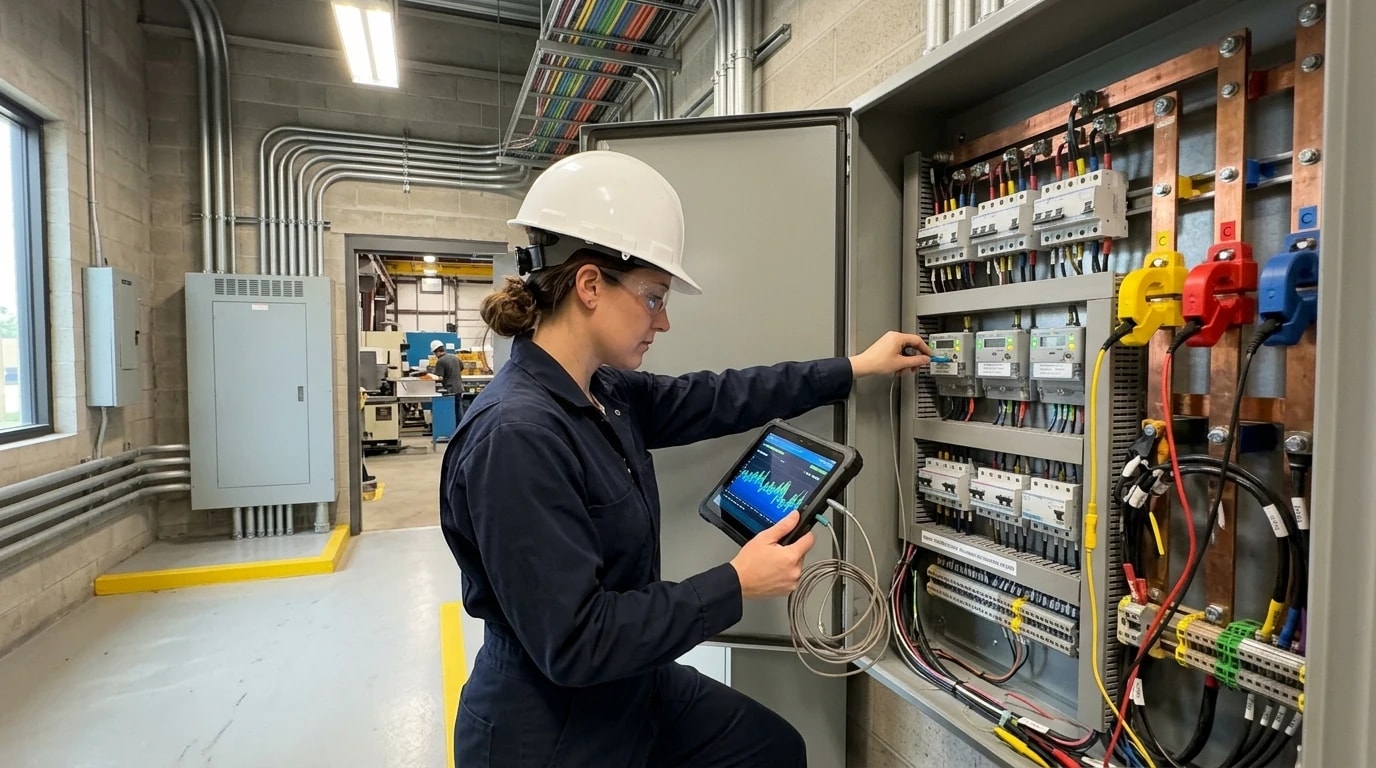
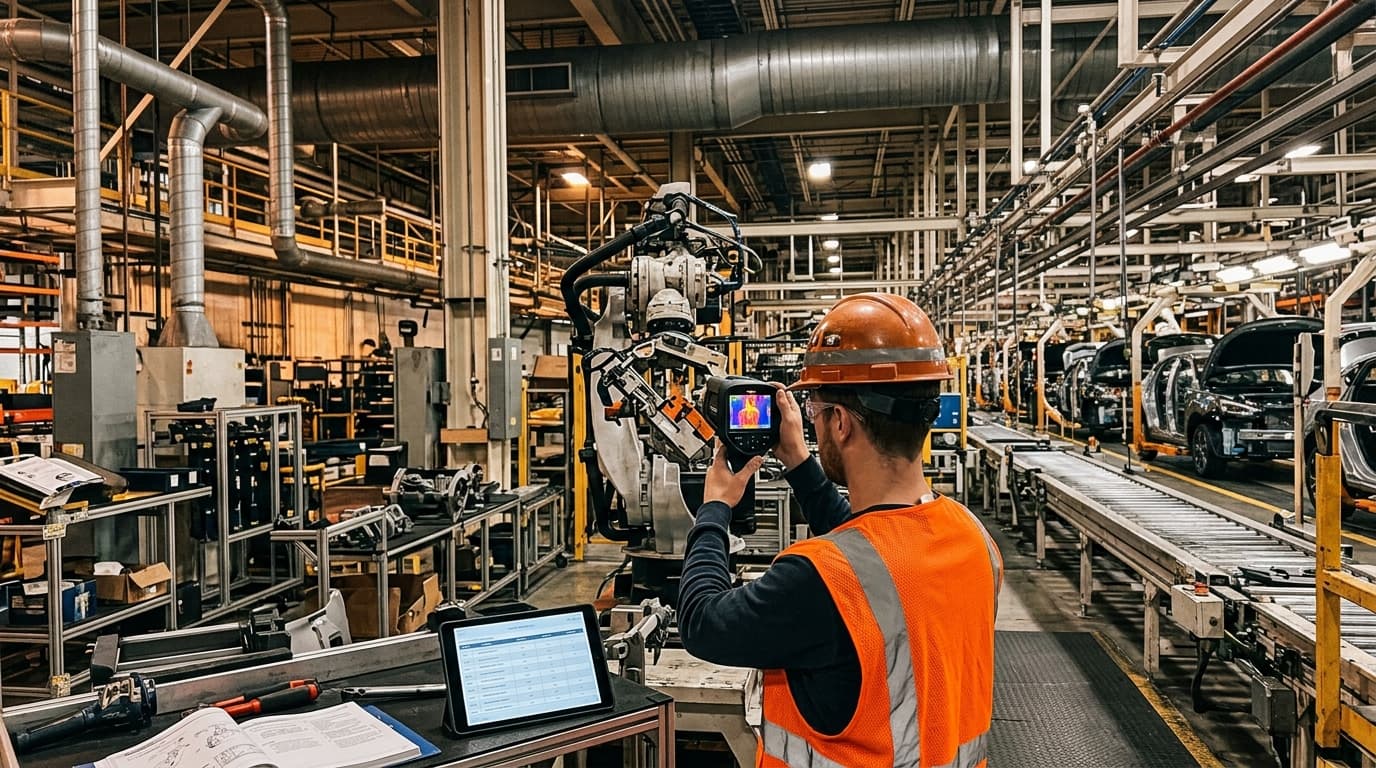
- On-Site Assessment: Conducting field measurements using advanced diagnostics, including power analysers, ultrasonic leak detectors, and high-resolution thermal imaging cameras.
- Data Analysis and Benchmarking: Aligning raw energy data with production metrics to establish production-normalised metrics, such as kilowatt-hours consumed per vehicle.
- Utility and Thermal Process Optimisation: Evaluating high-impact areas, including waste heat recovery, steam distribution systems, and compressed air generation.
- Capital Investment Modelling: Constructing detailed financial ROI models with precise payback periods and carbon offset projections for capital planning.
- Implementation Support: Assisting plant engineering teams during the installation, commissioning, and optimisation of recommended energy efficiency measures.
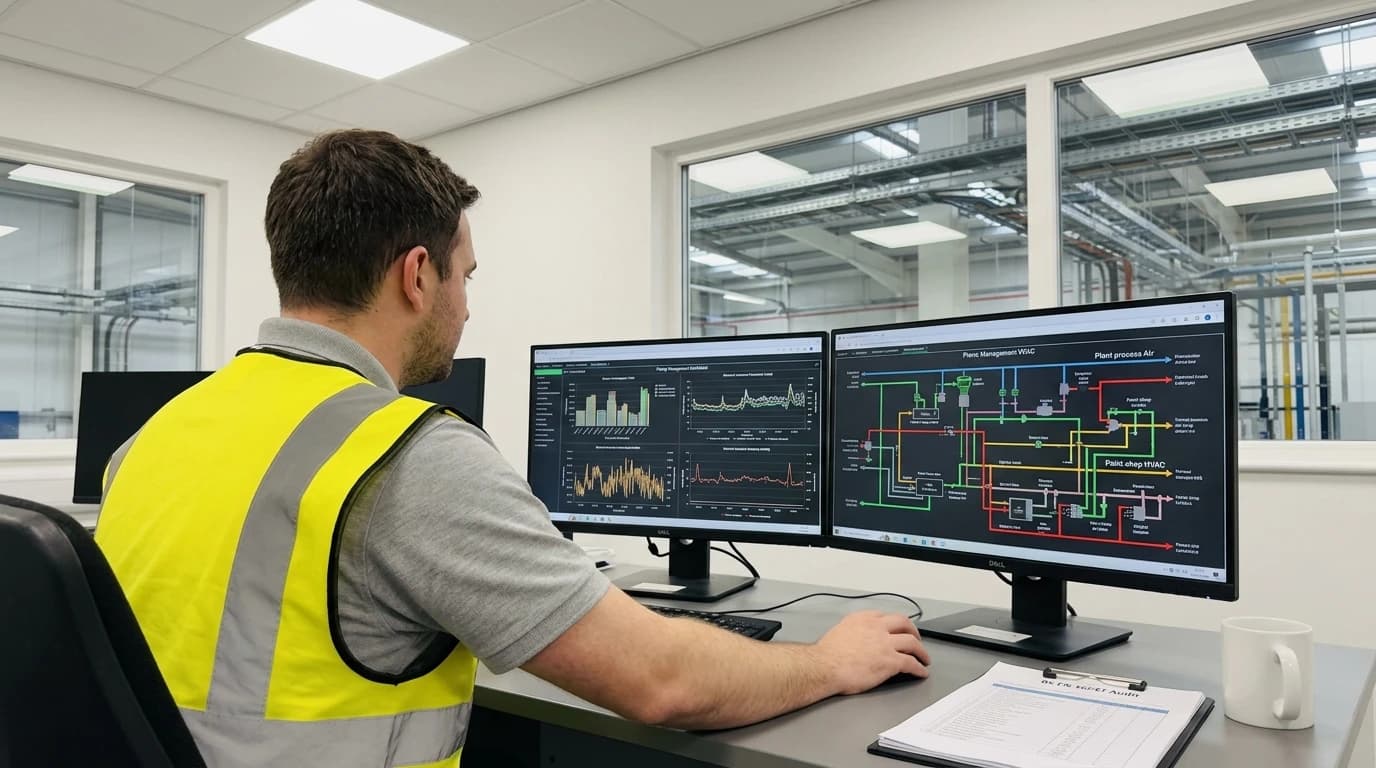
- Ongoing Measurement and Verification (M&V): Tracking long-term performance using international IPMVP protocols, integrated with EnerTherm's proprietary Ecolog consumption monitoring and process optimisation platform. Designed with a secure, read-only architecture, the platform tracks energy metrics and flags anomalies, enabling plant engineers to implement validated operational adjustments manually without direct write-back to control networks.
Optimising the Automotive Paint Shop Energy Consumption kWh per Vehicle
The paint shop represents the single largest energy sink in any vehicle assembly facility. Understanding and reducing automotive paint shop energy consumption kWh per vehicle is central to achieving significant plant-wide energy cost reductions.
The Paint Shop Energy Footprint
Historically, paint shops have accounted for 50 to 70 per cent of an assembly plant's total energy consumption and approximately 65 per cent of its overall CO₂ emissions. Traditional painting processes run on legacy thermal profiles, consuming vast quantities of natural gas and electricity. Typical historic benchmarks for paint shop energy demand have ranged between 860 and 1,290 kWh per vehicle.
To meet stringent sustainability targets, modern OEM operations are pushing down to an aggressive target of only 321 kWh per vehicle. Meeting this benchmark requires a complete transformation of the painting process and the integration of advanced thermal recovery technologies.
The "4-Wet" Compact Paint Process
One of the primary structural changes identified during specialised audits is the transition to compact painting processes. Traditional "two-wet" processes require four separate, energy-intensive baking and curing ovens to dry each individual coating layer.
By contrast, transitioning to a "4-wet" process allows the application of four coatings with only two curing ovens. This process consolidation reduces paint shop energy consumption by up to 30 per cent. For example, Stellantis implemented this process at its Gliwice, Poland paint shop, establishing an industry benchmark of just 245 kWh per vehicle. Specialised auditing services evaluate the feasibility of such line conversions, calculating the physical space, production throughput, and thermal modifications required to implement compact coatings.
High-Impact Thermal Retrofits: eRTO and Curing Ovens
Curing ovens and exhaust air treatment systems are major consumers of natural gas within the paint shop. Eliminating this fossil fuel consumption requires a shift in how exhaust gases are purified and how oven temperatures are maintained.
Transitioning to Electrified Regenerative Thermal Oxidation (eRTO)
Automotive paint shops generate significant quantities of volatile organic compounds (VOCs) and hazardous air pollutants (HAPs) from solvents and paint formulations. Historically, plants have used natural gas-fired Regenerative Thermal Oxidisers (RTOs) to destroy these pollutants, heating the exhaust air to high temperatures.
Modern audits frequently recommend transitioning to electrified regenerative thermal oxidation (eRTO) systems. An eRTO system operates entirely without fossil fuels, utilising electrical heating rods to reach the required oxidation temperature of approximately 1,000 °C.
The system relies on a two-metre-deep ceramic bed that acts as a highly efficient recuperative heat exchanger. Dirty exhaust air enters the ceramic bed, absorbing stored heat to preheat the stream before it enters the oxidation chamber. This configuration achieves a thermal efficiency of 95 to 97 per cent, meaning that once the operating temperature is reached, a minimal electrical connected load is required to keep the system running. By transitioning to eRTO systems, car manufacturers can run exhaust purification on green, renewable electricity, eliminating substantial Scope 1 emissions.
Waste Heat Recovery from Oven Exhaust
Even with high-efficiency thermal oxidisers, curing ovens discharge significant quantities of waste heat. Audits evaluate the thermodynamic potential of recovering this thermal energy. By installing secondary air-to-air or air-to-water heat exchangers on oven exhaust stacks, plant teams can redirect recovered heat back to preheat fresh incoming air, or feed it into the facility's low-temperature hot water loop for space heating.

Identify where your plant is losing energy and quantify the savings potential — our audits map every heat source, sink, and waste stream in your facility.
Mechanical and Ventilation Savings: Spray Booth Air Handling Units
Maintaining the precise temperature, humidity, and airflow velocity required for high-quality paint application requires massive volumes of conditioned air. The air handling units (AHUs) serving paint spray booths are major electrical consumers, driven by large supply and exhaust fan motors.
Retrofitting Variable Speed Drives (VSDs)
Traditional paint booth AHUs operate at fixed ventilation rates, moving constant volumes of air regardless of the actual production state or external weather conditions. Retrofitting these massive fans with variable speed drives (VSDs) allows the plant to modulate airflow dynamically.
During non-production periods, weekends, or model changeovers, the fans can be scaled back to safe minimum levels, saving significant amounts of electricity. Furthermore, VSDs allow the ventilation system to adapt to the lower fresh air requirements when recirculation modes are active.
Dynamic Ventilation and AI-Based Controls
To achieve deeper savings, thermal design teams look beyond basic VSD retrofits toward dynamic, demand-based control. For example, at the Stellantis paint shop in Rüsselsheim, Germany, plant operators deployed predictive control algorithms to adjust ventilation rates and cooling requirements dynamically based on real-time production schedules and ambient conditions.
By leveraging the thermal inertia of the building and scheduling air intake during favourable weather, the facility cut its ventilation energy consumption by over 60 per cent while maintaining a stable indoor climate for painting. Energy audits evaluate fan curves, duct pressure drops, and sensor configurations to establish the foundation for these advanced control retrofits.
Optimising Body-in-White, Assembly, and Factory Utilities
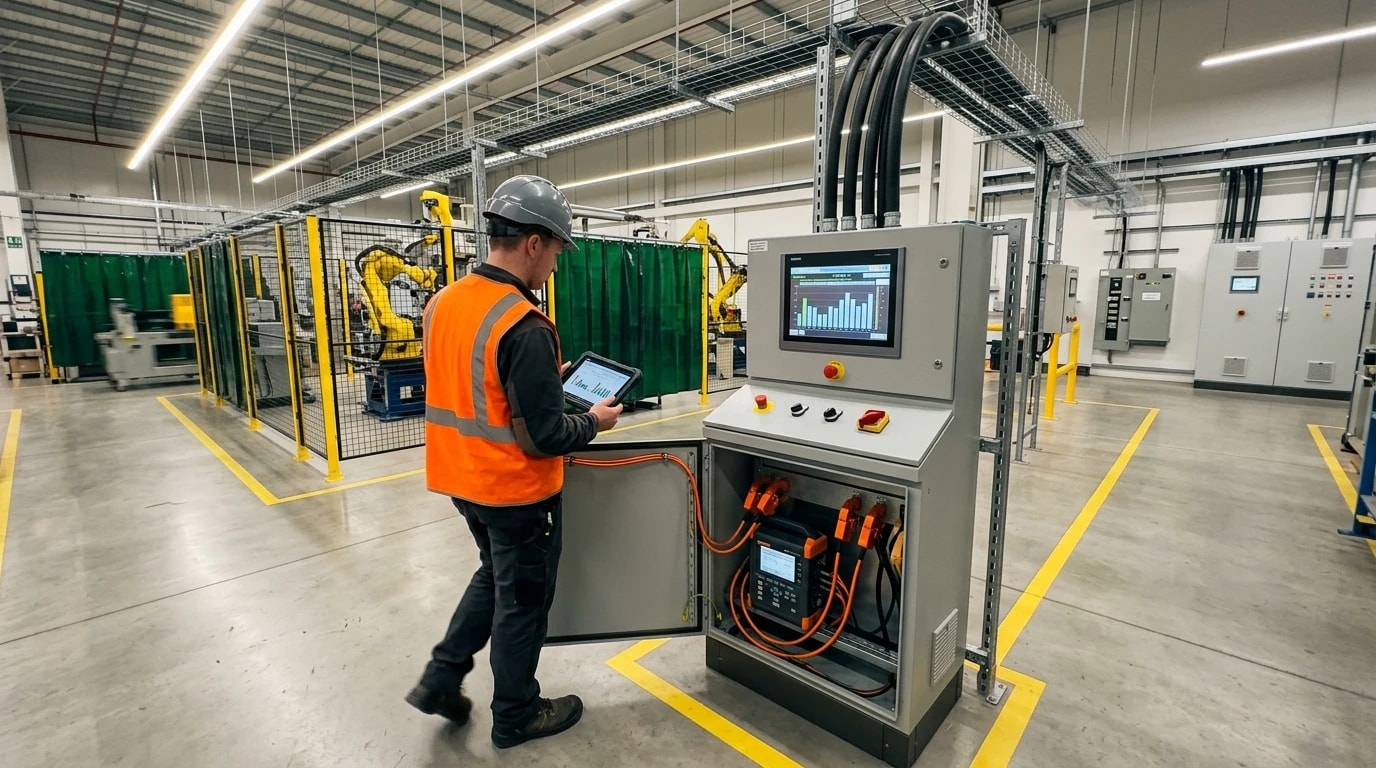
While the paint shop represents the primary target, comprehensive specialised automotive energy audit services look at the entire assembly plant to maximise cost savings. Other key manufacturing areas, such as the body-in-white (BIW) welding lines and robotic assembly areas, offer substantial, low-payback optimisation opportunities.
Managing Robot Standby Power
Modern automotive plants use thousands of industrial robots for welding, handling, and assembly. While a single robot draws relatively little power when idling, the cumulative standby power of an entire plant during non-production shifts is significant.
Specialised audits analyse the idle profiles of robotic systems and recommend configuration changes. Implementing automated sleep modes, which power down non-essential robot controllers and auxiliary systems during breaks or between production runs, reduces idle electricity consumption without impacting production cycle times.
Welding Transformer Efficiency
Resistance spot welding requires high currents delivered in short bursts. Older welding lines often rely on alternating current (AC) transformers, which suffer from poor power factors and significant electrical transmission losses.
Auditing teams evaluate the transition to medium-frequency direct current (MFDC) welding systems. MFDC transformers operate at much higher frequencies, allowing for smaller, lighter transformers that distribute electrical energy more efficiently. This upgrade improves the power factor, reduces peak demand charges, and cuts overall welding energy losses.
Compressed Air Leak Detection and System Pressure Optimisation
Compressed air is one of the most expensive industrial utilities, with up to 80 to 90 per cent of the electrical input energy lost as heat during compression. In a typical automotive plant, leaks in hoses, quick-connect fittings, and pneumatic valves account for 20 to 30 per cent of total compressed air consumption.
During the on-site assessment phase, auditors use ultrasonic leak detectors to pinpoint the exact location and size of leaks while the plant is operating. Beyond leak repair, the audit evaluates the overall system operating pressure. Lowering the main distribution header pressure by just 1 bar reduces the compressor electrical energy consumption by approximately 7 per cent, while also reducing the flow rate through any remaining unidentified leaks.
Financial Return on Investment and Carbon Reduction Roadmaps
The ultimate goal of an automotive energy audit is to provide energy managers with a clear, finance-approved capital plan. Every recommended physical retrofit must be accompanied by a robust financial model that demonstrates a clear return on investment.
Data-Driven Capital Planning
Audits translate technical energy savings (expressed in kilowatt-hours or cubic metres of natural gas) into financial metrics that appeal to chief financial officers. By using historical tariff data and projecting future utility price trends, auditing teams build precise ROI models. This allows facilities directors to prioritise capital expenditure (CapEx) on projects that deliver the highest energy reduction per pound spent.
Achieving Proven Performance Metrics
By focusing on high-impact areas, such as paint shop thermal management, VSD retrofits, and compressed air optimisation, specialised automotive audits consistently deliver outstanding financial and environmental results. On average, these assessments help facilities achieve:
- An average 19 per cent energy cost reduction, significantly lowering operational overheads.
- An average payback period of only 1.9 years across the recommended suite of energy efficiency measures.
- An average annual reduction of 1,400 tonnes of CO₂, directly supporting corporate Scope 1 and Scope 2 carbon reduction roadmaps.
To ensure these savings do not degrade over time, manufacturers integrate ongoing monitoring systems. Deploying EnerTherm’s proprietary Ecolog consumption monitoring and process optimisation solution provides continuous tracking of energy metrics. Operating strictly as a secure, read-only advisory platform, Ecolog analyses consumption and identifies potential drift, allowing plant teams to act on verified recommendations during validated change windows. By leveraging IPMVP-compliant measurement and verification protocols, operators can instantly verify that retrofits perform exactly as predicted, securing long-term cost control and carbon compliance.
Selecting the Right Audit Provider
Automotive manufacturing requires a level of engineering depth that standard commercial energy auditors cannot provide. When evaluating specialised automotive energy audit services, energy managers should prioritise providers who demonstrate a thorough understanding of industrial processes and thermal recovery.
Key Selection Criteria for Energy Managers
- Compliance with Standards: Ensure the provider conducts assessments in strict accordance with BS EN 16247-1:2022 and BS EN 16247-3:2022 to guarantee data integrity and regulatory compliance.
- Specialised Equipment: Verify that the on-site assessment team utilises high-precision diagnostic tools, including thermal imaging cameras, ultrasonic leak detectors, and power analysers.
- Production-Normalised Metrics: The audit must go beyond absolute energy consumption, benchmarking energy performance in relation to production volume (such as kWh per vehicle) to account for shifts in manufacturing output.
- End-to-End Support: Look for a partner that provides a continuous transition from initial assessment through to implementation support, capital planning, and ongoing measurement and verification.
By partnering with an experienced industrial thermal engineering firm, automotive manufacturers can successfully bridge the gap between aggressive corporate sustainability goals and practical, cost-saving operational realities. Implementing these specialised auditing services provides the precise diagnostic insight required to eliminate thermal waste, reduce electricity demands, and secure a highly competitive, low-carbon manufacturing future.
This article reflects the independent analysis and editorial opinion of EnerTherm Engineering. Product names, trademarks, and brands mentioned belong to their respective owners. EnerTherm Engineering is not affiliated with, endorsed by, or a licensee of any third-party software or product mentioned unless explicitly stated.

Technical Manager — EnerTherm Engineering
John Naranjo is Technical Manager at EnerTherm Engineering, bringing specialist expertise in chemical and environmental engineering. He recently led the implementation of Omni Vision, EnerTherm's real-time energy and utility monitoring platform. He holds an MSc in Environmental Engineering from the University of Huelva and a BSc in Chemical Engineering, with memberships in both the Energy Institute and IChemE.
