Industrial Thermal Energy Conservation Cuts Up to 50% Waste
BS EN 16247-3 and ISO 50002 audits verify thermal payback using IPMVP Option B.
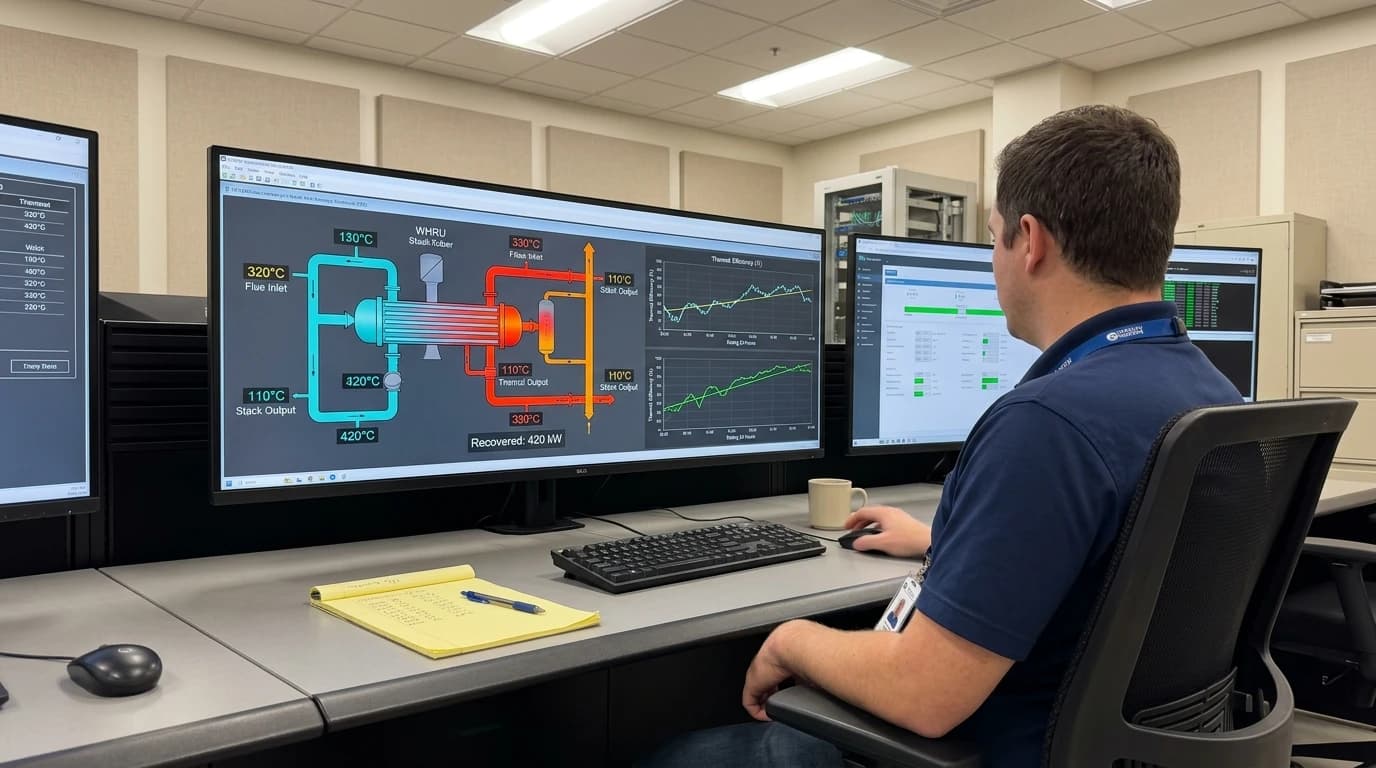
Industrial heating accounts for approximately 14 per cent of UK greenhouse gas emissions, yet about 50 per cent of the energy consumed across UK manufacturing is lost directly to the environment as waste heat. In January 2026, the Royal Society published a landmark report, Unlocking thermal energy: capture, storage and re-use of industrial waste heat. Chaired by Professor Andy Woods, the analysis highlighted that these massive losses stem primarily from system-level inefficiencies and thermal venting. For energy-intensive sectors, this lost heat represents a major cost and an obstacle to meeting UK net-zero targets.
The Scale of Industrial Thermal Energy Waste
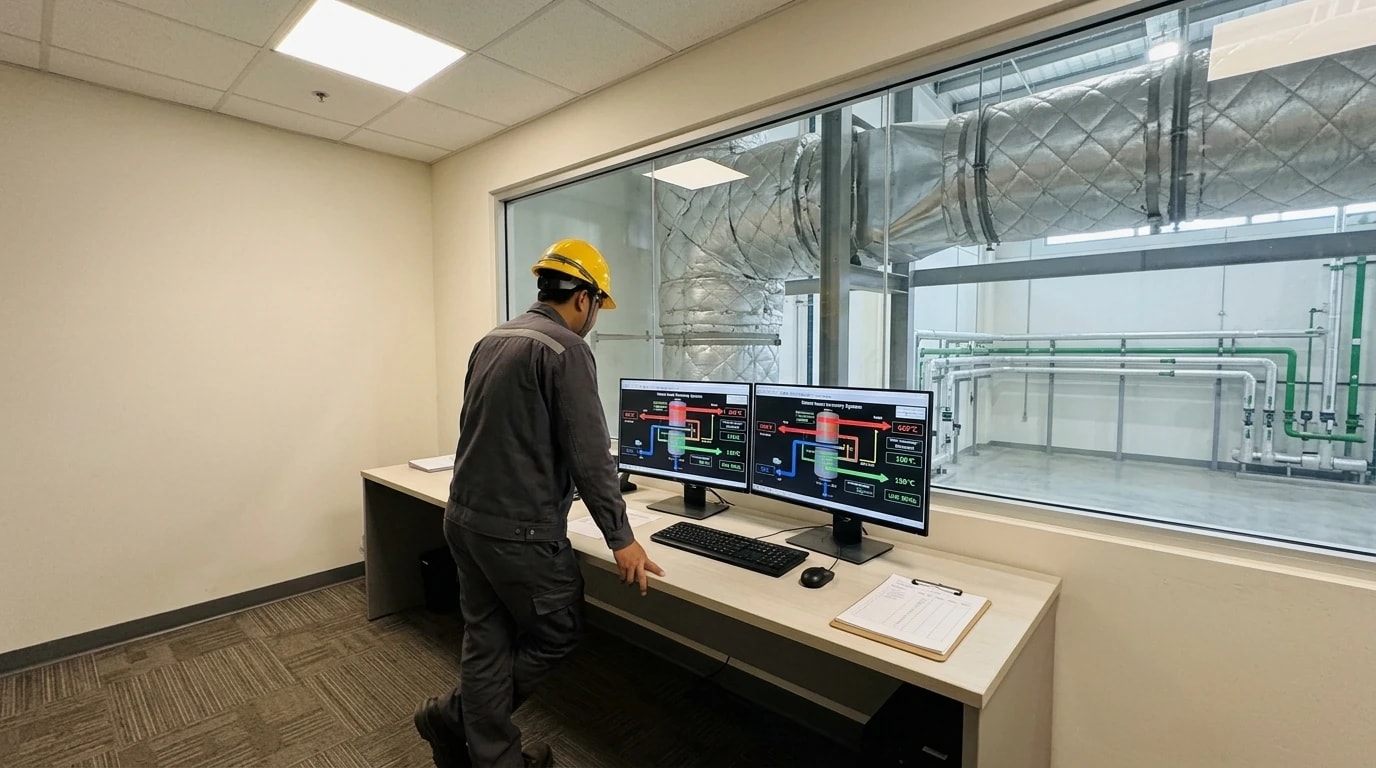
The working group established that foundation industries routinely heat process materials to temperatures between 400°C and 2,000°C before cooling them, venting massive volumes of thermal energy. Even as manufacturers transition from fossil fuels to electricity or hydrogen, these process losses will persist without dedicated capture, storage, and recovery systems. The analysis presents waste heat not as an inevitable by-product, but as an untapped resource to boost factory productivity and lower national energy demand.
Sector-Specific Loss in Chemical Processing
Chemical manufacturing requires substantial fuel inputs for high-temperature reactors, distillation columns, and exothermic processes. Much of this thermal energy vents via flue gases, condenser cooling water, and reactor jacket cooling. High-temperature waste streams exceeding 300°C carry significant exergy, which operators can capture to preheat combustion air, generate steam, or run organic Rankine cycles.
Low-Temperature Waste in Food and Beverage
The food and beverage sector operates predominantly below 150°C. Common waste heat sources include boiler blowdown, pasteurisation run-off, fryer exhausts, and refrigeration condensers. While these streams have lower thermodynamic exergy, industrial heat pumps can elevate this thermal energy to generate process hot water or low-pressure steam, displacing primary fuel.
High-Volume Heat Demands in Paper and Pulp
In paper and pulp production, steam-driven drying sections vent large volumes of moist air between 80°C and 120°C from machine hoods. This latent heat loss increases boiler load if left unrecovered. Run-around coils and air-to-air heat exchangers can capture this energy to preheat fresh process water or incoming building ventilation.
Identify where your plant is losing energy and quantify the savings potential — our audits map every heat source, sink, and waste stream in your facility.
Auditing Frameworks: BS EN 16247-3:2022 and ISO 50002-1:2025
Industrial sites must use structured auditing methods to identify, quantify, and justify thermal conservation measures. The UK and European markets rely on standardised processes to ensure audits deliver verifiable, investment-grade projects.
Process Auditing under BS EN 16247-3:2022
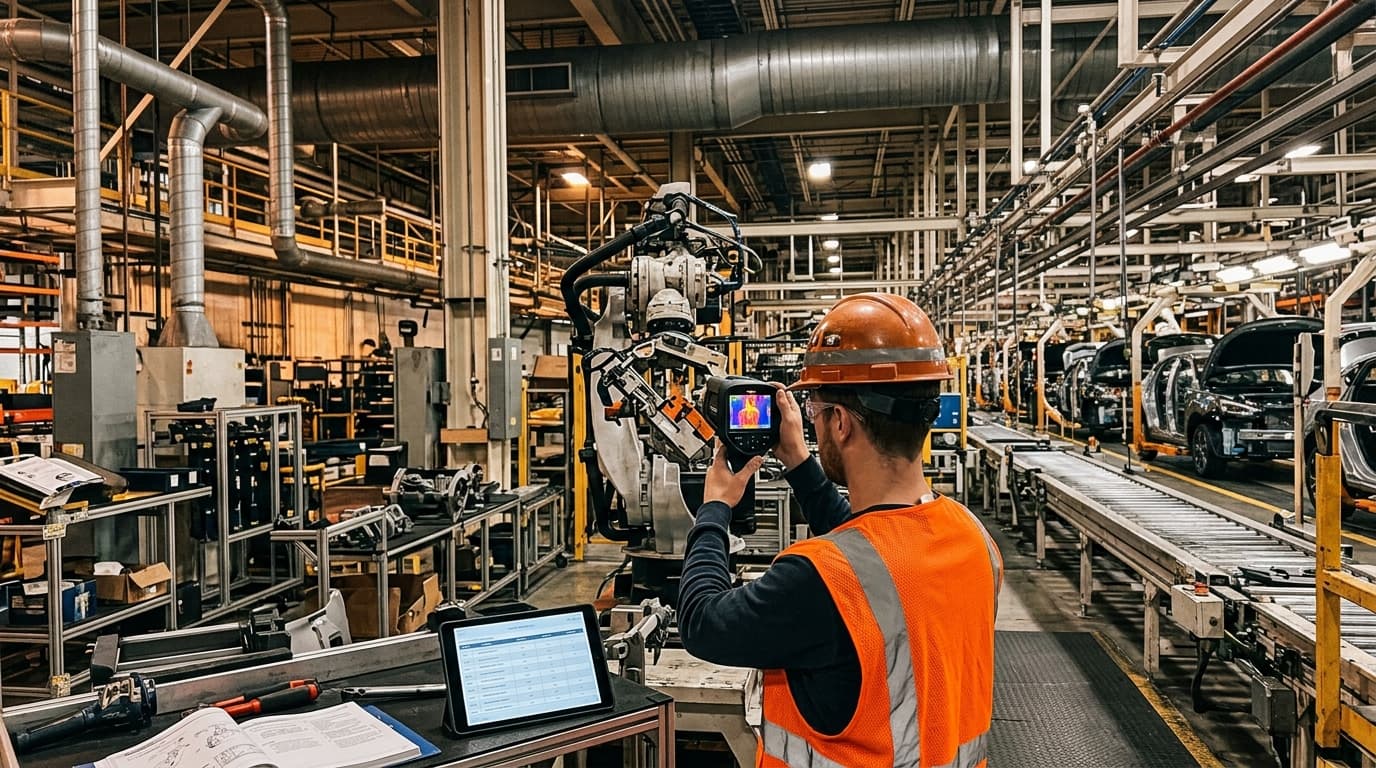
BS EN 16247-3:2022 governs process-specific energy audits in the UK, complementing the general requirements of BS EN 16247-1:2022. This standard outlines a systematic workflow for industrial plants, guiding auditors from initial data gathering and on-site measurements to investment-grade proposals. Auditors must construct an accurate process energy balance, identifying energy inputs, useful work, and specific thermal losses to help plant engineers establish energy performance indicators (EnPIs).
Global Standards: ISO 50002-1:2025 Alignment
For multinational corporations, ISO 50002-1:2025 acts as the global framework for energy audits, replacing ISO 50002:2014. Published in June 2025, it aligns energy audit terms directly with the ISO 50001:2018 energy management framework. The revised standard incorporates instructions on evaluating decarbonisation options, assessing fuel-switching feasibility, and defining clear measurement and verification protocols. This provides a scalable methodology to identify thermal efficiency opportunities, ensuring repeatable, high-quality data across production sites.
Compliance Pathways for ESOS Phase 4
Under the UK’s Energy Savings Opportunity Scheme (ESOS) Phase 4, running from December 2023 to December 2027, large organisations must perform compliant audits. The Environment Agency has tightened the rules, removing older compliance pathways such as Display Energy Certificates (DECs) and Green Deal Assessments (GDAs). Large undertakings must now align their audits strictly with either BS EN 16247 or ISO 50002-1:2025. Furthermore, ESOS Phase 4 makes a formal ESOS Action Plan mandatory, requiring companies to submit annual progress updates against their commitments.
The Heat Cascade: Maximising Thermal Recovery
Concept of the Thermal Cascade
Rather than discharging thermal energy after its initial industrial use, a heat cascade channels surplus heat through progressively lower temperature stages, maximising the primary fuel's thermodynamic exergy. High-temperature flue gas first generates high-pressure steam, then preheats boiler feed water, and finally supports space heating or district networks before venting at low temperatures.
Implementing On-Site Cascading
Inside the factory gate, process engineers capture flue gas heat to preheat incoming combustion air or boiler feed water. In chemical facilities, hot reactor discharge streams transfer energy to cold feed streams through heat exchanger networks. This internal reuse reduces demand for external utilities, lowering fuel costs and boiler emissions.
Industrial Symbiosis and Clusters
The heat cascade also extends beyond individual factory boundaries. Industrial clusters, such as Teesside, Humber, or Grangemouth, allow multiple companies to share thermal resources. A steelworks or chemical plant venting medium-temperature steam can pipe this energy directly to an adjacent food processing facility or paper mill. This industrial symbiosis improves collective thermal efficiency, transforming one site's waste into another's input.
Municipal Heat Networks Integration
The final tier exports low-grade thermal waste (below 50°C) to local communities. Water-source heat pumps can extract heat from industrial effluent or condenser cooling water, elevating it to warm public buildings and homes. This reduces local reliance on gas boilers, positioning manufacturing plants as positive utility contributors to municipal networks.
Technoeconomic Analysis of Waste Heat Recovery
Evaluating Capital Costs vs. Energy Cost Reductions
Thermal recovery projects — such as installing recuperators, economisers, or industrial heat pumps — demand significant upfront CAPEX. The primary financial benefit is the displacement of fuel purchases, typically natural gas or electricity. To determine viability, engineers calculate the simple payback period, net present value (NPV), and internal rate of return (IRR). Retrofitting a flue gas economiser in a typical chemical facility can yield payback periods of 1.5 to 3 years, depending on local utility tariffs and plant operating hours.
Heat Transfer Calculations and Exchanger Sizing
To size heat recovery equipment and project financial returns, engineers use the fundamental heat transfer equation. The rate of heat transfer (Q) in a heat exchanger is:
Q=U⋅A⋅ΔTlmwhere:
- Q is the thermal energy transfer rate (kW)
- U is the overall heat transfer coefficient (kW/m²°C)
- A is the heat transfer surface area (m²)
- ΔTlm is the logarithmic mean temperature difference (°C)
A larger surface area (A) increases heat recovery (Q) but escalates capital costs. Process design teams must balance this trade-off, finding the optimum temperature approach where the marginal cost of additional heat exchanger surface area does not exceed the financial savings of the recovered thermal energy.
Impact of Carbon Pricing and UK Net-Zero Mandates
In the UK, financial justifications for thermal conservation projects must factor in the cost of carbon. Under the UK Emissions Trading Scheme (UK ETS) or carbon taxes, emitting CO₂ carries a direct financial penalty. Improving thermal efficiency directly reduces fuel consumption, lowering Scope 1 greenhouse gas emissions. For large-scale manufacturing sites, the avoided cost of purchasing carbon allowances can improve a project's IRR by 3 to 7 per cent, turning marginal cases into highly profitable investments.

Identify where your plant is losing energy and quantify the savings potential — our audits map every heat source, sink, and waste stream in your facility.
Verification of Thermal Conservation Investments
International Performance Measurement and Verification Protocol (IPMVP) Option B
Industry professionals widely use the International Performance Measurement and Verification Protocol (IPMVP) to verify energy savings. For waste heat recovery retrofits, IPMVP Option B (Retrofit Isolation: All Parameter Measurement) is the most suitable pathway. This option requires continuous measurement of energy parameters within the isolated boundary of the retrofitted system. By measuring fluid flow rates, inlet and outlet temperatures, and power inputs before and after installation, engineers isolate the system from unrelated factory changes (such as production volume shifts or raw material variation), proving the exact savings delivered.
Aligning with ISO 50001:2018 Energy Management Systems
Integrating verification protocols with an ISO 50001:2018 certified Energy Management System (EnMS) ensures long-term persistence of savings. ISO 50001:2018 requires organisations to establish energy baselines and monitor Energy Performance Indicators (EnPIs). By aligning IPMVP Option B measurements with the broader EnMS, managers can track the ongoing efficiency of thermal recovery systems over time. This structured approach prevents performance drift, ensuring heat exchangers, steam traps, and insulation jackets perform to design specifications.
Case Example: Heat Recovery in a Food Processing Plant
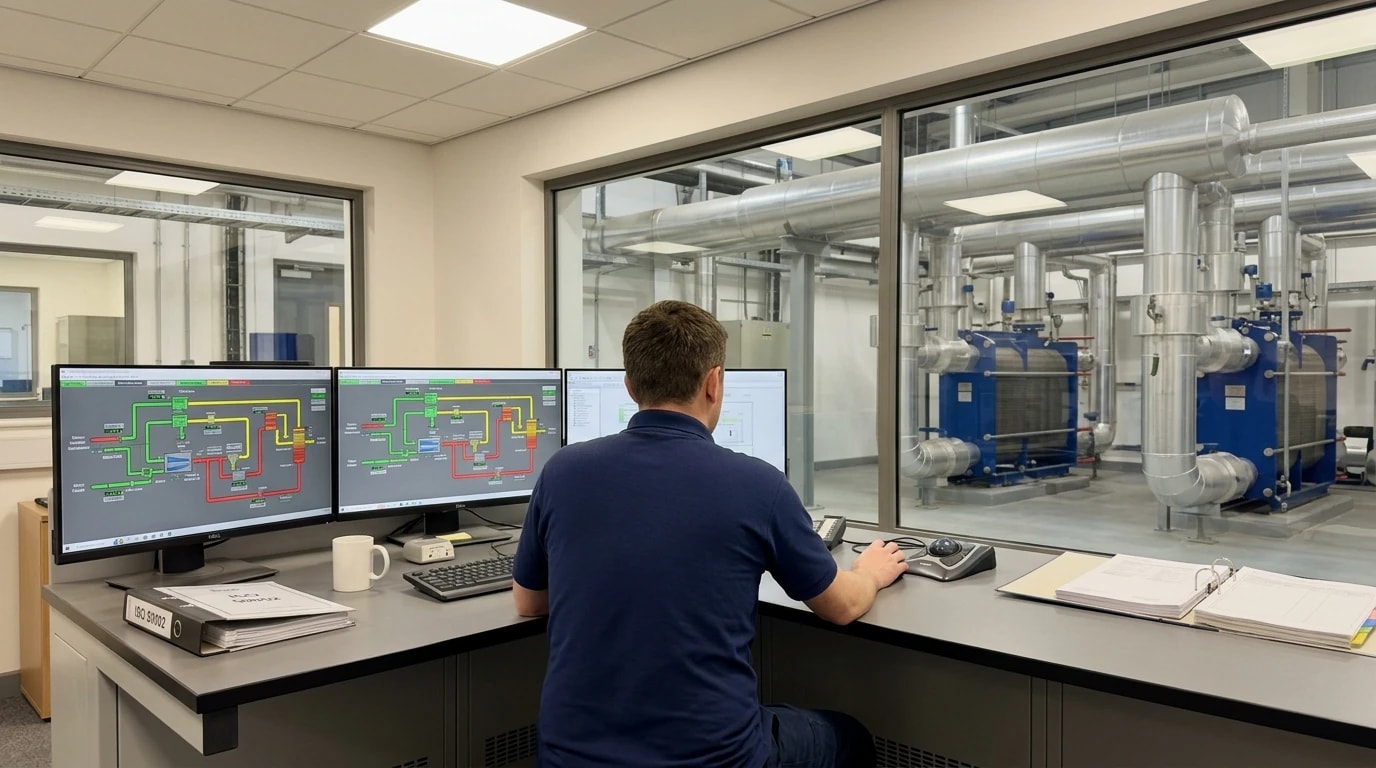
Consider a food processing plant installing a plate heat exchanger to capture heat from a pasteuriser drain stream to preheat incoming fresh water. To verify performance under IPMVP Option B, the facility installs electromagnetic flow meters and resistance temperature detectors (RTDs) on both the waste and supply streams. This instrumentation continuously records fluid volumes and temperatures.
| Parameter | Baseline Value | Post-Retrofit Value | Verification Method |
|---|---|---|---|
| Wastewater Discharge Temp | 82°C | 38°C | Continuous RTD Logging |
| Supply Water Inlet Temp | 12°C | 54°C | Continuous RTD Logging |
| Continuous Water Flow Rate | 15 m³/h | 15 m³/h | Electromagnetic Flow Meter |
| Recovered Thermal Power | 0 kW | 733 kW | Thermodynamic Calculation |
| Annual Energy Savings | 0 kWh | 2,932,000 kWh | Summed Logged Operational Data |
| Net Carbon Avoided | 0 tCO₂e | 540 tCO₂e | Gas Deficit Emission Factor |
Process Optimisation and Thermal Conservation
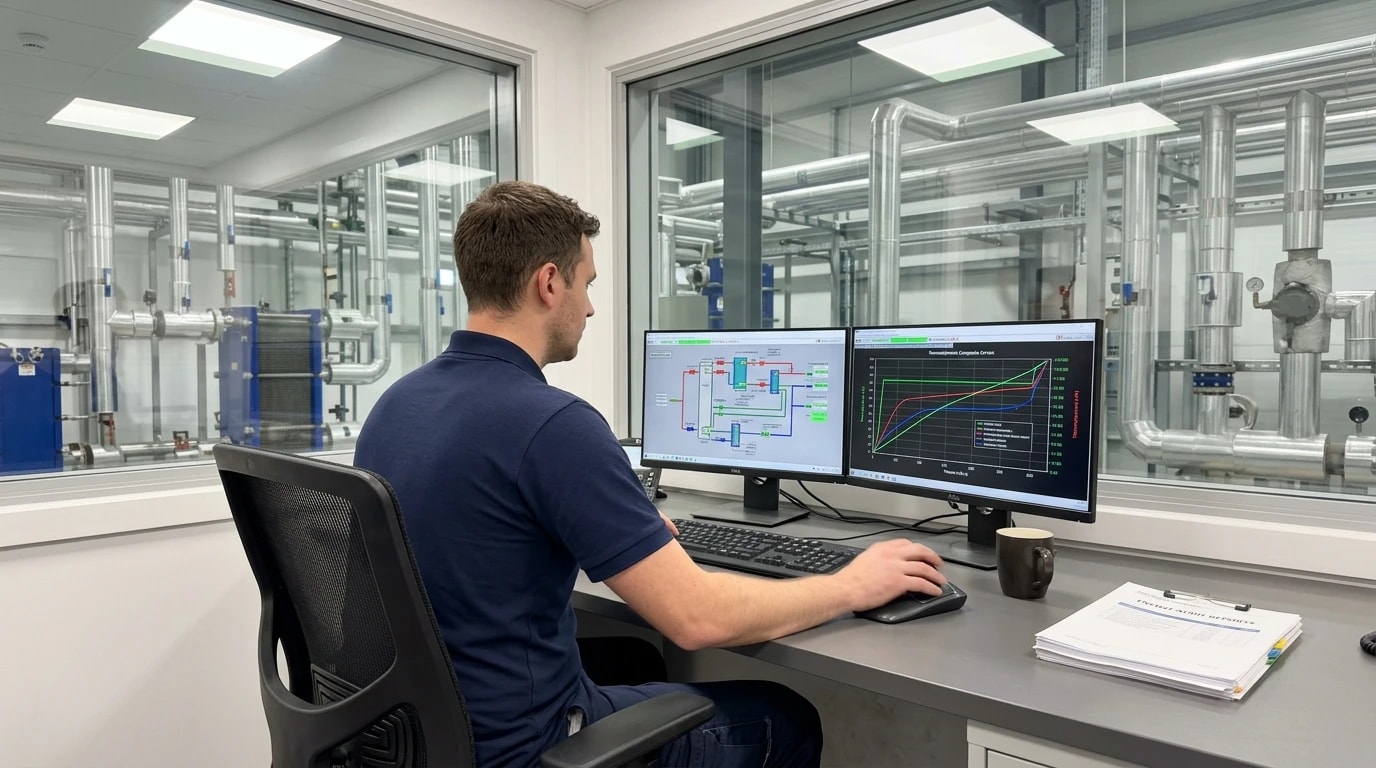
Achieving up to 50 per cent waste reduction requires looking beyond individual pieces of equipment. Thermal design teams must analyse the entire manufacturing process as an integrated system.
Pinch Analysis for Process Integration
Pinch Analysis remains the primary thermodynamic methodology for process integration, allowing engineers to design heat exchanger networks that minimise external hot and cold utility demands. The method constructs hot and cold composite curves representing all heat sources and heat sinks in the factory. The point of closest temperature approach is the "Pinch".
To achieve maximum thermodynamic efficiency, process designers must follow three fundamental rules:
- Do not transfer heat across the pinch.
- Do not use external utility heating below the pinch.
- Do not use external utility cooling above the pinch.
Violating these rules increases utility use and energy waste. Applying Pinch Analysis to complex chemical plants or paper mills often reveals opportunities to reduce steam consumption by 20 to 40 per cent without altering underlying processes.
Digital Consumption Monitoring and Process Optimisation
Many industrial facilities deploy digital monitoring platforms to track energy consumption in real time, collecting high-frequency data from steam, gas, temperature, and flow meters. Industrial energy management software analyses this data to identify operational anomalies, such as failing steam traps, fouled heat exchangers, or uninsulated pipe sections. This continuous monitoring allows utility managers to transition from reactive maintenance to predictive thermal optimisation, maintaining high efficiency across the plant's lifecycle.
Driving Capital Approval for Thermal Projects
Building a Board-Level Cost-Benefit Case
Executive boards rarely approve energy efficiency projects based solely on environmental benefits. Finance directors require metrics that fit strict investment criteria, meaning capital proposals must present clear projections for net present value (NPV), internal rate of return (IRR), and return on investment (ROI). Using clear, verified data from BS EN 16247-3:2022 audits and aligning savings projections with IPMVP Option B protocols reduces perceived technical risk, making projects highly attractive to financial stakeholders.
Futureproofing Against Volatile Utility Markets
Thermal conservation acts as a direct hedge against volatile energy markets. A factory that reduces its primary heat demand by 20 to 40 per cent is significantly less vulnerable to sudden utility price spikes. Highlighting this risk mitigation to corporate boards adds strategic value to financial calculations, proving that thermal efficiency protects long-term operating margins and competitive positioning.
Aligning with Mandatory UK Net-Zero Targets
UK legislation requires large manufacturing companies to demonstrate clear pathways to net-zero carbon emissions. Compliance schemes like ESOS Phase 4 mandate detailed carbon reporting and action plans. Thermal conservation is often the most cost-effective way to reduce Scope 1 emissions, as it directly displaces fuel combustion. By presenting waste heat recovery as a critical step in the corporate sustainability roadmap, energy managers can align capital requests with mandatory compliance requirements to secure necessary funding.
This article reflects the independent analysis and editorial opinion of EnerTherm Engineering. Product names, trademarks, and brands mentioned belong to their respective owners. EnerTherm Engineering is not affiliated with, endorsed by, or a licensee of any third-party software or product mentioned unless explicitly stated.

Managing Director — EnerTherm Engineering
Dr. François Pierrel is Managing Director of EnerTherm Engineering with over two decades of expertise in thermal design, heat transfer, and industrial energy optimisation. He holds a PhD in Heat Transfer from Cranfield University and a Post-Doctorate from Heriot-Watt University.
