
Pinch Analysis Cuts Heat Waste in Phase 4 Audits
Identify up to 30% thermal energy savings before the December 2026 ESOS deadline.
Industrial energy-intensive sectors in the UK face a tightening regulatory vice as the Energy Savings Opportunity Scheme (ESOS) Phase 4 compliance cycle intensifies. With critical qualification and submission deadlines looming, UK manufacturing organisations must act immediately to avoid costly last-minute filings. For chemical processors, pharmaceutical manufacturers, and food and beverage operators, a superficial "tick-box" energy audit is a squandered opportunity. Simple checklists might satisfy the minimum legal requirement of the Environment Agency, but they fail to address the core problem: systemic thermal energy waste.
Applying thermodynamic process integration, specifically Pinch Analysis, during an industrial energy audit in the UK transforms compliance from a regulatory burden into a highly profitable investment. This systematic methodology regularly cuts thermal utility consumption and associated Scope 1 carbon emissions by 10 to 30 per cent across high-energy processing facilities.
The Regulatory Framework of ESOS Phase 4
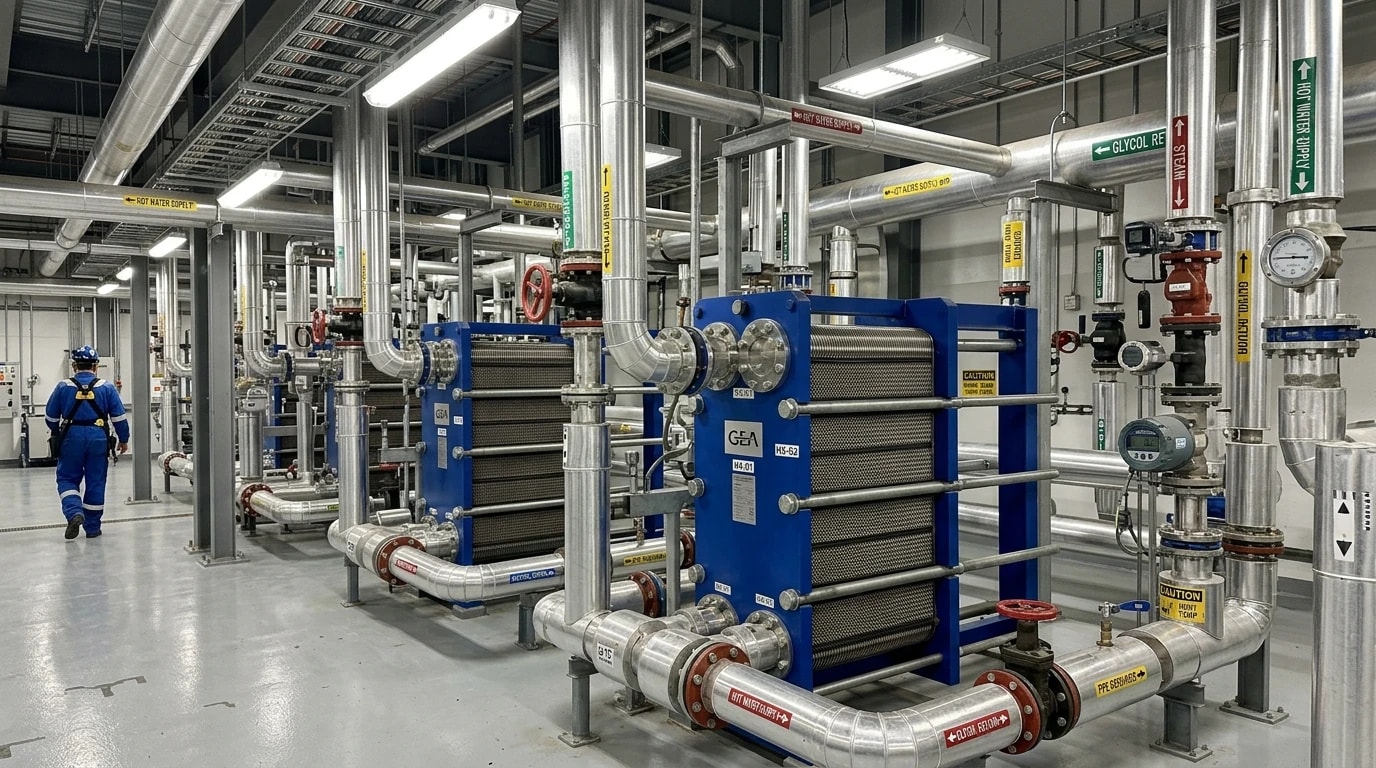
The regulations governing large UK organisations have changed significantly for Phase 4. Understanding the exact thresholds, deadlines, and structural updates is vital for compliance officers planning their audit strategy.
Qualification Thresholds and Deadlines
The qualification date for ESOS Phase 4 is 31 December 2026. UK undertakings must participate if they meet either of the following criteria on this specific date:
- They employ 250 or more people in the UK.
- They have an annual turnover exceeding £44 million and an annual balance sheet total exceeding £38 million.
If an organisation qualifies, the rule applies to all UK subsidiaries within its corporate group. The final compliance submission deadline is 5 December 2027. This four-year compliance window, running since 6 December 2023, requires organisations to measure and audit at least 95 per cent of their total energy consumption across buildings, transport, and industrial processes. This is an increase from the 90 per cent threshold applied in Phase 3.
| Parameter | ESOS Phase 3 | ESOS Phase 4 |
|---|---|---|
| Qualification Date | 31 December 2022 | 31 December 2026 |
| Compliance Deadline | 5 June 2024 | 5 December 2027 |
| Energy Coverage Threshold | 90% of total consumption | 95% of total consumption |
| Alternative Compliance Routes | DECs and GDAs accepted | DECs and GDAs removed |
| Reporting Portal | Smart Survey / Initial system | Manage Energy Savings Opportunity Scheme (MESOS) |
| Net Zero Mandate | Not applicable | Postponed to Phase 5 (Voluntary PAS 51215 in Phase 4) |
| Action Plan Tracking | Voluntary / Initial target-setting | Mandatory progress reporting on Phase 3 commitments |
Absolute Removal of Alternative Routes
A critical shift in Phase 4 is the complete removal of Display Energy Certificates (DECs) and Green Deal Assessments (GDAs) as valid compliance pathways. Industrial operators can no longer rely on these administrative shortcuts. The Environment Agency now mandates structured energy audits led by an approved Lead Assessor, or a fully certified ISO 50001 Energy Management System covering 100 per cent of the organisation's energy footprint.
Mandatory Action Plan Progress Tracking
Under the updated regulations, the Department for Energy Security and Net Zero (DESNZ) enforces strict progress tracking through the upgraded Manage Energy Savings Opportunity Scheme (MESOS) digital portal. Organisations must report their progress against the commitments made in their Phase 3 Action Plans. If a site has failed to implement its pledged energy-saving measures, the compliance officer must submit a formal, detailed explanation of why these targets were missed. This makes high-quality, practical energy audits during Phase 4 critical, as companies cannot afford to commit to unrealistic or poorly engineered actions.

Pinch analysis identifies the thermodynamic minimum energy requirement of your process — then designs the heat exchanger network to achieve it.
Why Standard Energy Audits Miss Industrial Heat Integration
Standard energy audits often adopt an equipment-by-equipment approach. The assessor examines an individual boiler, a single refrigeration compressor, or a specific process pump. They might recommend replacing a burner, adjusting a variable speed drive, or adding insulation to a short run of pipework. While these housekeeping measures offer incremental gains, they do not address the systemic thermal relationships within a complex chemical, food, or pharmaceutical plant.
In energy-intensive manufacturing, hot process streams must be cooled, and cold process streams must be heated. A typical plant might use cooling water to cool a hot reactor product, while simultaneously burning natural gas in a steam boiler to heat a feed stream entering a distillation column. This simultaneous use of external heating and cooling utilities on the same site represents a major thermodynamic mismatch. Standard audits cannot spot these opportunities because they lack the systematic tools to match heat sources and heat sinks across different process units.
The Power of Pinch Analysis in Thermal Auditing
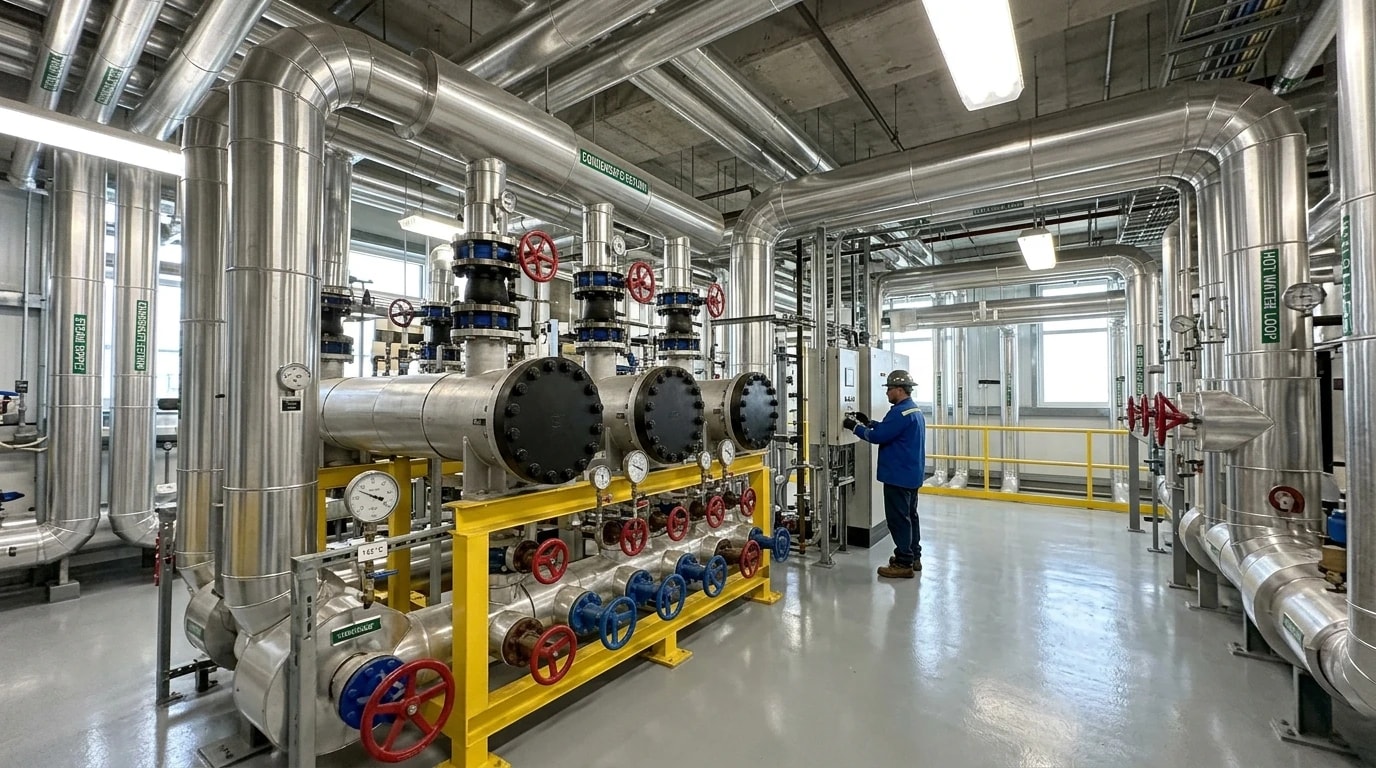
To solve these systemic inefficiencies, process engineers apply Pinch Analysis during an industrial energy audit in the UK. Originally developed by Bodo Linnhoff and his team at the University of Manchester, Pinch Analysis is a rigorous thermodynamic methodology that treats the entire manufacturing plant as a single integrated thermal system.
Defining the Pinch Point and the Composite Curves
Pinch Analysis begins by identifying every process stream that requires heating (cold streams) or cooling (hot streams). The engineer extracts critical thermodynamic data for each stream:
- Supply temperature (Ts)
- Target temperature (Tt)
- Mass flow rate (m)
- Specific heat capacity (Cp)
From these parameters, the heat capacity flow rate (CP=m×Cp) and the enthalpy change (ΔH=CP×[Tt−Ts]) are calculated.
The engineer then plots all hot streams together to create a single Hot Composite Curve on a Temperature-Enthalpy (T-H) diagram. Similarly, all cold streams are combined into a Cold Composite Curve. When these two curves are plotted on the same diagram, they reveal how closely the heat sources can match the heat sinks.
The minimum heating utility (QH,min) and minimum cooling utility (QC,min) are calculated using a fundamental thermal balance:
QH,min−QC,min=∑ΔHhot−∑ΔHcoldWhere:
- QH,min represents the minimum hot utility requirement (kW).
- QC,min represents the minimum cold utility requirement (kW).
- ∑ΔHhot represents the sum of enthalpy changes of all hot streams requiring cooling (kW).
- ∑ΔHcold represents the sum of enthalpy changes of all cold streams requiring heating (kW).
The point of closest approach between the Hot Composite Curve and the Cold Composite Curve is the Pinch Temperature or Pinch Point. This point acts as a thermodynamic dividing line for the entire manufacturing process.
The Three Golden Rules of Pinch Analysis
The thermodynamic Pinch Point divides the process into two distinct zones: a region above the Pinch, which is a net heat sink requiring only hot utility, and a region below the Pinch, which is a net heat source requiring only cold utility. To achieve the absolute minimum energy target of the plant, process engineers must strictly follow three rules:
- Do not transfer heat across the Pinch. Passing heat from a stream above the Pinch to a stream below the Pinch introduces a double penalty. It increases the hot utility requirement above the Pinch and increases the cold utility requirement below the Pinch by the exact same amount.
- Do not use hot utility below the Pinch. Any steam or hot water applied below the Pinch simply adds to the cooling load, wasting energy twice.
- Do not use cold utility above the Pinch. Any cooling water or chilled water applied above the Pinch forces the process to require more external heating.
Step-by-Step Execution of a Pinch-Aligned ESOS Audit
Conducting an industrial energy audit in the UK that incorporates Pinch Analysis requires a highly structured, data-driven approach. Unlike checklist assessments, this process demands deep coordination between energy auditors and onsite operations teams.
Step 1: Process Modelling and Stream Extraction
The engineering team must first construct an accurate process model of the plant. This involves measuring stream flows, temperatures, and pressures during stable operating conditions. This step is often challenging, as older industrial sites may lack sufficient instrumentation. Engineers often deploy non-invasive clamp-on ultrasonic flow meters and thermal imaging cameras to verify stream parameters.
Step 2: Setting the Minimum Temperature Difference (ΔTmin)
The minimum temperature difference (ΔTmin) is the smallest temperature gap allowed between a hot stream and a cold stream in any heat exchanger. Setting this value is an economic trade-off:
- A small ΔTmin (typically 5°C to 10°C) maximises heat recovery, reducing energy bills but requires larger, more expensive heat exchangers.
- A larger ΔTmin (typically 20°C to 30°C) reduces heat exchanger sizes and capital costs but increases external utility bills.
For chemical processing plants, ΔTmin typically ranges from 10°C to 20°C. In food and beverage or dairy operations, where heat transfer coefficients are lower and hygiene is paramount, a ΔTmin of 5°C to 10°C is common.
Step 3: Heat Exchanger Network (HEN) Synthesis
With the stream data and ΔTmin established, the engineers design or modify the Heat Exchanger Network (HEN). The goal is to identify how best to match hot streams above the Pinch with cold streams above the Pinch, and hot streams below the Pinch with cold streams below the Pinch.
Any remaining heating load above the Pinch is met using high-temperature utilities (such as steam boilers or thermal oil heaters). Any remaining cooling load below the Pinch is met using low-temperature utilities (such as cooling towers or chillers). This structured network synthesis ensures that every megawatt of heat is used at its highest thermodynamic potential.

Pinch analysis identifies the thermodynamic minimum energy requirement of your process — then designs the heat exchanger network to achieve it.
Real-World Benefits in Energy-Intensive Manufacturing
Applying Pinch Analysis to an industrial energy audit in the UK delivers clear economic and environmental returns. The benefits are especially pronounced in three key manufacturing sectors.
Chemical Processing
Chemical plants operate highly integrated, continuous processes like distillation, reaction, and evaporation. By auditing these systems using Pinch principles, operators frequently identify that low-grade waste heat from a reactor condenser can preheat the cold feed of a distillation column, bypassing the steam boiler. Historical data across chemical plants indicates that Pinch-driven retrofits yield average energy savings of 15 to 40 per cent with payback periods often under two years.
Food and Beverage
In food and beverage operations, pasteurisation, sterilisation, and clean-in-place (CIP) cycles require large volumes of hot water, while refrigeration systems simultaneously cool products down. A Pinch-based audit identifies opportunities to capture the heat rejected from refrigeration condensers and use it to preheat boiler feed water or wash water. This eliminates natural gas consumption and directly lowers the facility's carbon footprint.
Pharmaceuticals
Pharmaceutical manufacturing relies on strict climate-controlled cleanrooms, batch reactors, and purification systems. The high demand for heating, ventilation, and air conditioning (HVAC) combined with batch process thermal loads makes energy management complex. Pinch Analysis helps identify opportunities to coordinate these mismatched batch processes, allowing thermal energy to be stored and transferred between batches, reducing both cooling and heating peaks.
Future-Proofing for Phase 5 with PAS 51215-1:2025
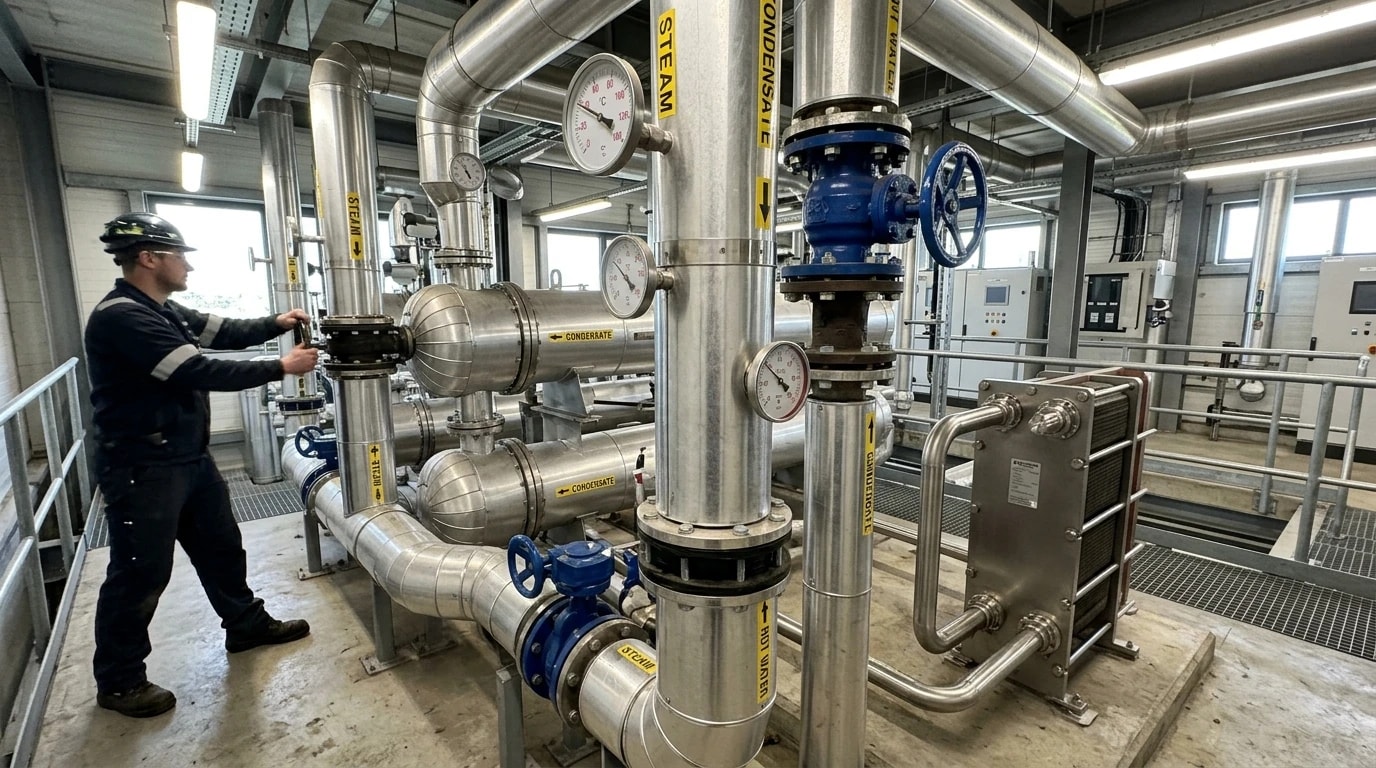
Although DESNZ officially postponed mandatory Net Zero audit requirements to ESOS Phase 5 (covering the 2027 to 2031 compliance period), forward-thinking organisations are already preparing. Fulfilling Phase 4 requirements is only the immediate hurdle; the long-term goal is full decarbonisation.
The Rise of PAS 51215-1:2025 and PAS 51215-2:2025
To help organisations bridge the gap between energy efficiency and decarbonisation, BSI published two voluntary standards:
- PAS 51215-1:2025 (Energy and decarbonisation assessment – Part 1: Process – Specification).
- PAS 51215-2:2025 (Energy and decarbonisation assessment – Part 2: Competencies of lead assessors and assessment teams – Specification).
These standards provide a rigorous, unified framework to conduct combined energy and greenhouse gas (GHG) reduction audits. Integrating these voluntary standards into a Phase 4 audit ensures that any energy-saving measures recommended today do not lock the plant into high-carbon infrastructure tomorrow.
The Interplay Between Pinch Analysis and Industrial Electrification
A major risk in industrial decarbonisation is "oversizing" new low-carbon assets. Many UK manufacturers are planning to replace gas boilers with high-temperature industrial heat pumps or electric boilers. However, industrial electricity in the UK is historically three to four times more expensive than natural gas. This wide spark spread means that a direct, unoptimised swap of a gas boiler for an electric heater can cause operational costs to rise rapidly.
Applying Pinch Analysis during an industrial energy audit in the UK solves this issue by identifying how to reduce the plant's overall thermal load by 10 to 30 per cent before any new equipment is purchased. This allows the new heat pump or electric boiler to be significantly downsized, cutting both the upfront capital expenditure (CAPEX) and the subsequent electricity bills (OPEX).
Choosing the Right Lead Assessor and Thermal Specialist
Meeting the strict requirements of ESOS Phase 4 and preparing for Phase 5 requires a partner with deep, specialised thermodynamic engineering capabilities. Compliance managers must look beyond standard consulting firms that only offer high-level checklist assessments.
The Role of the Lead Assessor
An ESOS assessment must be reviewed and signed off by an approved Lead Assessor from an Environment Agency register. Under Phase 4 rules, Lead Assessors will use the upgraded MESOS portal to file compliance notices. They must also verify that the organisation has accurately accounted for its Phase 3 Action Plan commitments and documented any deviations. Choosing an assessor who is also qualified under PAS 51215-2:2025 ensures they possess the advanced competencies in carbon accounting and process integration necessary for industrial-scale assessments.
Partnering with Thermal Engineering Experts
While a Lead Assessor can sign off on compliance, they may not possess the specialised software tools or academic engineering background required to execute a complex Pinch Analysis. Progressive manufacturers often pair their Lead Assessor with a dedicated thermal engineering consultancy. This ensures that the ESOS audit delivers a detailed, thermodynamically sound Heat Exchanger Network design that can actually be constructed on the factory floor, providing reliable savings for decades to come.
By integrating Pinch Analysis into an industrial energy audit in the UK, energy managers can confidently submit their Phase 4 compliance notifications, knowing they have unlocked the maximum possible value from their thermal systems.
This article reflects the independent analysis and editorial opinion of EnerTherm Engineering. Product names, trademarks, and brands mentioned belong to their respective owners. EnerTherm Engineering is not affiliated with, endorsed by, or a licensee of any third-party software or product mentioned unless explicitly stated.

Technical Manager — EnerTherm Engineering
John Naranjo is Technical Manager at EnerTherm Engineering, bringing specialist expertise in chemical and environmental engineering. He recently led the implementation of Omni Vision, EnerTherm's real-time energy and utility monitoring platform. He holds an MSc in Environmental Engineering from the University of Huelva and a BSc in Chemical Engineering, with memberships in both the Energy Institute and IChemE.
