Pinch Analysis Cuts Industrial Electrification Costs
An IETF-aligned study on reducing thermal demand by 15-30% before electrifying.
According to the Climate Change Committee's 2026 progress report to Parliament, industrial electrification in the UK lags behind other net zero pathways due to high retail electricity tariffs and substantial capital barriers. When switching from natural gas to electricity, manufacturing facilities face a steep hurdle: the UK's industrial electricity price is historically several times higher than that of natural gas. This price differential, known as the spark spread, means a direct, unoptimised swap from gas boilers to electric process heating can lead to unsustainably high operational bills. To address this, progressive process sites must apply thermodynamic process integration, specifically Pinch Analysis, before investing in industrial electrification solutions.
Pinch Analysis is a rigorous engineering methodology that determines the absolute minimum heating and cooling utilities required by a process. Mapping out heat recovery opportunities across an entire manufacturing plant allows process engineers to reduce the thermal load of the facility before specifying new electrical assets. This thermodynamic optimisation dramatically lowers both the capital expenditure (CAPEX) of the electric equipment and the ongoing operating expenditure (OPEX) of the power consumed.
The Operational Cost Challenge of the Fossil Fuel to Electric Heat Transition
The Impact of the Spark Spread on UK Manufacturing
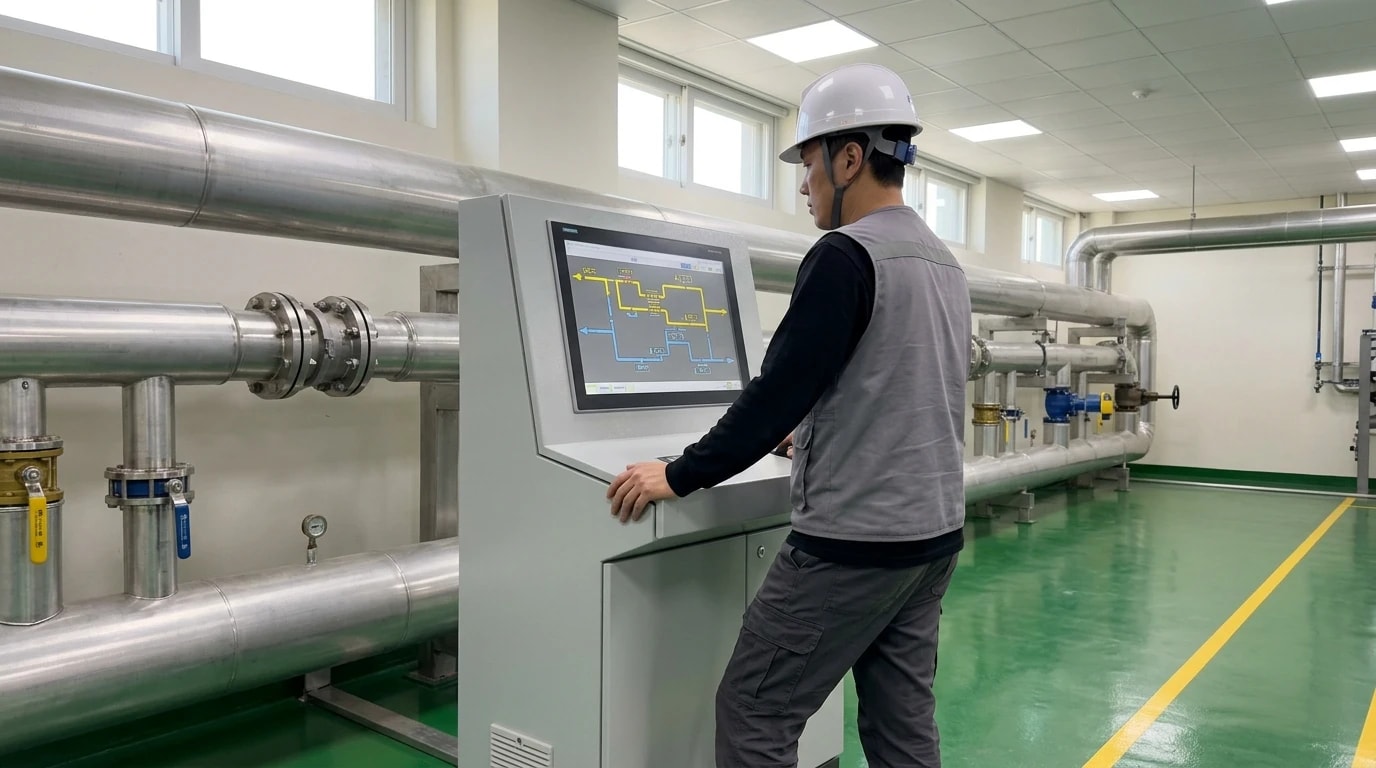
Historically, natural gas has served as the primary source of UK process heat due to its low cost relative to electricity. The spark spread—representing the ratio of industrial electricity prices to gas prices—often ranges from 3:1 to as high as 4:1. Kilowatt-hour for kilowatt-hour, electric heat is therefore significantly more expensive than gas-derived heat.
Because of this tariff disparity, directly replacing a gas-fired boiler with an electric boiler of equivalent thermal capacity can triple or quadruple a facility's monthly energy bills. To make the fossil fuel to electric heat transition commercially viable, plant operators must first drive down the absolute thermal energy demand of their processes. Slicing the baseline heating demand through systematic heat integration reduces the volume of high-priced electricity that the facility must import.
Policy Alignment with the UK Industrial Decarbonisation Strategy
HM Government's UK Industrial Decarbonisation Strategy outlines a clear pathway to transition manufacturing sites away from fossil fuel combustion. While carbon capture and storage (CCS) and hydrogen are options for specific industrial clusters, electrification is the primary route for the majority of dispersed, low-to-medium-temperature processes.
Without targeted operational cost reductions, however, businesses risk losing international competitiveness, potentially leading to carbon leakage. Adopting Pinch Analysis directly supports the strategy's dual focus on deep decarbonisation and high resource efficiency, ensuring that UK manufacturers can transition without jeopardising their commercial viability.
Minimising Sizing Requirements Before Capital Investment
A common error in decarbonisation planning is sizing electric process heaters based on legacy fossil-fuel boiler capacities. Gas boilers are frequently oversized to accommodate transient peak loads and conservative design safety margins.
Because the capital costs of industrial electrification scale almost linearly with electrical capacity, replicating these legacy margins in electric process heaters results in excessive, unnecessary CAPEX. Pinch Analysis reveals the true thermodynamic requirement of the plant during both steady-state and dynamic operations, allowing engineers to right-size electric process heaters to the absolute minimum required capacity.

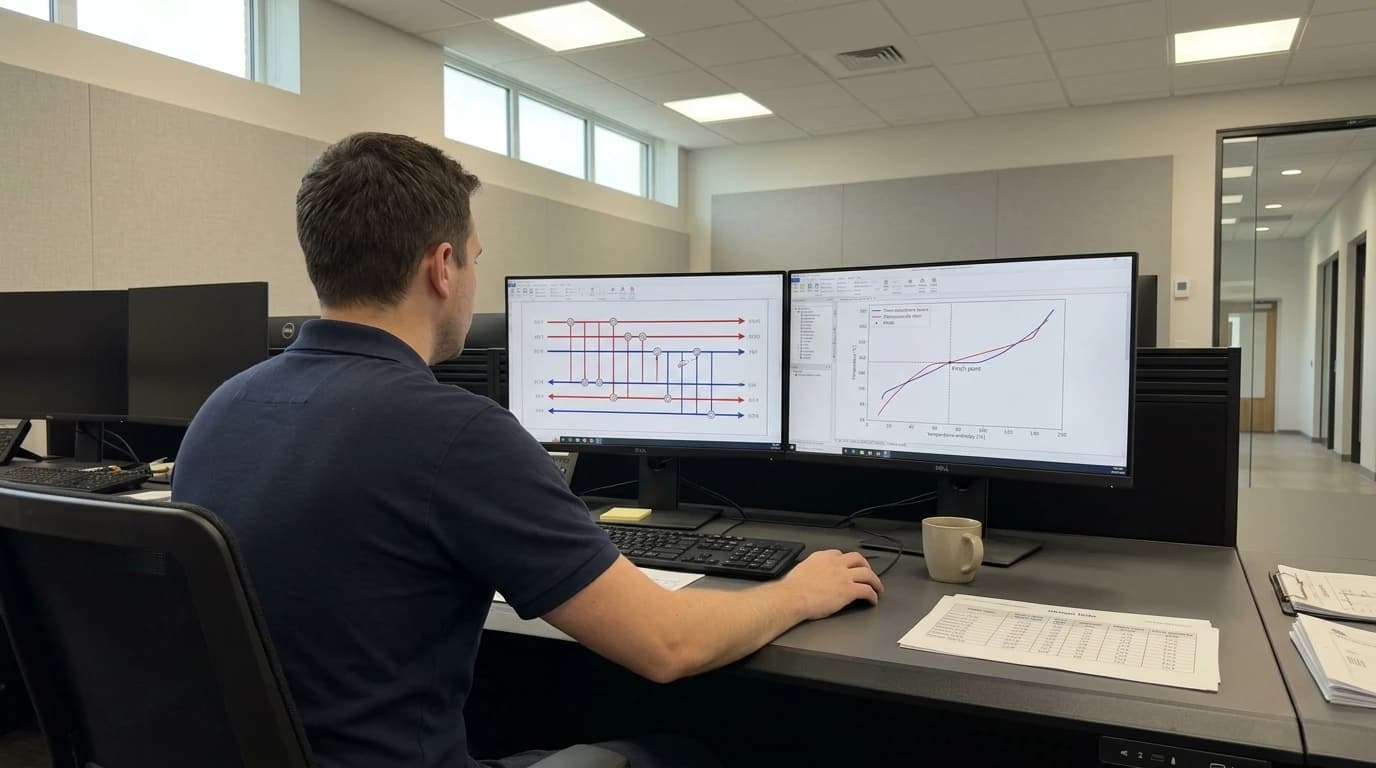
Pinch analysis identifies the thermodynamic minimum energy requirement of your process — then designs the heat exchanger network to achieve it.
Thermodynamic Fundamentals of Pinch Analysis in Electrification
Establishing Composite Curves and the Pinch Point
Process engineers begin a Pinch Analysis by collecting data on all process streams that require heating or cooling. This data collection is typically part of industrial energy efficiency audits conducted under standards such as ISO 50002-1:2025. Each stream is defined by its mass flow rate, specific heat capacity, supply temperature, and target temperature.
Design teams use modelling software, such as Aspen Energy Analyser or SPRINT, to combine these individual streams into two global curves:
- The Hot Composite Curve: Represents the total heat available within the process that must be rejected (cooling demand).
- The Cold Composite Curve: Represents the total heat required by the process that must be supplied (heating demand).
When process engineers plot these curves on a Temperature-Enthalpy (T-H) diagram, they shift them horizontally until they are as close as possible. The point of closest approach, defined by the minimum temperature difference (ΔTmin), is the Pinch Point.
The Thermodynamic Divider: Above vs. Below the Pinch
The Pinch Point acts as a thermodynamic divider, splitting the process into two thermal regions with strict rules:
- Above the Pinch: This region is a net heat sink. It requires external heating utility, and no cooling utility must be applied here.
- Below the Pinch: This region is a net heat source. It requires external cooling utility, and no heating utility must be applied here.
Transferring heat across the Pinch Point (from above to below) creates a double penalty: it increases the need for external heating above the pinch and simultaneously increases the need for external cooling below it.
Process Optimisation and Utility Sizing
Designing the heat exchanger network (HEN) to respect the Pinch Point maximises internal heat recovery by matching hot streams that need cooling with cold streams that need heating.
Only after exhausting all internal recovery opportunities should engineers design utility systems. This sequence ensures that the size of any external heating system, whether an electric boiler or a resistive heater, is minimised. Typical Pinch retrofits achieve thermal energy savings of 10 to 40 per cent, which translates directly to a reduction in the required electrical capacity of the new utility systems.
Optimising Heat Pump Integration Across the Pinch
The Golden Rule of Industrial Heat Pump Feasibility
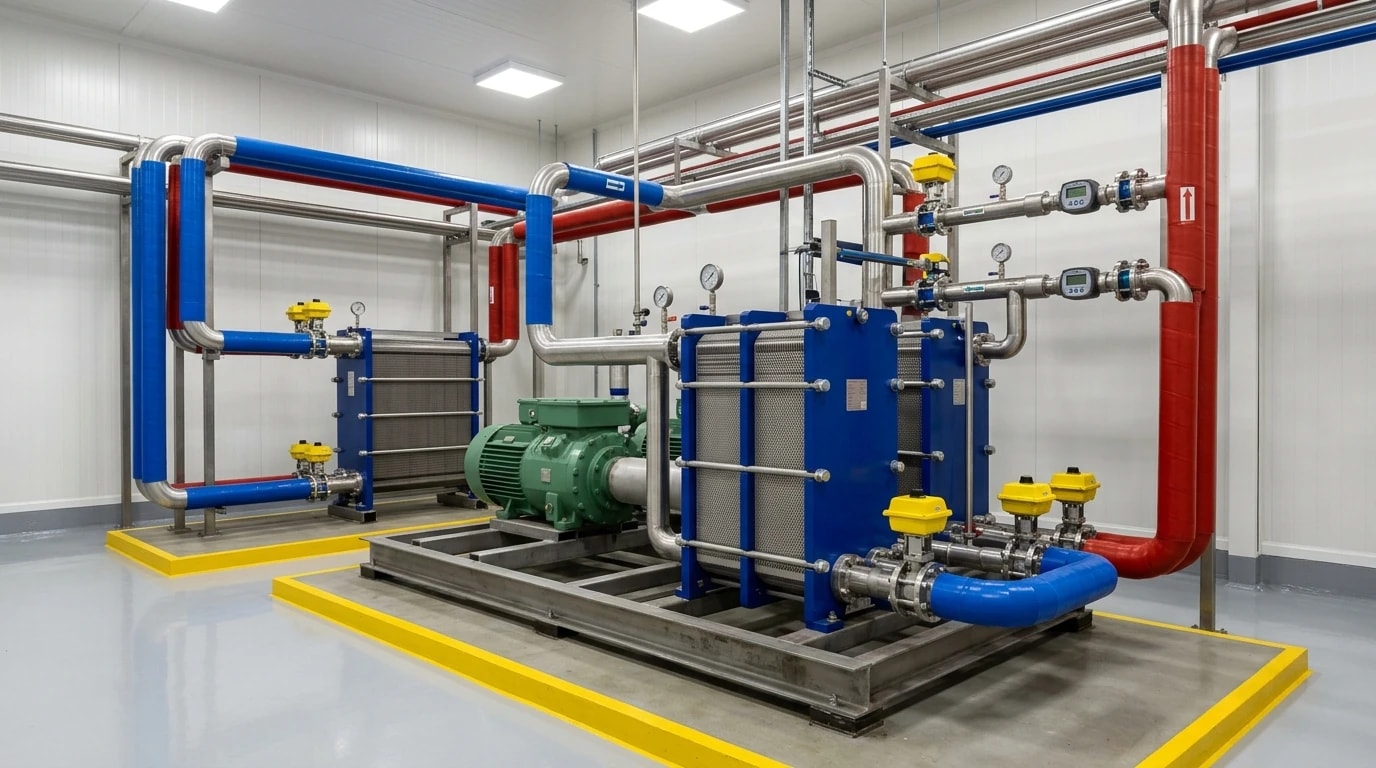
According to the GOV.UK Energy Innovation Needs Assessment: Industrial decarbonisation, industrial heat pumps are highly efficient industrial electrification solutions for low-to-medium-temperature applications, such as those in food and drink, chemical, and paper manufacturing. However, a heat pump must be integrated correctly around the Pinch Point to deliver true thermodynamic benefits.
The golden rule of heat pump integration is that the heat pump must operate across the Pinch Point. It must extract waste heat from a stream below the pinch (cooling duty) and upgrade it to a temperature above the pinch (heating duty).
If integrated entirely above the pinch, the heat pump absorbs heat from a region that is already short of heat, failing to reduce the external utility demand. If integrated entirely below the pinch, it rejects heat into a region that already has excess heat, failing to reduce the cooling load while wasting electrical power.
Coefficient of Performance and Temperature Lift
To evaluate the economic viability of a heat pump, engineers calculate its actual Coefficient of Performance (COPactual), representing the ratio of useful heat delivered to the electrical power consumed:
COPactual=η⋅Tsink−TsourceTsinkwhere:
- Tsink is the heat delivery temperature (sink) in Kelvin (K).
- Tsource is the waste heat source temperature in Kelvin (K).
- η is the Carnot efficiency multiplier of the industrial heat pump, typically ranging from 0.4 to 0.6 depending on compressor design.
Pinch Analysis helps engineers identify the highest available source temperature below the pinch and the lowest viable sink temperature above the pinch. By minimising the temperature lift (Tsink−Tsource), engineers maximise the COP, often achieving values of 3.0 to 5.0. This high operating efficiency dramatically reduces power demand, directly countering high retail electricity tariffs.
Structuring an Industrial Heat Pump Feasibility Study
Before investing, operators should conduct a structured industrial heat pump feasibility study. This study must compile accurate, empirical temperature profiles and mass flow rates rather than relying on nominal design data.
Applying Pinch methodology during this study ensures the heat pump is not oversized. It also prevents the heat pump from competing with cheaper, passive heat recovery options like simple gas-to-liquid heat exchangers. Passive heat recovery must always be prioritised, leaving the heat pump to address the remaining thermal lift across the pinch.

Pinch analysis identifies the thermodynamic minimum energy requirement of your process — then designs the heat exchanger network to achieve it.
Downsizing Capital Assets and Eliminating Grid Upgrade Bottlenecks
Sizing Electric Process Heaters for Industry
Direct electrification of process heating often relies on electric process heaters for industry, utilising resistive, inductive, or electromagnetic elements to heat process fluids directly. Unlike gas burners, which tolerate design oversizing with minimal capital penalty, high-capacity electric heaters require expensive, heavy-duty electrical switchgear, transformers, and cabling.
Using Pinch Analysis to maximise passive heat recovery substantially reduces the required kilowatt rating of these heaters. For example, if a chemical reactor pre-heating loop is integrated with a product cooling stream, the required electric heater capacity might drop from 1,500 kW to 900 kW. This down-sizing saves capital on the heater itself and lowers the cost of associated electrical infrastructure.
Sizing Electric Steam Generation for Industry
For manufacturing sites relying on steam networks, such as breweries, paper mills, and pharmaceutical plants, electric steam generation for industry is a critical decarbonisation pathway. This typically involves retrofitting gas-fired steam boilers with high-voltage electrode boilers or resistive steam generators.
However, electric steam boilers draw massive electrical loads; a typical 10-tonne-per-hour boiler requires approximately 6.5 MW of electrical power.
Applying Pinch Analysis to steam condensate and feed-water loops allows process teams to pre-heat boiler feed-water using low-grade process waste heat. Lowering the overall steam demand through thermal integration directly downsizes the required electric steam generator, saving hundreds of thousands of pounds in capital costs.
Bypassing Electrical Grid Connection Delays
A significant non-technical barrier to industrial electrification in the UK is the long queue for grid connection upgrades. Many industrial sites operate near their maximum imported power capacity. Adding several megawatts of electric heating capacity requires a formal application to the local Distribution Network Operator (DNO) for an imported capacity upgrade.
In 2026, these upgrades routinely face wait times of three to eight years, alongside substantial reinforcement charges. By minimising the electrical demand of the new assets through Pinch Analysis, plant engineers can often keep the total site load within the existing grid allocation. Bypassing a grid upgrade entirely removes a major schedule bottleneck, allowing the facility to proceed with its industrial decarbonisation strategy UK on its own timeline.
Designing an Industrial Electrification Roadmap
Phase 1: Industrial Energy Efficiency Audits
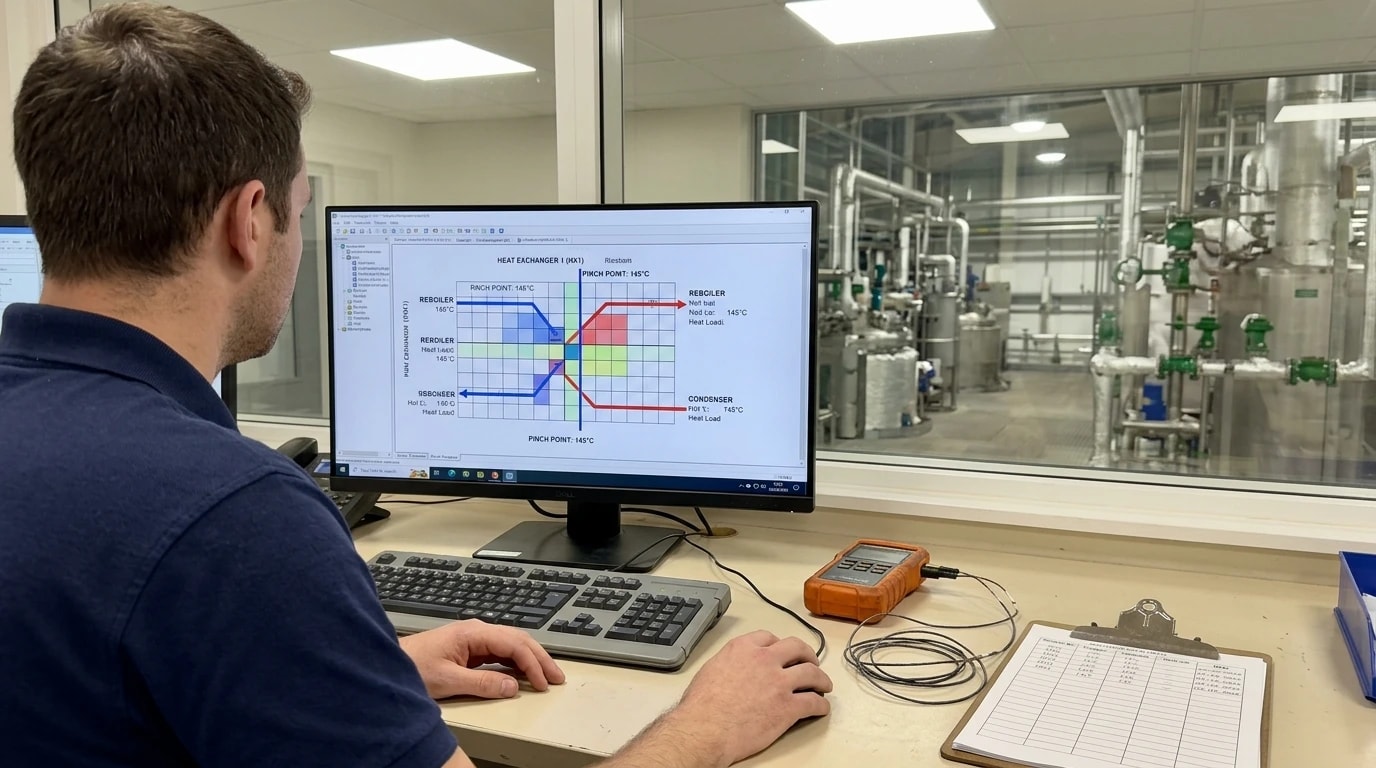
The first step of a successful industrial electrification roadmap is a detailed energy audit. These industrial energy efficiency audits must align with ISO 50002-1:2025 to ensure structured data collection and verification.
During this phase, technicians install temporary clamp-on flow meters and temperature loggers to capture true operational profiles. Relying solely on static piping and instrumentation diagrams (P&IDs) is risky, as actual operating conditions frequently deviate from original design specifications.
Phase 2: Pinch Analysis and Integration Mapping
Once the stream data is validated, process engineers build a thermodynamic model of the facility to perform the Pinch Analysis, generating:
- The Grand Composite Curve (GCC): This curve shows net heat utility requirements at different temperature levels, indicating exactly where heat pumps, hot water loops, or steam lines can be integrated.
- Heat Exchanger Network (HEN) Options: The analysis presents multiple network configurations, balancing the number of new heat exchangers against achieved energy savings to identify the shortest payback period.
- An Electrification Specification: This provides precise, right-sized specifications for the electric heaters, steam boilers, and heat pumps required for the transition.
Phase 3: Accessing Public Funding via the IETF
To help offset the initial engineering and capital costs, the UK government established the Industrial Energy Transformation Fund (IETF), which provides grant funding for feasibility studies, engineering designs, and the deployment of deep decarbonisation technologies.
A robust application to the IETF requires clear evidence of projected energy savings and carbon reductions. A completed Pinch Analysis provides this evidence, proving that the proposed electrification project is thermodynamically optimised and represents a highly cost-effective use of public funds. Navigating these requirements with a net zero manufacturing consultancy UK helps secure these competitive grants, significantly improving the project's return on investment.
Comparative Cost-Benefit Analysis of Pinch-Led Electrification
To demonstrate the economic value of process integration, the table below compares a standard, direct electrification project with an integrated, Pinch-led electrification project for a representative mid-sized food processing facility.
| Financial and Technical Parameters | Standard Electrification (Unoptimised Direct Swap) | Pinch-Led Electrification (Integrated System) | Financial and Operational Impact |
|---|---|---|---|
| Baseline Thermal Energy Demand | 8,000 kW | 5,200 kW | 35 per cent reduction in total thermal load |
| Pinch-Identified Heat Recovery | 0 kW | 2,800 kW | Direct fuel/electricity offset |
| Electric Heater Sizing | 8,000 kWe | 3,200 kWe (plus 2,000 kWe heat pump) | 35 per cent reduction in total electric heater capacity |
| Industrial Heat Pump Integration | None | 2,000 kWe capacity | High-efficiency heat upgrade (COP of 4.2) |
| Grid Connection Upgrade Cost | £750,000 (Requires new substation) | £0 (Fits within existing 6 MVA capacity) | Saved £750,000 in capital and avoided DNO delays |
| Annual Electricity Consumption | 48,000 MWh | 27,200 MWh | 43 per cent lower annual electricity demand |
| Annual Electricity Bill (at £150/MWh) | £7,200,000 | £4,080,000 | £3,120,000 saved in annual operating costs |
| Total Project CAPEX (Equipment + Grid) | £3,200,000 | £2,400,000 (Includes HEN + Heat Pump) | £800,000 lower initial capital outlay |
| Estimated Payback Period | Not viable (Negative ROI vs. gas) | 2.8 years (Without grants) | Reduced to 1.6 years with IETF grant support |
Quantifying the Capital and Operational Savings
As shown in the comparative analysis, an unoptimised direct swap of gas boilers for electric heaters results in an extremely high grid connection upgrade cost and an annual electricity bill of £7.2 million. This operating cost is commercially unviable compared to legacy natural gas prices, even when accounting for UK Emissions Trading Scheme (ETS) carbon penalties.
In contrast, the Pinch-led approach reduces baseline thermal demand by 35 per cent through passive heat recovery. It then integrates an industrial heat pump across the Pinch Point to deliver 2,000 kW of heat at a high COP of 4.2. This thermal integration lowers total annual electricity consumption to 27,200 MWh, saving more than £3.1 million in operating costs every year.
Mitigating Strategic and Financial Risks
By keeping the total electrified load within the site's existing grid capacity, the plant avoids the £750,000 substation upgrade fee and the multi-year DNO connection queue. The project can be executed immediately, protecting the facility against rising carbon costs and aligning with corporate net zero targets.
Furthermore, the rigorous thermodynamic evidence generated during Pinch Analysis strengthens the business case, making the project highly competitive for IETF capital grants. For UK manufacturers looking to manage the transition from fossil fuels to electricity, Pinch Analysis is an essential engineering tool to control capital costs and secure long-term operational profitability.
This article reflects the independent analysis and editorial opinion of EnerTherm Engineering. Product names, trademarks, and brands mentioned belong to their respective owners. EnerTherm Engineering is not affiliated with, endorsed by, or a licensee of any third-party software or product mentioned unless explicitly stated.

Simulation Engineer — EnerTherm Engineering
Rajesh Sekar is a Simulation Engineer at EnerTherm Engineering, specialising in computational fluid dynamics (CFD), finite element analysis (FEA), and thermal process simulation. He holds a degree from Cranfield University and brings extensive experience in simulation-based product development from the automotive, aerospace, and energy sectors.
