Paper Mill Energy Efficiency: Why Condensate Return Matters
An audit-led approach targeting 90% condensate return in paper mill boiler systems.
Condensate return is the controlled recovery of hot water formed after steam has released its latent heat in a paper machine dryer, returning that water and its remaining heat to the boiler system. Focus on Energy estimates that condensate can retain up to 16% of the energy used to produce the steam, yet many paper mills still discharge usable heat, water and treatment chemicals through poorly controlled return systems.
For paper, tissue and corrugated-board producers, this loss extends beyond the boiler house. It raises fuel demand, increases boiler-feedwater make-up, adds water-treatment load and can destabilise dryer-section performance. The paper machine accounts for roughly two-thirds of mill energy demand, while the dryer section dominates thermal use. Condensate management therefore warrants the same attention as press dewatering, hood balance and steam-pressure control.
A well-run condensate system supports paper mill energy efficiency improvements without changing furnish, grade or production rate. The work starts with evidence. An energy audit can establish where condensate goes, its pressure and temperature, how much flash steam is lost, and whether dryer drainage consumes unnecessary steam or electrical power.
Why condensate return matters for paper mill energy efficiency improvements
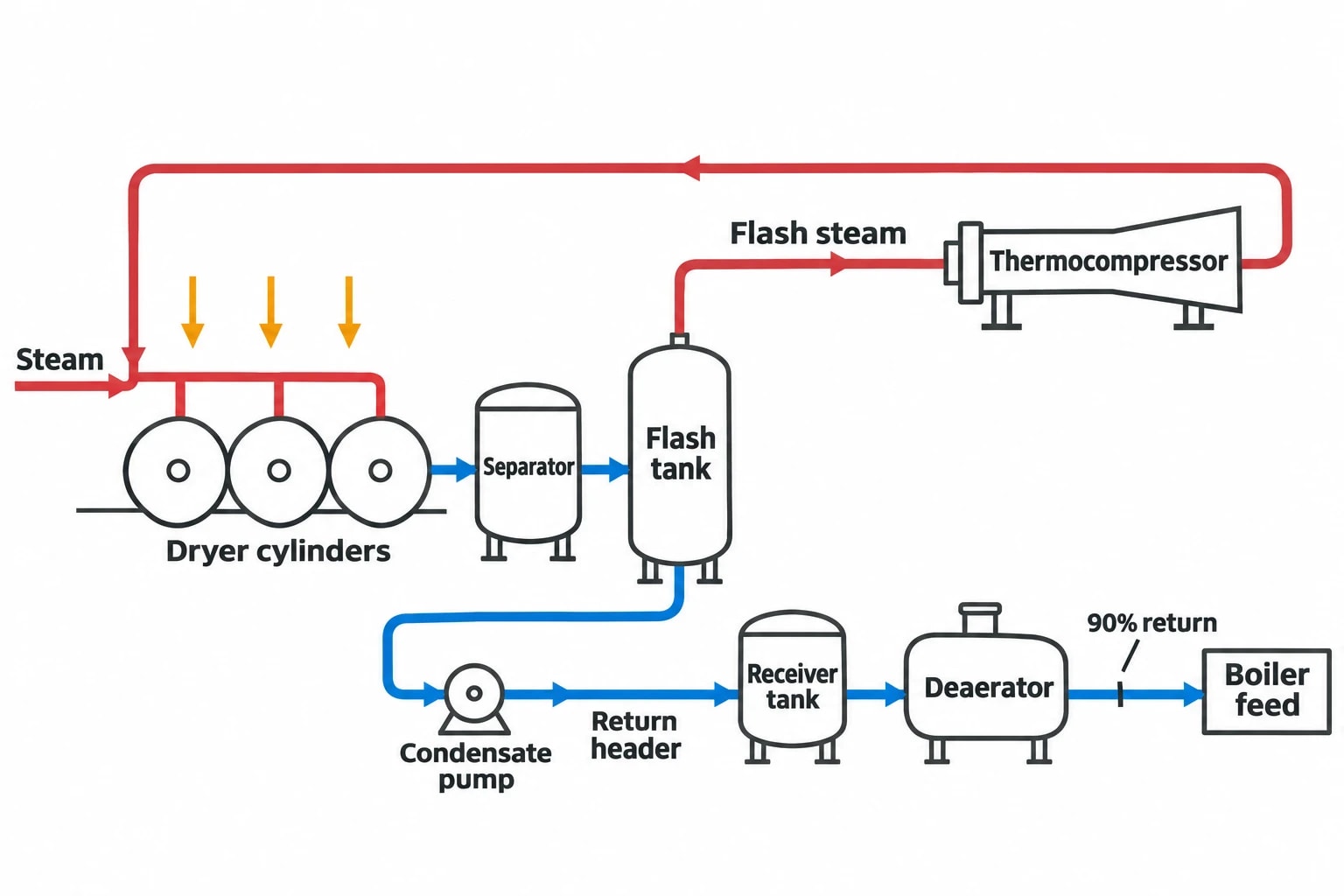
Steam enters dryer cylinders at controlled pressure and condenses as it transfers heat through the cylinder shell into the paper web. The resulting condensate remains hot. Returning it to the boiler house preserves treated water and sensible heat that would otherwise be replaced with cold make-up water and new steam generation.
Focus on Energy’s paper-mill guidance sets a practical target of 90% condensate return to the boiler. The right target for an individual site still depends on grade mix, machine configuration, condensate-contamination risk and return infrastructure. It remains a useful audit benchmark because it highlights the gap between condensate generated and condensate reaching the boiler-feed system.
The cost sits in several parts of the mill
Lost condensate increases fuel use because the boiler must heat make-up water from a lower starting temperature. It also increases the volume of water requiring softening, chemical treatment and deaeration, raising chemical consumption, blowdown requirements and wastewater loading.
The dryer section adds another complication. Condensate drainage must remove liquid from each cylinder while maintaining enough pressure differential for heat transfer. Inadequate drainage can flood dryer cylinders, reduce drying capacity and create moisture-profile problems. Operators may respond by increasing steam pressure or blow-through steam, concealing the root cause while increasing consumption.
The most valuable condensate-return projects consider three linked outcomes:
- thermal energy returned to the boiler system;
- water and treatment chemicals retained on site;
- stable cylinder drainage that protects runnability, sheet moisture and quality.
Condensate is part of the water-energy balance
Dryer drainage is closely tied to the paper machine water balance. A condensate system that sends excessive vapour to the condenser increases cooling-water duty. A system that leaks or vents hot condensate loses heat that could otherwise displace boiler fuel demand.
A boiler-house-only review can miss the cause of poor return performance. The audit boundary should include dryer groups, separators, flash tanks, thermocompressors where fitted, condensate pumps, return headers, receiver tanks and deaerator connections.
Identify where your plant is losing energy and quantify the savings potential — our audits map every heat source, sink, and waste stream in your facility.
How condensate moves through a paper machine dryer section
A dryer section must move steam in, transfer heat through the cylinder shell, remove condensate, separate vapour from liquid and return both streams at useful pressure. Each part affects paper mill energy efficiency improvements.
Steam, condensate and non-condensable gases
Steam gives up latent heat as it condenses inside a dryer cylinder. The liquid must be removed continuously through a siphon. Non-condensable gases, principally air, also require removal because they reduce heat-transfer rates at the cylinder surface.
At lower machine speeds, condensate can collect at the bottom of a cylinder and a stationary siphon may remove it effectively. At higher speeds, condensate forms a rotating ring against the cylinder shell. Drainage arrangements, pressure differentials and blow-through steam must match the machine’s operating range.
A poorly matched arrangement can cause:
- condensate accumulation in dryer cylinders;
- high differential-pressure demand;
- excess blow-through steam reaching the condenser;
- fluctuating cylinder pressure;
- wet streaks, unstable moisture profiles or sheet breaks;
- steam consumption rising without a corresponding production gain.
Why differential pressure must be controlled
Condensate needs a pressure gradient to move through siphons, separators, traps, piping and collection vessels. Excessive differential pressure can carry too much live steam into the condensate system. Too little can leave condensate in cylinders and restrict drying.
The aim is the lowest stable pressure differential that drains the cylinders across the required speed and basis-weight range. Audit teams should compare actual differential pressure with machine speed, dryer-group pressure, condensate temperature, separator level, vent flow and moisture performance. A single pressure reading offers little insight without this context.
Flash steam is a resource when it has a defined user
When high-pressure condensate moves to a lower-pressure vessel, part of it flashes into steam. Flash steam should have a defined consumer where it can displace fresh steam. Focus on Energy identifies uses including wet-end dryers, pocket ventilation-air preheating and steam showers, subject to correct trapping and piping design.
Using flash steam to heat water may be unsuitable where the temperature level and operating profile do not match. The audit should establish the pressure, quantity, timing and reliability of the flash-steam source before assigning a user. A heat source that arrives intermittently or at unsuitable pressure will not deliver dependable savings.
The condensate losses an energy audit should find
A structured assessment separates visible defects from system-level losses. Poor-performing return systems often contain both.
Leaks, failed traps and uninsulated fittings
Leaks from condensate pumps, drain lines, flanges and valves lose treated hot water directly. Steam traps that fail open can pass live steam into the return system. Failed-closed traps can stall equipment, flood heat-transfer surfaces and disrupt production.
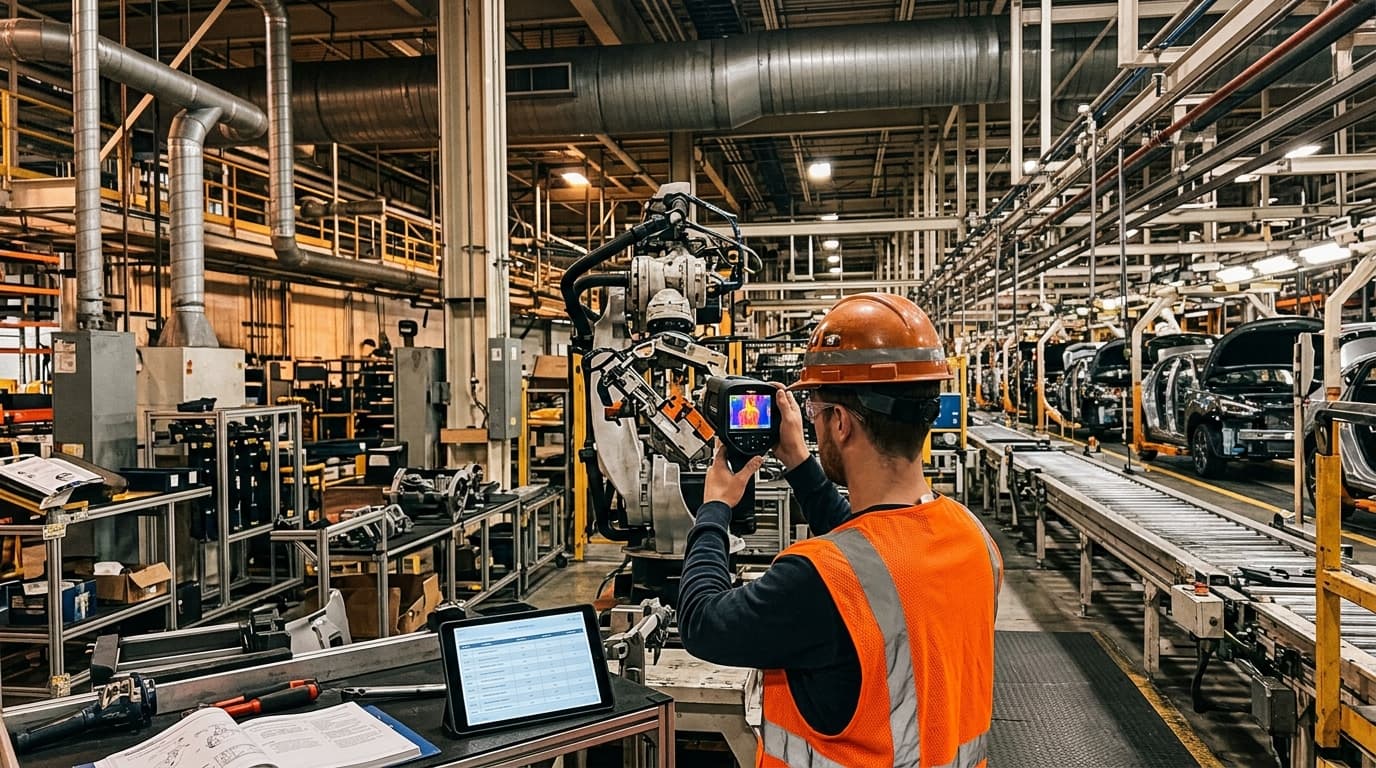
Thermal imaging helps identify hot spots around valves, fittings, trap stations and uninsulated pipework. Ultrasonic inspection can support trap and leak surveys. Findings should be recorded with line pressure, operating condition, access requirement, repair priority and expected production risk. A defect list without this information often stalls after the audit.
Commission Implementing Decision 2014/687/EU, establishing EU BAT conclusions for pulp, paper and board production under the Industrial Emissions Directive 2010/75/EU, identifies insulation of steam and condensate fittings among applicable energy-efficiency measures. For EU mills in scope, BAT conclusions provide a benchmark for permit-setting. UK mills can use the document as a mature technical reference when assessing energy performance.
Vents and vacuum condensers
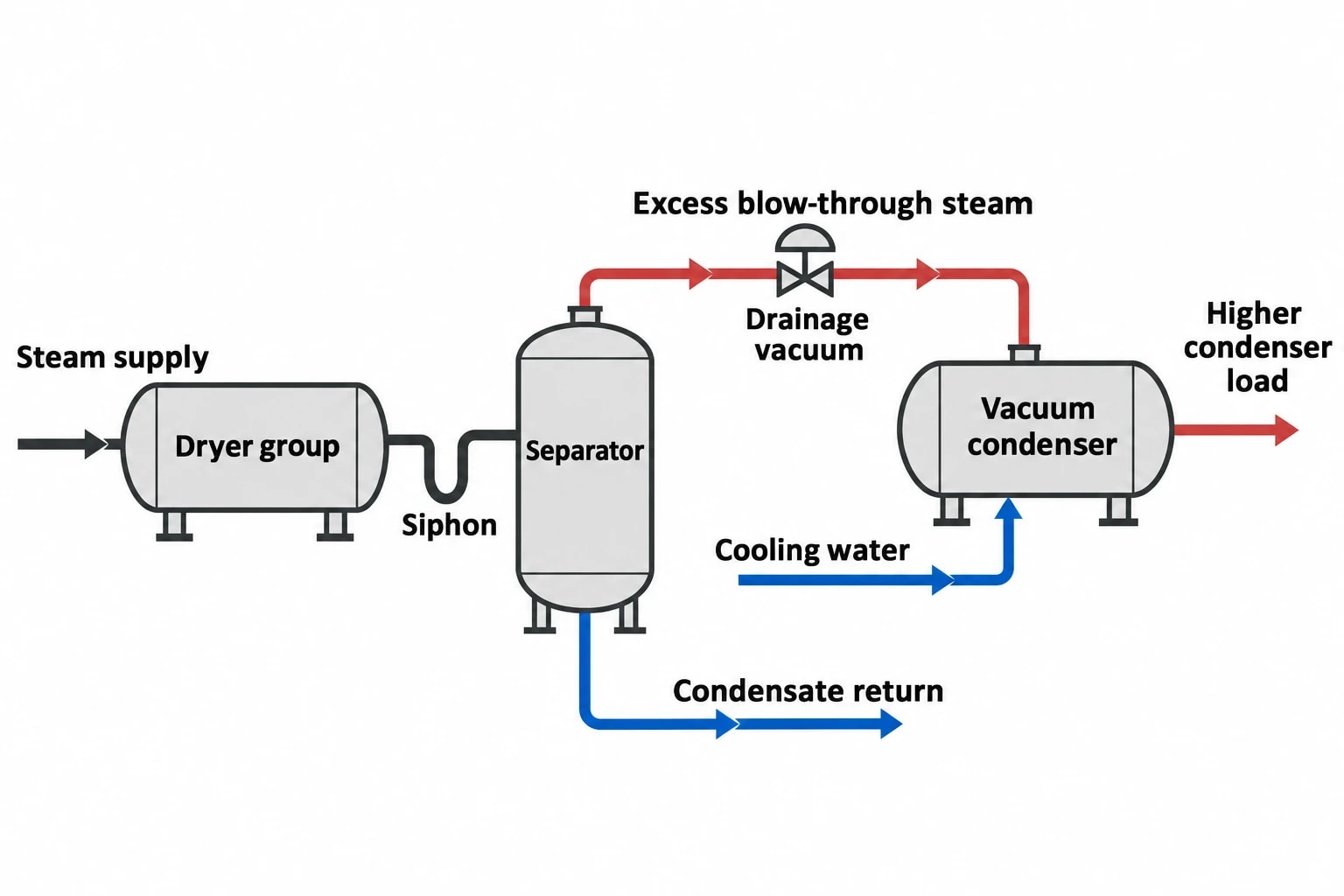
An oversized or poorly controlled dryer-drainage vacuum can pull more steam through the system than cylinder drainage requires. This raises condenser load and cooling-water demand while sending useful heat into a low-grade stream.
Focus on Energy advises mills to measure and display dryer vent rates to the condenser, avoid drainage vacuum beyond that required to evacuate dryers, and minimise blow-through through appropriate differential-pressure settings and cascade arrangements. These measures require reliable measurements and agreed control limits.
Useful audit questions include:
- Which dryer groups vent to the condenser, and at what rate?
- Does condenser load rise with speed, grade, pressure setpoint or a particular dryer group?
- Are separator and collection-tank levels stable?
- Has the vacuum setpoint changed to compensate for a drainage fault?
- Does a maintenance shutdown reveal blocked strainers, worn siphons, damaged seals or trap failures?
Return pressure that wastes useful heat
Hot condensate loses value when it is dropped to a lower pressure too early. Returning it at the highest practical pressure and temperature can allow direct use at the deaerator or preserve opportunities for controlled flash recovery.
This does not justify forcing high-pressure return into a system that cannot safely accept it. Hydraulic capacity, pump head, receiver pressure, pipe integrity, water chemistry and deaerator arrangement require engineering review. Each intentional pressure reduction should be mapped to establish whether it is needed for control, safety or a defined heat-recovery duty.
Paper mill energy efficiency improvements begin with measurement
A condensate project should begin with a process map and measured baseline.
Build a dryer-section condensate balance
The audit team should identify all major flows across representative grades and machine speeds:
| Measurement | Why it matters |
|---|---|
| Steam flow by dryer group | Shows where steam demand changes and supports specific-consumption analysis |
| Condensate return flow | Quantifies the return rate and identifies missing condensate |
| Condensate pressure and temperature | Establishes retained heat and flash-steam potential |
| Flash tank level and pressure | Reveals unstable control and pressure losses |
| Dryer differential pressure | Connects drainage performance to blow-through demand |
| Vent flow to condenser | Identifies vapour losses and excess vacuum duty |
| Boiler-feedwater make-up | Provides an independent check on condensate-return performance |
| Finished-paper production and moisture | Normalises energy use against operating output |
Portable power analysers can measure condensate-pump and vacuum-system demand. Thermal imaging can locate heat loss and abnormal temperatures. Ultrasonic leak detectors support steam-trap and compressed-air surveys, although compressed-air work should remain separate from dryer-condensate diagnosis.
The strongest baseline is taken during stable production, rather than a grade change, start-up or upset. Production records should include basis weight, machine speed, grade, incoming-sheet dryness and reel moisture. Without these variables, lower steam flow can be mistaken for an efficiency gain when it reflects easier drying conditions.
Trace missing condensate before specifying equipment
A low return rate can originate from known vents, trap discharge to drain, contaminated-condensate diversion, overflow, a faulty flowmeter, an unmetered process user or a mismatch between boiler-feedwater measurements and paper-machine data.
The audit should close this balance before proposing pumps, flash vessels or control changes. A new condensate pump cannot recover water already sent to drain. A new measurement point may prove more valuable than plant replacement where the return route is uncertain.
Prioritise interventions by production risk
Actions can be grouped into three practical tiers:
- Operational corrections: reset unnecessary vacuum or differential-pressure margins, repair leaks, stabilise levels and verify trap condition.
- Maintenance and minor modification: restore insulation, replace failed traps, clean strainers, repair siphons and correct drain-line restrictions.
- Capital measures: improve return routing, add or resize condensate-recovery equipment, install relevant flow and temperature instrumentation, or redesign flash-steam use.
Each proposal should state the energy mechanism, expected operating window, production dependency, measurement method and implementation constraints. This gives technical directors a usable investment case rather than a broad estimate of steam savings.

Identify where your plant is losing energy and quantify the savings potential — our audits map every heat source, sink, and waste stream in your facility.
BAT, energy management and the wider dryer-system opportunity
The EU pulp-and-paper BAT conclusions place condensate recovery within a wider energy-efficiency programme. BAT 6 covers measures including an energy-management system, matching steam pressure to process need, efficient vacuum systems, variable-speed drives for pumps, fans and compressors, and insulation of steam and condensate fittings.
For integrated mechanical-pulp, paper and board mills, BAT 53 includes steam-condensate recovery, efficient exhaust-air heat recovery, reduced refiner no-load power, optimised pump and variable-speed-drive design, and vacuum-system optimisation.
These measures interact directly with condensate return. Better press-section dewatering reduces the evaporation duty imposed on dryer cylinders. An efficient vacuum system reduces electrical demand while supporting web dewatering. Hood heat recovery can use available exhaust-air temperature more effectively. Condensate recovery reduces boiler demand and feedwater make-up.
The sequence matters. A mill should first establish drainage stability and return losses, then optimise pressure and vacuum control, then assess heat-recovery and capital projects against a reliable energy baseline. Installing heat recovery on an uncontrolled condensate system risks preserving an avoidable loss.
Turning an audit finding into verified savings
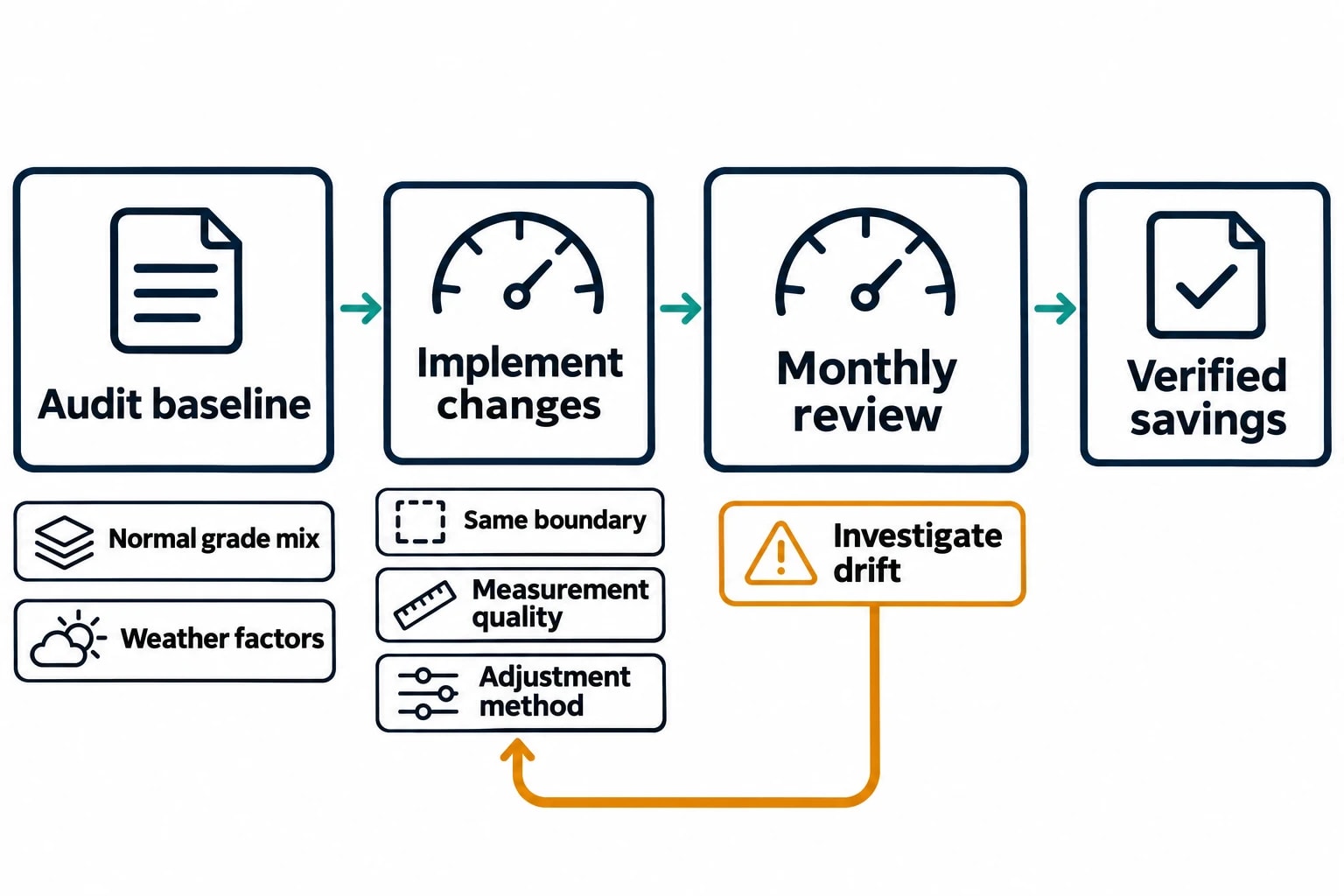
An energy audit creates value only when the mill can confirm performance after changes. ISO 50001:2018 provides a framework for continual energy-performance improvement, including energy reviews, objectives, action plans and measurement. For a condensate-return programme, relevant energy-performance indicators may include:
- condensate returned as a percentage of estimated condensate generated;
- boiler-feedwater make-up per tonne of saleable paper;
- steam consumption per tonne, adjusted for grade and production conditions;
- vent flow or condenser load per tonne;
- dryer differential pressure by group;
- condensate-pump electricity consumption.
The baseline must reflect normal grade mix and weather-sensitive operating factors where these influence drying. After implementation, the same boundary, measurement quality and adjustment method should be retained. The International Performance Measurement and Verification Protocol provides an established basis for documenting the chosen boundary, baseline period, independent variables and reporting period.
A monthly review can identify drift before it becomes an annual fuel-cost problem. Rising feedwater make-up, a change in condenser outlet temperature, persistent flash-tank level cycling or an unexplained increase in dryer differential pressure should trigger investigation.
A practical route to lower steam demand
Condensate return is often a practical starting point for reducing steam cost because it connects dryer drainage, water treatment, boiler efficiency and heat recovery in one measurable system.
A focused programme quantifies return, pressure, temperature and loss routes. It then restores basic condition, stabilises drainage control and directs flash steam to suitable duties. Capital work follows only where measured evidence supports it.
For mills pursuing paper mill energy efficiency improvements, condensate has thermal, operational and financial value. Returning hot, clean condensate at useful pressure reduces boiler demand and supports stable drying.
This article reflects the independent analysis and editorial opinion of EnerTherm Engineering. Product names, trademarks, and brands mentioned belong to their respective owners. EnerTherm Engineering is not affiliated with, endorsed by, or a licensee of any third-party software or product mentioned unless explicitly stated.

Managing Director — EnerTherm Engineering
Dr. François Pierrel is Managing Director of EnerTherm Engineering with over two decades of expertise in thermal design, heat transfer, and industrial energy optimisation. He holds a PhD in Heat Transfer from Cranfield University and a Post-Doctorate from Heriot-Watt University.
