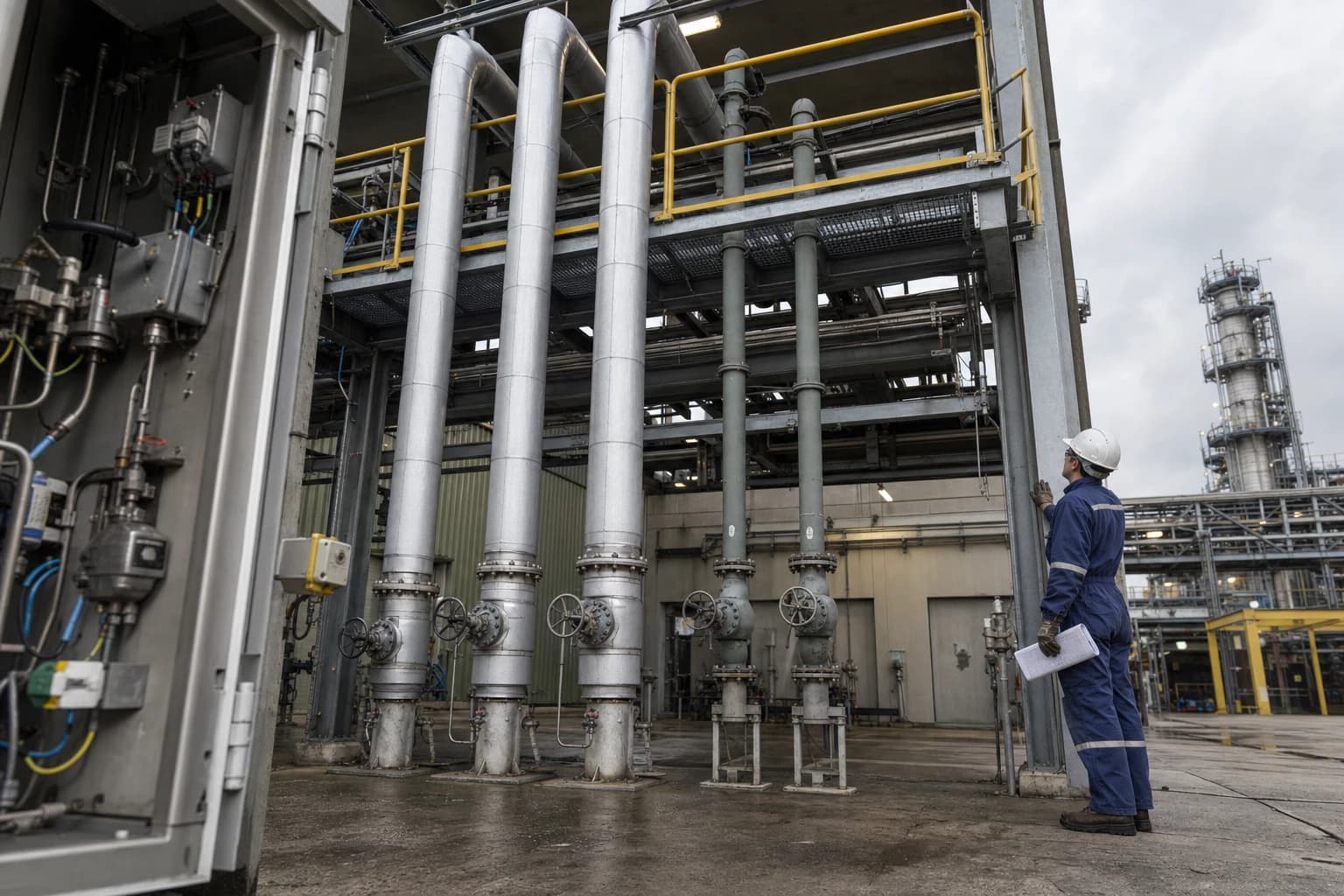
Pinch Analysis Software: PinCH or Aspen for UK Plants
Compare heat-recovery targeting, HEN design and ESOS Phase 4 deadlines
The ESOS Phase 4 compliance deadline is 5 December 2027. Qualifying UK chemical plants must report implemented energy-saving measures, including savings in kWh. That raises the value of a pinch analysis study from an occasional optimisation exercise to evidence for capital planning, energy management and compliance reporting.
For process-integration engineers, the buying decision often comes down to two paths. PinCH is a specialist pinch analysis package built around a defined workflow from stream data to heat-exchanger-network design. Aspen Activated Analysis brings pinch analysis into Aspen Plus and Aspen HYSYS, allowing engineers to work from a process simulation model and take heat-integration options into exchanger design and rating.
Both can identify utility-reduction opportunities. The better fit depends on the starting data, the plant’s operating pattern, the maturity of its simulation models and the depth of HEN work required after targets are set.
What pinch analysis software must deliver for a chemical plant
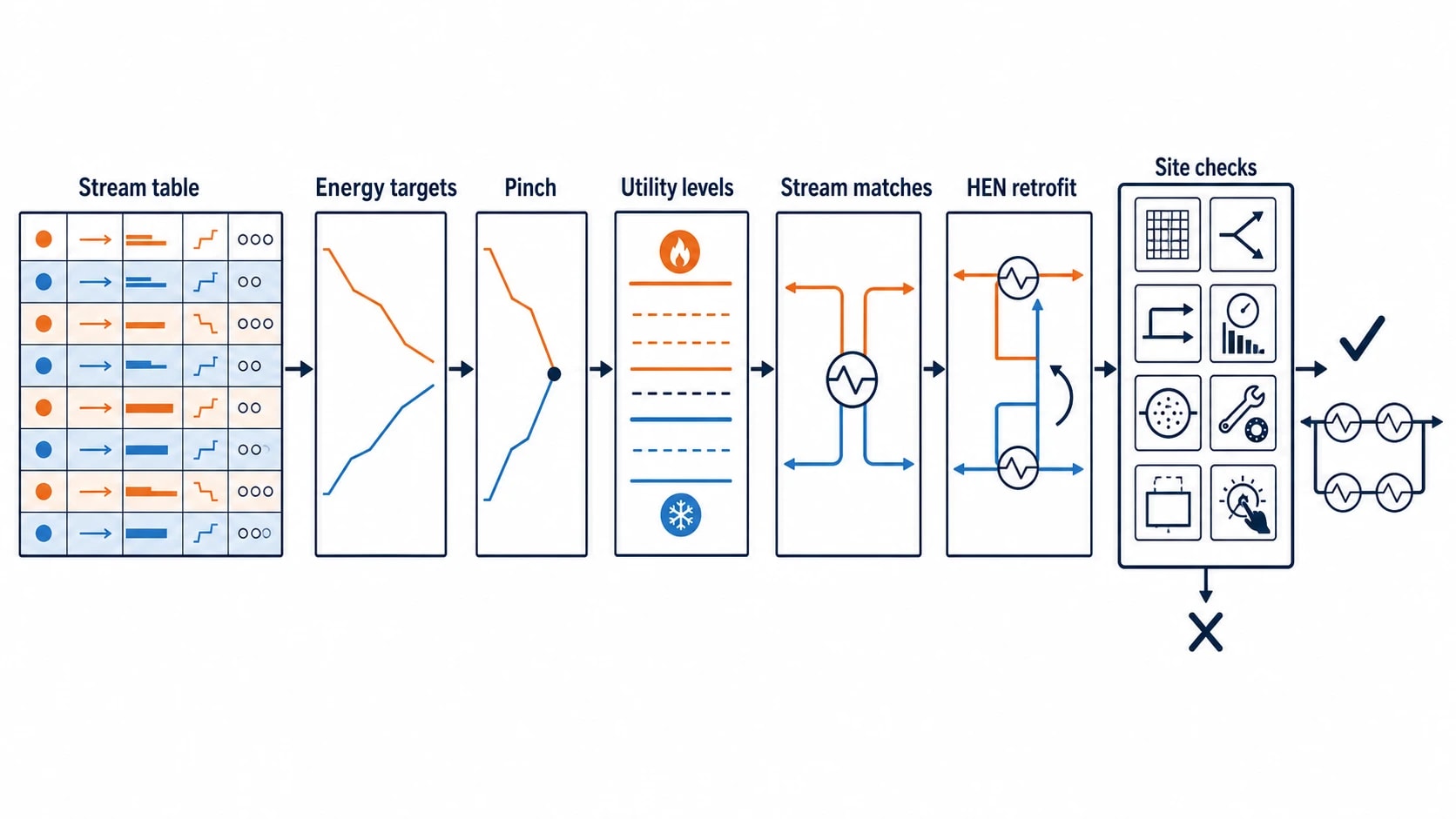
Pinch analysis projects for chemical plants begin with a sound stream table. The model must represent hot and cold process streams, supply and target temperatures, heat-capacity flow rates, phase changes, operating cases and practical constraints. Poor data extraction produces elegant but unbuildable targets.
The software should help an engineering team answer four connected questions:
- What is the minimum heating and cooling utility demand for the selected process boundary?
- Where is the pinch, and which existing cross-pinch heat transfers limit recovery?
- Which utility levels and process matches could reduce fuel, steam, electricity or cooling demand?
- Which heat-exchanger-network changes can reach a worthwhile target without excessive capital cost, pressure drop, fouling exposure or operability risk?
A minimum-energy target is a benchmark, not a construction instruction. Chemical plants operate across grades, throughput rates, ambient conditions and maintenance states. A proposed HEN must therefore be tested against site conditions, including control response, exchanger approach temperatures, metallurgy, cleaning access and available plot space.
Targeting and HEN design are separate stages
Composite curves and grand composite curves help engineers visualise the thermal problem and identify utility targets. They do not specify a viable exchanger network on their own.
HEN design converts a target into stream matches, exchanger duties and a practical network structure. It involves decisions on exchanger area, stream splitting, bypasses, utility trimming, pressure-drop allowances and fouling contingency. Software that only produces targeting plots can leave a major gap between an energy opportunity register and a revamp package.
Existing plants need scenario discipline
For a retrofit, the central question is rarely “what is the theoretical minimum?” It is “which modification gives a defensible saving at an acceptable cost and outage requirement?”
Software should allow teams to compare scenarios using the same boundaries, utilities, economics and operating assumptions. A site may need separate cases for normal production, turndown, summer cooling-water temperatures, winter operation and grade changes. The selected case must be traceable to the underlying process data.

Pinch analysis identifies the thermodynamic minimum energy requirement of your process — then designs the heat exchanger network to achieve it.
PinCH for dedicated pinch analysis and batch processes
PinCH is designed specifically for process integration. Its published workflow uses ten steps, beginning with data acquisition and process requirements, then covering stream data, equipment, processes, scheduling and economic data before targeting, utility integration and HEN design.
That structure suits teams that want pinch analysis to follow a visible engineering workflow rather than sit within a broader simulation environment.
Where PinCH fits well
PinCH supports continuous, semi-continuous and batch industrial processes. This matters for fine chemicals, speciality chemicals, pharmaceuticals and multipurpose plants, where the timing of heating and cooling loads can matter as much as total duty.
A batch reactor train may have a large cooling demand during one time slice and a heating demand elsewhere in the schedule. Treating the site as a single steady-state process can create heat matches that do not occur at the same time. PinCH’s process and scheduling support provides a structured route to account for this operating reality.
The software also combines direct and indirect heat integration. Direct integration considers process-to-process recovery through exchangers. Indirect integration can examine intermediate circuits and thermal storage where source and sink temperatures or timings do not align.
HEN design capability
PinCH states that it supports both maximum-energy-recovery and relaxed HEN design for a chosen minimum temperature difference. The distinction matters in plant projects.
Maximum energy recovery can identify the full thermodynamic prize. A relaxed design may accept additional utility use for fewer exchangers, lower area, simpler controls or a more manageable tie-in scope. This is often the more credible route for an operating chemical plant.
The specialist workflow can help less frequent users avoid omitting inputs such as schedules, economic assumptions or utility conversion units. That benefits sites building internal pinch-analysis capability rather than relying on an established simulation team.
PinCH limitations to test during procurement
A specialist tool does not replace process simulation. If base stream data changes with reaction conversion, column pressure, recycle composition or equipment behaviour, engineers still need a reliable way to establish the cases used in the pinch model.
Before purchase, buyers should test how readily their team can move approved stream data from process models and plant data into PinCH, maintain version control and document assumptions. The issue is whether the study remains auditable when a feedstock, rate or operating target changes.
Aspen Activated Analysis for simulation-led heat integration
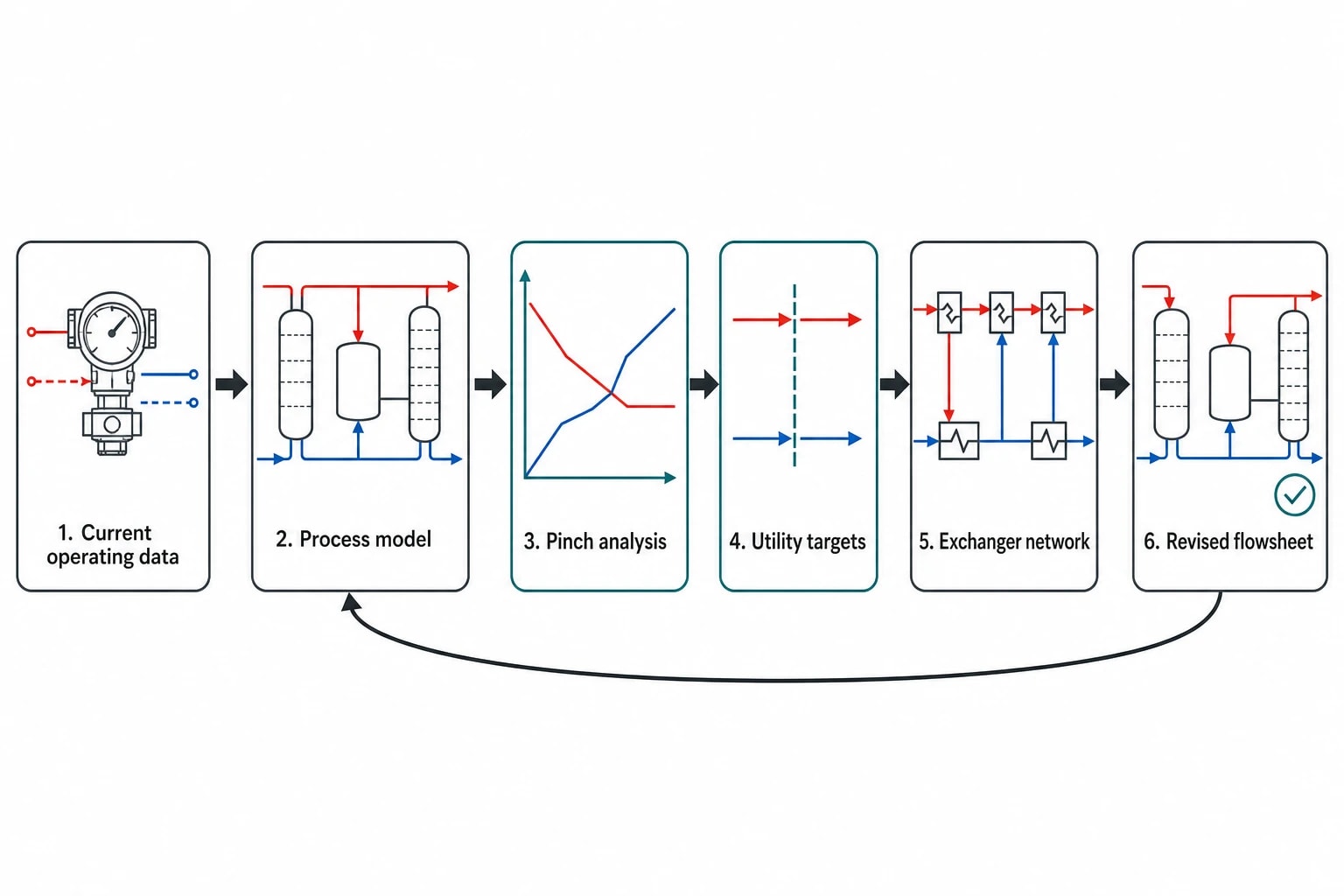
Aspen Activated Analysis embeds pinch analysis within Aspen Plus and Aspen HYSYS. AspenTech describes it as a way to develop design recommendations using built-in pinch analysis to minimise utility use and maximise energy savings.
This approach is strongest where a chemical plant already holds maintained Aspen Plus or Aspen HYSYS models and uses them for design, debottlenecking or operating studies.
From flowsheet model to energy target
A process simulation carries more than a stream list. It can represent thermodynamics, recycles, separation performance, reactions and utility duties. Activated Analysis allows process engineers to examine energy targets from that model rather than recreate a separate static dataset at the start of each study.
That can reduce rework when a heat-integration option changes a column duty, compressor load, recycle condition or another process variable. Engineers can evaluate the effect in the flowsheet, revise the thermal problem and compare the next HEN option.
AspenTech’s product material states that composite curves, grand composite curves and utility composite curves are available in Activated Energy Analysis from Version 14.5. The information includes stream segments, supply and target temperatures, enthalpy and the pinch point.
Connection to exchanger design and rating
The wider Aspen engineering suite is relevant where a project must move beyond targeting. AspenTech cites a case study in which LG Chem used Aspen Plus, Aspen Energy Analyser and Aspen Exchanger Design and Rating for a 1,3-butadiene plant study. The company reported a 15% capacity increase alongside energy savings from heat integration.
That case does not establish a universal performance figure. It shows the value of a connected workflow where thermal integration, process constraints and exchanger rating must be considered together.
A simulation-led route can suit complex continuous plants with established Aspen models, including olefins, aromatics, refining-linked chemical units and large solvent-recovery systems. It can also suit design teams already trained in the Aspen environment.
Aspen limitations to test during procurement
Activated Analysis depends on the quality and maintenance of the underlying simulation. An obsolete flowsheet can give a highly detailed but misleading energy study. Plant teams should validate the model against current operating data before treating its utility targets as investment-grade.
The learning burden also differs. Teams new to simulation may find a dedicated pinch workflow faster for a focused study. Aspen is likely to provide more value where its model infrastructure, engineering licences and specialist skills already exist.
PinCH versus Aspen for a chemical plant pinch analysis project
The choice is less about which package can draw curves and more about where the engineering work begins and ends.
| Buying criterion | PinCH | Aspen Activated Analysis |
|---|---|---|
| Primary approach | Dedicated process-integration workflow | Pinch analysis within Aspen Plus and Aspen HYSYS |
| Best starting point | Validated stream data and defined process cases | A maintained, validated simulation flowsheet |
| Process modes | Continuous, semi-continuous and batch | Particularly suited to simulation-led continuous process studies |
| Workflow structure | Ten steps from data acquisition to HEN design | Heat analysis connected to process simulation and Aspen engineering tools |
| HEN focus | Supports maximum-energy-recovery and relaxed HEN design | Supports energy analysis within the Aspen environment, with links to exchanger design and rating workflows |
| Strong buying case | Process-integration team needs a dedicated pinch platform, including scheduled or batch operations | Plant already relies on Aspen simulation for process design, revamps and equipment engineering |
| Main implementation risk | Weak data governance between simulation, site data and the pinch study | An unvalidated or poorly maintained simulation model |
Choose PinCH when the heat-integration problem leads
PinCH is the stronger candidate where a team needs to build, compare and communicate pinch-analysis cases. It is particularly relevant for facilities with batch or semi-continuous operation, changing schedules, indirect recovery options or a requirement to take a structured HEN design process through to a retrofit concept.
It also suits independent energy studies where the plant can establish a defensible stream table without rebuilding a full process simulation.
Choose Aspen when the process model leads
Aspen has the stronger case where a current Aspen Plus or Aspen HYSYS model already informs major technical decisions. Engineers can assess energy integration within the same modelling environment used to evaluate process changes, then carry selected exchanger duties towards detailed design and rating.
This can be valuable when the proposed recovery scheme changes the wider flowsheet rather than only reallocating heat between stable streams.

Pinch analysis identifies the thermodynamic minimum energy requirement of your process — then designs the heat exchanger network to achieve it.
How to assess HEN outputs before approving a project
Neither package should be selected solely on a demonstration model. A procurement trial should use a representative plant problem and require outputs that an engineering team can interrogate.
Use a realistic pilot case
A useful pilot contains enough complexity to expose the differences between tools:
- A mixture of sensible and latent heat duties where relevant.
- At least two operating cases or production rates.
- Real utility levels, including steam headers, hot oil, refrigeration or cooling-water constraints.
- Existing exchanger performance, including known fouling or pressure-drop limits.
- A proposed HEN modification with an identifiable tie-in point.
The trial should preserve the same process boundary and minimum temperature difference across both tools. Without that discipline, apparent differences in savings may reflect modelling assumptions rather than software capability.
Ask for decision-ready outputs
The final comparison should include:
- Heating and cooling utility targets for each case.
- Pinch location and the principal constraints on recovery.
- A proposed HEN or retrofit concept.
- Heat duties, temperatures and utility changes for each proposed exchanger or modification.
- A clear record of assumptions, exclusions and known site constraints.
- An estimate of annual energy saving in kWh, supported by operating hours and production assumptions.
The annualised result may be commercially useful, but it must be distinguished from a thermodynamic target. If a project cannot operate at the assumed rate, availability or temperature approach, the realised saving will differ.
ESOS Phase 4 and ISO 50001: linking software results to compliance evidence
The Energy Savings Opportunity Scheme Regulations 2014, as amended by the Energy Savings Opportunity Scheme (Amendment) Regulations 2026, set the Phase 4 framework. The Environment Agency’s guidance states that a Phase 4 report and notification of compliance must identify implemented measures, the energy saving achieved by each measure and the energy-saving category. It also specifies that only combined savings across measures will be published.
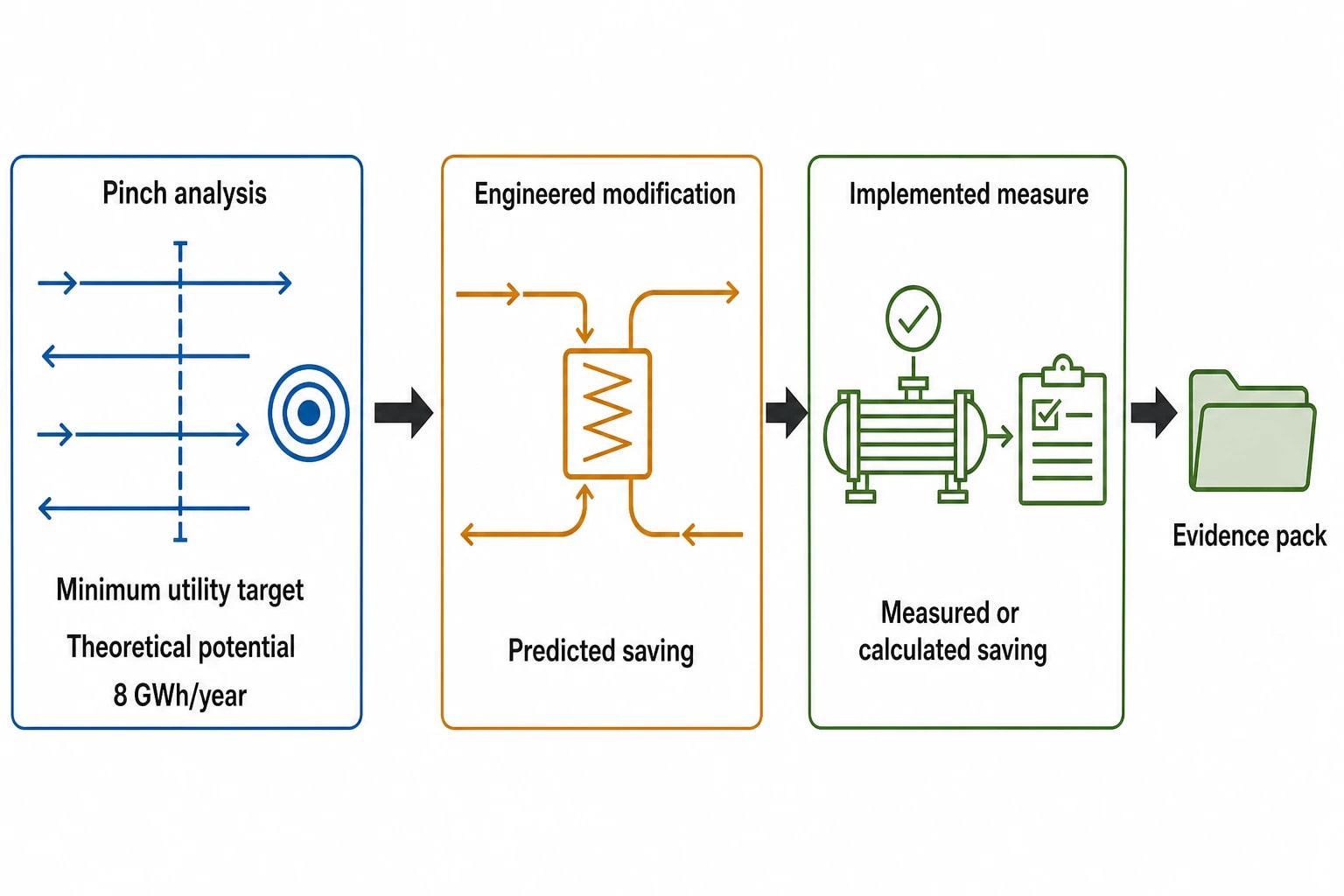
For a chemical plant, pinch analysis software can help identify and quantify opportunities. It does not, by itself, demonstrate that a measure was installed or achieved the expected result. The evidence pack should connect the modelled opportunity to engineering change records, commissioning evidence, fuel and utility data, production data and the method used to calculate savings.
Build the study around measurable measures
A good HEN study should separate three values:
- The minimum utility target from pinch analysis.
- The predicted saving from a specific, engineered modification.
- The measured or calculated saving after implementation.
This distinction prevents a common reporting error: presenting the full theoretical target as the outcome of one limited capital project. A study may identify 8 GWh per year of theoretical potential, while a first exchanger reroute delivers only part of that figure. Both numbers are useful, but they answer different questions.
ISO 50001 route
ISO 50001:2018 remains current, with an amendment issued in 2024. Under Phase 4 guidance, organisations using the ISO 50001 certification route, where certification covers total or significant energy consumption, do not need to produce an ESOS report or appoint a lead assessor.
That does not remove the need for disciplined energy analysis. It makes the quality of energy planning, measurement and improvement records more important. Pinch studies can support the identification and prioritisation of significant energy opportunities within an energy management system, provided the plant maintains clear baselines and verifies results after implementation.
A practical buying recommendation for UK plants
Chemical manufacturers should select PinCH where the immediate requirement is a dedicated pinch-analysis and HEN-design workflow, especially for batch, semi-continuous or schedule-dependent processes. Its defined ten-step structure suits a team that needs a repeatable methodology for energy targeting and retrofit development.
Aspen Activated Analysis is the better investment where a validated Aspen Plus or Aspen HYSYS model already sits at the centre of process engineering. Assessing heat integration in the context of the full flowsheet, then connecting analysis with exchanger design and rating, can shorten the route from opportunity to engineered modification.
In either case, the purchasing decision should be tested against a real plant problem. The selected software must produce a traceable HEN proposal, credible annual kWh savings and an evidence trail that supports capital approval and ESOS Phase 4 reporting.
This article reflects the independent analysis and editorial opinion of EnerTherm Engineering. Product names, trademarks, and brands mentioned belong to their respective owners. EnerTherm Engineering is not affiliated with, endorsed by, or a licensee of any third-party software or product mentioned unless explicitly stated.

Simulation Engineer — EnerTherm Engineering
Rajesh Sekar is a Simulation Engineer at EnerTherm Engineering, specialising in computational fluid dynamics (CFD), finite element analysis (FEA), and thermal process simulation. He holds a degree from Cranfield University and brings extensive experience in simulation-based product development from the automotive, aerospace, and energy sectors.
