Pulp Mill Energy Efficiency Audits Need 95% ESOS Coverage
What BAT rules and 12-month mill data reveal about steam and heat recovery.
A pulp mill energy efficiency audit is a structured assessment of fuel, steam and electricity use across the mill. UK ESOS Phase 4 requires significant energy consumption to cover at least 95% of total energy consumption.
For a kraft, recycled-fibre or integrated pulp and paper site, that threshold makes the audit boundary an operational issue. An assessment limited to purchased electricity or the boiler house can overlook steam let-down losses, missed condensate recovery, evaporation demand, vacuum loads, pumping, drying and heat rejected between departments.
The notification deadline for ESOS Phase 4 is 5 December 2027. Qualifying organisations need a defensible energy inventory, a defined area of significant energy consumption, and an audit or ISO 50001 route that covers the required energy use. For pulp mills, the compliance exercise should also establish a practical programme for heat recovery, steam-system improvement and electricity reduction.
What 95% ESOS coverage means for a pulp mill energy efficiency audit
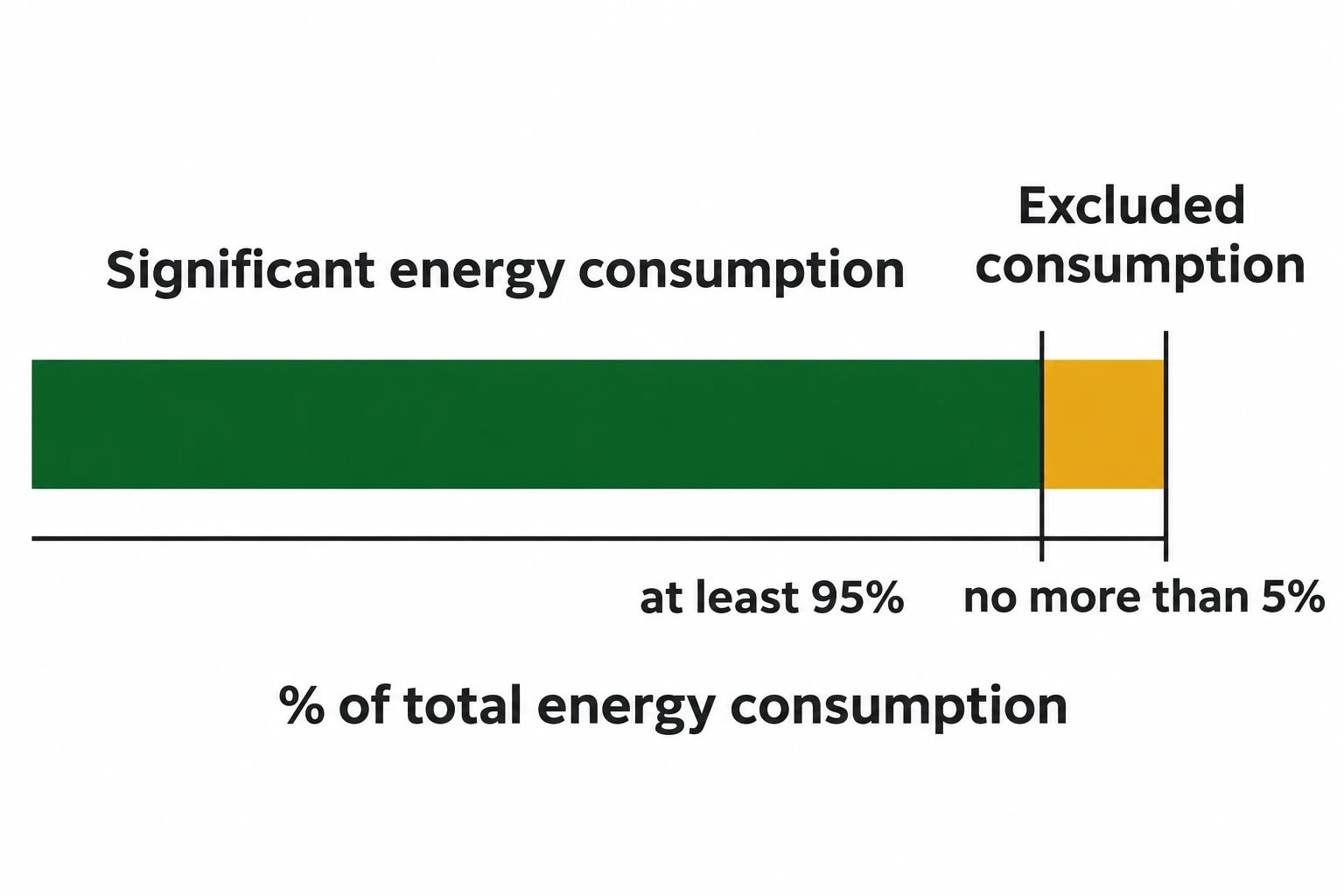
ESOS requires an organisation to calculate total energy consumption before deciding which activities make up its significant energy consumption. The chosen activities must represent at least 95% of the total. Energy used by buildings, industrial processes and transport sits within that organisational calculation.
A mill should establish the full annual boundary before selecting audit priorities. Two large utility meters may account for most consumption, yet omit energy uses that matter for compliance and process improvement.
Build a mill-wide energy inventory first
The inventory should distinguish purchased and internally generated energy, then allocate it to meaningful operating areas. The appropriate detail depends on the site, but a pulp mill energy efficiency audit commonly considers:
- Purchased electricity and on-site electricity generation.
- Natural gas, biomass, fuel oil and other fuels.
- Steam generation, headers, pressure reduction, turbine generation and condensate return.
- Fibre preparation, pulping, screening, cleaning, washing, bleaching and thickening.
- Evaporation, causticising, lime-kiln and recovery-island duties at kraft mills.
- Recycled-fibre pulping, deinking, refining, reject handling and effluent treatment.
- Paper-machine drying, vacuum systems, compressed air, ventilation and pumping at integrated sites.
- Laboratories, workshops, warehousing and transport within the organisational boundary.
This work is more than an invoice review. It links annual energy consumption to the processes that convert, transfer or reject energy, giving the audit team a credible basis for selecting opportunities.
Account for the 5% residual
The portion outside significant energy consumption cannot exceed 5% of total energy consumption. A mill should record why each excluded activity falls within that allowance and retain the calculation in its ESOS evidence pack.
A useful audit record sets out:
- The organisation and site boundary.
- The 12-month energy reference period.
- Meter data, invoices, fuel records and production records used.
- Energy-consuming activities included within significant energy consumption.
- The consumption assigned to each activity.
- Any excluded consumption and its share of the total.
- The compliance route used for each area, whether audit or ISO 50001 certification.
This prevents an energy study of one important asset being presented as evidence of mill-wide coverage.

Pinch analysis identifies the thermodynamic minimum energy requirement of your process — then designs the heat exchanger network to achieve it.
ESOS Phase 4 sets the audit timetable
An ESOS-compliant energy audit must use verifiable energy-consumption data measured over 12 months, so far as reasonably practicable. For Phase 4, the reference period must begin no earlier than 6 December 2022 and end no later than 31 December 2026.
The audit must analyse energy consumption and energy efficiency, identify energy-saving opportunities and include site visits. Early preparation matters because a pulp mill needs operating data from representative production conditions, rather than a period affected by an outage, a grade change or reduced demand.
Qualification and notification requirements
Phase 4 applies to organisations that meet the large-undertaking definition on 31 December 2026. This includes a UK company with 250 or more employees, or one with annual turnover above £44 million and an annual balance-sheet total above £38 million. Group rules can bring a UK mill into scope where another UK group member qualifies.
The Phase 4 notification of compliance is due through the Manage your Energy Savings Opportunity Scheme Reporting service by 5 December 2027. A board-level director, or a person exercising management control, must sign off the assessment and notification.
Reporting now includes delivery
Phase 4 requires reporting of energy savings achieved during the compliance period. The action-plan review must identify proposed measures that were not implemented and explain why.
Each identified measure should have a technical description, baseline, affected energy carrier, production assumptions, capital requirement, implementation constraint, accountable owner and decision status.
Collect pulp mill audit data before site visits
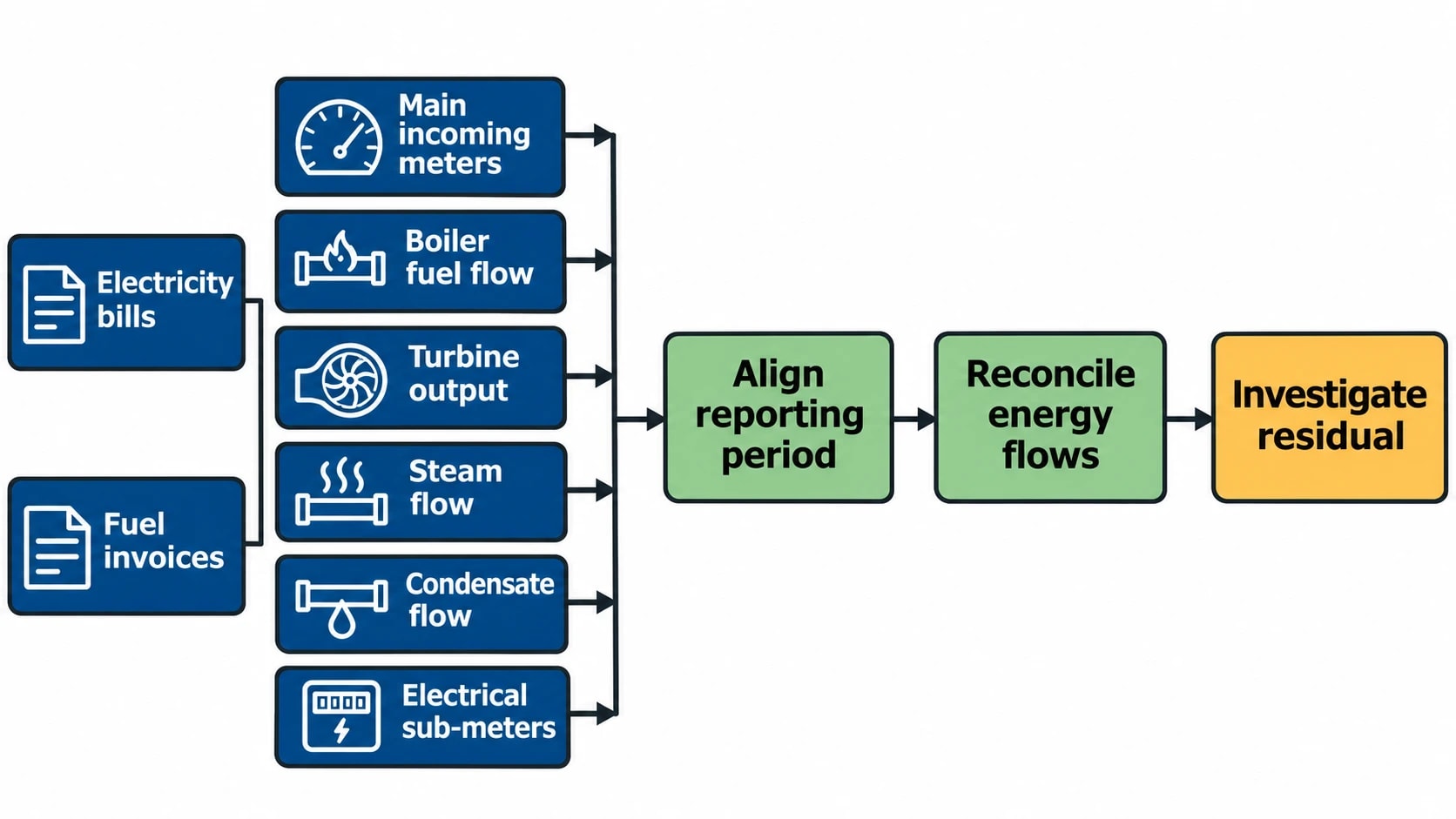
Electricity bills and fuel invoices establish the annual total. They cannot show whether steam is being reduced across a valve, whether a heat exchanger has fouled, or whether a warm-water demand has displaced available recovered heat.
A pulp mill energy efficiency audit needs a data request structured around process operation as well as utility purchasing.
Use production-normalised indicators with care
ESOS requires energy intensity ratios for buildings, transport, industrial processes and other energy uses. The relevant indicator must be quantifiable, connected to the activity being assessed and based on verifiable data where reasonably practicable.
Air-dried tonnes of pulp or saleable tonnes of paper often provide useful production indicators. A single mill-wide figure can conceal the effect of product mix, recycled-fibre quality, wood species, moisture targets, operating rate and downtime. The overall ratio remains useful for ESOS reporting, while process-level indicators locate the cause of a change.
Supporting measures can include:
- Electricity use per tonne for screening, cleaning, refining, pumping and vacuum generation.
- Steam supplied at each pressure level relative to production.
- Condensate returned as a proportion of steam supplied.
- Fuel input, steam generation and electrical output from the recovery island.
- Black-liquor solids and evaporation duty at kraft mills.
- Drying steam use relative to paper production and moisture target.
- Water flow, temperature and recovered heat duty for selected streams.
The aim is to distinguish poorer energy performance from a legitimate shift in production conditions.
Reconcile utilities with process boundaries
Main incoming meters, turbine output, boiler fuel flow, steam flow, condensate flow and electrical sub-meters may use different averaging periods or calibration arrangements. The audit should reconcile major energy flows to a single reporting period.
A large residual deserves investigation. It can indicate unmetered consumption, meter error, fuel-stock variation, mismatched timestamps or a missing energy user. Treating the residual as unexplained consumption weakens the ESOS evidence and the engineering conclusions.
Steam data needs particular care. Steam flow does not demonstrate useful heat delivery on its own. Header pressure, condensate temperature, flash-steam recovery, return route and final process duty determine whether the system uses the correct energy grade.
Pinch Analysis finds the heat losses that inspection can miss
Site inspection remains essential. Leaking steam traps, failed insulation, open bypasses and damaged valve stations require attention. Many of the larger thermal opportunities, however, arise from the interaction of heating and cooling duties across a mill.
Pinch Analysis uses process-stream temperatures, heat-capacity flow rates and operating constraints to establish heating and cooling targets for a defined operating case. It then tests whether the heat exchanger network makes effective use of the available temperature difference.
Select representative operating cases
A Pinch Analysis based on one low-rate production day can produce poor investment decisions. The audit should choose cases that represent normal production, important grades, seasonal conditions and known operating constraints.
At a kraft mill, hot streams may include condensates, evaporator condensates, recovery-boiler flue-gas heat-recovery streams, bleaching effluent and warm process water. Cold demands may include boiler feedwater, process water, washing duties and building heating where distance and temperature make recovery practical.
At a recycled-fibre or integrated site, the review can include white-water streams, refiner heat, dryer exhaust air, shower-water heating and condensate systems. The engineering principle is consistent: match available heat to a useful demand at the lowest workable temperature before raising steam demand.
Test whether recovered heat will survive operation
Heat-recovery projects can lose value when throughput, product mix or control arrangements change. The audit should identify those conditions before capital approval.
Key questions include:
- Does the heat exchanger network retain the intended flow arrangement and temperature approach?
- Do fouling, contamination or scaling constrain heat transfer?
- Does control logic preserve recovered heat as production changes?
- Does the warm-water demand exist through all relevant operating modes?
- Is high-pressure steam serving a duty that secondary heat, condensate or lower-pressure steam could meet?
- Would further water-system closure create corrosion, odour, fouling or product-quality constraints?
The resulting action may be heat exchanger cleaning, revised controls, a new heat exchanger, a different utility pressure or an operating procedure. Pinch Analysis establishes the thermal target; process engineering determines whether the mill can sustain it safely and reliably.

Pinch analysis identifies the thermodynamic minimum energy requirement of your process — then designs the heat exchanger network to achieve it.
Kraft-mill recovery-island audits need accurate BAT references
Commission Implementing Decision (EU) 2014/687 separates recovery-boiler air-emission controls from energy-efficiency measures. This distinction matters when a mill uses BAT conclusions to frame an audit or support permit-related discussion.
BAT 21 addresses sulphur dioxide and total reduced sulphur emissions from a recovery boiler. BAT 22 addresses nitrogen oxides through an optimised firing system. BAT 23 addresses recovery-boiler dust emissions. These are air-emission conclusions, not energy-performance conclusions.
BAT 31 covers kraft energy consumption and efficiency
For the kraft pulping process, BAT 31 addresses reducing thermal-energy consumption, making better use of energy carriers and reducing electricity use. Its listed techniques include efficient steam boilers, high-efficiency evaporation, secondary heating, low-temperature heat recovery, secondary heat and condensate use, heat exchanger network optimisation, recovery-boiler flue-gas heat recovery, speed control, vacuum-pump efficiency and appropriate sizing of pipes, pumps and fans.
The audit should determine where low-temperature heat is available, whether the heat exchanger network directs it to suitable duties, and whether pumps, fans and vacuum equipment run at the required operating point.
BAT 32 covers kraft power-generation efficiency
BAT 32 concerns power-generation efficiency at kraft mills. Its techniques include higher black-liquor dry solids, recovery-boiler pressure and temperature, turbine efficiency, turbine outlet steam pressure, feedwater preheating and combustion-air or fuel preheating.
These measures are connected. Higher boiler pressure may alter turbine electricity generation and process-steam availability. A lower back-pressure turbine outlet pressure may increase generation but must remain compatible with stable process operation. Feedwater heating can reduce fuel demand, but the heat source needs assessment against competing process uses.
A credible audit records these dependencies and avoids adding savings from mutually competing heat sources.
Recycled-fibre and integrated mills need the same audit discipline
Recycled-fibre operations have a different thermal profile from kraft pulp mills, but their ESOS boundary must still capture their main industrial energy uses. Refining, stock preparation, screening, deinking, pumping, vacuum generation and drying can each materially affect total consumption.
Commission Implementing Decision (EU) 2014/687 addresses electrical-energy reduction in recycled-fibre processing through high-consistency pulping, efficient screening and stock-preparation concepts that remove contaminants earlier in the process. For papermaking and related processes, the decision also addresses thermal and electrical energy use.
Treat the fibre line and paper machine as connected systems
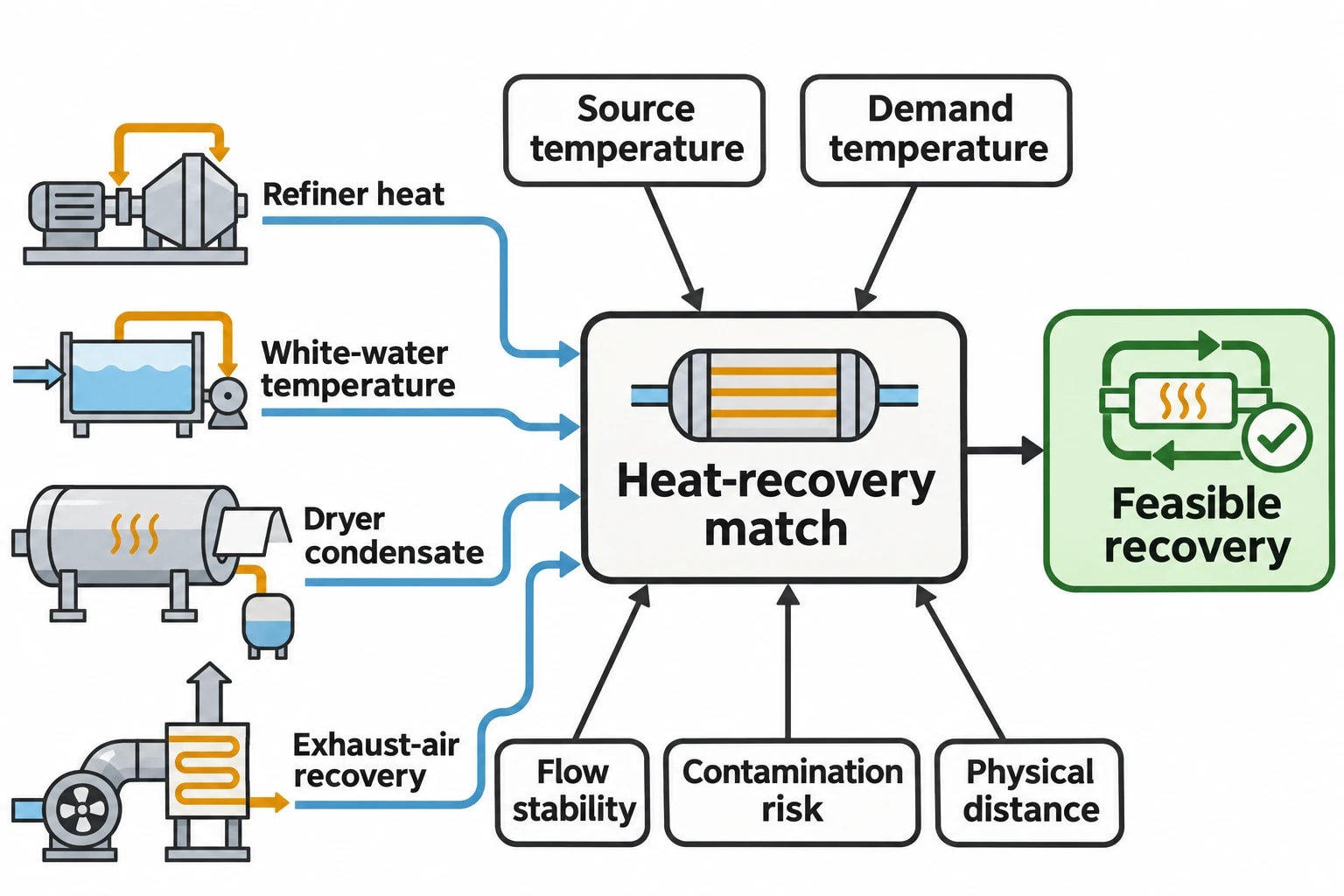
At an integrated site, a department-by-department audit can conceal useful energy links. Refiner heat, white-water temperature, dryer condensate, exhaust-air recovery and effluent temperature can connect areas with separate budgets and operating teams.
The audit should assess the source temperature, demand temperature, flow stability, contamination risk and physical distance for each potential heat-recovery match. This keeps attention on feasible recovery rather than theoretical heat availability.
Turn the 95% requirement into an optimisation programme
The most useful pulp mill energy efficiency audit leaves behind an energy model that the mill can continue using. It also creates an opportunity register that makes technical decisions visible to operations, engineering and management.
Early actions may include meter repair, steam-trap maintenance, insulation, heat exchanger cleaning, control-setpoint changes, condensate-return repairs and variable-speed control of pumps and fans. Larger projects can involve heat exchanger network changes, evaporation improvement, turbine work, recovery-boiler modifications or new heat-recovery equipment.
This article reflects the independent analysis and editorial opinion of EnerTherm Engineering. Product names, trademarks, and brands mentioned belong to their respective owners. EnerTherm Engineering is not affiliated with, endorsed by, or a licensee of any third-party software or product mentioned unless explicitly stated.

Managing Director — EnerTherm Engineering
Dr. François Pierrel is Managing Director of EnerTherm Engineering with over two decades of expertise in thermal design, heat transfer, and industrial energy optimisation. He holds a PhD in Heat Transfer from Cranfield University and a Post-Doctorate from Heriot-Watt University.
