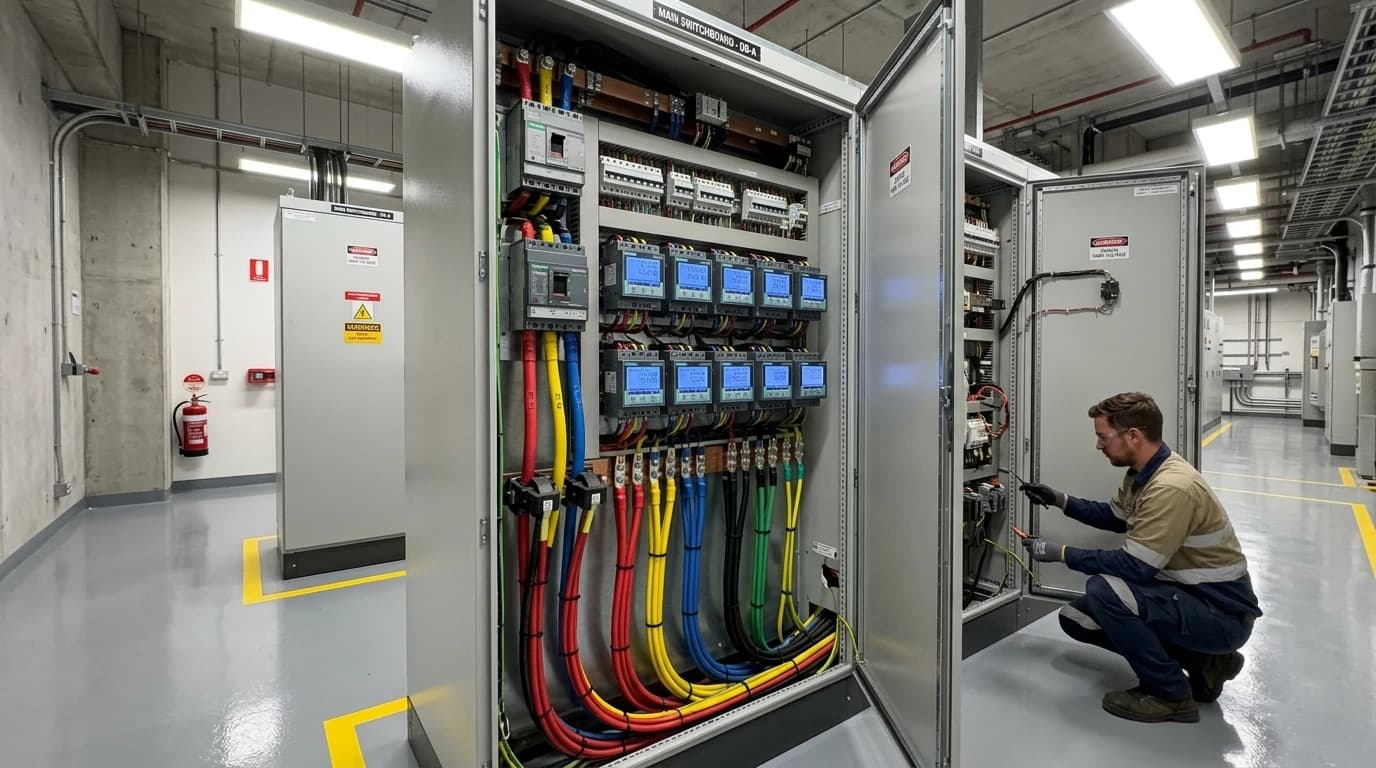
Real-Time Energy Monitoring Systems for SECR Compliance
How energy-intensive factories replace manual tracking to cut utility costs by 15-25%.
A real-time energy monitoring system is a coordinated digital infrastructure of sub-meters, sensors, and telemetry gateways that continuously captures utility data for immediate visibility into industrial resource consumption. For energy-intensive manufacturers—including chemical, pharmaceutical, and food and beverage producers—managing energy use is now a strict regulatory mandate rather than an operational preference. Relying on manual spreadsheets to track performance is no longer viable.
The UK government's 2026 post-implementation review of the Streamlined Energy and Carbon Reporting (SECR) framework concluded that the regulations will remain a permanent corporate reporting fixture, with targeted improvements aimed at reducing duplication and enforcing higher data quality. Consequently, large industrial firms require verifiable, audit-ready data streams to satisfy both internal financial targets and external audits. Automated, continuous monitoring provides the granular visibility needed to meet these demands while driving down operational costs.
What is a Real-Time Energy Monitoring System?
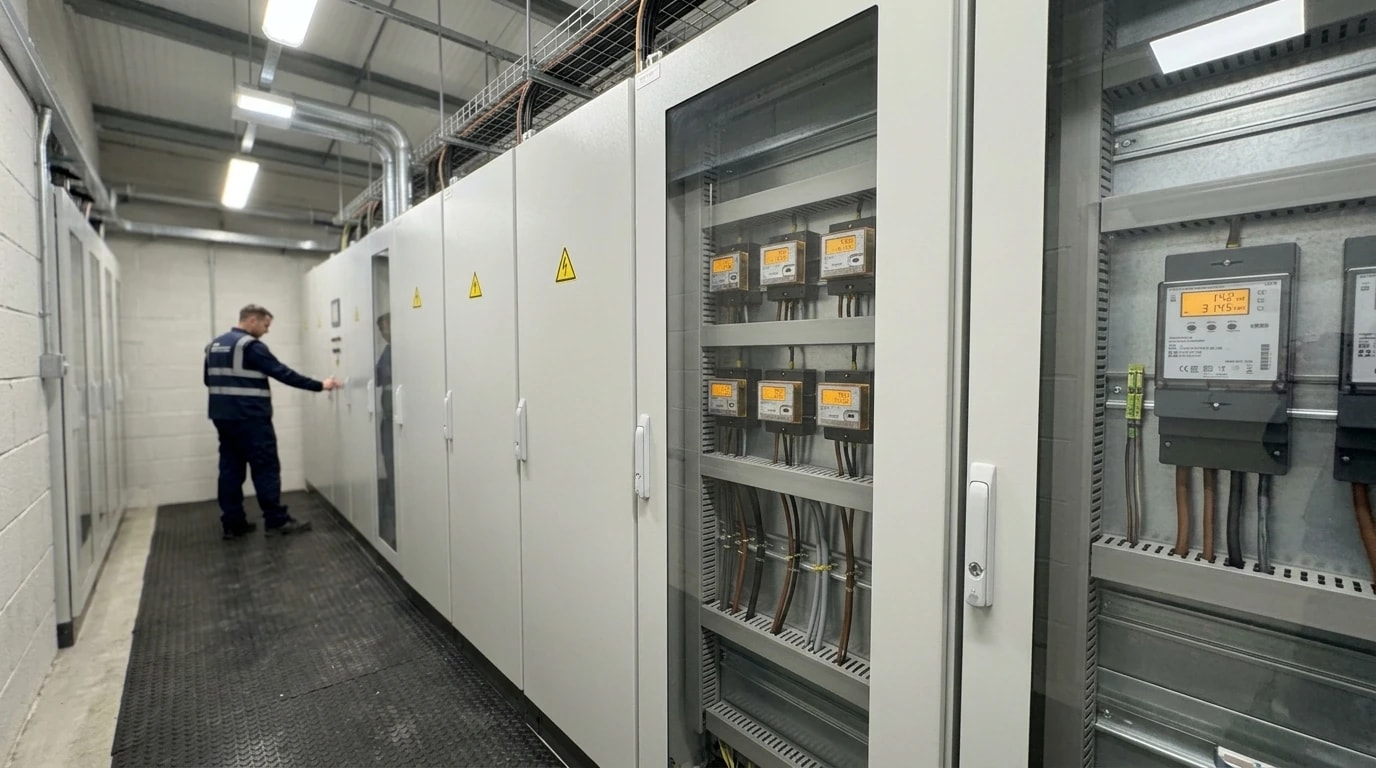
Many industrial facilities operate with a critical blind spot. Traditional energy tracking relies on monthly utility bills, which provide highly aggregated, historic figures but offer no insight into when or where energy was consumed. A real-time monitoring system resolves this by providing continuous, granular visibility across the entire manufacturing footprint.
The Transition From Static Bills to Continuous Auditing
A monthly electricity or gas bill acts as a post-mortem. It reveals the total consumption over a 30-day period but cannot identify a compressed air leak that developed on day three, nor can it isolate the energy cost of a specific production run. In contrast, real-time systems capture data at minute-by-minute intervals. This allows energy managers to correlate consumption with production events, shift patterns, and equipment states, turning raw data into an ongoing, automated energy audit.
Tracking the Six Industrial Utility Streams
Comprehensive industrial energy management requires tracking more than just electricity. High-intensity manufacturing plants typically rely on a complex mix of utility inputs. An effective system monitors at least six core utility streams:
Electricity: Main incoming supplies, heavy motor control centres, and individual process lines.
Natural Gas: Steam boilers, direct-fired dryers, and oxidisers.
Water: Process water, cooling tower make-up, and effluent discharge.
Steam: Mass flow, temperature, and pressure tracking to evaluate boiler efficiency.
Compressed Air: Compressor electrical input matched against flow rates to identify leaks.
Thermal Oil: Heat transfer fluid loops for high-temperature process heating.
High-Resolution Metering Hardware
Capturing this data requires dedicated field-level hardware. This includes digital electrical sub-meters, ultrasonic flow meters for liquids and steam, thermal energy calculators, and vortex shedding meters. These devices measure the exact physical properties of the utility streams and transmit this information to central collection points.

Omni Vision delivers turnkey utility metering, CO2 tracking, and AI-powered production KPI intelligence — giving you real-time dashboards and actionable insights across your entire facility.
Demystifying SECR Compliance in the UK Industrial Sector
The Streamlined Energy and Carbon Reporting (SECR) framework is a mandatory UK climate disclosure regime designed to increase transparency and encourage organisations to implement energy efficiency measures. Filed annually alongside statutory accounts at Companies House, SECR disclosures are subject to auditor scrutiny, making data integrity paramount.
SECR Organisation CategoryApplicability ThresholdsUK Reporting ScopeQuoted CompaniesAll UK-incorporated quoted companies, regardless of size.Global Scope 1 and Scope 2 emissions, global energy use, and intensity ratios.Large Unquoted CompaniesMeet at least two of the following: • Turnover ≥ £36 million • Balance sheet total ≥ £18 million • Employees ≥ 250.UK Scope 1 and Scope 2 emissions, UK energy use, and intensity ratios.Large LLPsSame financial and employee thresholds as unquoted companies.UK Scope 1 and Scope 2 emissions, UK energy use, and intensity ratios.
Statutory Thresholds and Corporate Obligations
For unquoted companies and Limited Liability Partnerships (LLPs), SECR compliance is triggered if the organisation meets at least two of the three statutory size criteria in a financial year. While a low-energy exemption exists for organisations using 40,000 kWh or less during the reporting period, almost all operational manufacturing sites exceed this threshold and must submit full disclosures.
Mandatory Reporting of Scope 1 and Scope 2 Emissions
In-scope companies must disclose their total energy consumption in kilowatt-hours (kWh) alongside corresponding greenhouse gas (GHG) emissions expressed in tonnes of carbon dioxide equivalent (tCO2e). This reporting is split into two mandatory scopes:
Scope 1 (Direct Emissions): On-site fuel combustion (e.g. natural gas in boilers), fuel used in company-owned transport, and fugitive emissions from refrigerant leaks.
Scope 2 (Indirect Emissions): Emissions from purchased electricity, heat, steam, or cooling imported into the facility.
The regulations also require companies to detail their annual energy efficiency actions and to state a chosen intensity ratio.
Calculating Verifiable Energy Intensity Ratios
An intensity ratio normalises emissions data against a business metric, allowing stakeholders to compare environmental performance year-on-year regardless of business growth. In manufacturing, common intensity ratios include:
Tonnes of CO2e per tonne of chemical product.
Kilowatt-hours per million pharmaceutical tablets produced.
Tonnes of CO2e per hectolitre of beverage packaged.
Generating these ratios requires correlating precise energy consumption with production output. Manual spreadsheets fail here because billing cycles rarely align with production inventory dates. A real-time system solves this by capturing production and energy data simultaneously.
The Imperative of ISO 50001:2018 in Data-Driven Decarbonisation
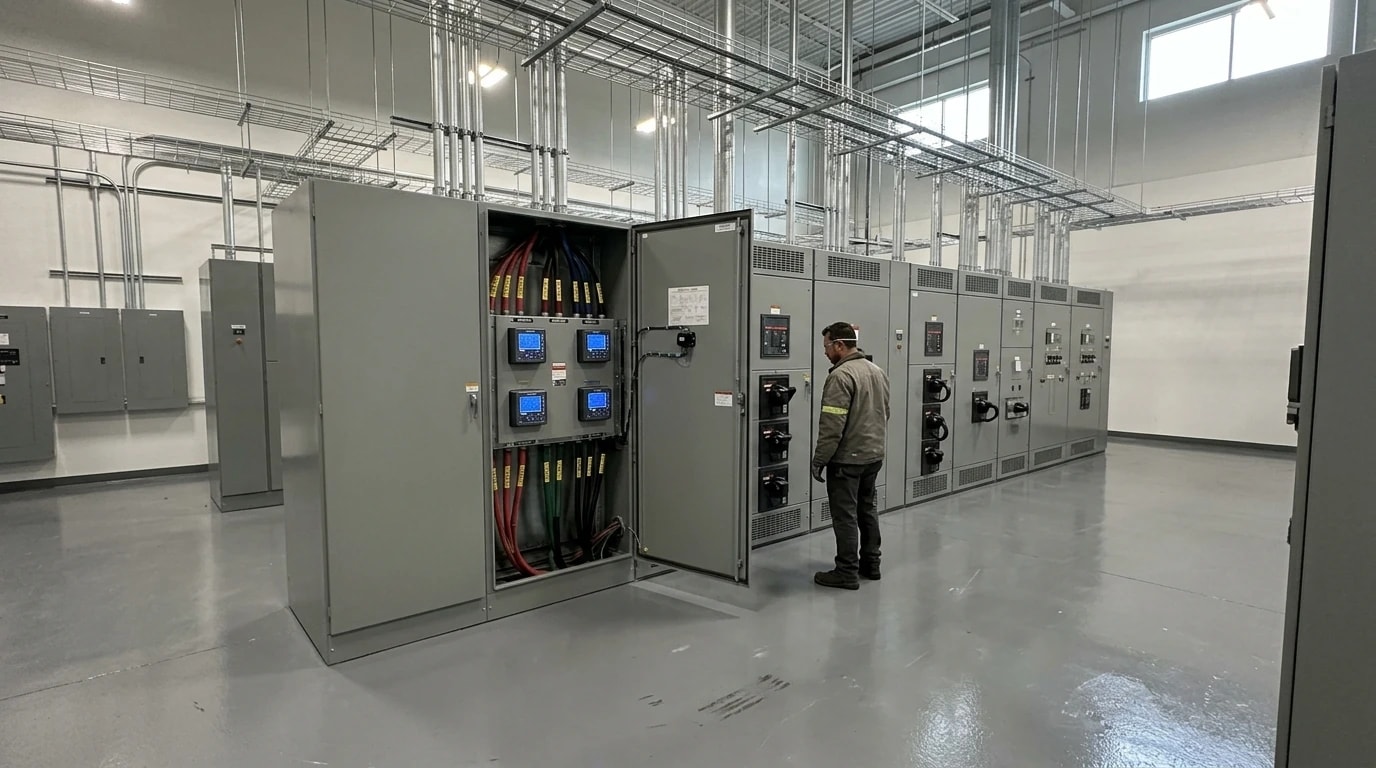
While SECR establishes the annual reporting framework, the ISO 50001:2018 standard defines the operational framework for reducing consumption. This international standard outlines the requirements for establishing, implementing, maintaining, and improving an Energy Management System (EnMS).
Shifting from Reactive Auditing to Continuous Improvement
ISO 50001:2018 mandates that organisations move away from static, retrospective audits to adopt a systematic process of continuous improvement based on the Plan-Do-Check-Act cycle. Real-time monitoring systems are essential for the 'Check' phase, providing the continuous empirical data needed to verify that energy-saving initiatives are performing as expected.
Establishing Accurate Energy Baselines (EnBs)
An Energy Baseline (EnB) represents the quantitative reference tool used to compare energy performance over specified periods. To build a valid EnB under ISO 50001:2018, engineers must identify the variables affecting consumption, such as production volumes, raw material characteristics, and outdoor temperatures. Real-time monitoring systems collect these variables alongside energy data, allowing advanced algorithms to construct dynamic baselines that adjust automatically to operational changes.
Dynamic Energy Performance Indicators (EnPIs)
An Energy Performance Indicator (EnPI) measures energy efficiency gains. Rather than relying on simple total consumption values, dynamic EnPIs calculated from real-time data provide immediate feedback. For example, if a steam-heated distillation column experiences a sudden increase in energy consumption per unit of output, the EnPI spikes immediately, alerting the operations team to a potential control-valve fault or heat-exchanger fouling.

Track energy consumption, emissions, and process parameters with seamless PLC/SCADA integration via Modbus, OPC-UA, and MQTT protocols.
Non-Invasive IIoT Architecture: Safe and Secure Data Extraction
Integrating a real-time monitoring system must not disrupt existing automation or compromise safety certifications. Many legacy plants rely on Programmable Logic Controllers (PLCs) managing deterministic, time-critical processes where any lag or software conflict could cause unplanned downtime or safety hazards.
Maintaining PLC Determinism and Operational Integrity
In GMP-regulated pharmaceutical plants and HACCP-compliant food facilities, modifying PLC code to extract energy data requires extensive re-validation and testing. To avoid this costly and time-consuming process, deployment teams utilise a non-invasive, read-only data extraction model. By tapping into existing communication ports or installing dedicated splitters, monitoring systems capture sensor data passively, ensuring the primary control loop remains unaffected and safe from external interference.
Integrating Modbus, OPC-UA, BACnet, and MQTT
To accommodate the diverse mix of hardware found in modern factories, industrial telemetry systems support multiple communication protocols:
Modbus TCP/RTU: A widely used serial and Ethernet protocol ideal for communicating directly with electrical sub-meters, flow meters, and gas analysers.
OPC-UA (Open Platform Communications Unified Architecture): A platform-independent, service-oriented architecture that provides secure, reliable communication from PLCs and SCADA systems to higher-level enterprise software.
BACnet: Used primarily to integrate building services, such as HVAC systems, chiller plant controllers, and lighting networks.
MQTT (Message Queuing Telemetry Transport): A lightweight, publish-subscribe network protocol designed for high-latency, low-bandwidth links, making it the industry standard for pushing data from edge gateways to cloud databases.
One-Way Encrypted Cloud Push Architecture
Data security is paramount for industrial networks. To prevent cyber-attacks on critical infrastructure, edge telemetry devices are configured for a one-way, outbound-only encrypted push of data to the cloud. By utilising Transport Layer Security (TLS 1.3) over outbound port 443, the system requires no open inbound ports on the firewall, keeping the local operational technology (OT) network completely isolated from the public internet.
Omni Vision Energy Intelligence: Transitioning from Spreadsheets to Centralised Intelligence
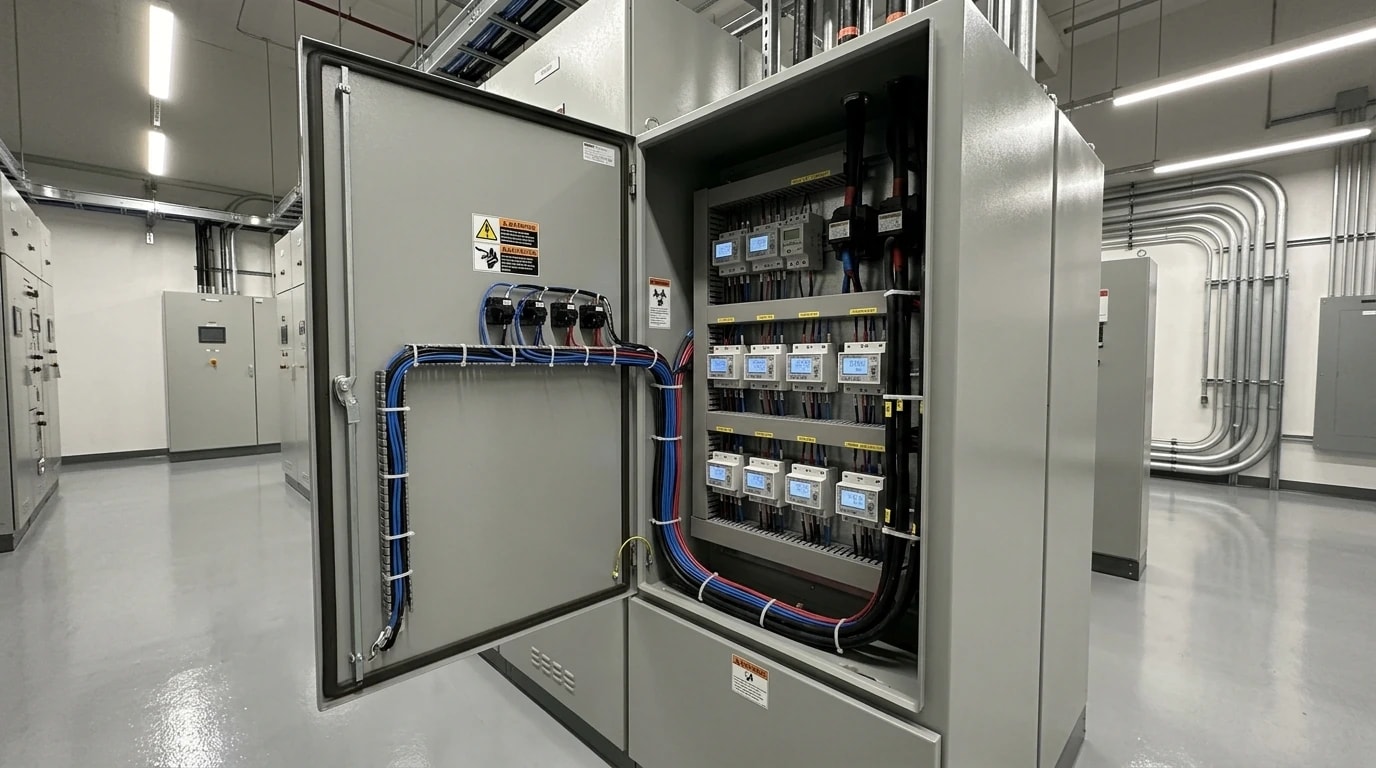
The Omni Vision Energy Intelligence Platform is a comprehensive, turnkey solution for industrial energy management, combining precision hardware integration with advanced cloud-based analytics. The system allows energy managers and operations directors to transition from error-prone spreadsheets to an automated, audit-ready compliance workflow.
Turnkey Deployment Model
Deploying an enterprise-grade system does not require months of disruptive work. Through a standardised 8 to 16-week turnkey process, engineers handle the entire lifecycle:
Site Assessment & Metering Specification: Identifying optimal sub-meter locations across all six utility streams.
Hardware Installation & Non-Invasive Integration: Installing physical meters and configuring read-only PLC connectivity via Modbus, OPC-UA, BACnet, or MQTT.
Secure Telemetry Gateway Commissioning: Configuring the edge device to compile and encrypt data streams before cloud transmission.
Analytics Configuration: Mapping incoming telemetry to production-linked Key Performance Indicators (KPIs) and compliance dashboards.
EPSA Cloud-Based AI Analytics Engine
Once data is securely transmitted, it is processed by EPSA's cloud-based AI analytics engine. This cloud intelligence platform does not simply store data; it actively monitors facility performance:
AI-Driven Anomaly Detection: By analysing historical consumption patterns alongside live variables, the AI can automatically identify when a machine is consuming abnormal amounts of energy, indicating a mechanical fault, insulation degradation, or steam trap failure.
Permit Threshold Management: For chemical and process sites operating under strict environmental permits, the system tracks real-time emissions and issues alerts if cumulative output approaches regulatory thresholds, helping operators avoid costly non-compliance penalties.
Automated Intensity Mapping: The engine automatically integrates with enterprise resource planning (ERP) systems to match energy data with production schedules, providing instant metrics such as energy cost per batch or carbon emissions per unit of product.
Generating Audit-Ready Compliance Disclosures
As annual SECR deadlines approach, sustainability teams no longer need to spend weeks chasing utility bills, normalising figures, and manually calculating emissions factors. The Omni Vision platform generates verified, audit-ready disclosures with a single click. Every figure in the report is tied directly to primary, timestamped meter data, providing the precise traceability auditors require for SECR, ESOS, UK ETS, and ISO 50001 frameworks.
The Financial Case for Real-Time Energy Monitoring Systems
Implementing automated monitoring is an operational investment that delivers substantial financial returns. When facilities gain complete visibility over their utility streams, they routinely uncover hidden waste, operational inefficiencies, and process optimisation opportunities.
Realising 15 to 25 Per Cent Energy Cost Reductions
In energy-intensive manufacturing, minor inefficiencies compound into massive financial losses. Industry data shows that transitioning from manual spreadsheet tracking to automated, real-time intelligence typically yields 15 to 25 per cent reductions in overall utility costs. These savings are driven by:
Eliminating Idle Load Waste: Identifying auxiliary systems, heaters, and air compressors that continue to run when production lines are idle.
Optimising Peak Demand Charges: Enabling operators to reschedule energy-intensive processes during off-peak windows to avoid peak electricity tariffs and demand penalties.
Predictive Maintenance Savings: Identifying failing pumps, fans, and steam systems before they fail completely, reducing unplanned downtime.
Achieving Sub-12-Month Return on Investment
Because non-invasive telemetry requires no expensive modifications to existing production machinery or control software, the initial capital outlay is low. Combined with immediate, actionable insights that allow teams to target waste from day one, most industrial plants achieve a full return on investment (ROI) in under 12 months.
Decades of Proven Industrial Expertise
Transitioning to an automated environmental monitoring platform is backed by a proven track record. Over a 12-year history, more than 150 industrial customers have successfully implemented these monitoring systems to secure reliable compliance, eliminate manual data administration, and achieve sustained energy cost reductions. Embracing real-time telemetry ensures that energy-intensive manufacturers remain compliant, competitive, and operationally efficient.
This article reflects the independent analysis and editorial opinion of EnerTherm Engineering. Product names, trademarks, and brands mentioned belong to their respective owners. EnerTherm Engineering is not affiliated with, endorsed by, or a licensee of any third-party software or product mentioned unless explicitly stated.

Technical Manager — EnerTherm Engineering
John Naranjo is Technical Manager at EnerTherm Engineering, bringing specialist expertise in chemical and environmental engineering. He recently led the implementation of Omni Vision, EnerTherm's real-time energy and utility monitoring platform. He holds an MSc in Environmental Engineering from the University of Huelva and a BSc in Chemical Engineering, with memberships in both the Energy Institute and IChemE.
