Selecting a UK Process Engineering Consultancy for COMAH
A framework for assessing DSEAR compliance, HSE safety, and HYSYS simulation accuracy.
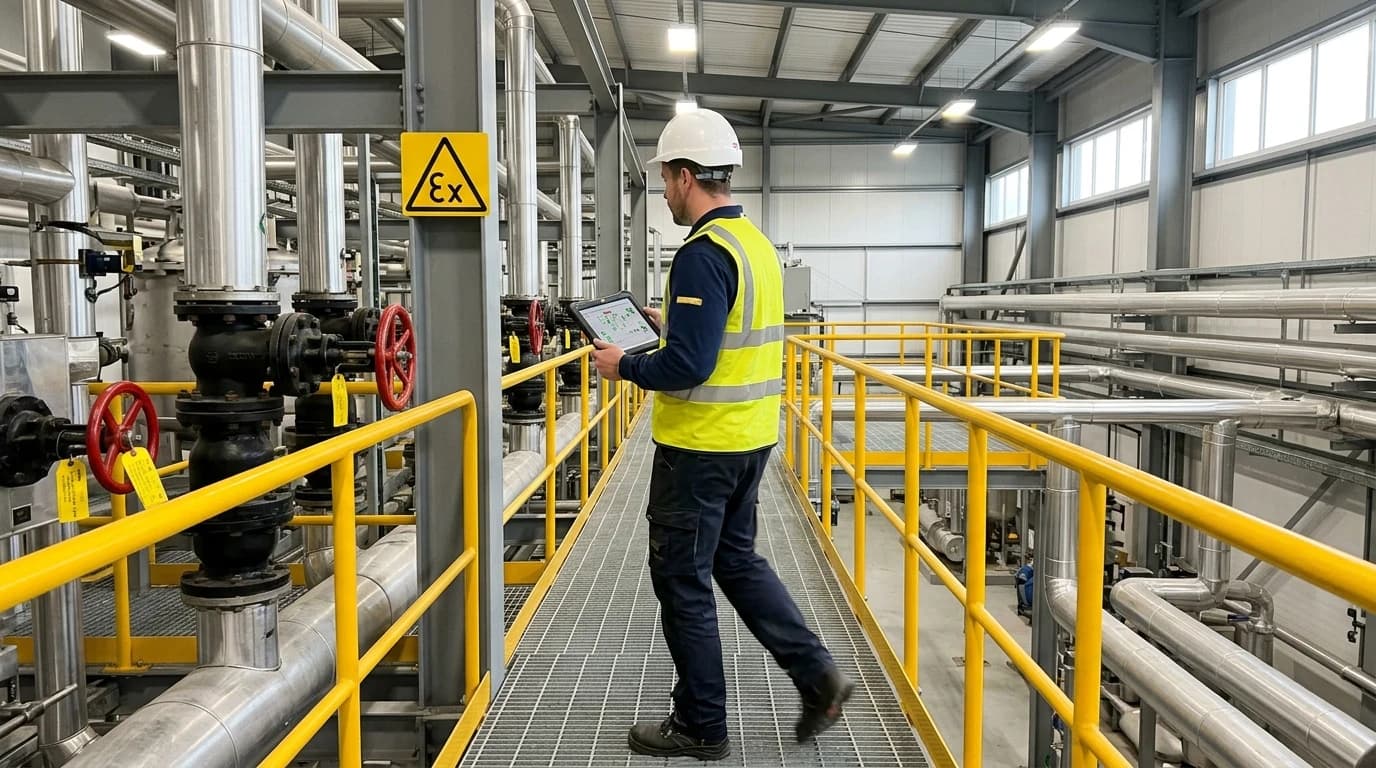
The Health and Safety Executive (HSE) is executing approximately 14,000 proactive inspections through 2026, targeting major-hazard facilities with rigorous audits on explosive atmospheres, chemical process safety, and containment measures. For engineering directors and capital project managers at UK chemical, petrochemical, and pharmaceutical sites, this intense regulatory environment demands flawless technical documentation and robust system design.
When outsourcing complex process design, dynamic debottlenecking, or thermodynamic validation, choosing a qualified external partner is critical. A generalist engineering firm often lacks the specialised chemical physics and safety credentials required for high-hazard environments. To secure compliance and protect operational licences, operators must select a specialist process engineering consultancy UK that can bridge the gap between chemical thermodynamics and major accident prevention.
Evaluating COMAH Regulatory Standards in UK Chemical Processing
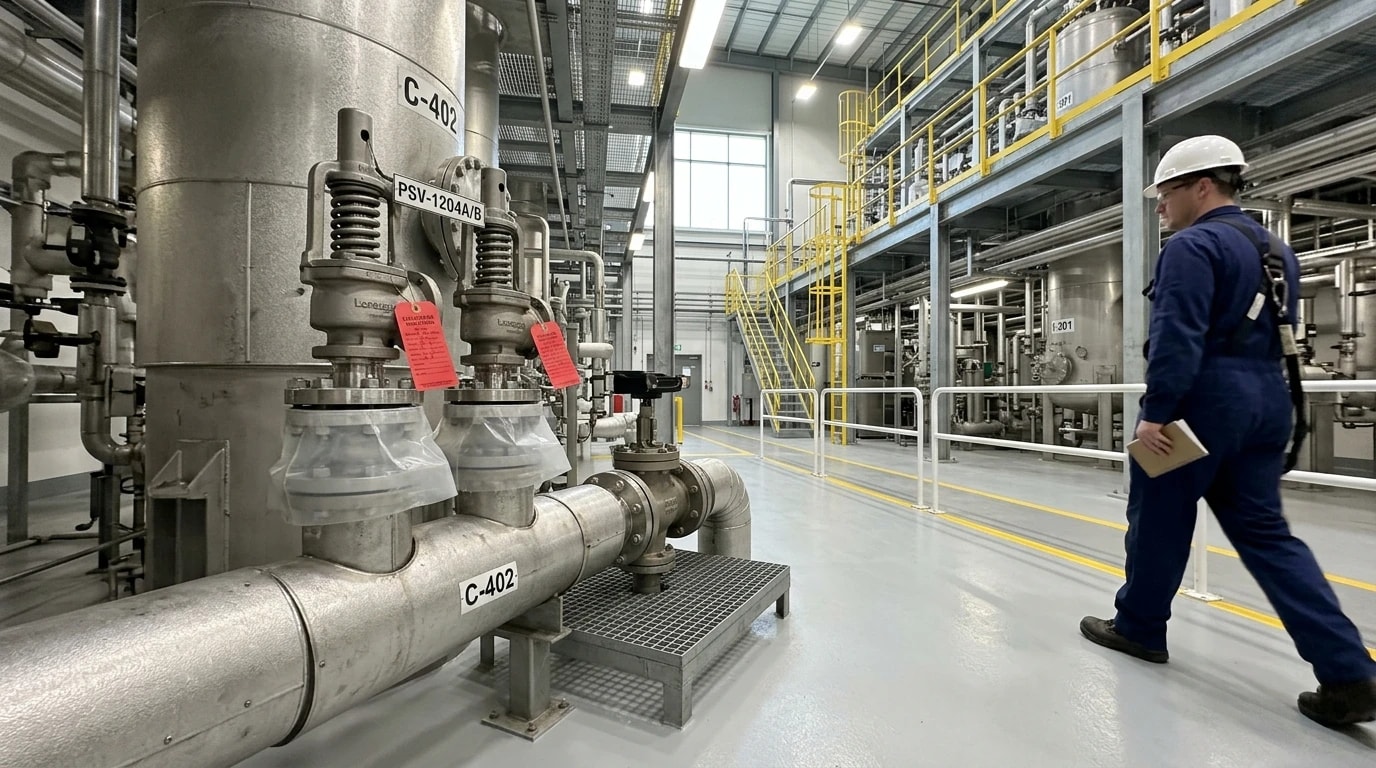
The Control of Major Accident Hazards (COMAH) Regulations 2015 govern UK sites storing or processing hazardous substances above specific thresholds. Co-enforced by the HSE and the Environment Agency (EA) in England, the Scottish Environment Protection Agency (SEPA) in Scotland, and Natural Resources Wales (NRW) in Wales, these regulations categorise facilities into Lower Tier and Upper Tier. Each tier carries progressively demanding statutory duties that require extensive process engineering support.
Major Accident Prevention Policies (MAPP)
Every COMAH site must establish a written Major Accident Prevention Policy (MAPP). Whilst the MAPP outlines the management systems designed to control hazards, it must be supported by physical process design reality. A qualified process engineering consultancy UK translates high-level policy into physical plant protections. This includes designing safety-critical interlocks, sizing emergency pressure-relief systems, and calculating safe venting rates to prove to the competent authority that the plant design reduces risks to a level that is as low as is reasonably practicable (ALARP).
Upper Tier Safety Reports and HSE Expectations
Upper Tier operators face a heavier regulatory burden, requiring the submission of a comprehensive Safety Report. This document must demonstrate that the operator has identified all major accident hazards and implemented sufficient safeguards. In 2026, the HSE is scrutinising these reports with a focus on cost-recovery efficiency, penalising incomplete submissions under the COMAH charging schemes.
A specialist consultancy supports this by providing:
- High-fidelity consequence modelling for toxic gas releases, pool fires, and vapour cloud explosions.
- Rigorous Layer of Protection Analysis (LOPA) to verify that Independent Protection Layers (IPLs) meet target Safety Integrity Levels (SIL).
- Validated piping and instrumentation diagrams (P&IDs) and Process Flow Diagrams (PFDs) that accurately depict the current plant state.

Map every energy and material flow in your process with detailed heat and mass balance calculations — the foundation for any optimisation or design project.
Integrating DSEAR and the 2026 ATEX Guidelines
In the UK, process designs must comply strictly with the Dangerous Substances and Explosive Atmospheres Regulations 2002 (DSEAR), which transposes the European ATEX Workplace Directive (Directive 99/92/EC). Equipment installed within these zones must also meet the Equipment and Protective Systems Intended for Use in Potentially Explosive Atmospheres Regulations 2016 (SI 2016 No. 1107).
The Impact of the 6th Edition of the ATEX Guidelines (January 2026)
The publication of the 6th Edition of the ATEX 2014/34/EU Guidelines in January 2026 clarified the regulatory landscape. While the core directive remains unchanged, this update provides essential interpretations that directly affect how process consultancies design, modify, and maintain systems:
- Spare Parts Scope Refinement (§33): The new guidance clarifies that spare parts intended solely for the routine maintenance of existing, legally placed equipment are excluded from requiring new ATEX conformity, provided they do not alter the equipment's original safety parameters. A design consultancy must assess whether a proposed piping modification constitutes simple maintenance or a process change that triggers full recertification.
- Simple Products and Electrostatic Risks (§38): The guidelines confirm that simple mechanical items without their own ignition source (such as hand-operated valves or ladders) do not require ATEX marking. However, they introduce a warning: market surveillance authorities can restrict these items if they present electrostatic hazards, particularly when utilising polymer components. Process designs must ensure that non-conductive plastics in hazardous areas are properly earthed.
- Digital Documentation Transition (§74): EU Declarations of Conformity (DoC) and instructions can now be supplied digitally, via web links or machine-readable codes, provided they remain accessible for the product's expected lifetime. This eases the administrative consolidation of safety dossiers during capital projects.
- Electrical Trace Heating Systems (§253): Clear distinctions are now made between stabilised design and controlled design trace heating systems, setting strict design verification expectations. Consultancies must verify these heating circuits carefully, as uncontrolled heat tracing can act as an ignition source in volatile storage areas.
Implementing Technical Controls Under DSEAR
When evaluating a process engineering consultancy UK, operators must ensure the firm can execute detailed hazardous area classification (HAC) studies. This involves mapping Zone 0, 1, and 2 areas for gases and vapours, and Zone 20, 21, and 22 areas for combustible dusts. The consultancy must design ventilation systems, containment vessels, and flame arresters that prevent explosive mixtures from forming, directly satisfying the hierarchy of controls required under DSEAR.
Aligning Specialty Chemical Design with MHRA and EU Annex 1
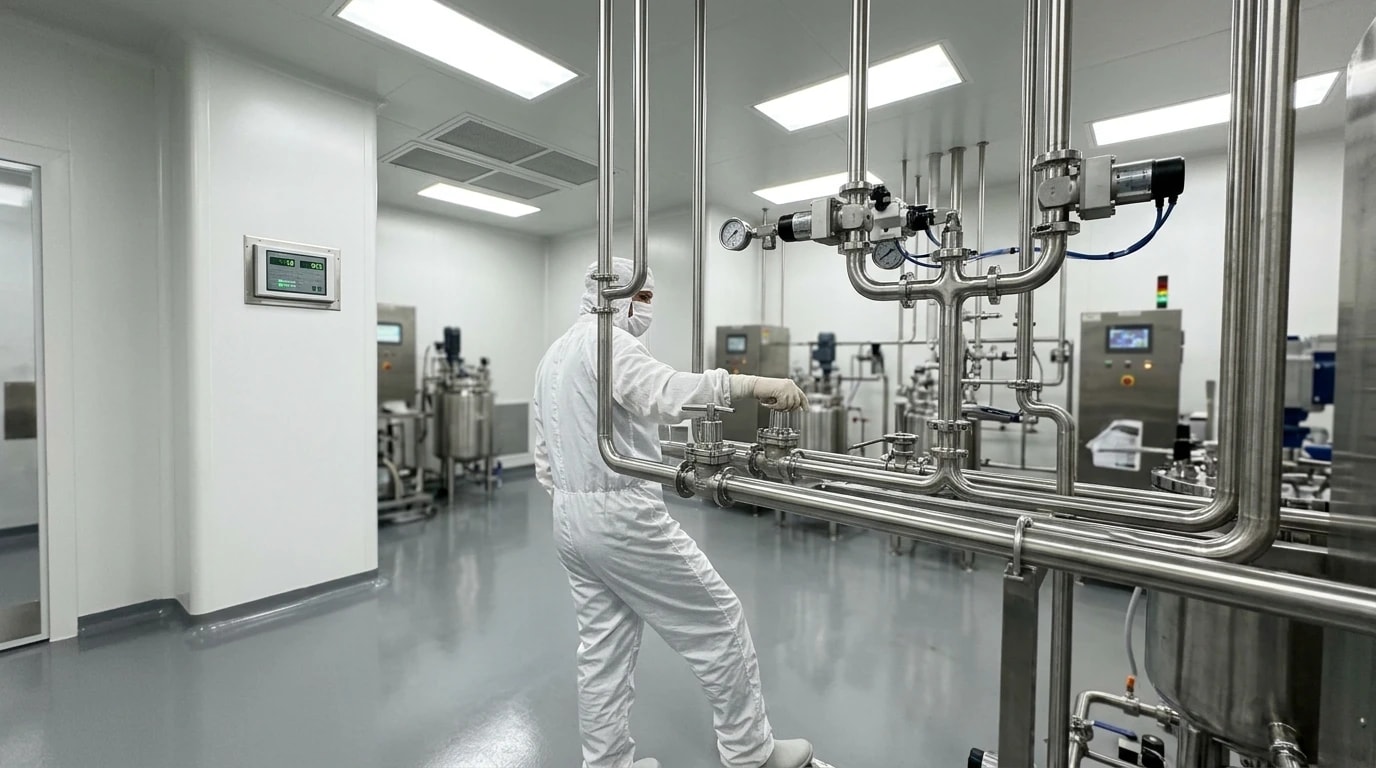
For chemical facilities operating at the intersection of speciality synthesis and pharmaceutical manufacturing, process designs must align with the Medicines and Healthcare products Regulatory Agency (MHRA) expectations and Good Manufacturing Practice (GMP) standards.
The Mandatory Contamination Control Strategy (CCS)
The revised EU GMP Annex 1 (Manufacture of Sterile Medicinal Products) dictates that sterility assurance and contamination control cannot be tested into a finished batch. Instead, control must be designed into the process itself. In 2026, MHRA inspectors expect continuous, active proof that contamination risks are controlled daily across all utility, piping, and reactor systems.
Process design consultancies must integrate these principles into the physical layout of the facility:
- Closed-System Design: Ensuring the reaction and transfer pathways are entirely isolated from the external environment using barrier technology, aseptic connectors, and sterile filter housings.
- Clean-in-Place (CIP) and Steam-in-Place (SIP) Engineering: Designing piping networks with zero dead-legs to prevent product holdup and bacterial growth, whilst ensuring steam distribution maintains the necessary sterilisation temperatures (121 ∘C minimum) across every pipe branch.
- Dynamic Simulation of Utilities: Modelling sterile water-for-injection (WFI) loops and pure steam generators to guarantee continuous turbulent flow, preventing bioburden accumulation.
Veterinary GMP Alignment
Process teams must also plan for the mid-2026 regulatory transition. Starting 16 July 2026, Commission Implementing Regulation (EU) 2025/2091 establishes separate but closely aligned GMP rules for veterinary products. Consultancies designing multi-product synthesis lines must ensure that active ingredients intended for both human and veterinary applications satisfy these dual, harmonised requirements without cross-contamination risks.

Map every energy and material flow in your process with detailed heat and mass balance calculations — the foundation for any optimisation or design project.
Thermodynamic Simulation and Heat and Mass Balance Validation
At the foundation of any COMAH safety case or process optimisation project is the thermodynamic model. This predicts how chemical mixtures behave under varying pressures and temperatures. If a process engineering consultancy UK selects an incorrect thermodynamic framework, the physical equipment sizing, distillation efficiency calculations, and relief valve venting capacities will be flawed.
Selecting the Correct Thermodynamic Property Packages
Process engineers utilise specialised thermodynamic equations of state and activity coefficient models depending on the chemical species involved:
- NRTL (Non-Random Two-Liquid): Best suited for highly non-ideal liquid phase mixtures, such as alcohol-water separations, organic acid purification, and speciality chemical reactions where liquid-liquid phase separation occurs.
- UNIQUAC (Universal Quasi-Chemical): Ideal for polar and non-polar mixtures, multi-component solvent extraction processes, and complex chemical systems exhibiting strong molecular interactions.
- SRK (Soave-Redlich-Kwong): Commonly selected for high-pressure gas processing, light hydrocarbons, and industrial petrochemical applications where components are non-polar.
- Peng-Robinson: The standard choice for oil, gas, and hydrocarbon systems, providing highly accurate vapour-liquid equilibrium (VLE) predictions over wide temperature and pressure ranges.
Using an equation of state like Peng-Robinson to model a highly polar system (such as ethanol and water) results in severe errors in boiling point predictions and phase behaviour. This can lead to an under-designed distillation column or a dangerously undersized emergency relief system.
The 11-Step Heat and Mass Balance Engineering Methodology
A rigorous process engineering consultancy UK applies a systematic approach to build, validate, and deliver a "single source of truth" heat and mass balance. This methodology transitions through 11 distinct engineering phases:
- Project Scoping: Define the process boundaries, operating envelopes, chemical components, and production goals.
- Data Acquisition: Gather physical plant data, including current piping and instrumentation diagrams (P&IDs), historical operating logs, laboratory assays, and raw material specifications.
- Property Method Selection: Assess the chemical structures to select the most accurate thermodynamic package (e.g., NRTL, Peng-Robinson).
- Unit Operation Block Modelling: Map out reactors, distillation columns, flash vessels, pumps, and heat exchangers within the simulation environment.
- Steady-State Model Construction: Develop the initial steady-state process simulation using industry platforms like Aspen Plus, HYSYS, or DWSIM.
- Recycle Loop Management: Solve complex, nested recycle loops by setting precise mathematical convergence tolerances to prevent unrealistic accumulation of trace compounds.
- Dynamic Simulation Transition: Configure time-dependent physical holdups, vessel geometries, and control valve characteristics to model transient behaviours.
- Plant Validation: Compare the simulation outputs directly against physical plant operating data under normal conditions to calibrate the model.
- Equipment Sizing Verification: Size and rate safety-critical equipment, including reactors, heat exchangers, and separator vessels, to ensure safe operating margins.
- Risk Scenario Simulation: Model transient upset conditions (e.g., cooling water failure, power outage, runaway reaction) to calculate maximum relief loads.
- Deliverable Finalisation: Issue validated Process Flow Diagrams (PFDs) complete with embedded stream tables, Sankey energy maps, and physical equipment data sheets.
Mitigating Reaction Kinetics and High-Hazard Distillation Risks
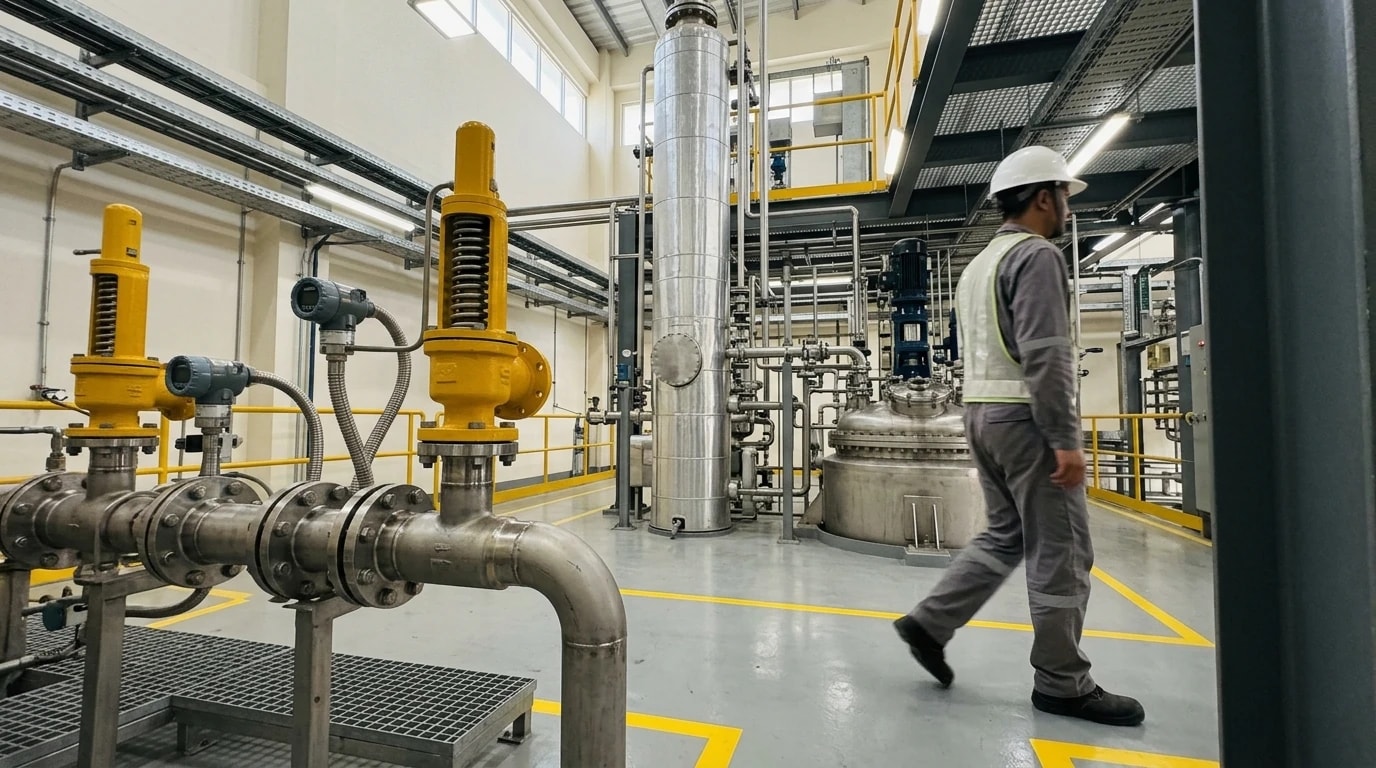
COMAH facilities often run highly exothermic reactions or handle volatile, multi-component distillation feeds. Designing and managing these systems requires deep physical chemistry and chemical kinetics expertise.
Exothermic and Endothermic Reactor Heat Duties
In exothermic reactions, such as polymerisations or nitrations, the heat generation rate (qg) must never exceed the cooling capacity (qc) of the reactor's heat transfer systems:
qg>qc⟹Thermal RunawayA qualified consultancy must calculate exact heat duties under peak reaction rates. This requires modelling reaction kinetics, heat transfer coefficients (U), and heat exchanger surface areas (A).
By simulating these reactions under dynamic conditions, engineers can determine the exact cooling water flow rates required to prevent thermal runaway. They can also design emergency quenching systems and determine the safe initiation points for safety instrumented shutdowns.
Multi-Component and Azeotropic Distillation
Separating volatile compounds often involves multi-component distillation where liquid and vapour phases coexist in complex patterns, including:
- Vapour-Liquid Equilibrium (VLE) for standard separations.
- Liquid-Liquid Equilibrium (LLE) in solvent extraction columns.
- Vapour-Liquid-Liquid Equilibrium (VLLE) in heterogeneous azeotropic systems.
In cases like ethanol dehydration or acetic acid concentration, simple distillation is prevented by the formation of an azeotrope, where the liquid and vapour phases share the same composition. Process engineers must model azeotropic distillation columns that utilise an entrainer compound to break the azeotrope.
They must also ensure that recycle loops converge reliably within the simulation. If these loops do not converge, trace compounds can accumulate in the model, leading to inaccurate predictions of heat duties and column hydraulics, which can cause real-world column flooding or dry-tray conditions.
How to Benchmark and Choose a Process Engineering Consultancy UK
To select the right engineering partner, capital project managers and engineering directors must compare consultancies against technical, safety, and regulatory benchmarks. The table below outlines the key differences between generalist engineering providers and specialised process safety and heat and mass balance consultancies.
| Evaluation Metric | Generalist Engineering Firm | Niche Process Safety & HMB Consultancy |
|---|---|---|
| Thermodynamic Modelling Expertise | Uses default simulation settings; limited understanding of non-ideal liquid phase models (NRTL, UNIQUAC). | Dedicated thermodynamic experts; selects and calibrates custom property packages validated against laboratory data. |
| Simulation Platforms | Basic steady-state modelling; relies on basic third-party spreadsheets. | High-fidelity steady-state and dynamic modelling using Aspen Plus, HYSYS, and DWSIM. |
| COMAH & HSE Regulatory Compliance | Outsources HAZOP/LOPA; treats process safety as an afterthought. | Fully integrated HAZOP, LOPA, and consequence modelling; extensive experience presenting safety cases to the HSE. |
| DSEAR & ATEX Expertise | Basic zoning; unaware of 2026 ATEX guideline updates regarding spare parts or trace heating. | Expert hazardous area classification; applies 6th Edition guidelines to plant design and equipment selection. |
| MHRA / GMP Validation | General mechanical designs; lacks familiarity with sterile boundary requirements. | Thoroughly understands EU Annex 1, sterile fluid dynamics, and Contamination Control Strategy integration. |
| Deliverables Quality | Standard PFDs and CAD drawings without validated physical property tables. | Dynamic simulation models, detailed equipment sizing summaries, validated PFDs, and integrated stream tables. |
Essential Verification Questions for Chemical Manufacturers
When interviewing a prospective process engineering consultancy UK, chemical and pharmaceutical manufacturers should ask four targeted, technical questions to verify their engineering capabilities:
- How does your engineering team choose between the NRTL and Peng-Robinson property packages when modelling a mixture of polar solvents and dissolved gases at elevated pressures?
- Can you demonstrate how your dynamic simulation methodology has been used to size emergency relief valves for a multi-component, reactive distillation column under a total loss of cooling water scenario?
- What specific design changes would you implement under the 6th Edition ATEX Guidelines (§38) for a mechanical piping assembly that incorporates high-density polyethylene (HDPE) transfer lines in a Zone 1 environment?
- How does your process design team ensure that the clean-in-place (CIP) hydraulic calculations satisfy the shear-stress and velocity requirements outlined in the latest EU GMP Annex 1 guidelines?
Choosing a process engineering consultancy UK is not simply a procurement exercise; it is a critical process safety decision. By selecting a partner with a systematic heat and mass balance methodology, deep thermodynamic expertise, and a comprehensive understanding of current COMAH, DSEAR, and GMP regulations, operators can ensure their plant is efficient, compliant, and fundamentally safe.
This article reflects the independent analysis and editorial opinion of EnerTherm Engineering. Product names, trademarks, and brands mentioned belong to their respective owners. EnerTherm Engineering is not affiliated with, endorsed by, or a licensee of any third-party software or product mentioned unless explicitly stated.

Managing Director — EnerTherm Engineering
Dr. François Pierrel is Managing Director of EnerTherm Engineering with over two decades of expertise in thermal design, heat transfer, and industrial energy optimisation. He holds a PhD in Heat Transfer from Cranfield University and a Post-Doctorate from Heriot-Watt University.
