UK Chemicals' 6.4 MtCO2e Decarbonisation Strategy
How heat recovery, fuel switching and audits reduce site emissions
A process decarbonisation strategy for the chemical industry is a site-level plan to reduce fuel, electricity and process emissions while maintaining product quality, throughput, containment and process safety.
UK chemicals emitted 6.4 MtCO₂e in 2023, according to the Department for Energy Security and Net Zero's 2025 Energy Innovation Needs Assessment. That places chemicals behind refineries and iron and steel among the largest industrial emissions sources. It also makes site energy decisions material to the national industrial transition.
For chemical manufacturers, the practical work begins well before a fuel-switching project or carbon-capture study. Steam networks, fired heaters, distillation columns, refrigeration loads, compressed air, thermal oxidisers and process reactions interact. A project that lowers fuel use while destabilising a reactor temperature profile, creating an ignition risk or constraining production has failed its real test.
A credible process decarbonisation strategy starts with an auditable energy and emissions baseline, then builds a ranked programme of efficiency, heat recovery, electrification and fuel-switching measures. The sequence matters. Reducing avoidable heat demand first can lower the capacity, operating cost and electrical connection requirements of later capital projects.
Why UK chemicals' 6.4 MtCO₂e baseline matters
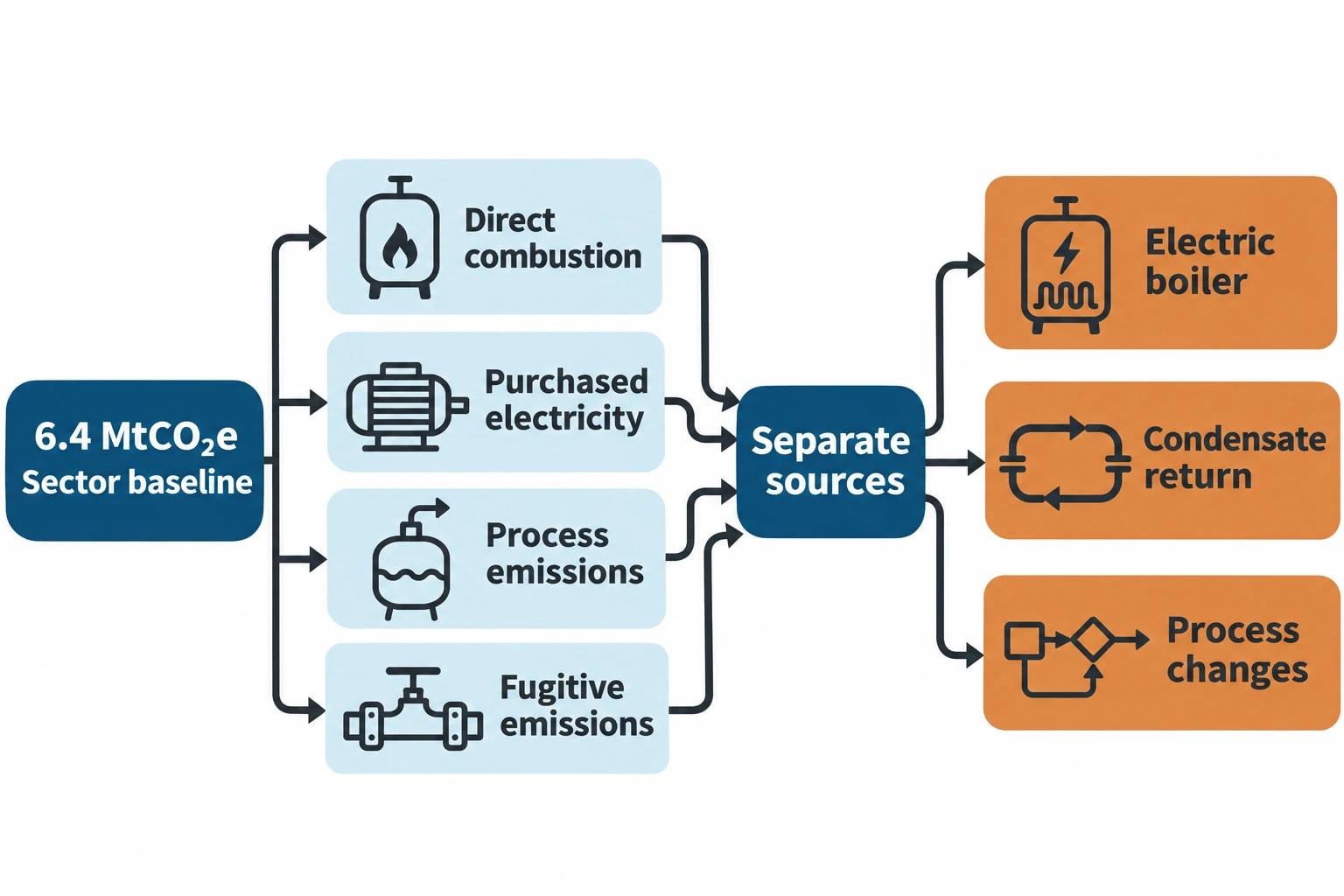
The figure is a sector-wide emissions baseline, not a target for an individual plant. Chemical sites often operate continuously, handle hazardous materials and rely on high-temperature heat. Their emissions arise from several sources:
- Direct combustion in boilers, fired heaters, furnaces and thermal oxidisers.
- Purchased electricity for motors, refrigeration, pumping, air compression and electric heating.
- Process emissions from chemical reactions, venting and purification.
- Fugitive emissions from valves, seals, storage and transfer systems where relevant to the process.
A decarbonisation programme needs these sources separated before management can choose the right intervention. Replacing a gas-fired boiler with an electric boiler affects direct fuel emissions and electrical demand. Improving condensate return reduces boiler fuel demand without changing the primary heat source. Process changes may reduce reaction-related emissions while increasing separation energy.
The correct unit of analysis is usually more precise than annual site consumption. A speciality chemical plant may need energy intensity per batch, per tonne of active ingredient, per tonne of saleable product or per campaign. Polymer plants may need separate measures for extrusion, drying, pelletising and utilities. Bulk chemical sites often require asset-level views of furnaces, cracking, distillation, compression and steam generation.
Production mix, operating hours, ambient conditions, feedstock quality and grade changes must accompany energy data. Without those variables, a lower monthly gas bill can be misread as an efficiency improvement when production has merely fallen.
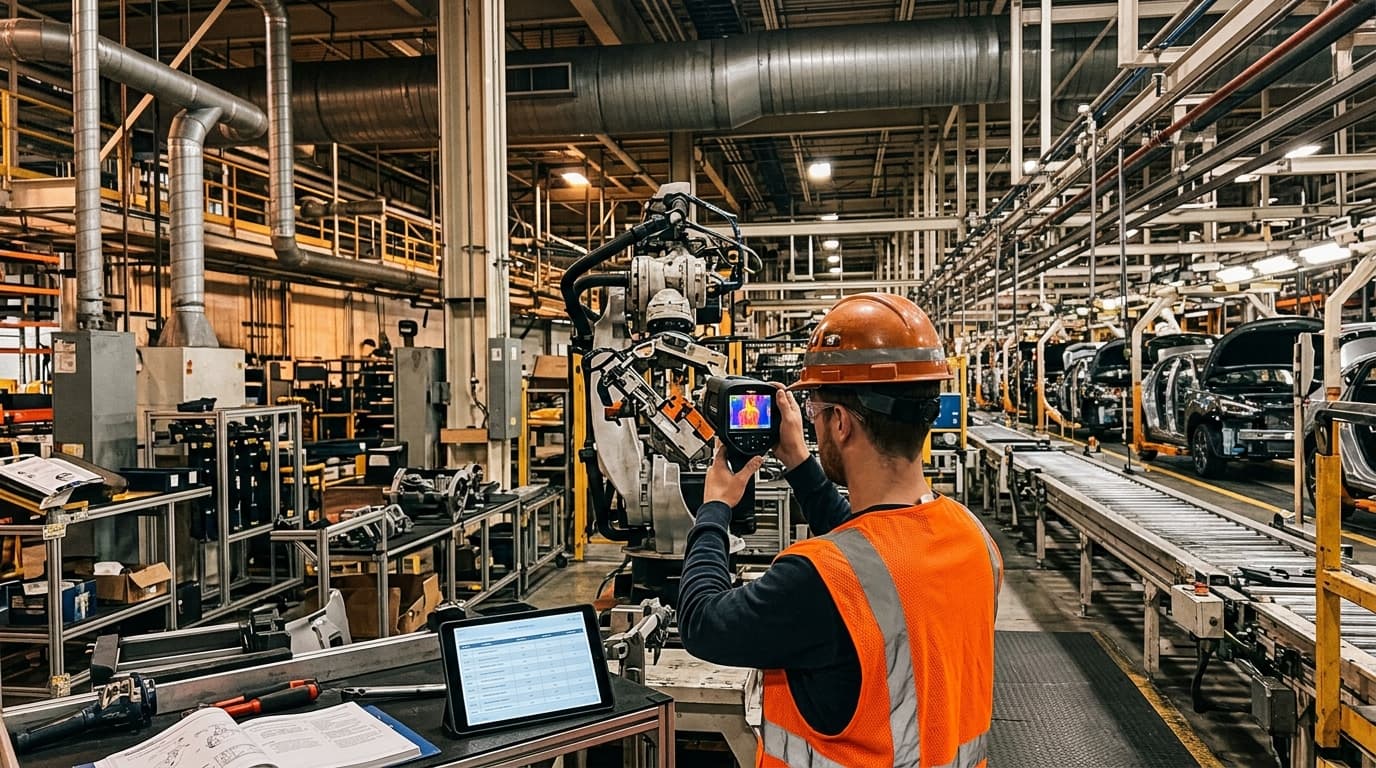
Identify where your plant is losing energy and quantify the savings potential — our audits map every heat source, sink, and waste stream in your facility.
Build the chemical-site baseline through an energy audit
Map energy, mass and emissions together
A useful audit follows energy from incoming meter to point of use, then connects it with material flows and emissions sources. The baseline should identify:
- Gas, electricity, steam, compressed air, cooling and refrigerant consumption.
- Steam generation, pressure reduction, distribution, condensate return and blowdown.
- Fired-heater duty, stack temperature, oxygen level, excess air and run hours.
- Major electrical loads, load profiles and control arrangements.
- Heat rejected through stacks, cooling systems, vents and hot product streams.
- Production rates, batch records, grade changes and planned downtime.
- Relevant Scope 1 and Scope 2 emissions factors used for corporate reporting.
This approach exposes interactions that utility bills conceal. A reactor cooling problem can increase refrigeration power, cooling-water pumping and downstream separation duty. A poorly controlled dryer can consume additional steam while increasing product losses. A leaking steam trap can impose boiler, water-treatment and condensate-system penalties at the same time.
Site teams should establish a clear boundary for each proposed measure. A heat-recovery project can appear attractive at individual heat-exchanger level while creating additional pumping, cleaning, maintenance or process-control demands elsewhere.
A seven-step route from evidence to investment
EnerTherm Engineering's seven-step methodology can structure a chemical energy audit around operational evidence and investment decisions:
- Define site objectives, production constraints, emissions boundary and safety requirements.
- Review utility data, production records, maintenance history and existing environmental permits.
- Complete on-site assessments using power analysers, thermal imaging and targeted process measurements.
- Develop energy and mass-balance models for major thermal and electrical systems.
- Identify Energy Conservation Measures, including operating changes, maintenance actions and capital projects.
- Rank measures by energy impact, emissions reduction, safety implications, capital cost, payback and net present value.
- Support delivery and measurement through a defined measurement and verification plan.
The audit should distinguish immediate operational actions from projects requiring shutdowns, design studies or external infrastructure. This prevents a long capital list from obscuring measures that operations teams can deliver during normal maintenance cycles.
Process heat is the first decarbonisation priority
Improve fired-heater and boiler performance before fuel switching
Fuel switching receives attention because it can quickly change reported direct emissions. Yet poor combustion control, heat loss and excess steam demand increase the size and cost of any replacement energy system.
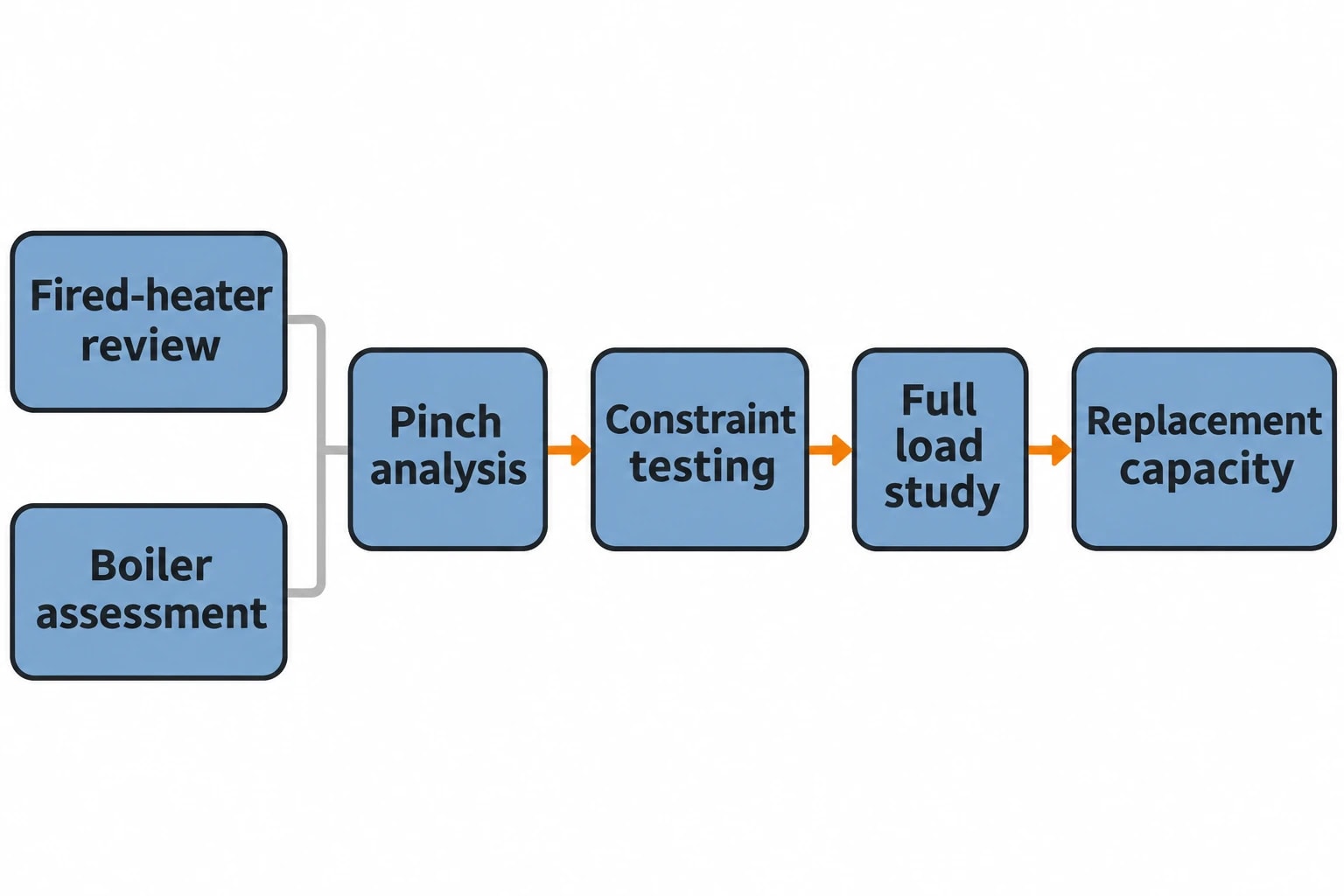
Fired-heater reviews should examine combustion control, excess oxygen, burner condition, air ingress, flue-gas temperature, refractory condition and heat-transfer performance. Boiler assessments should include load profile, blowdown, feedwater temperature, condensate return, steam pressure and distribution losses.
The target is stable process heat duty with the least fuel input consistent with safe operation. Operators need to retain approved operating envelopes, combustion safeguards and emissions controls. Changes to burner management or oxygen trimming need process safety review, commissioning discipline and reliable instrumentation.
Use pinch analysis to find heat-recovery limits
Pinch analysis compares hot streams that require cooling with cold streams that require heating. It can identify where direct heat exchange, heat pumping or utility redesign may reduce external heating and cooling demand.
Chemical applications include:
- Recovering heat from hot product or reactor effluent to preheat feed streams.
- Reducing steam use in distillation preheating.
- Matching condenser heat with low-temperature process or building heat loads.
- Reconfiguring heat exchanger networks around changed product grades or throughput.
- Identifying temperature gaps that determine whether a heat pump is technically suitable.
The practical constraints are fouling, corrosion, pressure drop, controllability and batch variability. Engineers should test these conditions before relying on a theoretical heat-integration target. A heat exchanger network with poor cleanability or inadequate isolation can increase lost production time and erase expected savings.
Match electrification and fuel switching to the duty
Electrification suits some chemical heat duties better than others. Electric boilers, electrode boilers, electric tracing, heat pumps and electric process heaters have different temperature ranges, response characteristics and connection requirements. A plant needs a full load study before adding substantial electrical demand.
Fuel switching also requires a supply and safety case. Hydrogen, biomethane and other low-carbon fuels can affect burner design, flame detection, combustion control, pipework, venting and hazardous-area assessments. The programme must include fuel availability, contract structure, emissions accounting and process-operability implications.
Efficiency measures should reduce peak and annual heat requirements before selecting replacement capacity. This improves capital discipline and reduces pressure on electrical infrastructure.

Identify where your plant is losing energy and quantify the savings potential — our audits map every heat source, sink, and waste stream in your facility.
Hazardous-area compliance must shape the retrofit design
DSEAR requirements apply from concept stage
Decarbonisation projects often introduce new motors, variable-speed drives, electrical panels, heat pumps, sensors, cabling, control valves and ignition sources. Chemical plants must assess those changes against the Dangerous Substances and Explosive Atmospheres Regulations 2002.
DSEAR Regulation 5 requires a suitable and sufficient risk assessment where a dangerous substance is, or may be, present. The assessment must consider hazardous properties, process conditions, quantities, interactions, handling, storage and waste. A retrofit concept should therefore include hazardous-area information before equipment selection.
DSEAR Regulation 7 requires employers to classify places where explosive atmospheres may occur into zones based on their frequency and duration. Equipment and protective systems used in hazardous zones must meet the relevant requirements. HSE identifies Directive 2014/34/EU, the ATEX Equipment Directive, as the EU framework for equipment and protective systems intended for potentially explosive atmospheres. In Great Britain, the Equipment and Protective Systems Intended for Use in Potentially Explosive Atmospheres Regulations 2016 provide the relevant product framework.
Maintain safety functions through the project lifecycle
A low-carbon retrofit requires management-of-change discipline. The project team should review process hazard studies, ventilation, gas detection, emergency shutdown arrangements, ignition sources, electrical classification drawings and maintenance procedures.
Where a plant uses safety instrumented systems, engineers should confirm that equipment changes preserve the required safety integrity functions. This applies to altered control logic, new drives, revised trip settings, changed heat-transfer rates and new utility failure modes.
These questions should be resolved during feasibility and front-end engineering. Late redesign after procurement can materially change cost, schedule and equipment selection.
Turn Energy Conservation Measures into an investable portfolio
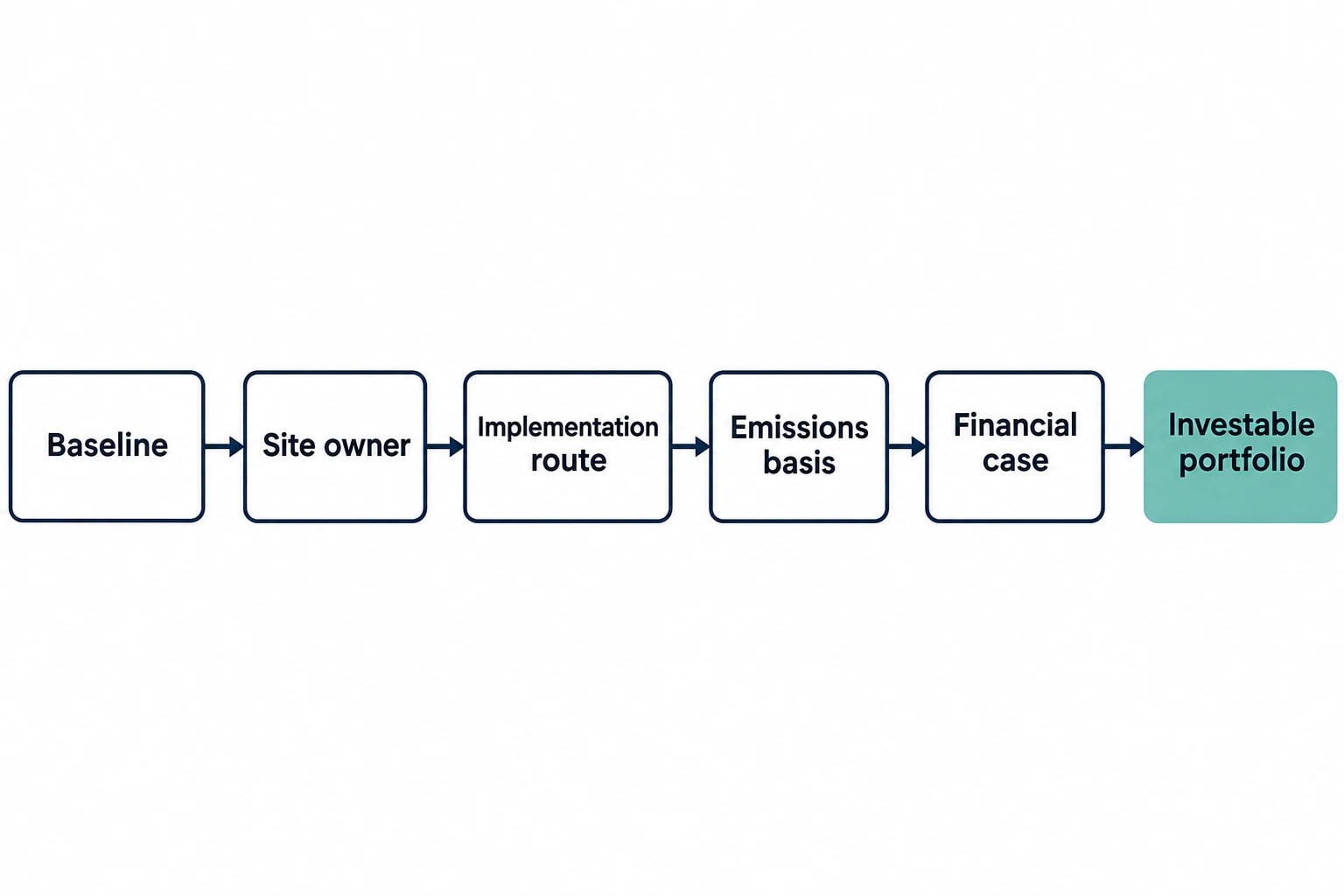
A chemical decarbonisation strategy needs more than a technical opportunity register. Each Energy Conservation Measure should have a defined baseline, site owner, implementation route, emissions basis and financial case.
| Measure | Primary mechanism | Chemical-site considerations | Evidence needed |
|---|---|---|---|
| Steam-trap and condensate programme | Reduces avoidable steam loss and boiler fuel demand | Steam quality, water treatment, pipework condition and access | Trap survey, condensate records, boiler fuel data |
| Fired-heater optimisation | Reduces fuel per unit of delivered heat | Product temperature, burner safeguards, NOₓ limits and stack conditions | Combustion tests, operating trends, emissions records |
| Heat-exchanger network retrofit | Recovers process heat and lowers utility demand | Fouling, corrosion, pressure drop, cleanability and control response | Process model, pinch study, inspection data |
| Variable-speed drives | Matches motor speed to variable pumping or fan demand | Hazardous-area suitability, minimum-flow protection and process stability | Electrical logging, pump curves, control narrative |
| High-temperature heat pump | Upgrades suitable waste heat for useful heating duty | Source temperature, refrigerant selection, electrical capacity and maintenance | Hourly heat balance, temperature profile, load study |
| Electrified process heat | Replaces fossil-fuel heat for suitable duties | Grid connection, peak demand, process response and safety review | Electrical study, duty profile, carbon and cost scenario |
A financial model should show capital expenditure, installation duration, shutdown requirement, maintenance cost, energy and carbon price assumptions, and expected asset life. Net present value is useful for projects with long operating lives or staged benefits. Simple payback remains useful for screening, but it can understate the value of measures that reduce exposure to fuel volatility, permit constraints or future network charges.
Project sequencing should consider outage windows. Instrumentation, steam-loss reduction and control tuning may proceed during normal operations. Heat-exchanger network changes, major electrification and fuel conversion commonly need longer engineering and shutdown planning.
Measure results and keep the strategy current
Use measurement and verification from day one
Measurement and verification should be designed before implementation, not after a project has been commissioned. An IPMVP-aligned approach can define the baseline period, monitored variables, adjustment factors, meter locations, reporting frequency and acceptance criteria.
For a fired-heater project, useful evidence may include fuel flow, process duty, feed rate, stack oxygen and product specification. For a variable-speed-drive project, power measurement should be linked to flow, differential pressure or production demand. Heat-recovery projects need both recovered duty and any added pumping or electrical consumption.
The aim is to establish savings that remain credible after production mix and operating conditions change. This gives operations teams feedback, allows finance teams to validate the business case and identifies performance drift before it becomes embedded.
Align audits, management systems and regulation
ISO 50001:2018 provides a recognised framework for energy management, objectives, performance review and continual improvement. It can help convert a one-off audit into an operating management system.
UK organisations meeting the Energy Savings Opportunity Scheme qualification criteria must complete an assessment every four years. For ESOS phase 4, qualifying organisations are assessed on 31 December 2026 and must submit their notification of compliance by 5 December 2027. The assessment covers buildings, industrial processes and transport, and must account for at least 95% of total energy consumption.
For EU operations, the Energy Efficiency Directive, Directive (EU) 2023/1791, requires Member States to ensure that enterprises averaging more than 10 TJ of annual energy consumption over the preceding three years undergo an energy audit if they do not operate an energy management system. Enterprises above 85 TJ must implement a certified energy management system. The Directive also requires an installation-level cost-benefit analysis for new or substantially refurbished industrial installations with average annual total energy input above 8 MW, assessing on-site and off-site waste-heat utilisation.
A practical decarbonisation strategy converts these obligations into a rolling site programme. It refreshes the energy balance after material process changes, confirms which measures delivered their forecast result and redirects capital towards the next constrained heat, fuel or emissions source.
This article reflects the independent analysis and editorial opinion of EnerTherm Engineering. Product names, trademarks, and brands mentioned belong to their respective owners. EnerTherm Engineering is not affiliated with, endorsed by, or a licensee of any third-party software or product mentioned unless explicitly stated.

Managing Director — EnerTherm Engineering
Dr. François Pierrel is Managing Director of EnerTherm Engineering with over two decades of expertise in thermal design, heat transfer, and industrial energy optimisation. He holds a PhD in Heat Transfer from Cranfield University and a Post-Doctorate from Heriot-Watt University.
