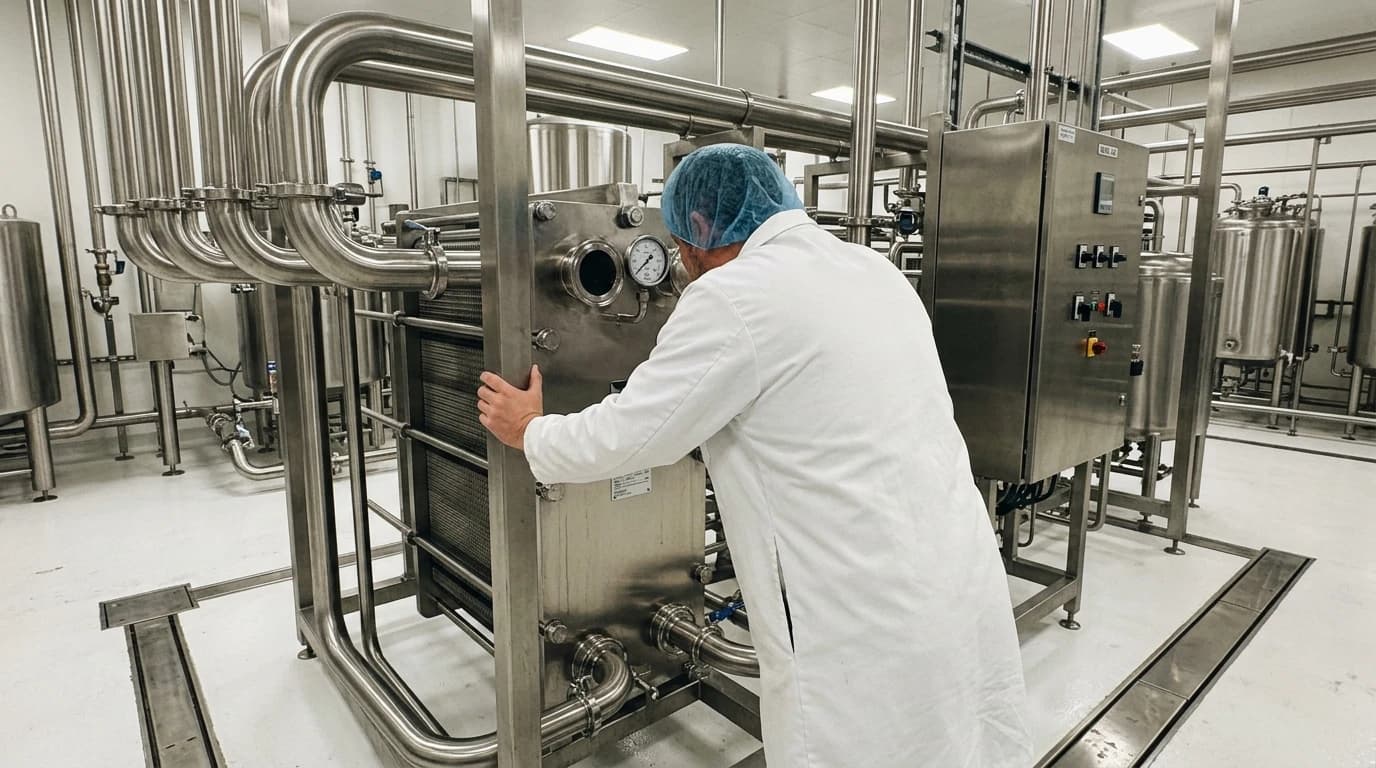
Why Automated CIP Systems Are Vital for Hygienic Heat Exchange
Reducing equipment downtime by 40% while meeting EHEDG and 3-A sanitary standards.
An automated clean-in-place (CIP) system is a closed-loop process automation architecture that sanitises the interior surfaces of pipes, vessels, and heat exchangers without requiring mechanical disassembly. In industrial thermal processing, maintaining sterile conditions across the production line is an absolute necessity. Fouling severely degrades heat transfer efficiency, leading to increased fuel expenditure, compromised temperature control, and heightened risks of biological contamination. To mitigate these hazards, industrial thermal engineering relies on automated CIP technology to force precise concentrations of chemical agents and heated water through the process equipment. By standardising the sanitation cycle, these systems guarantee that critical thermal components maintain strict hygienic conditions, ensuring end-product safety and process reliability.
Defining Automated Clean-In-Place Technology in Thermal Processing
The Engineering Mechanics of CIP
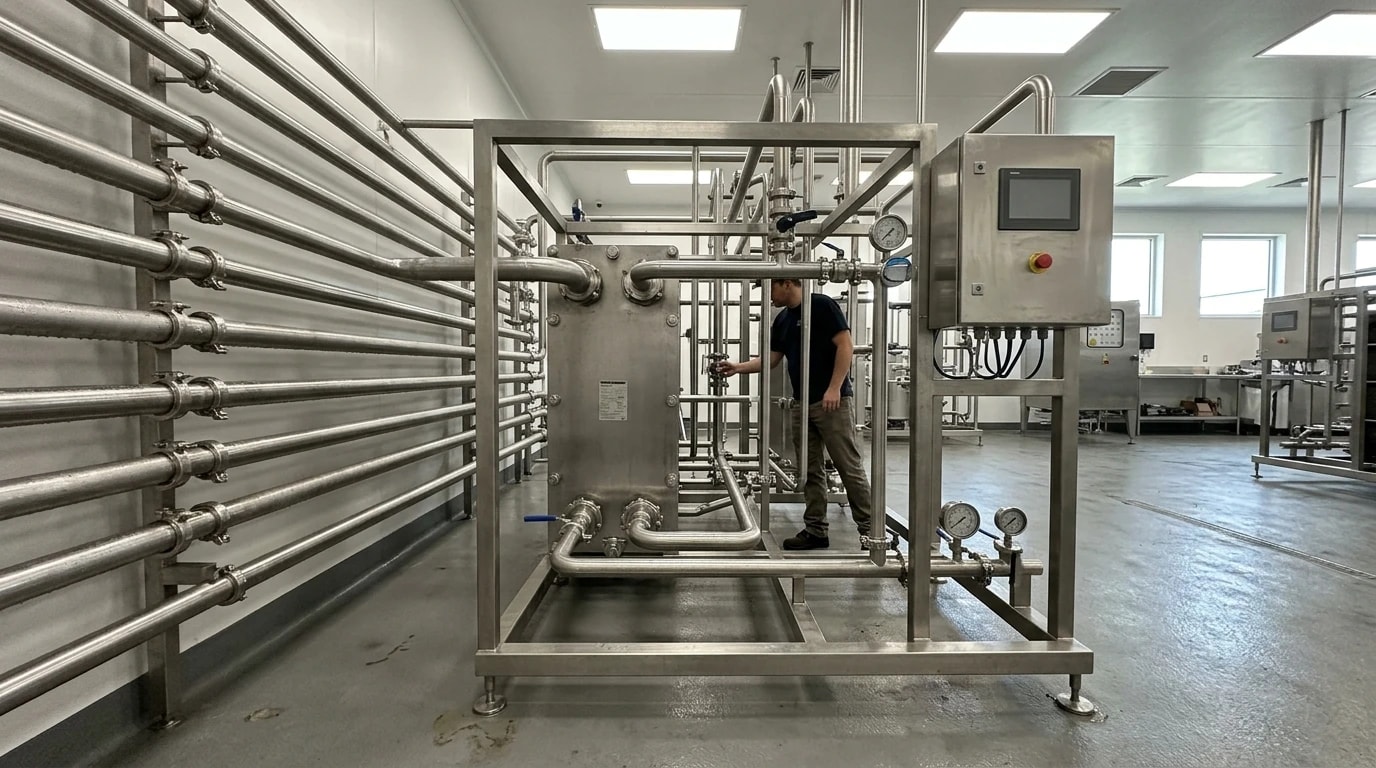
CIP clean-in-place heat exchanger systems operate by circulating liquid solutions at high velocities. This movement generates high-shear turbulent flow capable of stripping away organic and inorganic residues from internal metal surfaces. Instead of relying on manual labour to open, scrub, and rebuild plate or tubular units, operators simply initiate a pre-programmed sequence.
A standard automated cleaning sequence generally incorporates the following structured phases:
- Initial water rinse: Flushes loose organic debris and product residue from the system.
- Alkaline wash: Circulates sodium hydroxide or similar agents to saponify fats and break down complex proteins.
- Intermediate rinse: Clears residual alkaline agents to prevent chemical neutralisation in the next phase.
- Acid wash: Dissolves stubborn mineral deposits, calcium scaling, and agricultural residues.
- Final sanitisation: Sterilises the internal surfaces using chemical sanitisers or high-temperature water before production resumes.
The Shift from Disassembly to In-Situ Maintenance
Historically, servicing thermal equipment required extensive physical strip-downs. Manual cleaning introduced a high margin for human error, risking recontamination from ambient exposure, improper chemical handling, or insufficient scrubbing. Automated in-situ maintenance entirely removes this variable. The equipment remains sealed from the surrounding environment. Programmable logic controllers dictate the exact flow rates, chemical concentrations, and dwell times. This produces validatable, repeatable results essential for modern compliance reporting and food safety audits.
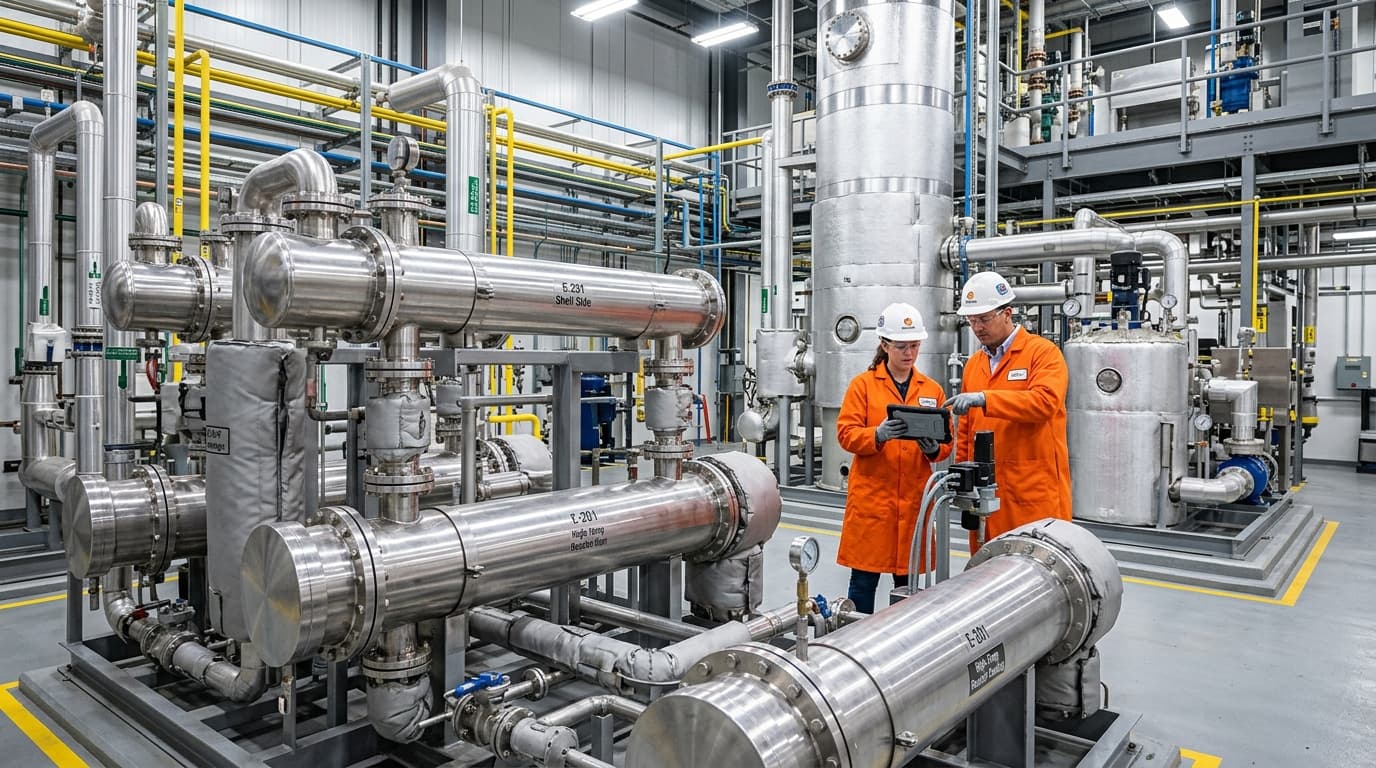
Recover waste heat and cut fuel costs with shell & tube or air-to-air exchangers engineered for continuous industrial duty.
Regulatory Requirements for CIP Heat Exchanger Systems in Food and Beverage Industry
European Standards and EHEDG Guidelines
In the UK and the European Union, process engineers strictly follow the European Hygienic Engineering and Design Group (EHEDG) directives to validate equipment cleanability. EHEDG Guideline 8 (Hygienic Equipment Design Criteria) dictates that process equipment must be free of crevices, possess smooth surface finishes, and feature self-draining geometry. Stagnant zones, frequently referred to as dead legs, provide safe harbours for bacterial multiplication and must be eliminated during the design phase.
Further standardising these parameters, EHEDG Guideline 50 details specific hygienic design requirements for CIP installations. It mandates the precise placement of sensors, optimum flow velocities, and correct geometric layouts to ensure cleaning solutions contact all internal surfaces. Compliance with these technical parameters ensures that food safety management systems align perfectly with the Global Food Safety Initiative (GFSI) benchmarking requirements for equipment users and manufacturers.
Global Hygienic Benchmarks: 3-A Sanitary Standards
When exporting systems or aligning with North American manufacturing processes, industry professionals widely regard 3-A Sanitary Standards (governed by 3-A Sanitary Standards Inc. in the US) as the primary benchmark for hygienic design. For thermal processing, specification 3-A 11-10 applies strictly to Plate Type Heat Exchangers, while 3-A 12-08 governs Tubular Heat Exchangers.
These standards dictate stringent criteria regarding surface roughness. Contact surfaces generally require a No. 2B finish or smoother to prevent microbial adhesion. Furthermore, standard 3-A 00-02 covers general equipment requirements, ensuring all construction materials are non-toxic, highly corrosion-resistant, and entirely capable of withstanding aggressive CIP chemicals and extreme temperatures without degrading. Validating these claims requires a Certified Conformance Evaluator (CCE) to perform an independent third-party verification process.
Engineering CIP Clean-In-Place Heat Exchanger Systems
Fluid Velocity and Shear Stress
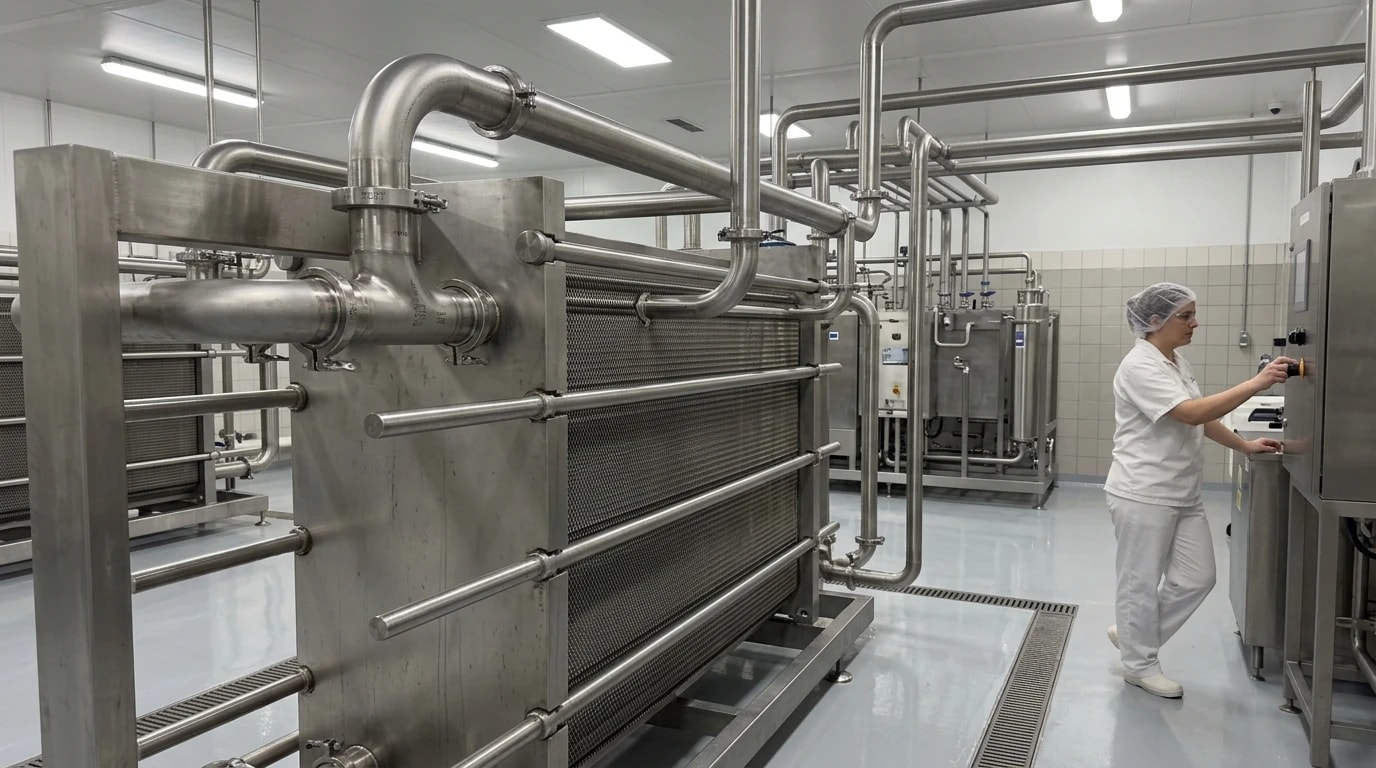
For a CIP cycle to succeed inside a heat exchanger, mechanical force is essential. Pumping systems must maintain a minimum fluid velocity—typically between 1.5 and 2.0 metres per second—to induce a highly turbulent flow regime. High turbulence creates the necessary wall shear stress to physically dislodge stubborn fouling layers from corrugated heat exchanger plates or tube walls. The intricate internal geometries of plate heat exchangers naturally promote this turbulence. This characteristic makes them exceptionally suited for CIP processes, provided the facility's pump sizing is adequately engineered to overcome the internal pressure drops.
Thermal Variables and Chemical Reactions
Heat accelerates the chemical reactions required to break down biological matter. In automated sanitation systems, steam heating arrangements provide the thermal energy necessary to bring cleaning solutions to target temperatures quickly. Process engineering teams frequently implement indirect steam heating using dedicated hot water tanks and secondary heat exchangers. This indirect method prevents raw steam from directly contaminating the cleaning chemicals while ensuring highly stable and uniform temperature profiles.
Alkaline solutions typically circulate at temperatures between 70°C and 85°C to rapidly saponify fats and denature proteins. Failing to maintain these exact temperatures throughout the thermal network results in incomplete sanitisation. Therefore, strategically positioned temperature transmitters feed data continuously to the central controller, adjusting steam input dynamically to maintain the required thermal baseline.
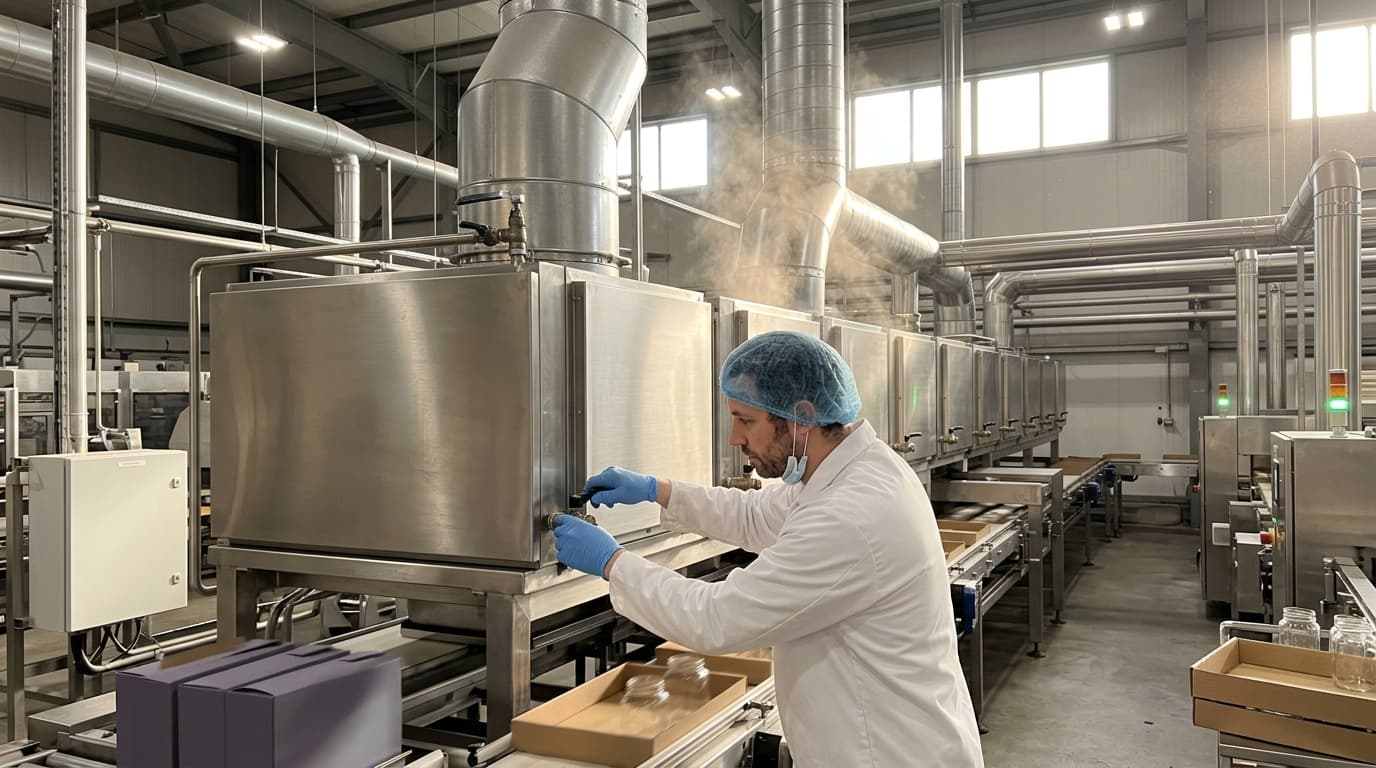
Our ThermStack and EcoStream heat exchanger ranges deliver measurable energy savings across chemical, food, pharma, and power generation processes.
Benefits of Clean-In-Place Systems for Heat Exchangers in Agricultural Processing
Minimising Equipment Downtime
In the agricultural processing sector, equipment must constantly handle high-volume, continuous throughput—particularly during strict seasonal harvests. Processing facilities utilise heat exchangers for milk pasteurisation, juice concentration, and the thermal regulation of edible oils. Any halt in production for mechanical cleaning translates directly to yield loss and supply chain delays. Automated CIP systems dramatically reduce this operational downtime. Facilities can execute sanitation protocols rapidly between product batches, returning the plant to total operational capacity in a fraction of the time required for manual strip-downs.
Supporting Thermal Solutions in Agriculture
Agricultural operations also rely heavily on dehydrators, incinerators, and process heaters for product moisture reduction and waste disposal. When processing raw agricultural outputs, the thermal equipment encounters heavy organic loads, dust, and variable input qualities. CIP clean-in-place heat exchanger systems prevent these exceptionally high fouling rates from overwhelming the plant. By scheduling short, automated cleaning cycles, operators maintain optimal heat transfer coefficients. This ensures dehydrators run efficiently and incinerator waste-heat recovery systems operate without blockages, directly protecting the facility's overall output.
Quantifying Water and Energy Savings in Process Operations
Regenerative Heat Exchange and Thermal Recovery
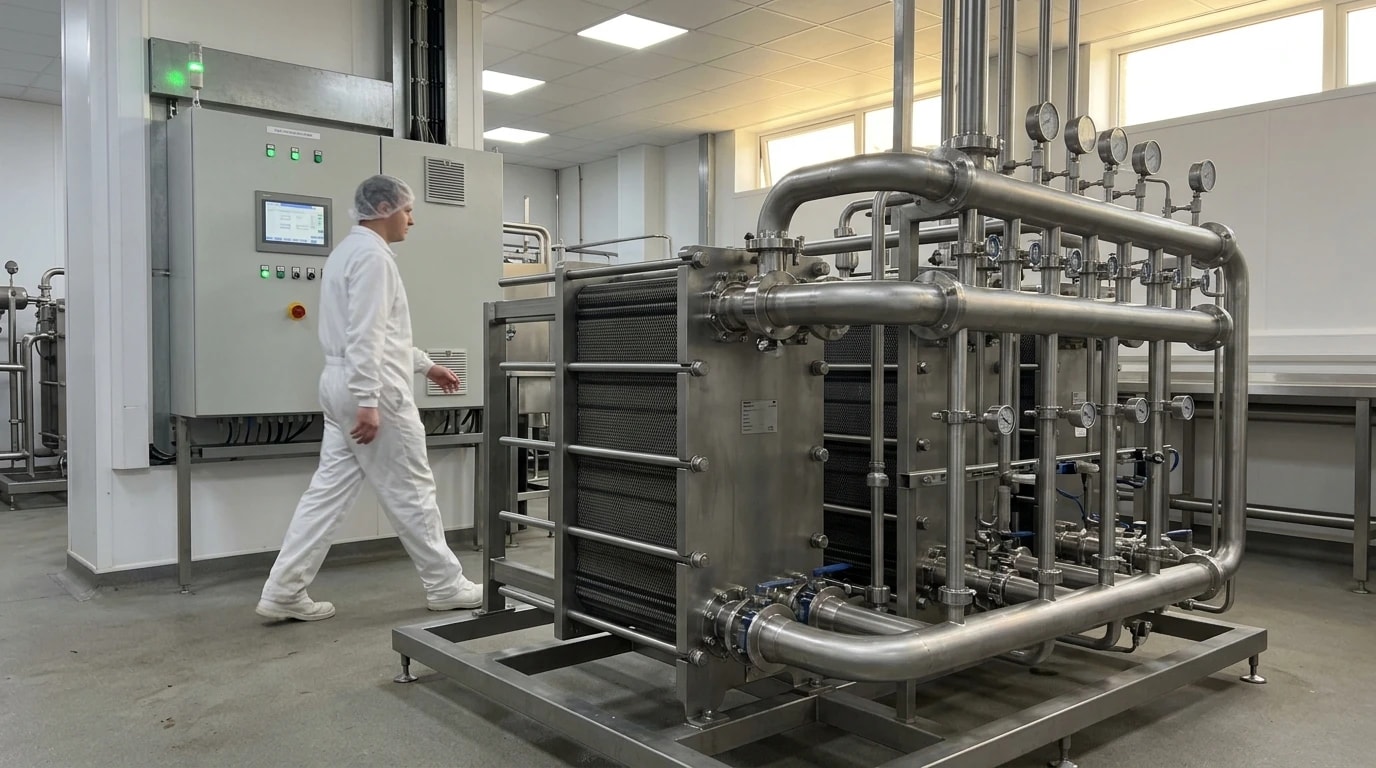
Automated systems achieve substantial energy savings by integrating regenerative thermal networks. In applications such as dairy pasteurisation, the incoming cold fluid is preheated by the outgoing hot pasteurised fluid, which is simultaneously cooled. This regenerative heat transfer cycle can recover up to 95% of the existing thermal energy. Consequently, the load demands on external boilers and industrial chillers drop significantly.
Maintaining this high recovery rate demands immaculate heat exchanger surfaces. Even a microscopic layer of fouling introduces thermal resistance, sharply degrading the energy recovery efficiency. Routine CIP operations remove this resistance continuously, guaranteeing that the calculated energy savings remain constant over the equipment's lifespan.
Sensor-Driven Resource Optimisation
Manual cleaning procedures notoriously waste vast quantities of fresh water and concentrated chemicals. Operators often flush systems longer than necessary merely to guarantee cleanliness visually. Modern automated CIP systems eliminate this excessive wastage via advanced sensor integration.
Optical turbidity sensors continuously assess the clarity of the return water, dynamically signalling the controller to terminate the pre-rinse phase exactly when the fluid runs clear. Similarly, conductivity probes differentiate between chemical phases and water rinses. Terminating the cycles based on precise, real-time chemical data rather than arbitrary timers ensures facilities observe massive reductions in total water consumption and chemical expenditure.
Maintaining Compliance and Long-Term Equipment Reliability
Eliminating Dead Legs and Stagnation Zones
Successful hygienic design relies fundamentally on fluid dynamics. Heat exchangers and their associated pipework must drain completely between cycles to prevent bacterial incubation in residual pools. Process engineers meticulously design pipework gradients and specify zero-dead-leg valves to guarantee total evacuation of fluids. Regulatory bodies heavily scrutinise these configurations, ensuring no section of piping extends beyond an acceptable ratio of the pipe's diameter without active flow. This strict geometry guarantees every internal surface receives the full mechanical and chemical impact of the CIP process.
Extending Component Lifespan
Regular manual intervention physically damages process equipment. Frequent disassembly stresses metal fittings, tears elastomer gaskets, and exposes delicate plate corrugations to accidental mechanical impact. By shifting entirely to automated CIP operations, the physical integrity of the heat exchanger is perfectly preserved. Elastomer seals undergo significantly fewer compression cycles, extending their operational lifespan and reducing the frequency of costly replacement intervals. As a result, the total cost of ownership for the facility decreases while equipment reliability drastically increases.
Automated CIP systems represent a mandatory investment for modern hygienic manufacturing. By merging strict regulatory compliance with advanced fluid engineering, these systems ensure agricultural and food processing facilities maximise their operational uptime, minimise resource consumption, and maintain the absolute safety of their thermal processing networks.
This article reflects the independent analysis and editorial opinion of EnerTherm Engineering. Product names, trademarks, and brands mentioned belong to their respective owners. EnerTherm Engineering is not affiliated with, endorsed by, or a licensee of any third-party software or product mentioned unless explicitly stated.

Managing Director — EnerTherm Engineering
Dr. François Pierrel is Managing Director of EnerTherm Engineering with over two decades of expertise in thermal design, heat transfer, and industrial energy optimisation. He holds a PhD in Heat Transfer from Cranfield University and a Post-Doctorate from Heriot-Watt University.
