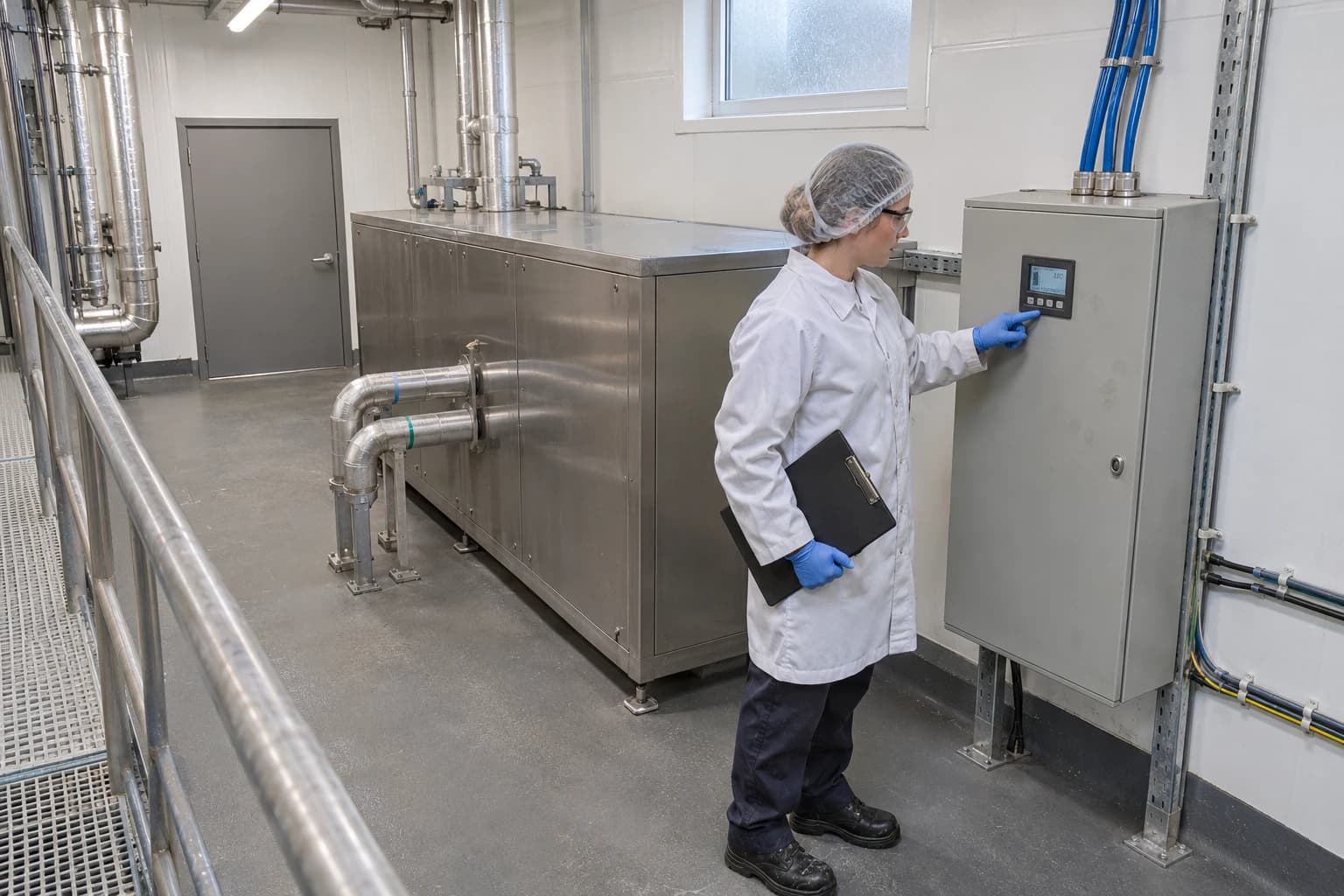
The UK Food Plant Energy Audit Checklist Engineers Use
Covers ESOS Phase 4, BS ISO 50002-1:2025 and at least 95% of significant energy use.
An industrial energy audit checklist for the food industry is a structured inspection of how a food plant buys, converts, distributes and loses energy across its utilities and production processes.
A dairy may run refrigeration, pasteurisation, chilled water, compressed air and cleaning-in-place systems across several shifts. A bakery often concentrates gas use in ovens, while refrigeration, ventilation and dough handling shape electrical demand. Meat and beverage plants combine chilled-chain loads with hot water, steam, pumps and packaging lines.
This industrial energy audit checklist gives engineering teams a disciplined way to find process-energy losses without disrupting hygienic production. It also creates an evidence base for compliance, maintenance planning and capital investment.
For qualifying organisations, ESOS Phase 4 requires areas of significant energy consumption to represent at least 95% of total energy consumption. Organisations must submit their notification of compliance by 5 December 2027. Food manufacturers therefore need an audit trail linking invoices and meter data to the equipment using the energy.
Define the food industry energy audit scope
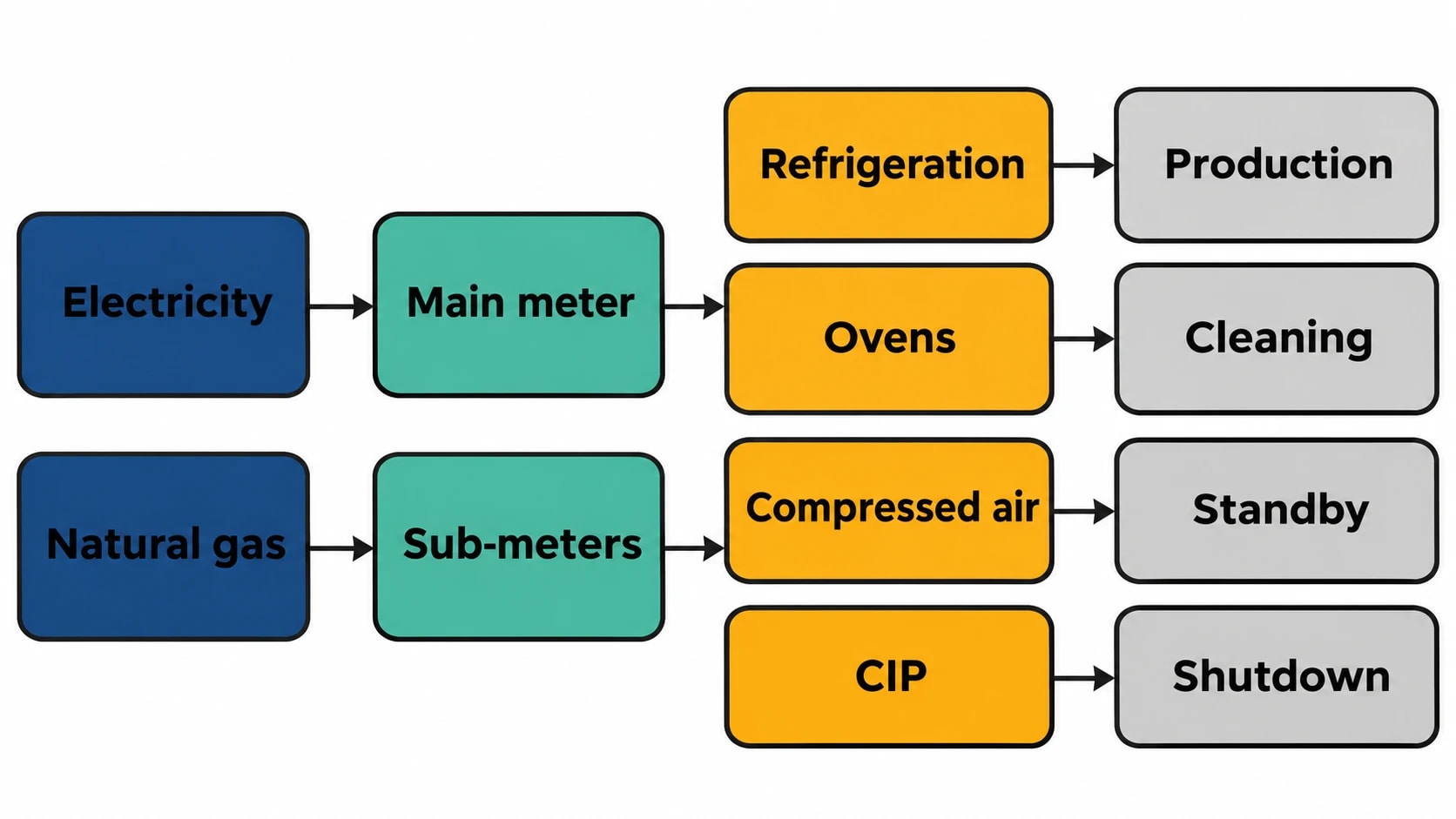
A useful audit begins with an agreed boundary. Electricity and gas invoices show total consumption, but not how much energy refrigeration, ovens, compressed air, CIP or idle equipment uses.
Confirm the audit objective
The site engineering team should record the reason for the work before collecting data. Common objectives include:
- ESOS Phase 4 compliance
- An annual energy-management review
- Investigation of rising energy intensity
- Preparation for a utility replacement or factory expansion
- A carbon-reduction programme
- Capital appraisal for heat recovery, refrigeration or steam projects
- Measurement and verification after completed works
BS ISO 50002-1:2025 sets out general requirements and guidance for conducting energy audits. ISO 50002-3:2021 provides process-focused guidance for reviewing ovens, refrigeration, steam systems, compressed air and other production equipment.
The audit brief should specify the reporting format, assumptions, programme, data sources and responsible contacts. This prevents the work becoming a generic site survey of little value to production or engineering managers.
Set physical and operational boundaries
The audit scope should identify all material energy supplies and the equipment they serve:
- Electricity, natural gas, LPG, fuel oil, biomass, purchased heat and on-site generation
- Main meters, sub-meters and unmetered systems
- Production halls, warehouses, offices, welfare areas and external refrigerated stores
- Shared energy centres and contract packing operations
- Normal production, reduced-output, cleaning, warm-up, standby and shutdown states
- Planned product changes, line alterations or expansions that could affect the baseline
For ESOS, the assessment covers energy used by buildings, industrial processes and transport. Food sites benefit from reporting these separately. A cold store may need substantial electricity during a production stoppage to protect product. An oven extract fan running through a non-production weekend may indicate a control issue. The checklist must distinguish necessary from avoidable energy use.
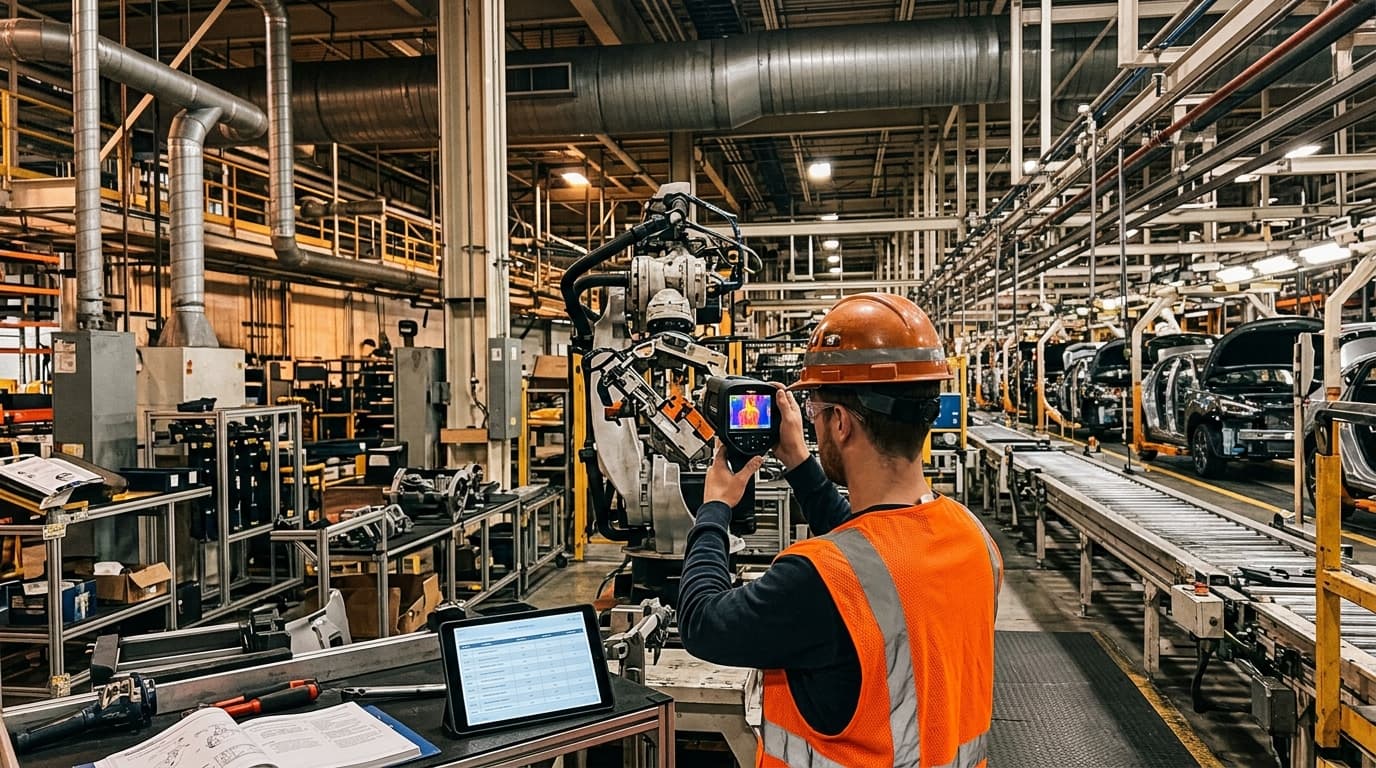
Identify where your plant is losing energy and quantify the savings potential — our audits map every heat source, sink, and waste stream in your facility.
Build a 12-month food plant energy baseline
One month of utility bills cannot describe a food factory accurately. Product mix, ambient temperature, production campaigns, seasonal demand and washdown schedules can all change consumption.
ESOS-compliant audits must use verifiable energy-consumption data measured over a 12-month period where reasonably practicable, include site visits, analyse energy consumption and efficiency, and identify savings opportunities.
Assemble the evidence pack
The pre-audit evidence pack should contain at least 12 months of:
- Half-hourly electricity data, maximum-demand data and tariff information
- Gas, LPG, fuel oil, biomass and purchased-heat invoices
- Main-meter and sub-meter records
- Boiler, refrigeration plant and compressor operating logs
- Production volumes by tonnes, litres, batches, packs or operating hours
- Shift patterns, shutdown calendars and cleaning schedules
- Planned-maintenance reports and breakdown records
- Refrigeration temperature records and alarm history
- Boiler-water treatment, blowdown and condensate-return records
- CIP recipes, wash-water temperatures and water-use data
Engineers should reconcile invoice totals, meter data and recorded throughput before calculating opportunities. An incorrect meter multiplier, failed sub-meter or gas allocation to the wrong department can undermine a capital case.
Use energy-intensity indicators that match the process
Total kWh per tonne is useful, but it can conceal changes in product mix. A site making chilled ready meals and frozen products needs more than one indicator.
| Process area | Practical indicator | Audit use |
|---|---|---|
| Bakery oven line | kWh per tonne of baked product | Compare fuel, extraction and bake performance by product family |
| Dairy pasteurisation | kWh per litre processed | Identify regeneration and process-heating losses |
| Refrigerated warehouse | kWh per m³ or pallet movement | Separate cold-store demand from production demand |
| CIP system | kWh per wash cycle or m³ of wash water | Review water heating and cleaning sequence |
| Compressed air | kWh per m³ of air delivered | Examine controls, leakage and inappropriate use |
| Steam system | Fuel use per tonne of steam or product | Assess boiler, distribution and process losses |
| Beverage filling | kWh per thousand litres or packs | Compare line performance between shifts |
The review should report throughput, operating hours, product type and ambient conditions alongside each indicator. This produces a fairer comparison between periods and reduces the risk of mistaking low output for improved energy performance.
Inspect utilities and production equipment
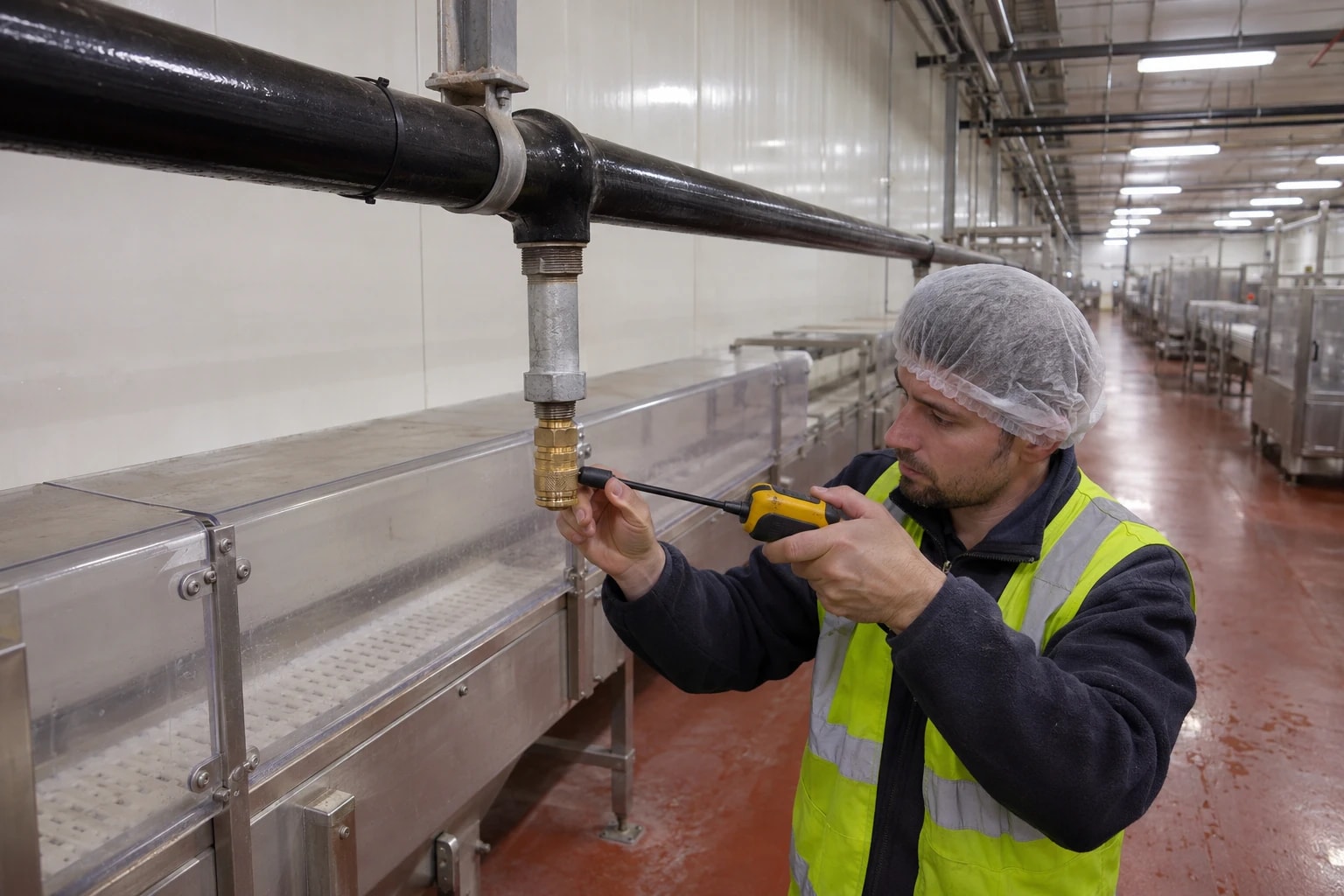
The utility walkdown should trace energy from supply point to final use. Portable power analysers, ultrasonic leak detectors, thermal imaging and temperature logging can verify conditions that meters cannot show.
Plan access with production, maintenance and food-safety teams. Operators often know where a compressor runs overnight, which oven takes too long to stabilise, or when washdown affects refrigeration demand.
Audit boilers, steam and hot-water systems
Steam and hot water support cooking, pasteurisation, sterilisation, CIP and washdown. The checklist should examine:
- Boiler firing pattern, load profile and burner condition
- Combustion performance and excess-air settings
- Blowdown rate and blowdown heat-recovery provision
- Feedwater temperature and deaerator operation where installed
- Steam-pressure setpoints at the boiler and major end users
- Steam leaks, trap condition, condensate return and flash-steam losses
- Insulation on pipework, valves, flanges and vessels
- Hot-water storage temperatures and recirculation losses
- Heat-recovery opportunities from refrigeration condensers, compressors or process exhaust
The Carbon Trust identifies leak repair, insulation, condensate return, blowdown improvements and combustion-air preheat as steam-system priorities. Food plants can also use refrigeration or process waste heat to preheat wash water.
Any heat-recovery proposal needs a hygienic design review. The design must maintain separation between heat-transfer fluids and process or potable water, provide cleaning access and define responsibility for temperature control.
Audit refrigeration and chilled production
Refrigeration can dominate electrical demand in dairy, meat, beverage and frozen-food facilities. Engineers should inspect:
- Compressor run hours, loading and suction-pressure trends
- Condenser condition, fan control and water treatment where applicable
- Evaporator coil cleanliness and defrost frequency
- Door operation, air curtains and loading-bay infiltration
- Cold-room setpoints against product and food-safety requirements
- Refrigerant alarm history and recurring maintenance faults
- Heat-recovery equipment and operating hours
- Simultaneous heating and cooling loads
Thermal imaging can identify damaged insulation, cold-store door heat gain and abnormal electrical temperatures. It should supplement measured temperature and power data rather than replace them.
Audit compressed air, pumps and drives
Compressed air supports actuators, packaging equipment, conveying and some cleaning tasks. Food plants should identify uses where compressed air performs cooling, blow-off or open-ended cleaning that another method could perform with lower energy input.
The checklist should test:
- Compressor power, load and unload time
- Header pressure and pressure at critical end uses
- Intake-air temperature, filters, dryers and drains
- Receiver capacity and pressure stability
- Leakage during production and non-production periods
- Isolated zones, unused pipework and overnight demand
- Suitability of compressed-air end uses
- Motor loading on pumps, fans, conveyors and refrigeration auxiliaries
- Variable-speed-drive operation and existing throttling or bypass control
An ultrasonic leak survey during a quiet period can identify leaks masked by production noise. Each leak should have a tag, location, repair owner, completion date and verification test.
Follow energy through each food process
A process audit should follow major product routes rather than treating the factory as one load.
Bakery audits should examine burner control, baking profile, exhaust temperature, conveyor speed, make-up air, prove-room conditions and heat loss from oven doors or ductwork. Dairy audits should review pasteuriser regeneration, homogenisation, refrigeration, CIP heating and compressed-air demand. Meat sites need particular attention to refrigeration, hot water, cooking, chilling tunnels and washdown. Beverage plants should inspect refrigeration, compressed air, pumps, filling-line idle time and bottle warming or pasteurisation where present.
Record when each asset is producing, warming up, cleaning, standing ready or idle. This operating-state record often explains consumption more clearly than an annual total.

Identify where your plant is losing energy and quantify the savings potential — our audits map every heat source, sink, and waste stream in your facility.
Keep the audit compatible with hygienic production
Food safety governs access, instruments and any recommendation affecting process conditions. Engineers should agree the audit plan with the food-safety team before entering controlled areas.
HACCP controls require documented monitoring, verification and corrective action. An external thermal survey of an oven may be straightforward. Temporary instruments near exposed product, a CIP measurement point or work in a high-care area can require site approval and additional contamination controls.
Complete the audit hygiene and safety check
Before work starts, confirm:
- Hygiene zoning, protective clothing and entry requirements
- Restrictions on tools, cameras, batteries and temporary instrumentation
- Foreign-body and contamination controls
- Cleaning and disinfection requirements for equipment entering production areas
- Food-safety approval for temporary sensors, loggers or clamp meters
- Electrical and mechanical safe-isolation procedures
- Permit-to-work requirements
- Production windows for observation or testing
- Escalation contacts for any process, safety or food-safety concern
HSE guidance identifies electrical or mechanical isolation, hot work, vessel entry and work on hazardous pipework as activities that may require a written permit to work. An audit should collect evidence first. Intrusive testing or repairs must follow established site controls.
Test recommendations against food-safety requirements
Each recommendation should state the food-safety boundary. Lowering a cold-store setpoint may save electricity but cannot compromise approved product-temperature limits. Changes to CIP temperature, wash volume or cleaning sequence need assessment against validated cleaning performance, microbiological control and customer requirements.
The same applies to recovered heat. Preheating wash water from refrigeration heat requires a clear heat-exchanger boundary, appropriate materials, cleaning access and defined temperature-control limits.
Rank food plant energy opportunities by evidence
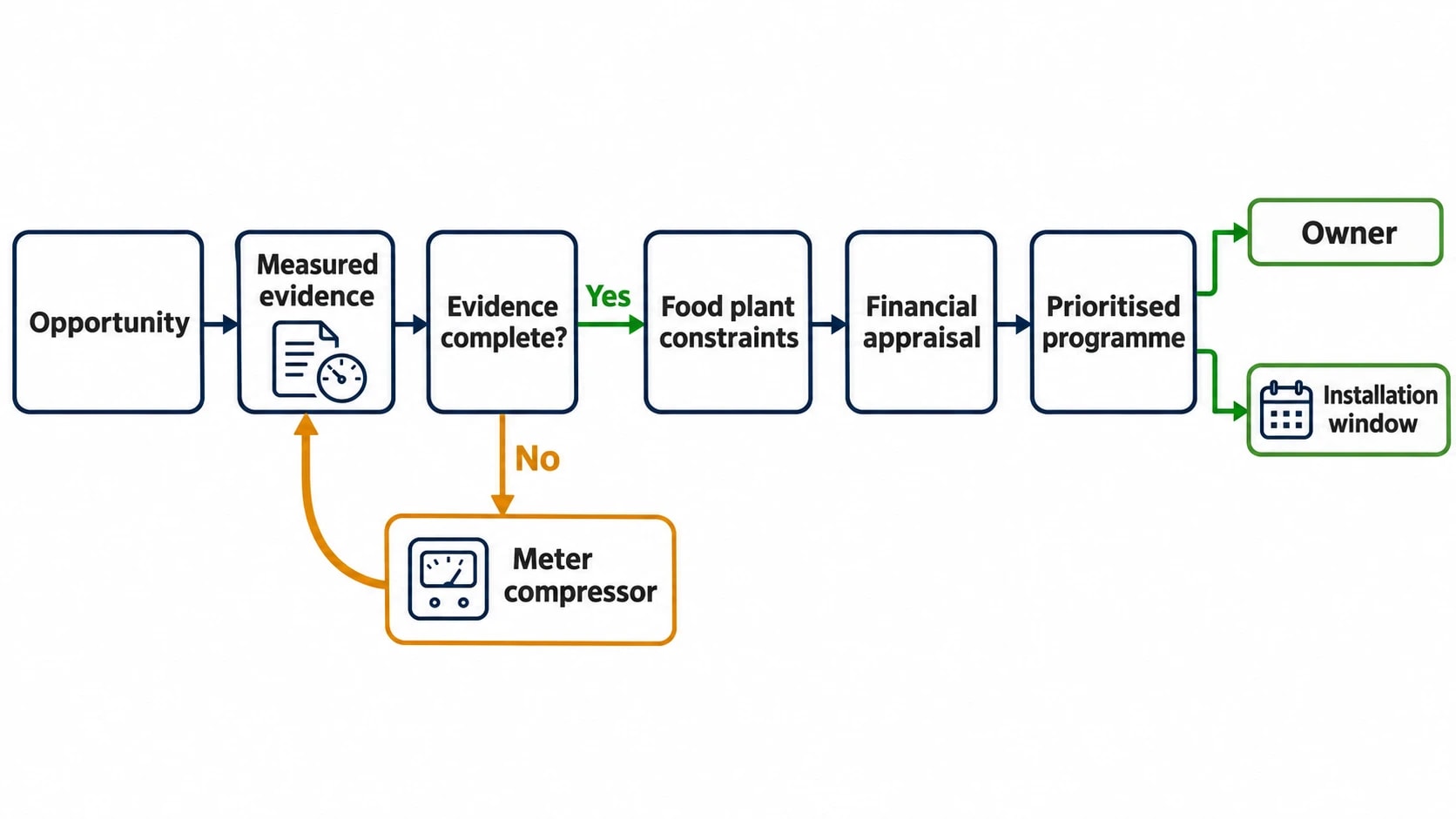
A long list of ideas does not help a site engineering manager. The audit report should turn findings into a prioritised programme. Each action needs measured evidence, an owner and an installation window that production can accommodate.
Create a practical opportunity register
| Opportunity | Evidence required | Food plant constraint | Decision output |
|---|---|---|---|
| Repair compressed-air leaks | Leak survey and power profile | Access during hygiene or shutdown window | Repair list and post-repair verification |
| Reduce boiler losses | Combustion test, steam balance and maintenance records | Maintain steam quality and process availability | Burner, blowdown or insulation scope |
| Recover refrigeration heat | Condenser load, hot-water demand and temperature profiles | Hygienic separation and cleaning requirements | Feasibility study |
| Improve oven operation | Fuel profile, exhaust temperature and product-quality data | Protect bake quality and throughput | Control, insulation or exhaust review |
| Fit variable-speed control | Motor load and process-demand profile | Confirm product and process conditions | Capital appraisal and commissioning plan |
| Improve shutdown controls | Out-of-hours profile and operating procedures | Preserve refrigeration and sanitation needs | Control schedule and verification plan |
Financial appraisal should show capital cost, annual energy saving, CO₂e impact, maintenance effects, production risk and implementation timing. Simple payback helps rank quick actions. Net present value and internal rate of return provide a stronger basis for larger utility projects.
Where evidence is incomplete, the report should specify the next measurement step rather than promise a precise saving. A compressor without a load profile should be metered before calculating a variable-speed-drive saving.
Implement measures and verify savings
An audit should finish with an action plan separating immediate controls, planned maintenance, minor capital work and major projects.
EnerTherm Engineering’s seven-step audit methodology follows this sequence: initial consultation, on-site assessment using portable instrumentation, data analysis, opportunity identification, report preparation, implementation support, and ongoing measurement and verification.
Make the investment case board-ready
For each measure, the report should identify:
- The asset, process and area affected
- Baseline period and data source
- Proposed technical change
- Estimated energy, cost and CO₂e effect
- Capital cost and maintenance implications
- Food-safety, quality and production risks
- Required approvals, shutdown duration and responsible owner
- Measurement method and review date
Leak repair, steam-trap maintenance, insulation repair and control-schedule correction can often sit within planned maintenance. Heat recovery, refrigeration replacement, boiler upgrades and major oven modifications need feasibility work, detailed design and capital approval.
Measure results after installation
The International Performance Measurement and Verification Protocol, IPMVP, provides a recognised framework for defining the measurement boundary, baseline, adjustment factors and reporting period.
The verification method should match the measure:
- Meter compressor kWh before and after control changes.
- Track fuel use and tonnes of steam after boiler improvements.
- Compare refrigeration demand against ambient conditions and chilled throughput.
- Monitor wash-water temperature, volume and energy after heat-recovery installation.
- Confirm that product quality, cleaning validation and food-safety controls remain within approved limits.
Monthly engineering reviews should compare delivered savings against the audit forecast and record reasons for variance. Product mix, weather, operating hours and throughput can alter consumption. Recording these changes protects the credibility of the audit and improves the next investment decision.
This article reflects the independent analysis and editorial opinion of EnerTherm Engineering. Product names, trademarks, and brands mentioned belong to their respective owners. EnerTherm Engineering is not affiliated with, endorsed by, or a licensee of any third-party software or product mentioned unless explicitly stated.

Managing Director — EnerTherm Engineering
Dr. François Pierrel is Managing Director of EnerTherm Engineering with over two decades of expertise in thermal design, heat transfer, and industrial energy optimisation. He holds a PhD in Heat Transfer from Cranfield University and a Post-Doctorate from Heriot-Watt University.
