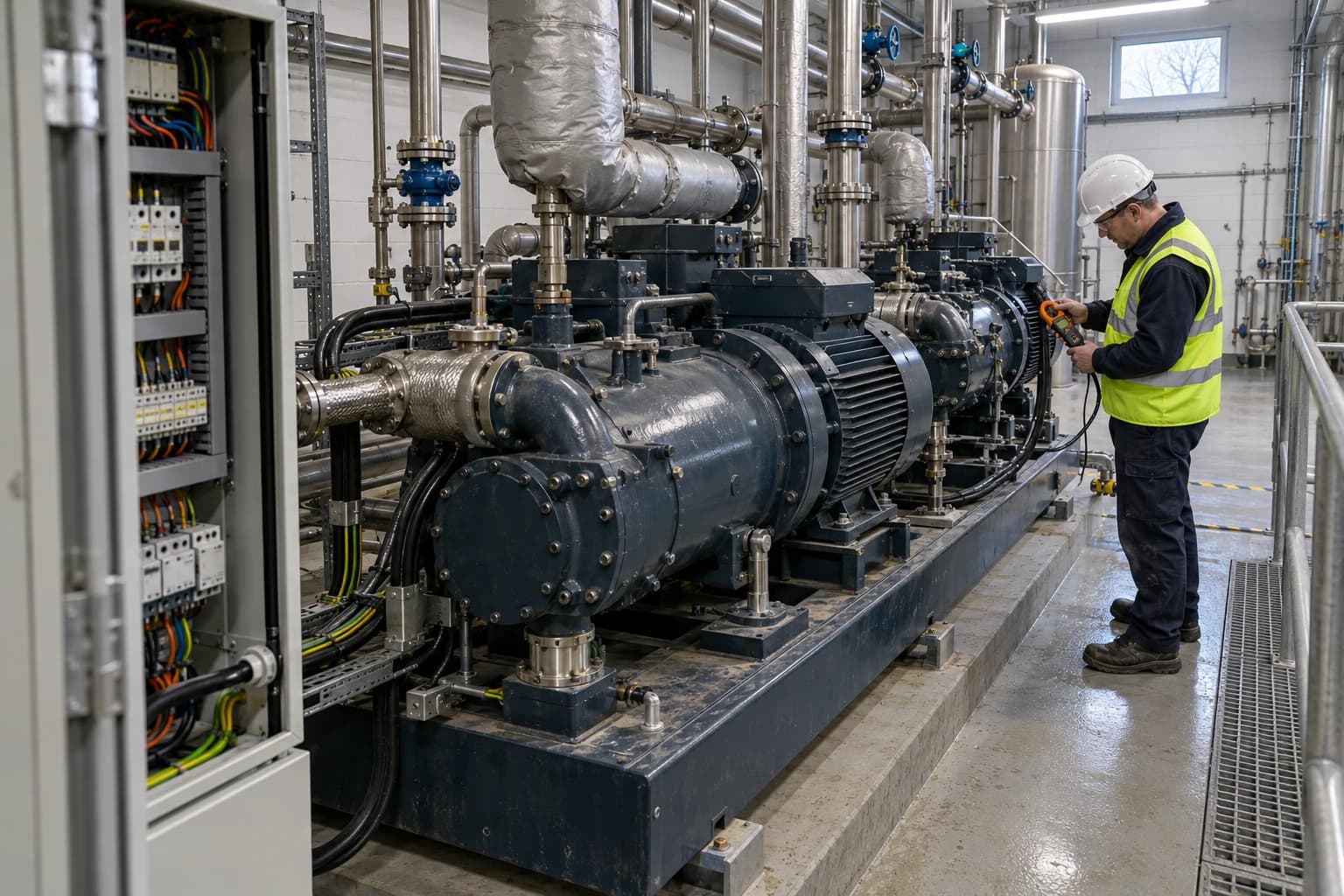
Energy Audit for Food and Beverage Sites: 95% ESOS Coverage
How UK food plants can meet the 5 December 2027 ESOS Phase 4 deadline
An energy audit for the food and beverage industry is a measured examination of how a factory buys, converts, distributes and uses energy to identify practicable reductions without compromising food safety, product quality or output.
For UK manufacturers in scope of ESOS Phase 4, the audit must cover significant energy consumption accounting for at least 95% of total energy use. The notification-of-compliance deadline is 5 December 2027. For a bakery, dairy, meat processor or beverage plant, this brings ovens, refrigeration, steam, compressed air, cleaning-in-place and process heating into the assessment.
This is not a utility-bill exercise. Food factories have variable production schedules, hygiene restrictions, product changeovers and tightly controlled thermal processes. A credible audit shows where energy enters the site, where it becomes useful process heat or cooling, and where it leaves as losses, exhaust, condensate flash, hot effluent or avoidable plant run-time.
ESOS Phase 4 and 95% Energy Audit Coverage
What the 95% rule means for food factories
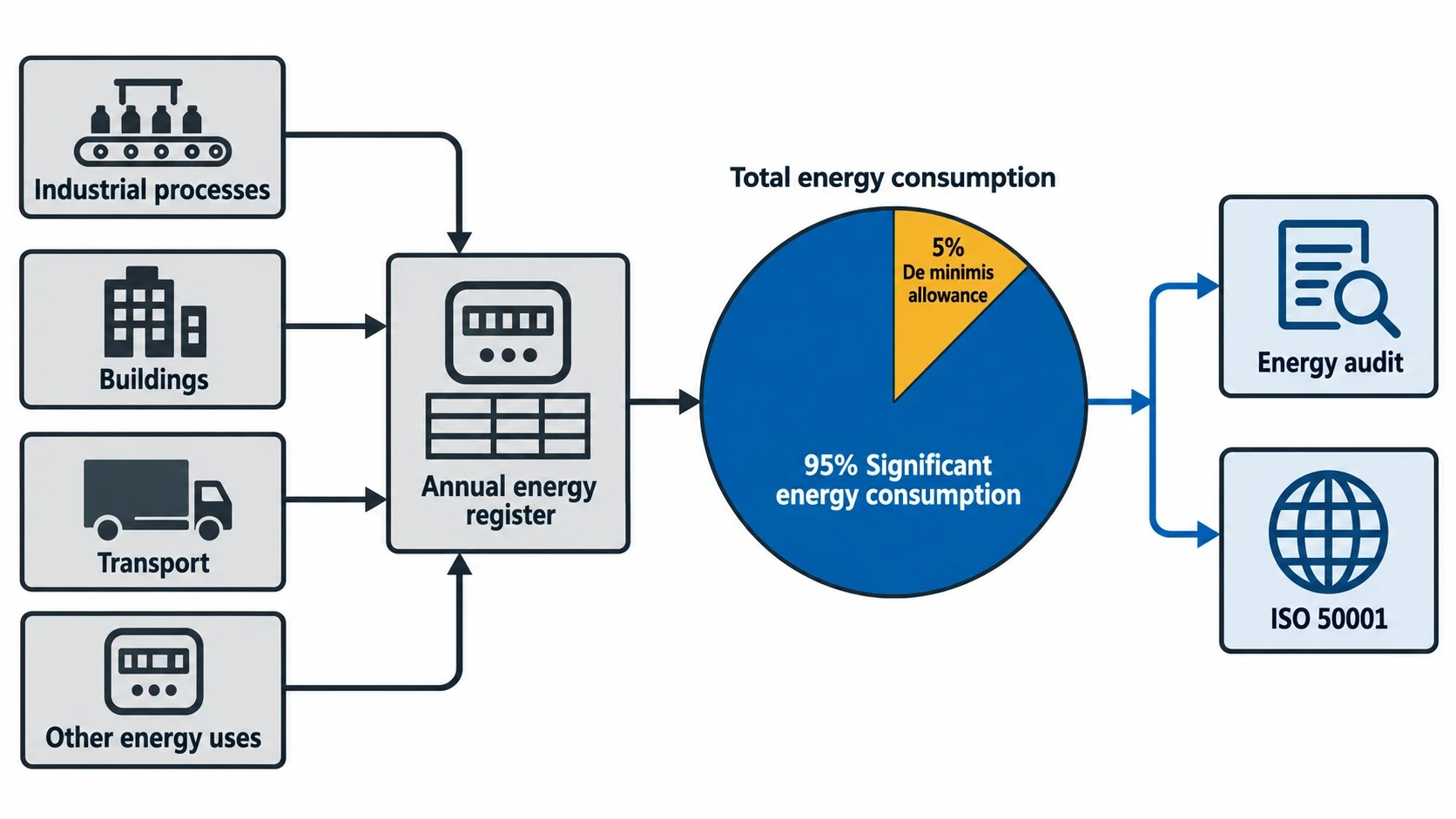
ESOS requires qualifying organisations to identify assets and activities that together account for at least 95% of total energy consumption. This significant energy consumption must be covered by a compliant energy audit or, where applicable, an ISO 50001 certification route.
The remaining 5% is a de minimis allowance. It should not become a convenient place for poorly understood loads. A site may exclude small, dispersed or difficult-to-meter uses, but the evidence pack must explain the boundary and support the calculation.
For most food and beverage sites, the highest-use areas commonly include:
- Gas-fired ovens, fryers, dryers, boilers and thermal-oil systems.
- Refrigeration compressors, condensers, chilled-water systems and freezer tunnels.
- Steam generation and distribution for cooking, pasteurisation, sterilisation and cleaning-in-place.
- Compressed-air generation and distribution.
- Pumps, fans, conveyors and process drives.
- Hot-water production, heat recovery systems and effluent handling.
- Buildings, offices, warehouses and cold stores.
- Company-controlled transport, where relevant to the organisation’s energy responsibility.
A factory should begin with a complete annual energy register. This includes purchased electricity, natural gas, LPG, diesel, heating oil, biomass and other fuels for which the organisation is responsible. The register should distinguish process, buildings, transport and other energy uses so that ESOS intensity ratios can be calculated correctly.
Phase 4 dates and qualification
ESOS Phase 4 applies where an organisation meets the large-undertaking criteria on 31 December 2026. This includes UK undertakings with 250 or more employees, or those with annual turnover above £44 million and an annual balance-sheet total above £38 million. Corporate groups require care because a qualifying group member can bring connected UK undertakings into scope.
The assessment must be notified through MESOS by 5 December 2027. Phase 4 also requires participants to report progress against action-plan commitments and explain measures that were not implemented.
For food and beverage groups, the practical implication is clear: start the energy map before the final compliance year. Metering gaps, inconsistent production data and incomplete steam or refrigeration records take time to resolve.
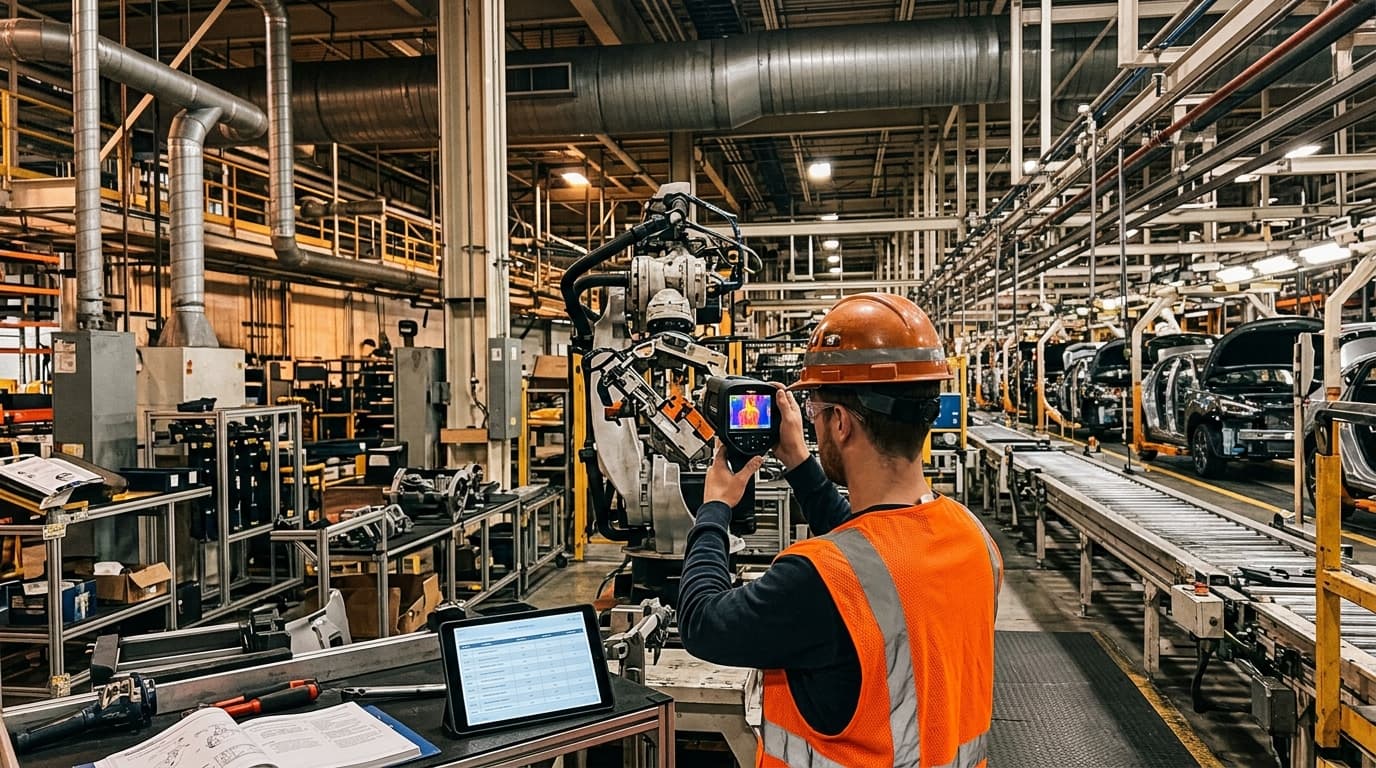
Identify where your plant is losing energy and quantify the savings potential — our audits map every heat source, sink, and waste stream in your facility.
Building an Energy Audit for the Food and Beverage Industry
Use a process boundary, not a building boundary
A food factory’s energy performance cannot be understood from half-hourly electricity data alone. Production lines cross departmental boundaries. Steam may serve cooking, washdown and space heating. Refrigeration may support raw-material storage, blast freezing, chilled packing halls and distribution. One compressed-air system may feed both process machinery and poorly maintained utility drops.
BS ISO 50002-3:2025 provides a useful process-audit framework alongside BS ISO 50002-1:2025. It directs attention to process energy use, measurement, analysis and energy-performance improvement opportunities.
The audit boundary should follow product and utility flows:
- Receipt and storage of ingredients or raw materials.
- Preparation, mixing, cooking, baking, frying, drying or pasteurisation.
- Cooling, freezing, filling and packaging.
- Cleaning-in-place, washdown and wastewater handling.
- Supporting utilities, including steam, compressed air, refrigeration and ventilation.
This structure exposes interactions that an asset-by-asset survey can miss. A boiler may appear efficient at its stack while poor condensate return, excess steam pressure or uncontrolled cleaning cycles create the larger loss.
Establish representative production conditions
Food plants often operate in campaigns. A dairy may have distinct pasteurisation, cleaning and filling profiles. A bakery’s oven load changes with product weight, moisture and run length. A meat processor may have high refrigeration and washdown loads outside core production hours.
The audit should record production volume, product mix, operating hours, ambient conditions and cleaning cycles alongside energy data. These variables explain why consumption differs between weeks.
Useful food-sector indicators include:
| Process or utility | Suitable activity indicator |
|---|---|
| Bakery oven line | kWh per tonne of finished product |
| Pasteurisation | kWh per m³ of product processed |
| Refrigerated storage | kWh per pallet-day or tonne-day |
| Freezing tunnel | kWh per tonne frozen |
| Steam system | kWh per tonne of steam delivered |
| Cleaning-in-place | kWh per cleaning cycle or m³ of solution |
| Compressed air | kWh per m³ of compressed air produced |
The selected indicators must be stable enough to track performance over time. Turnover is a poor energy-intensity denominator because it moves with price, sales mix and inflation rather than physical activity.
On-Site Measurement Without Disrupting Hygienic Production
Plan the visit around food safety controls
ESOS-compliant audits include site visits. For multi-site food groups, a representative sampling approach may be acceptable, but the organisation must document why the selected sites reflect energy use across the estate. Data must still cover all significant energy consumption, whether or not every site is visited.
At a live food site, the audit plan should be agreed with engineering, production, quality and health-and-safety teams. It should identify hygienic zones, permit requirements, allergen controls, protective clothing, access restrictions and safe locations for temporary instruments.
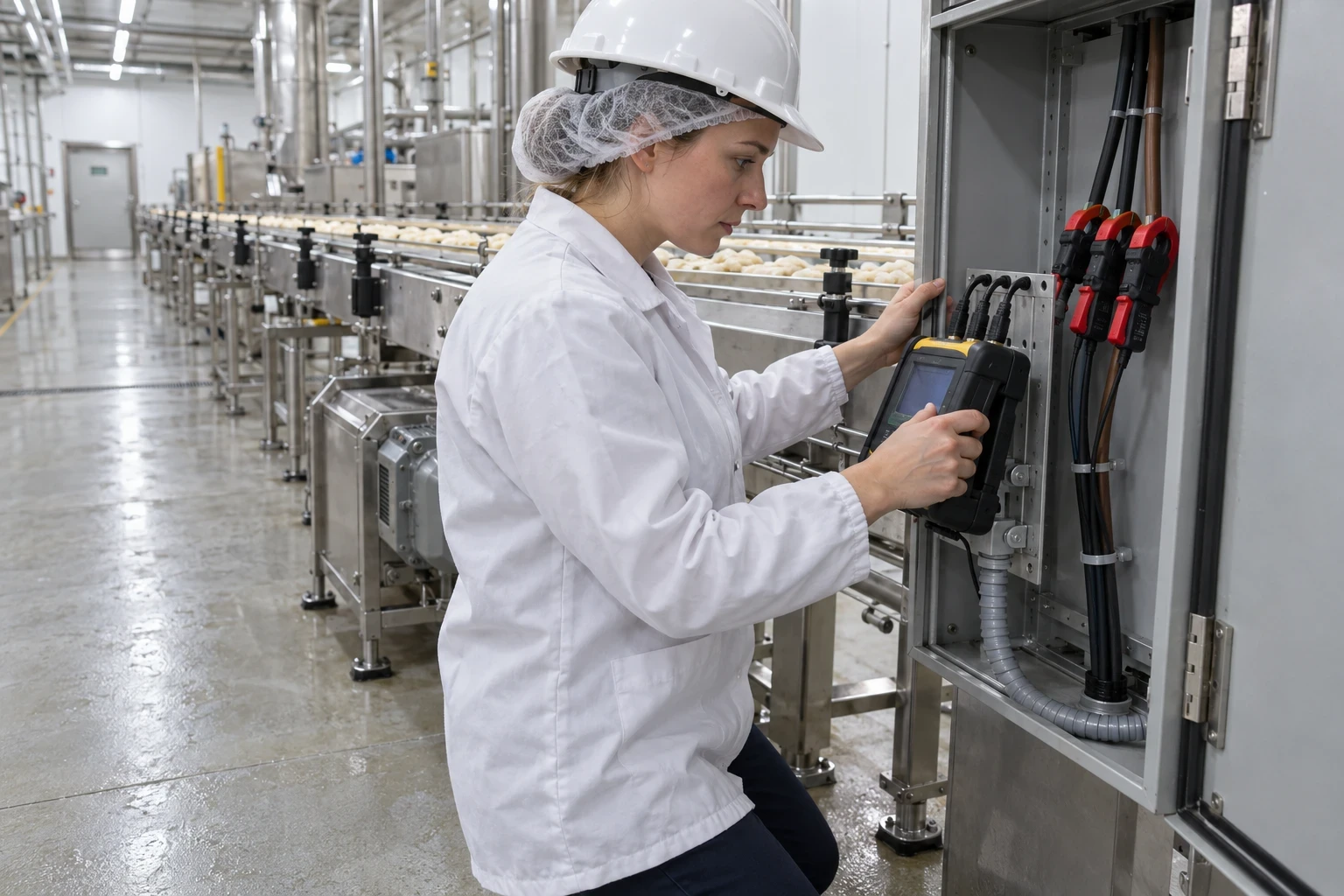
Portable measurement can usually take place during normal production. Typical tools include power analysers for motors and process lines, ultrasonic detectors for compressed-air leaks, thermal imaging for refractory and insulation condition, clamp-on flow metres, temperature loggers, pressure instruments and combustion-analysis equipment.
Instrumentation should not interfere with hygienic surfaces, product-contact equipment, guarding or cleaning regimes. The site should retain control of access to critical process areas. An audit that creates contamination or safety risk has failed before analysis begins.
Use 12 months of data, then test the process
ESOS energy audits should use verifiable energy-consumption data over 12 consecutive months where reasonably practicable. The audit should also analyse the process during the site visit rather than treating historic data as a substitute for observation.
A sound measurement plan links annual energy consumption to short-interval evidence. Half-hourly electricity profiles can reveal overnight base loads, compressor cycling and refrigeration peaks. Temporary power logging can establish the load profile of a pump, fan, conveyor or oven auxiliary. Steam pressure and temperature records can show whether a process receives more energy than the recipe or equipment requires.
The objective is to separate necessary energy from avoidable energy. A compressor running at low load during a non-production shift is not automatically wasteful. It may supply critical instrument air. The audit needs enough operational evidence to establish that distinction.

Identify where your plant is losing energy and quantify the savings potential — our audits map every heat source, sink, and waste stream in your facility.
Where Food and Beverage Energy Audits Find Savings
Thermal processing, ovens and fryers
Baking ovens, fryers, dryers and thermal process equipment warrant close measurement because their losses can be continuous and high-temperature. The audit should examine burner combustion, excess-air settings, flue temperature, refractory condition, door seals, extraction rates, idle time and recipe-driven setpoints.
A burner-tuning review can identify poor combustion control, but the assessment should not stop at the burner. Excess exhaust extraction can draw heated air from the process. Damaged insulation increases shell losses. Long periods at full temperature between product runs increase fuel use without increasing output.
Any proposed adjustment requires product-quality and food-safety approval. A lower setpoint or changed exhaust rate can affect moisture removal, browning, cooking time and emissions performance. Trials should use agreed product specifications and normal quality checks.
Steam, hot water and cleaning-in-place
Steam systems often combine several food-critical duties. They may supply cooking vessels, pasteurisers, hot-water calorifiers, cleaning-in-place circuits and space heating. A site-wide audit should establish the boiler’s load profile, fuel use, feedwater condition, blowdown practice, steam pressure, condensate-return rate and distribution losses.
Common opportunities include repairing steam leaks, insulating valves and pipework, reducing excessive steam pressure where process requirements permit, recovering condensate, reviewing boiler sequencing and improving hot-water storage control.
Cleaning-in-place deserves its own energy profile. Cleaning programmes use energy through hot water, steam, pumps, chemical dosing and wastewater discharge. The audit should compare energy use with the validated cleaning recipe, not a generic target. Cycle duration, temperature hold, return temperature and flow can indicate where energy is being added without improving cleaning performance.
Refrigeration and heat recovery
Refrigeration is frequently one of the largest electrical loads in chilled and frozen food production. The audit should review compressor run hours, suction and condensing conditions, defrost strategy, evaporator fans, condenser performance, refrigerant charge, door discipline and cold-store loading.
A dirty condenser, excessive condensing pressure or ineffective defrost controls can increase compressor work. Refrigeration heat rejection may support preheating for domestic hot water, process water or cleaning duties, subject to temperature, hygiene and operational requirements.
Research into UK food processing has estimated 2.8 TWh per year of waste heat available in the food and beverage sector. That figure describes technical potential across the sector, not a guaranteed recoverable quantity at an individual factory. The audit must identify a usable heat source, coincident heat demand, acceptable temperature levels, pipe routes, maintenance requirements and production compatibility.
Oven exhaust, fryer exhaust, dryer exhaust, refrigeration condensers, hot effluent and boiler blowdown are typical candidates. Heat recovery works best where a consistent source matches a consistent demand. Intermittent sources may require thermal storage, altered cleaning schedules or a different application.
A Seven-Step Audit Method for Food Manufacturers
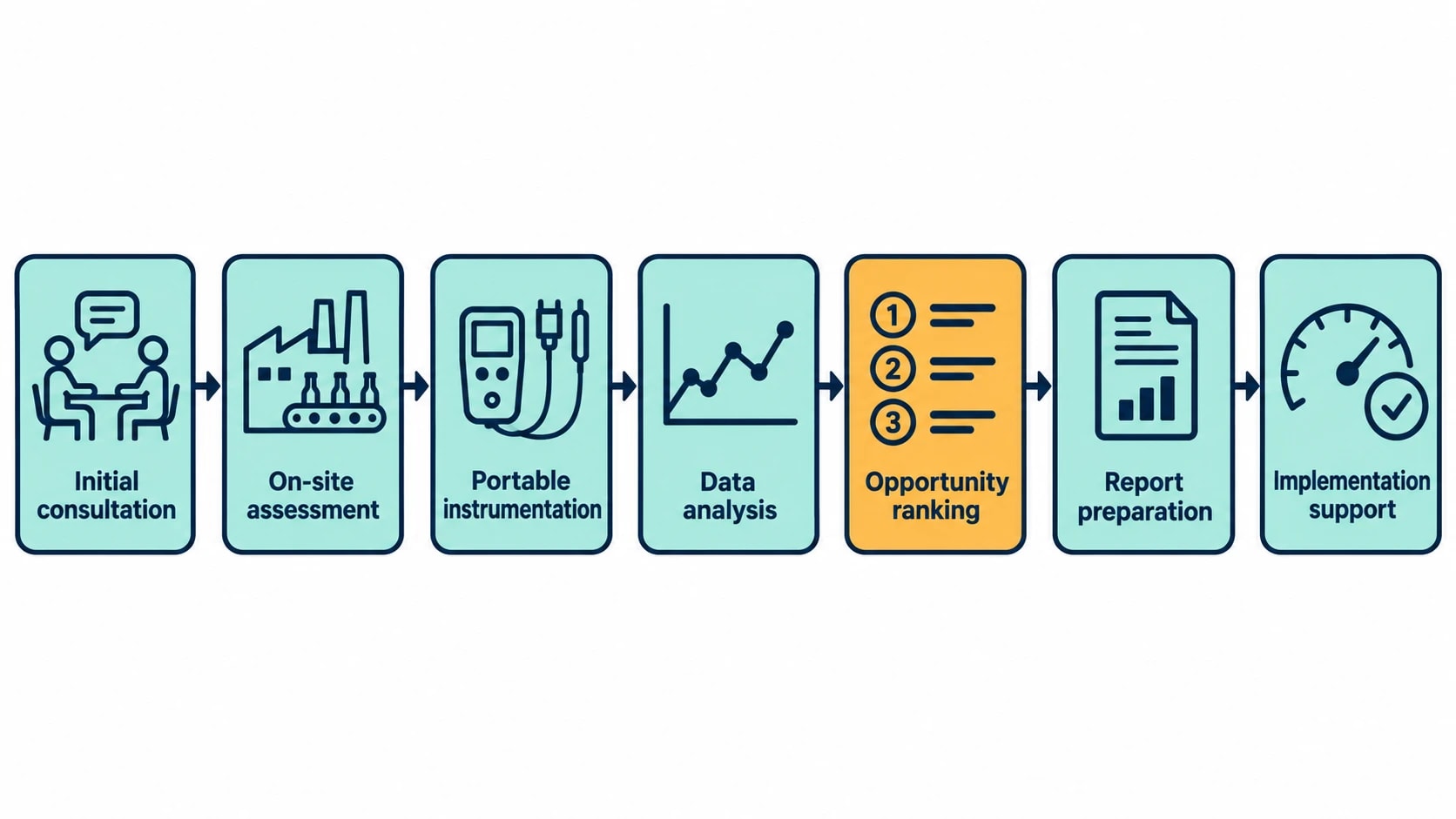
From energy data to an investment decision
EnerTherm Engineering’s seven-step methodology provides a practical sequence for an energy audit for the food and beverage industry:
- Initial consultation to establish production, compliance, hygiene and commercial objectives.
- On-site assessment of process equipment, utilities and operating practices.
- Portable instrumentation to measure load, temperature, pressure, flow and losses.
- Data analysis against production activity, operating schedules and energy bills.
- Identification and ranking of energy-saving opportunities.
- Report preparation with technical findings, costs, savings and implementation priorities.
- Implementation support and ongoing measurement and verification.
The process should produce a prioritised register rather than a long list of generic ideas. Each opportunity should specify the affected process, baseline evidence, expected energy reduction, capital requirement, operational dependencies, food-safety considerations, disruption risk and owner.
This makes the report useful for maintenance planning and board approval. It also gives the ESOS lead assessor a traceable basis for recommendations.
Rank projects by engineering practicality
The first projects are often operational or maintenance measures: compressed-air leak repair, controls correction, insulation repair, steam-trap maintenance, burner tuning and revised plant scheduling. Capital projects can follow once the site has resolved basic losses and established a stable baseline.
For larger investments, the case should set out:
- The production assumptions behind projected savings.
- Energy-price and carbon assumptions.
- Capital cost and maintenance implications.
- Product-quality, hygiene and safety requirements.
- Planned installation window and expected downtime.
- Payback, net present value and internal rate of return where the board requires them.
- Measurement and verification method after commissioning.
A proposed heat-recovery project requires more than a calculated heat source. It requires evidence that heat demand exists during the same operating periods, that the heat exchanger can be cleaned and maintained, and that the system will not introduce an unacceptable production constraint.
Measurement and Verification After the Energy Audit
Turn recommendations into sustained performance
An audit identifies opportunities. Measurement and verification confirms whether a completed measure delivers the anticipated result under real operating conditions.
The International Performance Measurement and Verification Protocol provides established options for this work. The appropriate approach depends on the project. A boiler-control change may use whole-facility gas data adjusted for production. A motor replacement may use isolated power measurement. A refrigeration improvement may need compressor electricity and temperature-condition records.
The baseline must account for factors that change energy demand. In food production, these may include throughput, product mix, ambient temperature, run hours, cleaning schedules and freezer load. A comparison without these factors can overstate a saving or hide a genuine improvement.
Ongoing monitoring through Ecolog consumption monitoring can support this discipline by making energy visible at process level. Engineering teams can then investigate deviations while they remain linked to a recent operational change, maintenance issue or product campaign.
Prepare for the next ESOS cycle
Phase 4 requires an action plan by 5 December 2028, followed by annual progress updates in 2029 and 2030, plus a further progress update by 5 December 2031. The audit report should therefore act as a live implementation register, not a document filed after compliance notification.
It should retain a verified energy map, a defensible 95% ESOS coverage calculation, process-specific investment cases and a measurement plan that remains valid through changes in product mix and operating schedules.
This article reflects the independent analysis and editorial opinion of EnerTherm Engineering. Product names, trademarks, and brands mentioned belong to their respective owners. EnerTherm Engineering is not affiliated with, endorsed by, or a licensee of any third-party software or product mentioned unless explicitly stated.

Simulation Engineer — EnerTherm Engineering
Rajesh Sekar is a Simulation Engineer at EnerTherm Engineering, specialising in computational fluid dynamics (CFD), finite element analysis (FEA), and thermal process simulation. He holds a degree from Cranfield University and brings extensive experience in simulation-based product development from the automotive, aerospace, and energy sectors.
