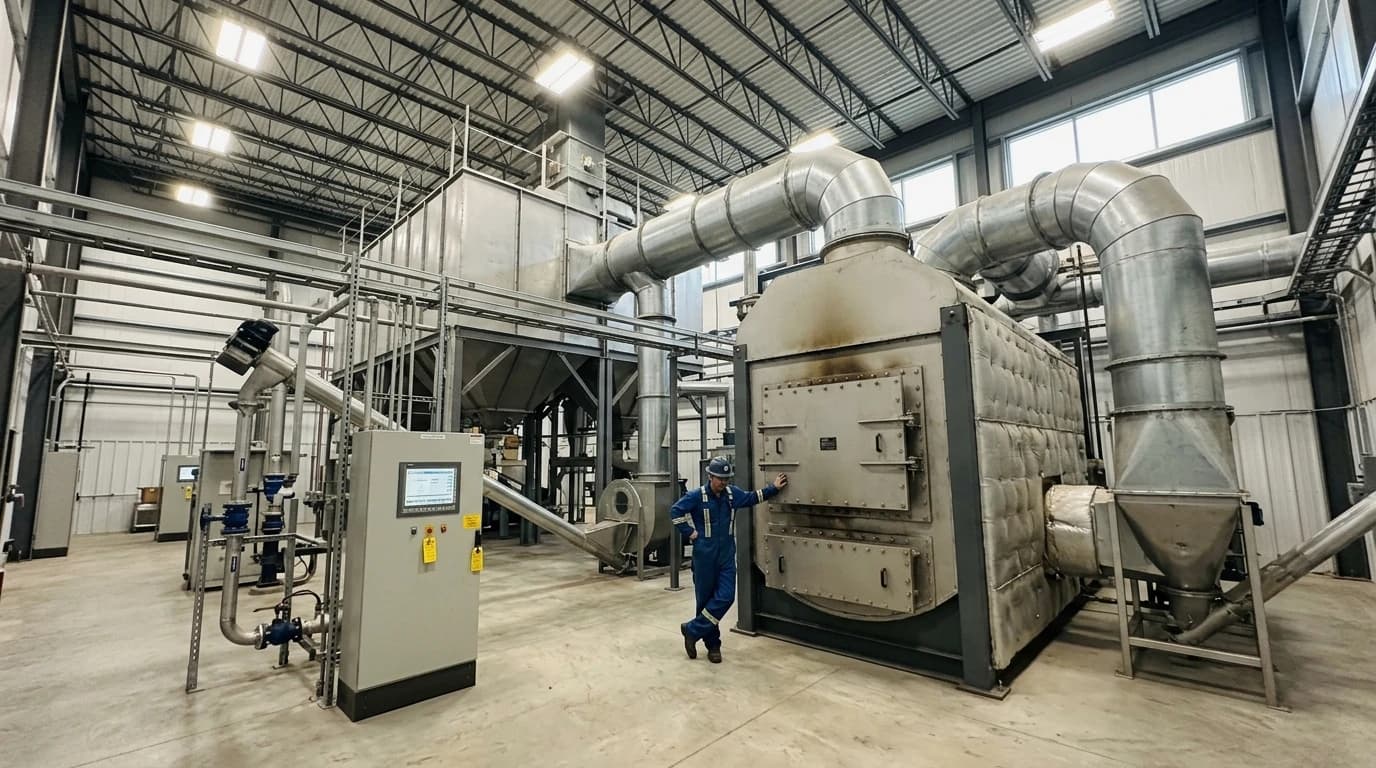
Why UK Farms Are Switching to Biomass-Fueled Crop Dehydrators
Analysing how shifting from fossil fuels to biomass cuts energy costs and satisfies MCPD.
UK agricultural operations face an unprecedented £337m increase in annual fuel expenditures following red diesel prices surging beyond 117 pence per litre in early 2026. Operations managers at large-scale commercial farms and food processing facilities are aggressively seeking financially viable alternatives to fossil-fuel-dependent grain drying systems. Exacerbated by structural carbon border taxes and global supply constraints, the economic argument for continuing with kerosene or red diesel has collapsed. Transitioning to biomass-fueled crop dehydrators provides a mathematically sound alternative, securing site-controlled fuel independence, predictable operational expenditure, and immediate alignment with net-zero carbon targets.
The Financial Imperative: Why Crop Drying Economics Are Shifting
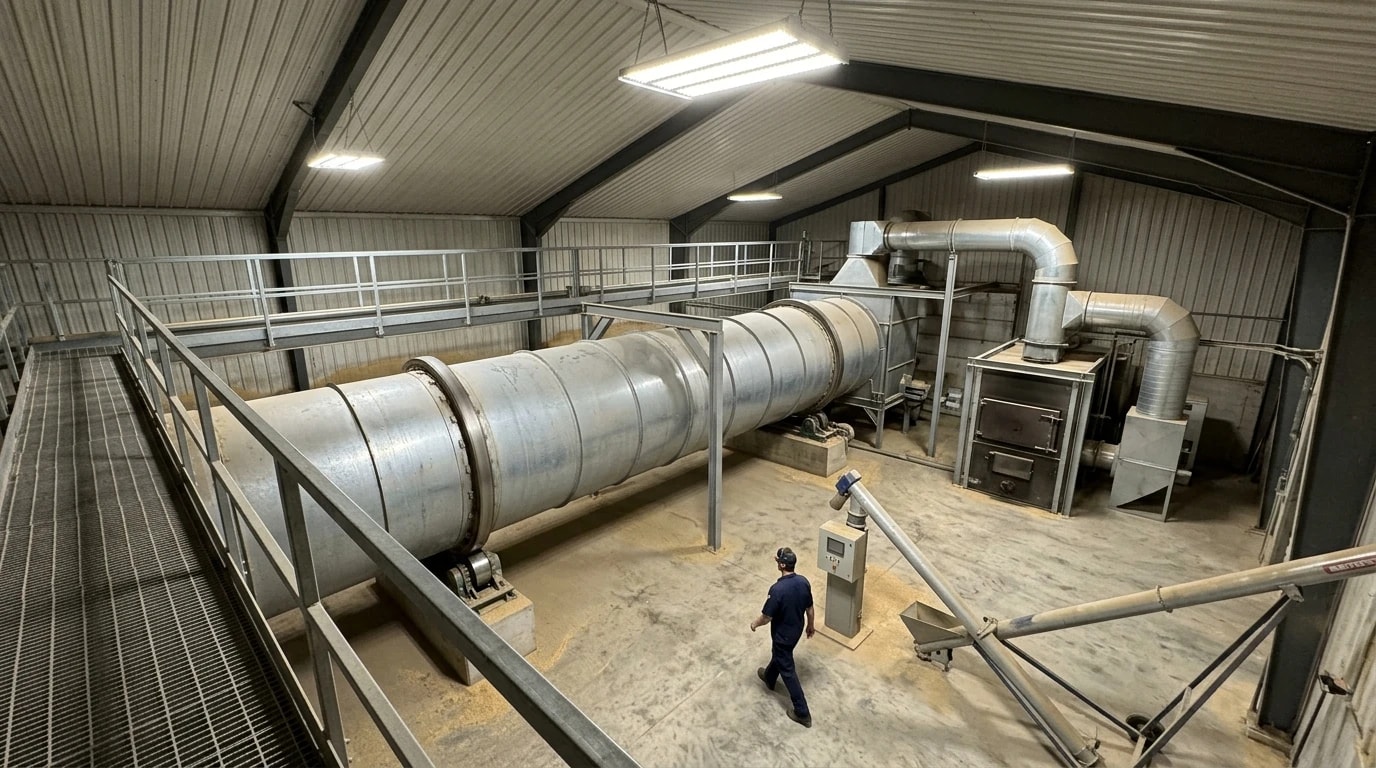
Energy expenditure dictates profitability in the agricultural processing sector. The reliance on liquid hydrocarbons exposes commercial farms to extreme price volatility, severely degrading the margin on combinable crops.
The Red Diesel Crisis and Energy Price Volatility
The first quarter of 2026 demonstrated the severe fragility of UK agricultural fuel supply chains. With red diesel prices fluctuating between 95p and 117p per litre, the cost of processing high-moisture harvests has spiralled. The Energy and Climate Intelligence Unit (ECIU) estimates that this pricing environment could force English farmers to absorb a two-thirds jump in their overall fuel bills. Cereal growers, who routinely consume around 100 litres of diesel per hectare for field operations alone, now face prohibitive costs when bringing moisture levels down to safe storage parameters.
Operational Cost Comparisons: Fossil Fuels versus Biomass
Executing a comprehensive biomass-fueled crop dehydrators UK cost benefit analysis requires plotting the cost of delivered thermal energy. Biomass woodchip and agricultural residues represent highly stable, locally sourced commodities. By replacing volatile liquid hydrocarbons with steady-priced biomass, facility managers isolate their processing costs from global oil shocks. While the initial capital expenditure for biomass boiler infrastructure exceeds that of direct-fired diesel burners, the operational cost per kilowatt-hour of thermal output is drastically lower. This disparity generates accelerated payback periods, particularly for operations processing thousands of tonnes of grain during wet harvest windows.
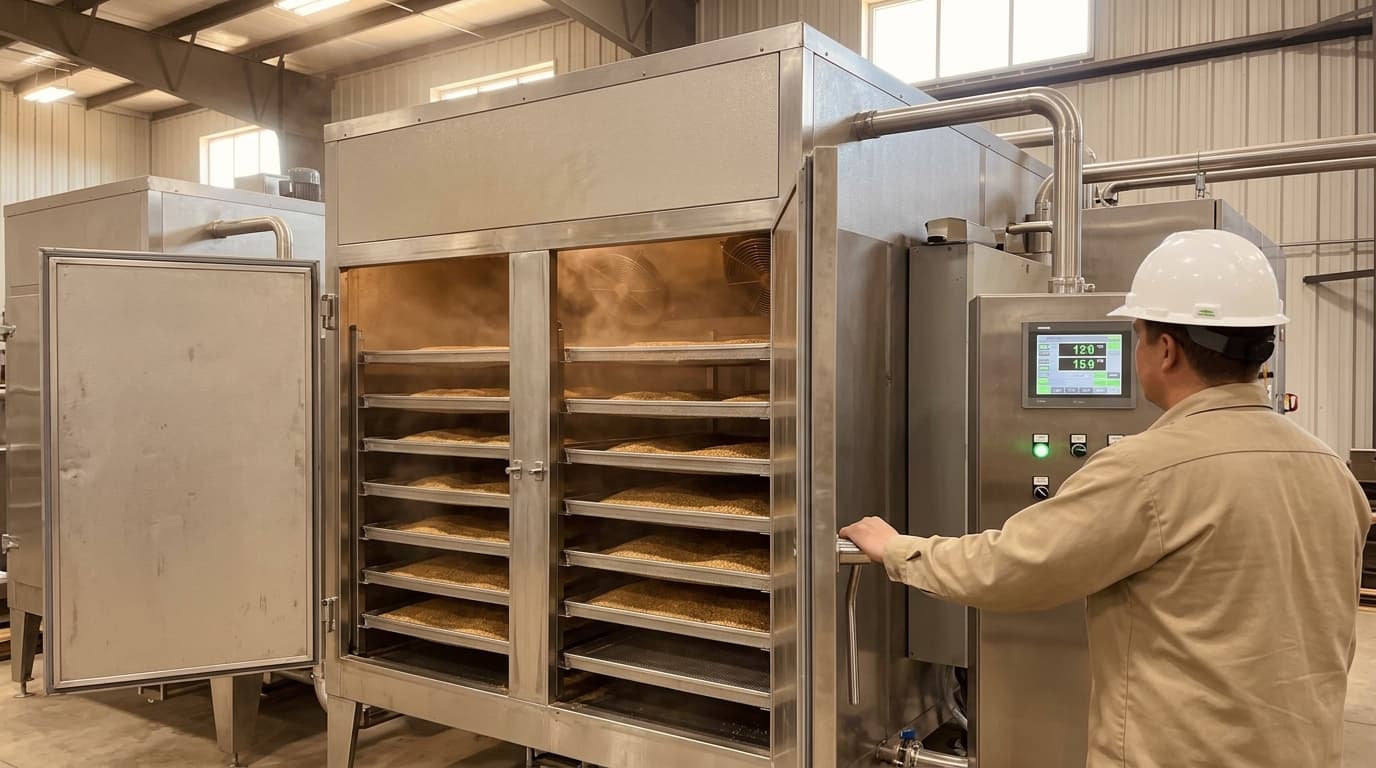
Industrial dehydration systems designed for precise moisture removal — from agricultural produce and pet food to chemical powders and pharmaceutical intermediates.
Analysing Capital Expenditure and Retrofit Integration
Transitioning to renewable thermal processes does not necessitate the wholesale destruction of legacy infrastructure. Intelligent engineering allows operations to integrate modern heat sources with existing mechanical drying assets.
Mitigating Capital Deployment
Rather than authorising total system replacement, thermal design teams typically select intermediate heat exchangers to bridge legacy fossil fuel systems with modern biomass boilers. This retrofitting methodology significantly lowers capital expenditure. Water-to-air or steam-to-air heat exchangers capture thermal energy from the biomass loop and transfer it directly into the intake manifolds of existing drying floors or batch towers. This indirect heating approach provides the economic benefits of biomass crop drying systems UK without stranding millions of pounds in existing mechanical assets.
The Mountfair Farming Case Study
Real-world deployment validates this hybrid integration model. Mountfair Farming, a massive 2,200-hectare operation in the Scottish Borders, successfully redesigned its grain drying infrastructure around a 1MW biomass boiler. The facility must process up to 14,000 tonnes of cereals and oilseeds annually, often battling sub-optimal, high-moisture cutting conditions.
Instead of discarding their existing equipment, the operation retrofitted a 48-tonne diesel-fired batch dryer with a custom heat exchanger. Fueled by hot water piped 60 metres from the primary biomass plant, this setup allows Mountfair Farming to dry 10,000 tonnes of crops annually using the 1MW boiler as the primary heat source. During wet harvest seasons, this specific integration yields immense cost savings by functionally eliminating the diesel requirement for the main drying load.
Precision Thermal Control in Modern Biomass Dehydrators
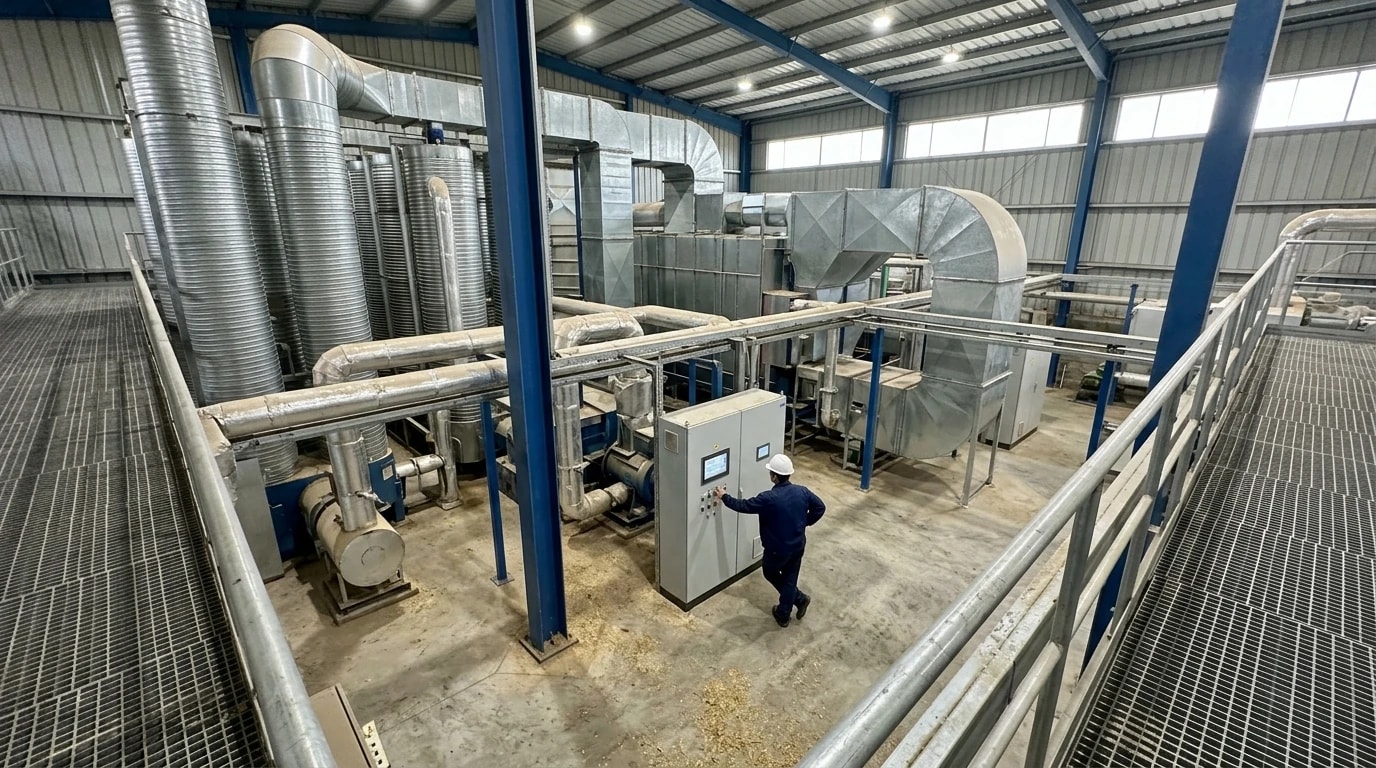
Agricultural commodities demand exacting environmental controls. Applying excessive heat destroys protein structures and seed viability, while insufficient heat allows fungal proliferation and mycotoxin development.
Direct versus Indirect Heating Systems
Traditional diesel systems frequently rely on direct combustion, where exhaust gases mingle directly with the crop. This method introduces combustion byproducts, soot, and moisture into the grain column. EnerTherm Engineering’s EcoHeat series (EIHS/EIHD) provides advanced indirect process heating designed specifically for large-scale drying towers. Achieving 80–90% thermal efficiency, the EcoHeat series utilises sealed heat exchangers to transfer energy into the drying airstream. This absolute separation of combustion gases from the product ensures strict food-grade safety and zero taint. Furthermore, these units feature complete fuel flexibility, supporting both hydrogen and biogas integration to future-proof the installation.
Optimising Seed Viability and Moisture Levels
The thermodynamics of dehydration require precise manipulation of the psychrometric chart. Under the EnerTherm Engineering 'Dehydrators for Agriculture' subcategory, the ThermDry TDS-3500 and TDD-6500 systems execute absolute moisture management. These systems employ AI-driven, multi-zone temperature control ranging precisely between 30°C and 70°C. By mapping the exact latent heat of vaporisation required for specific grains and herbs, the AI controller adjusts damper positions and airflow velocities in real-time. This prevents thermal shock to the cellular structure of the crop, guaranteeing 95% seed germination viability and securing premium market value for the final product.
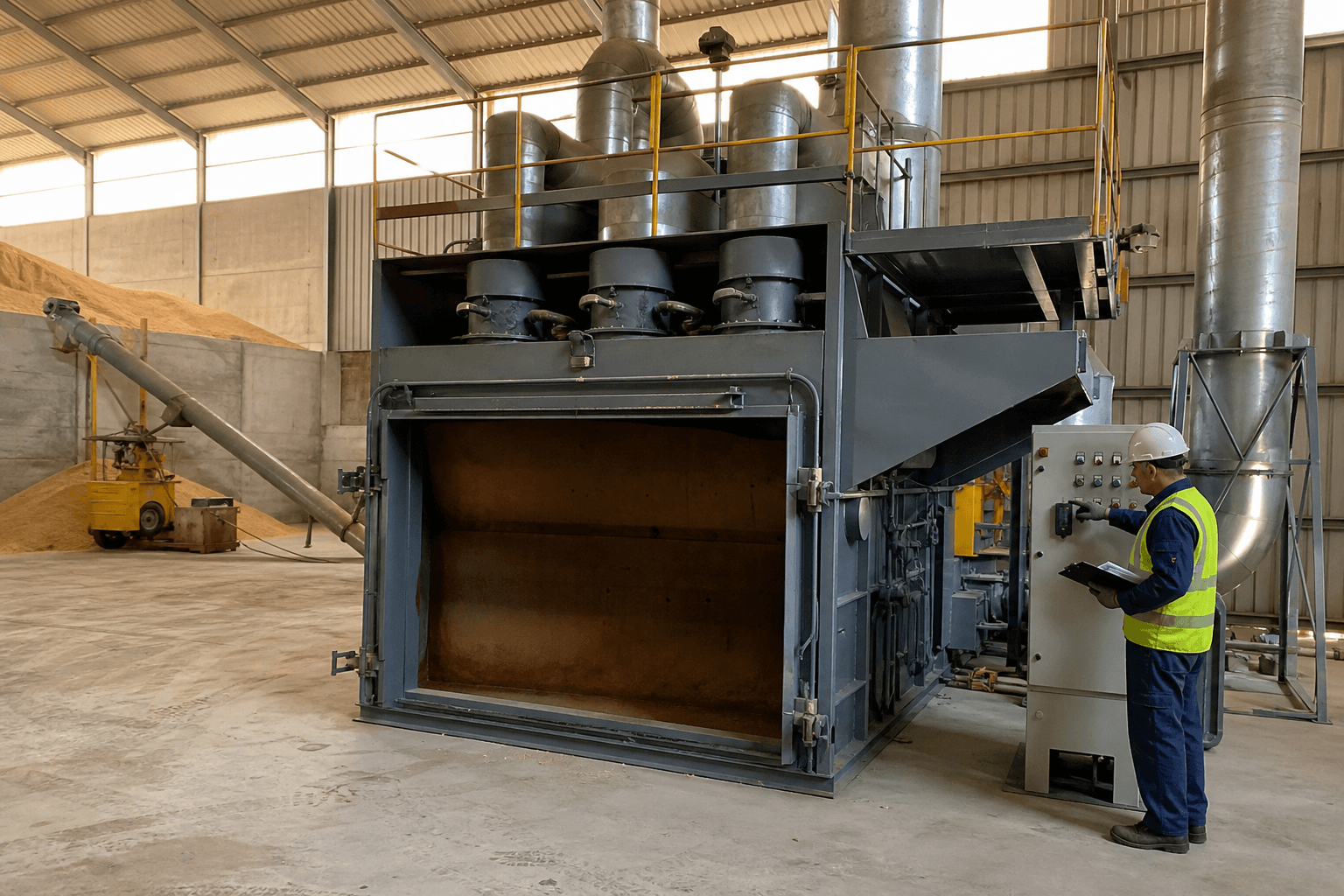
The LitBurn, AgriBurn, AmoBurn, and AniBurn ranges cover every waste disposal need with dual-chamber combustion and scrubbing options.
UK Regulatory Compliance: The Medium Combustion Plant Directive
Deploying industrial thermal equipment requires strict adherence to environmental legislation. Facility managers must account for permitting timelines and compliance costs during the initial feasibility study.
Understanding MCPD Thresholds and Permitting
The regulations for industrial biomass crop dryers UK MCPD are comprehensive and heavily enforced. The Medium Combustion Plant Directive (MCPD) mandates permitting for all combustion plants operating with a rated thermal input between 1 and 50 MWth. Even if a biomass plant falls below the 1 MWth threshold, operators burning more than 50 kg of waste wood per hour must secure specific exemptions from the Environment Agency, while burn rates exceeding this often trigger Part B permits under Small Waste Incineration Plant (SWIP) regulations. Compliance with the EU Industrial Emissions Directive (IED) and the Environmental Permitting Regulations (EPR 2016) is non-negotiable for large-scale agricultural operations.
Navigating Emission Limit Values (ELVs) and Abatement Technology
The MCPD imposes strict Emission Limit Values (ELVs) regarding nitrogen oxides (NOₓ), sulphur dioxide (SO₂), and particulate matter (dust). For existing and new solid fuel biomass boilers, operators must monitor exhaust plumes and report data to regulatory bodies. To meet stringent NOₓ limits, process engineers often use Selective Catalytic Reduction (SCR) or Selective Non-Catalytic Reduction (SNCR) systems. Additionally, industry professionals widely regard electrostatic precipitators or multi-cyclone filters as necessary standard equipment to strip particulate matter from the exhaust gas before it breaches the stack. Factoring these abatement technologies into the design phase prevents costly post-installation modifications.
Engineering Biosecurity and Waste-to-Energy Resource Efficiency
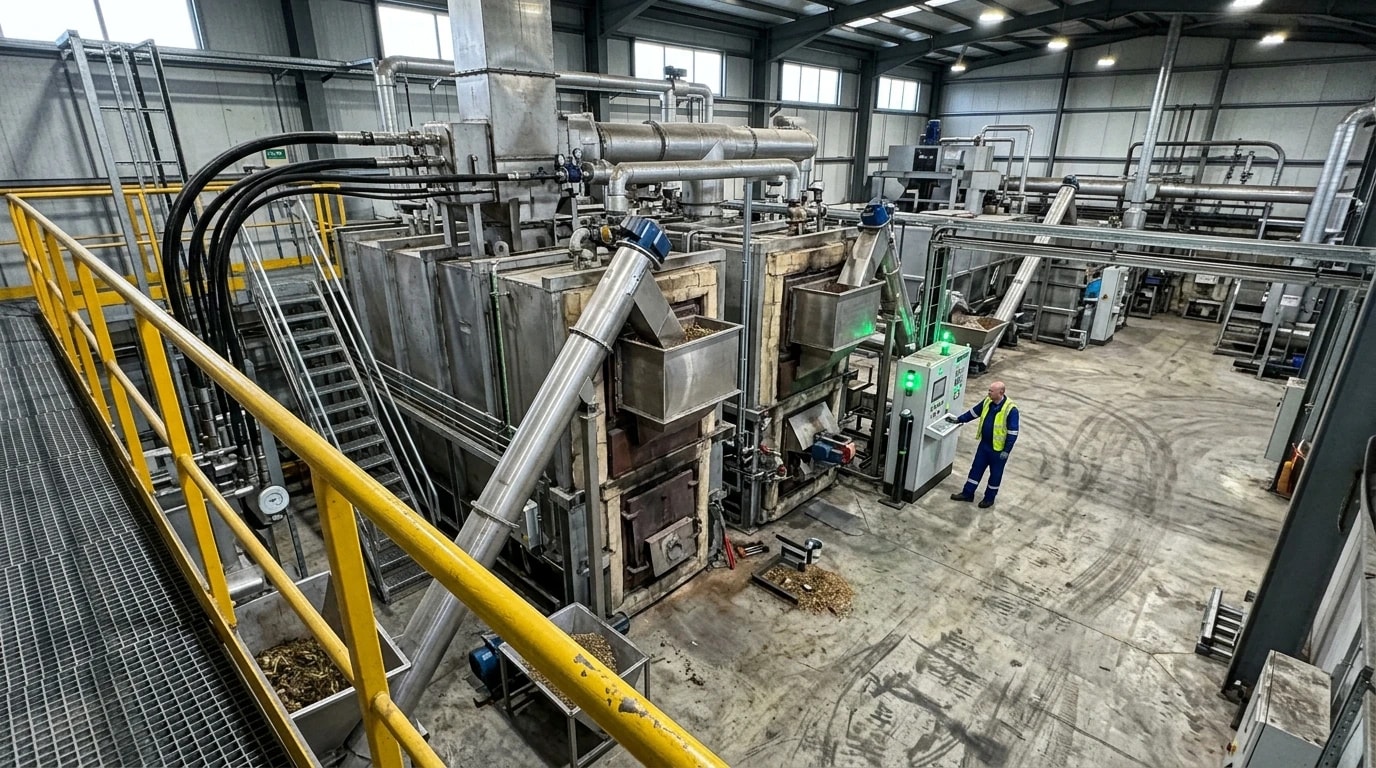
Modern farms generate vast quantities of organic waste, much of which harbours pathogens or requires expensive off-site disposal. Converting this liability into the primary thermal asset drives absolute operational efficiency.
High-Efficiency Incineration and Pathogen Elimination
Biosecurity remains a primary concern for intensive agricultural facilities. EnerTherm Engineering addresses this through the 'Incinerators for Agriculture' subcategory, featuring the LitBurn and AgriBurn AGBI series. These heavy-duty units are engineered for dual-chamber combustion, operating seamlessly between 850°C and 1,200°C. Maintaining these extreme temperature thresholds guarantees the total destruction of complex organic molecules, neutralizing harmful pathogens and ensuring strict biosecurity across the farm.
Achieving Net-Zero Operations
Rather than venting thermal energy into the atmosphere, the AgriBurn AGBI series captures exhaust heat via integrated economisers. This energy recovery mechanism facilitates rapid water pre-heating and high-pressure steam generation. The recovered steam is then piped directly into the heat exchangers powering the crop dehydrators. By transforming infected crop waste or agricultural residues into process heat, facilities drastically shrink their carbon footprint and move aggressively toward net-zero operations.
Mechanical Specifications Driving Reliable Thermal Processes
Agricultural harvest windows are unforgiving. Mechanical failure during peak dehydration operations results in immediate crop degradation and severe financial losses. Infrastructure must be engineered for continuous, brutal duty cycles.
Advanced Airflow Dynamics and Thermal Retention
The physical architecture of a dehydrator dictates its efficiency. EnerTherm Engineering systems utilise CFD-designed airflow (Computational Fluid Dynamics) to model and control the exact pressure gradients within the drying chambers. This prevents the formation of dead zones where moisture can pool, ensuring homogenous drying across the entire grain column. To minimise thermal bleed, combustion chambers are heavily insulated with Coretex refractory lining, a high-density ceramic composite that reflects radiant heat back into the process zone, lowering base fuel consumption.
Component Durability under Continuous Loads
Operating temperatures fluctuate wildly during startup and shutdown sequences, causing severe mechanical stress on metal components. EnerTherm engineering incorporates free-floating tube bundles within our heat exchange systems. This specific mechanical configuration allows internal steel tubes to expand and contract independently of the main structural casing, entirely eliminating the risk of stress fractures and weld failures. To maintain 24/7 operational throughput, facility managers typically deploy predictive maintenance software. These external analytical platforms monitor vibration signatures and thermal anomalies in real-time, allowing maintenance crews to replace bearings and seals before catastrophic mechanical failures halt the drying process.
By unifying extreme mechanical durability with precision thermal control, UK agribusinesses can break their reliance on fossil fuels, satisfy strict MCPD regulations, and secure the long-term economic viability of their crop processing operations.
This article reflects the independent analysis and editorial opinion of EnerTherm Engineering. Product names, trademarks, and brands mentioned belong to their respective owners. EnerTherm Engineering is not affiliated with, endorsed by, or a licensee of any third-party software or product mentioned unless explicitly stated.

Managing Director — EnerTherm Engineering
Dr. François Pierrel is Managing Director of EnerTherm Engineering with over two decades of expertise in thermal design, heat transfer, and industrial energy optimisation. He holds a PhD in Heat Transfer from Cranfield University and a Post-Doctorate from Heriot-Watt University.
