Why Waste Heat Recovery Systems Belong in ESOS Audits
How metered heat-loss audits turn recovered heat into ESOS business cases
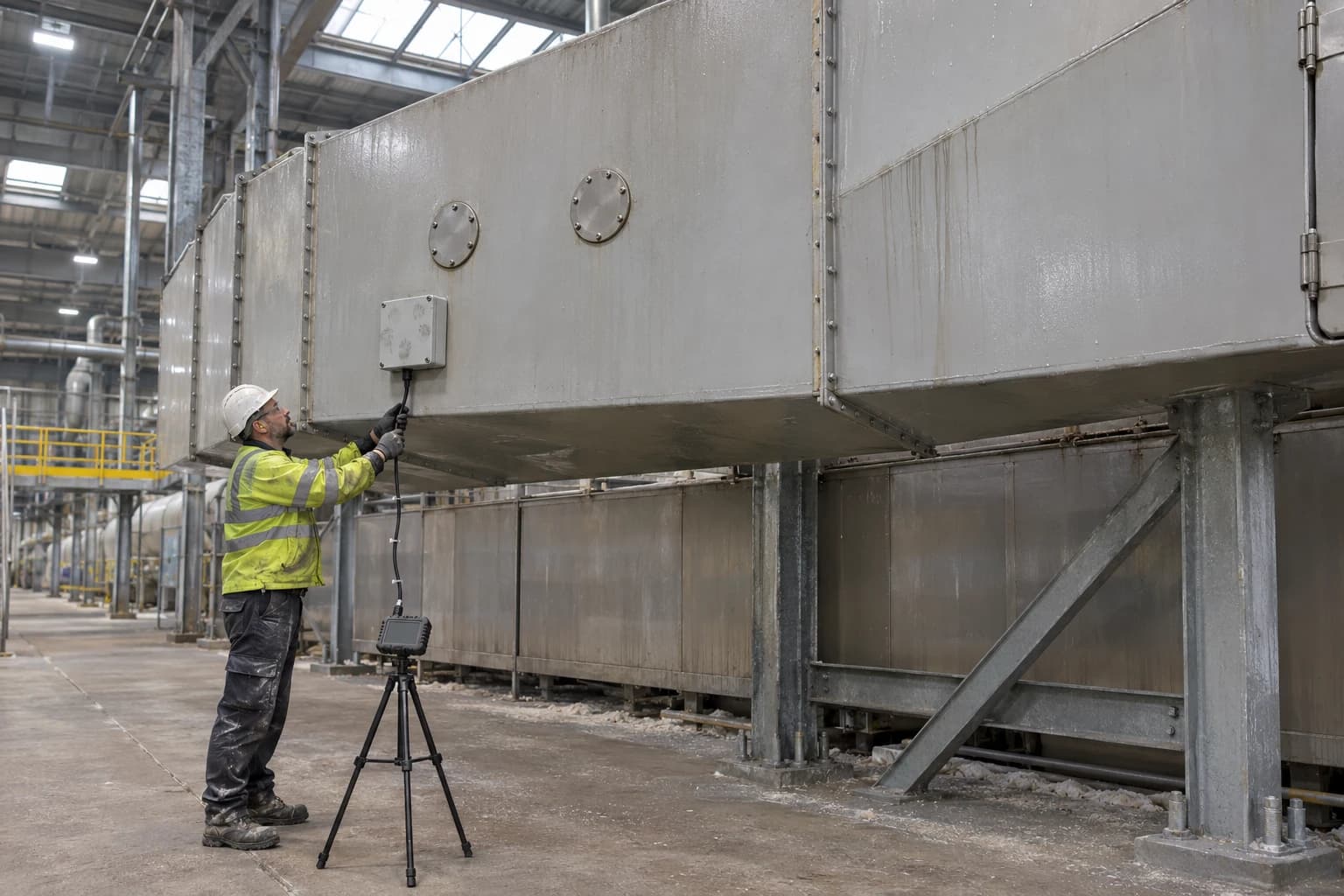
A paper-machine drying section, boiler stack or hot-effluent line can reject heat throughout every production shift while the same site buys fuel to generate steam, hot water or warm process air. Waste heat recovery systems turn that mismatch into an auditable energy-saving opportunity.
For UK energy-intensive manufacturers, the Energy Savings Opportunity Scheme is a practical reason to investigate this properly. An ESOS assessment examines energy used in buildings, industrial processes and transport, then identifies tailored, cost-effective measures. That remit makes process heat losses difficult to treat as peripheral engineering issues.
Waste heat recovery systems should sit within the main audit scope, alongside combustion efficiency, steam losses and electrical consumption. They need measured temperature, flow and operating-hour data, a defined heat sink, and a business case that reflects production risk as well as fuel savings. A thermal image of a hot duct or pipe can identify a problem, but cannot establish whether a heat exchanger, heat pump, condensate recovery loop or process-to-process connection will deliver lasting value.
ESOS audits now demand a stronger waste heat recovery business case
The Energy Savings Opportunity Scheme Regulations 2014, SI 2014/1643, require qualifying organisations to assess energy consumption and identify reasonably practicable, cost-effective energy-saving opportunities. The regulations have since been amended, including by the Energy Savings Opportunity Scheme (Amendment) Regulations 2023, SI 2023/1182.
A waste heat recovery proposal is no longer well served by a vague note stating “recover heat from exhaust”. An ESOS audit should establish the opportunity’s scale, likely implementation cost, operational constraints and expected energy saving.
Phase 4 increases the value of a well-developed thermal audit. Current Environment Agency guidance requires qualifying organisations to report energy savings achieved during the compliance period and explain why earlier action-plan measures were not implemented. An unsupported recovery concept is harder to carry into an action plan. A metered, technically screened opportunity gives engineering and finance teams something they can assess.
Significant energy consumption includes thermal loads
ESOS participants must identify areas of significant energy consumption accounting for at least 95% of total energy consumption. On chemical, food, paper or pharmaceutical sites, fuel-fired process heat and steam systems often fall within that assessment boundary.
The audit should follow heat through the process rather than stopping at the gas meter. Key sources include:
- Boiler blowdown and flash steam
- Steam condensate returning at elevated temperature
- Furnace, dryer and thermal oxidiser exhausts
- Refrigeration condenser heat
- Hot process water and wastewater
- Compressor aftercoolers
- Product cooling circuits
- Hot air extracted from ovens, dryers and curing lines
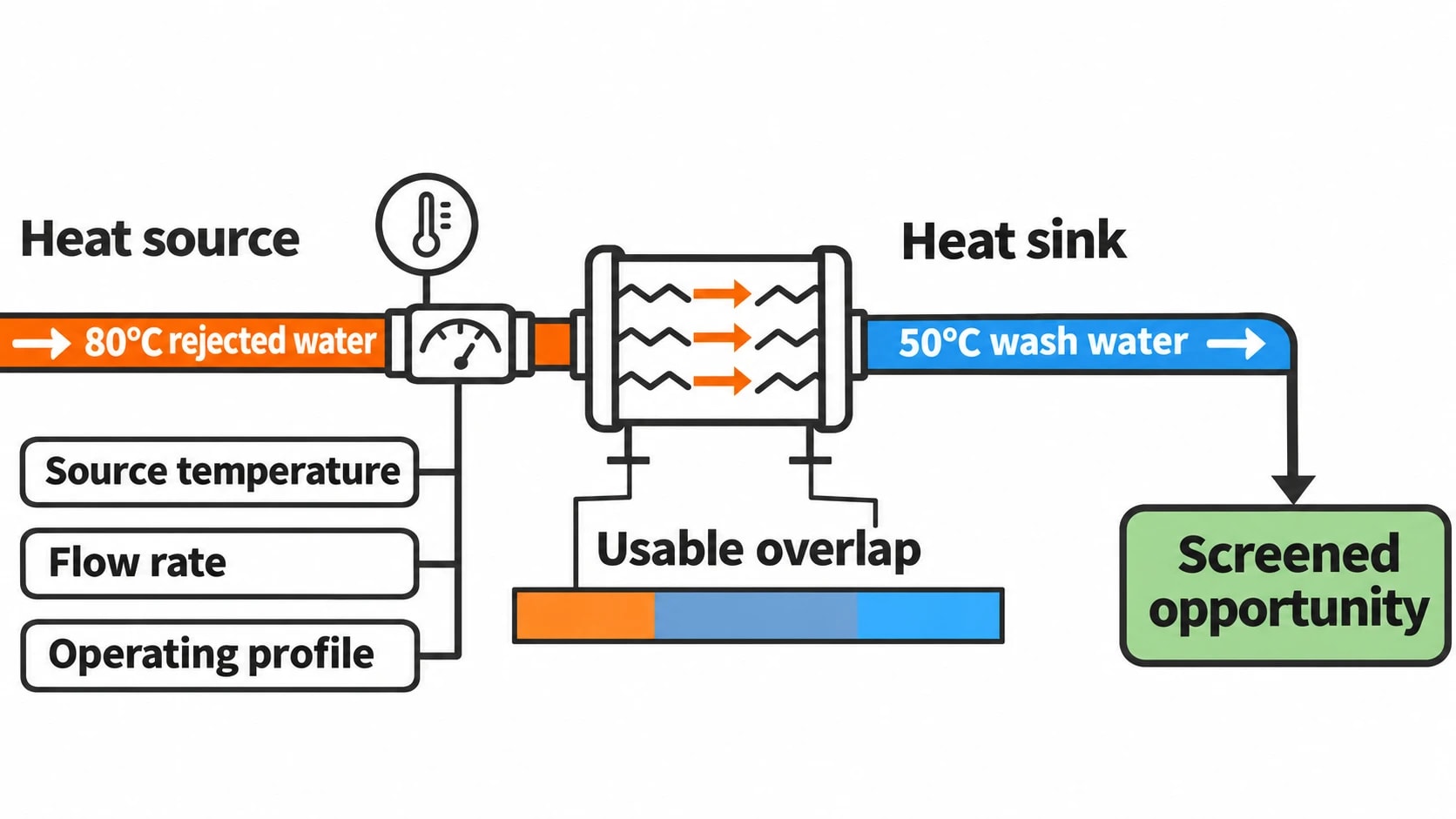
A hot stream alone does not make recovery viable. The audit must identify a concurrent or storable demand at a usable temperature. A site rejecting 80°C water may have an attractive opportunity if it also needs 50°C wash water. It may have a poor opportunity if the only nearby demand requires high-pressure steam.
Audit evidence protects project credibility
ESOS energy audits should, where reasonably practicable, use verifiable energy-consumption data covering 12 months and include representative site visits. For waste heat recovery systems, the same discipline should extend to thermal data.
A credible evidence pack records source temperature, flow, operating profile, fouling history, pressure constraints, existing controls and destination demand. It also records periods when either side of the proposed recovery link is unavailable. This prevents an annual saving estimate from assuming 8,000 productive hours when maintenance shutdowns, product changes and batch operation reduce usable overlap.

Identify where your plant is losing energy and quantify the savings potential — our audits map every heat source, sink, and waste stream in your facility.
How waste heat recovery systems create measurable value
Waste heat recovery systems capture thermal energy from a stream that would otherwise be discharged, then transfer or upgrade it for a defined use. Recovered heat may displace gas-fired boiler output, reduce direct-fired burner duty, preheat combustion air, supply hot water or reduce cooling demand.
The best option depends on temperature level, contamination risk, location and the receiving process.
Match the source to the sink before selecting equipment
Direct heat exchange usually offers the strongest economic case where a stable hot stream and a stable lower-temperature demand operate at the same time. Examples include recovering heat from pasteuriser discharge to preheat incoming water, using hot dryer exhaust to preheat make-up air, or transferring heat from a product cooling loop to a cleaning-water circuit.
A heat pump may broaden the opportunity where source temperature is too low for direct use. It consumes electricity to raise the temperature of recovered heat. The business case must compare electrical demand, carbon intensity and operating cost with the fuel displaced. It must also assess refrigerant selection, maintenance capability and the required temperature lift.
Steam and condensate systems create different opportunities. Flash steam can serve low-pressure users where demand coincides. Hot condensate can return energy and treated water to the boiler house, subject to pressure, contamination and return-line capacity. A recovery project that compromises condensate quality can create expensive boiler-water treatment and reliability problems.
Temperature is commercial information
The value of heat depends on its temperature and destination. A large quantity of low-grade heat can be less useful than a smaller high-temperature stream when no low-temperature demand exists nearby.
Pinch analysis is valuable at this stage. It maps hot and cold process streams, identifies feasible heat exchange and avoids designs that transfer heat to the wrong duty. The European Commission’s Energy Efficiency BREF identifies pinch, exergy and enthalpy analysis among the tools used in energy management and auditing.
The audit should distinguish between:
| Audit question | Why it affects the business case |
|---|---|
| What is the heat source temperature and flow? | Sets the amount and quality of recoverable heat. |
| When is the source available? | Determines whether it aligns with receiving demand. |
| What temperature does the heat sink require? | Determines whether direct recovery, heat pumping or no recovery is appropriate. |
| Can streams be kept separate? | Addresses contamination, hygiene and product-quality risk. |
| What happens during shutdown or upset conditions? | Defines bypass, control and safe operating requirements. |
| How quickly will heat-transfer surfaces foul? | Determines maintenance cost and retained performance. |
This analysis is particularly relevant in food, beverage and pharmaceutical production, where hygiene segregation and cleanability may rule out direct-contact arrangements. In chemical processing, corrosive, polymerising or particulate-bearing streams can change heat-exchanger material selection and cleaning strategy. Paper and pulp operations often need to consider fibre carryover, vapour loads and dryer-section operating variation.
Building the cost-benefit case for waste heat recovery systems
A recovery project earns approval when it reduces total cost without creating unacceptable production, safety or maintenance exposure. Fuel savings are central, but only one part of the decision.
Capital cost is more than the heat exchanger
A preliminary estimate needs to include the full installed system. Omitting tie-ins, access works or downtime creates a misleadingly short payback period.
Typical cost items include:
- Heat exchanger, heat pump, economiser or recovery coil
- Pumps, pipework, valves and insulation
- Ductwork modifications for exhaust-air schemes
- Filtration, separators or cleaning arrangements
- Instrumentation, control valves and integration with existing control systems
- Structural steel, access platforms and drainage
- Electrical supply and plant-room work
- Installation during planned shutdowns
- Commissioning, performance testing and operator training
Thermal engineers should also identify avoided expenditure. A proposed capacity increase may allow a smaller boiler, chiller or cooling-tower upgrade if recovered heat reduces peak duty. That benefit should be separated from recurring energy savings so decision-makers can see the project’s full economic effect.
Savings estimates need operational realism
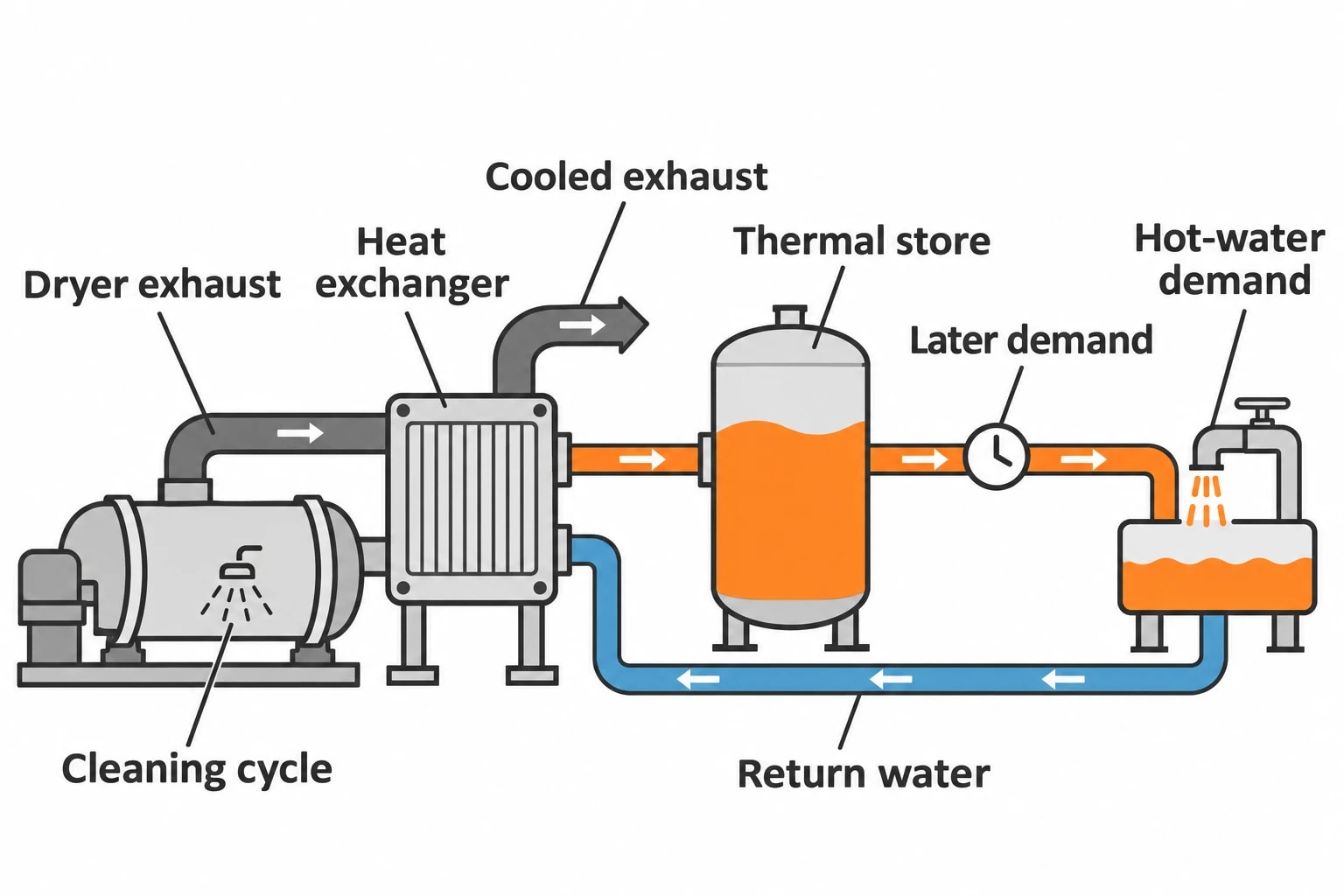
Annual fuel saving should reflect measured operating hours and realistic heat availability. A dryer exhaust may be hot during production but unavailable during cleaning cycles. A batch reactor may reject heat in short peaks while the proposed hot-water demand occurs later in the day. Thermal storage may bridge that gap, but adds capital cost, heat loss and control complexity.
The audit should test at least three conditions:
- Normal production operation.
- Low-throughput or part-load operation.
- Start-up, shutdown and product-change periods.
This approach exposes projects whose attractive headline saving occurs only at a narrow production point. It also identifies where variable-speed pumping, bypass control or staged heat-exchanger banks can preserve recovery across a wider operating range.
Carbon savings follow the displaced energy source
Waste heat recovery systems can reduce direct fuel use and associated Scope 1 emissions where they displace site combustion. If they reduce imported electricity or cooling-plant operation, they can affect Scope 2 emissions. The audit should state the displaced energy source rather than apply a generic carbon figure to all recovered heat.
This distinction matters for sites with electrified boiler capacity, combined heat and power, renewable-electricity contracts or changing decarbonisation plans. A project that displaces natural gas has a different financial and carbon profile from one that increases electricity use through a high-temperature heat pump.
Technical risks must be addressed before project approval
A thermal opportunity can fail after installation if the design team treats process integration as a simple utility connection. Heat recovery changes temperatures, flows and control responses. These changes can affect product quality, emissions control and equipment life.
Fouling and corrosion determine retained savings
The EU Energy Efficiency BREF identifies periodic monitoring of heat-exchanger efficiency and prevention or removal of fouling as best available techniques. This is a direct operating issue, not a maintenance footnote.
A fouled heat exchanger increases pressure drop and reduces heat transfer. Operators may open a bypass to protect throughput, leaving the recovery asset installed but underused. Corrosive exhaust gases can condense if the system drives surfaces below their dew point. This can damage equipment and create leakage risks.
The audit should identify:
- Stream composition and contaminants
- Likely deposit mechanisms
- Permitted pressure drop
- Cleaning method and isolation requirements
- Materials compatibility
- Condensation and corrosion risks
- Expected performance reduction between cleaning intervals
The Health and Safety Executive also identifies fouling, polymerisation, solidification, overheating, leakage, tube vibration and tube rupture as heat-exchanger hazards requiring attention in design and maintenance.
Production continuity comes first
Plant engineering managers should test recovery options against process constraints before commissioning a detailed design. A recovery project needs bypass arrangements, instrumentation and operating procedures that protect core production.
For example, combustion-air preheating can improve furnace efficiency, but altered air temperature may require burner-control review. Recovering heat from solvent-bearing exhaust may require careful separation from clean-air systems. A hot-water recovery loop connected to cleaning operations must avoid compromising sanitation temperatures or water quality.
This is why a site walkover, operator interviews and production data belong in the ESOS audit. The heat balance becomes investable only when it reflects how the line runs in practice.

Identify where your plant is losing energy and quantify the savings potential — our audits map every heat source, sink, and waste stream in your facility.
ISO 50001 turns an ESOS finding into sustained performance
BS EN ISO 50001:2018+A1:2024 provides an energy-management framework for establishing baselines, tracking energy performance and driving continual improvement. It is also a valid ESOS compliance route where certification covers the required energy consumption.
For waste heat recovery systems, ISO 50001 discipline prevents the project from disappearing after handover. The site can define an energy-performance indicator that reflects relevant production output and monitor whether recovered heat continues to displace purchased fuel.
Baselines should account for production and weather
A useful baseline records more than total gas use. It may include fuel consumed per tonne of product, steam generated per batch or boiler fuel per unit of thermal duty. The appropriate indicator depends on the process.
The baseline period should capture normal variation in product mix, throughput and ambient conditions. For exhaust-air recovery, outdoor temperature can materially affect heating demand. For batch production, energy use may need to be normalised against batch count, recipe or cycle duration.
A recovery project should have a defined measurement plan before procurement. That plan should identify source-side temperature and flow, receiving-side duty, fuel displaced and plant operating state. It should also assign responsibility for reviewing performance.
Continuous Ecolog monitoring supports action-plan delivery
EnerTherm Engineering’s Ecolog consumption monitoring can support the ongoing measurement needed to identify heat losses, establish thermal baselines and detect performance drift. Continuous monitoring is particularly useful after a recovery project starts operating, when fouling, altered production patterns or control changes can gradually erode savings.
Monthly review should compare recovered heat with expected duty, relevant production output and backup fuel use. A sudden fall in recovered heat may point to a bypass-valve position, reduced source flow, a blocked strainer or heat-exchanger fouling. Early intervention protects project economics and creates evidence for ESOS progress reporting.
EU-facing sites should connect recovery assessments to BAT expectations
Sites operating within the EU may also need to consider the recast Industrial Emissions Directive. Directive (EU) 2024/1785 amends the Industrial Emissions Directive framework and places environmental performance, including energy and resource efficiency, firmly within the regulatory context.
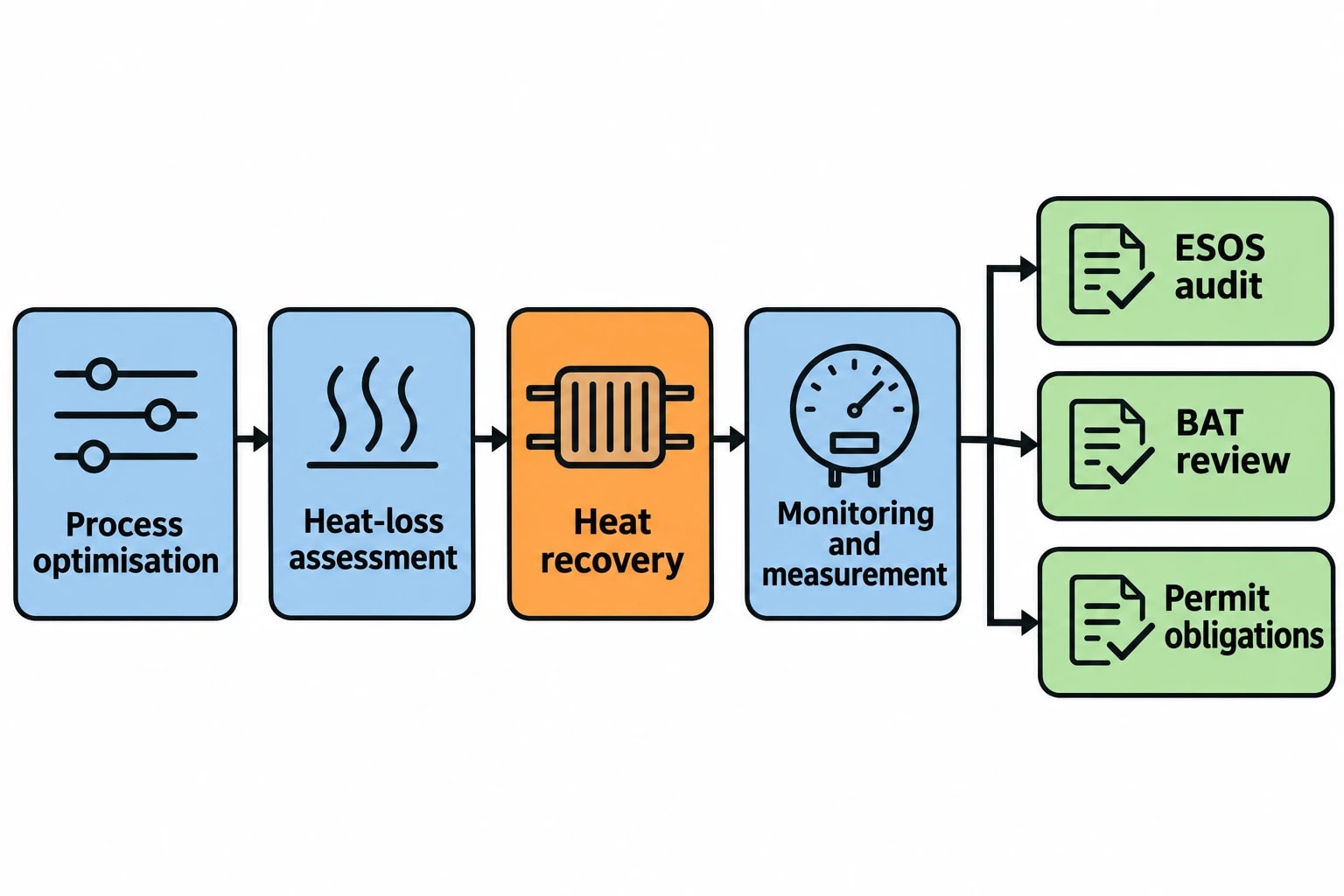
The European Commission’s Energy Efficiency BREF treats heat recovery, heat-exchanger maintenance, monitoring and measurement as core considerations for industrial energy efficiency. It also states that engineers should optimise relevant processes before adding heat recovery. A poorly controlled process can leave a new recovery system oversized or unable to achieve its projected savings.
For chemical and manufacturing groups with EU operations, this creates a useful alignment. The ESOS audit can provide a disciplined heat-loss assessment and cost-benefit case. Site environmental teams can then consider whether the proposed work supports relevant permit, BAT and energy-management obligations.
A practical ESOS audit scope for waste heat recovery systems
The strongest audit programmes begin with a structured heat survey and finish with projects that can enter a capital plan.
What to ask for in the audit output
For each shortlisted waste heat recovery system, request:
- A defined heat source and receiving heat demand
- Measured or evidenced temperature, flow and operating profile
- Annual recoverable heat and estimated fuel or electricity displacement
- Installed-capital estimate with assumptions stated
- Maintenance, cleaning and inspection requirements
- Production, product-quality and safety constraints
- Carbon impact linked to the displaced energy source
- An implementation window and outage requirement
- A measurement and verification plan
- A ranked recommendation based on cost, benefit and practical deliverability
This turns ESOS from a compliance exercise into a thermal investment programme. The site gains a clear record of where heat leaves the process, which sinks can use it and which projects justify detailed engineering.
Waste heat recovery systems belong in ESOS audits because they test a central question facing energy-intensive plants: why purchase high-value energy for a duty that an existing process already rejects? A properly scoped audit supplies the evidence needed to answer that question, then monitors whether the result holds through real production.
This article reflects the independent analysis and editorial opinion of EnerTherm Engineering. Product names, trademarks, and brands mentioned belong to their respective owners. EnerTherm Engineering is not affiliated with, endorsed by, or a licensee of any third-party software or product mentioned unless explicitly stated.

Managing Director — EnerTherm Engineering
Dr. François Pierrel is Managing Director of EnerTherm Engineering with over two decades of expertise in thermal design, heat transfer, and industrial energy optimisation. He holds a PhD in Heat Transfer from Cranfield University and a Post-Doctorate from Heriot-Watt University.
