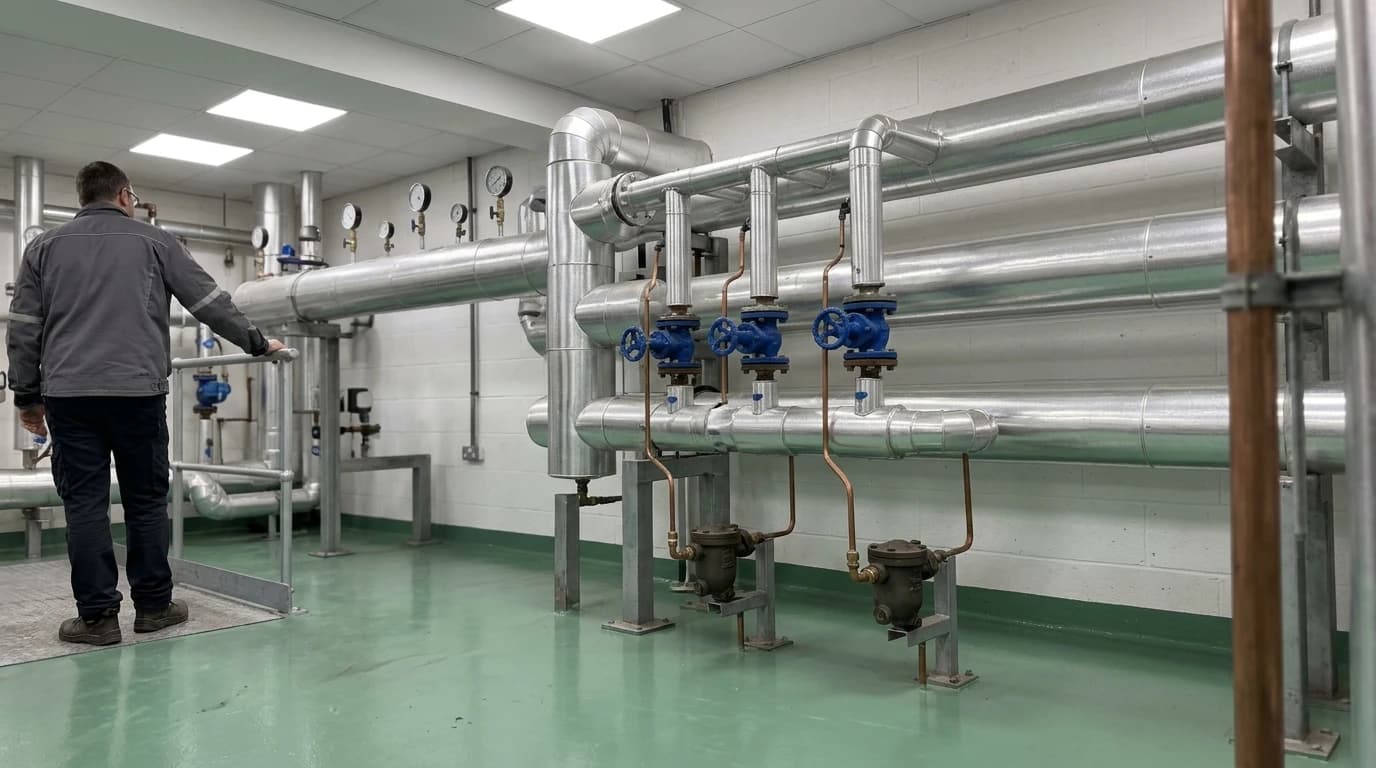
Food Industry Steam System Optimisation Saves up to 18%
Reducing fuel use in pasteurisation and CIP while ensuring PSSR safety compliance.
Defining Food Industry Steam System Optimisation
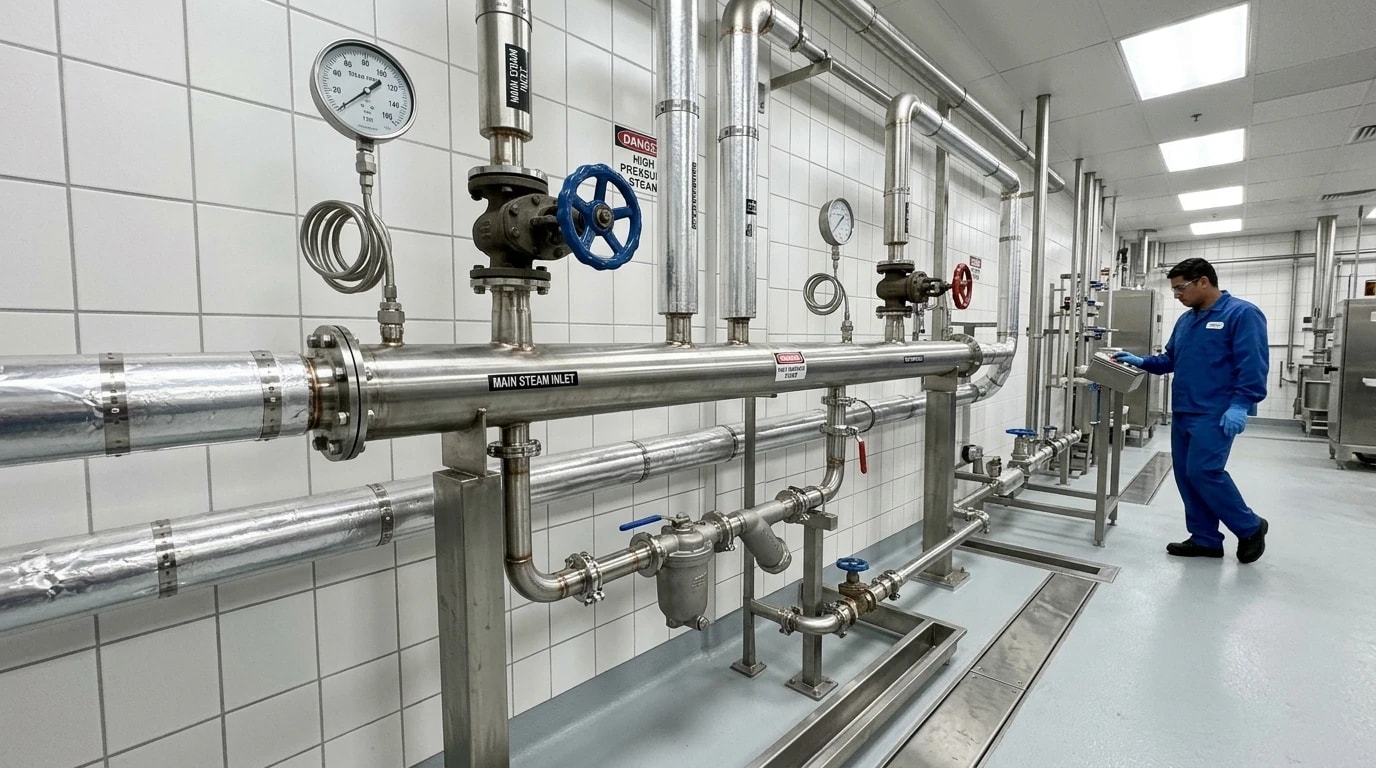
Food industry steam system optimisation is a systematic engineering process that improves the thermal efficiency, safety and reliability of steam generation, distribution and end-use recovery within food and beverage manufacturing facilities. Steam is the primary utility for thermal processing, driving critical operations such as pasteurisation, sterilisation, Clean-in-Place (CIP) cleaning and direct injection cooking. Because fuel costs represent a major operating expense, implementing a comprehensive food industry steam system optimisation programme enables manufacturers to protect operating margins while complying with stringent UK environmental and safety regulations. Typical energy audits executed under professional thermal engineering frameworks demonstrate that system-wide steam optimisation can reduce fuel consumption and utility costs by up to 18 per cent, while securing substantial carbon reductions.
Why Steam Dominates Food and Beverage Manufacturing
Industrial food processing requires rapid, uniform heat transfer to ensure product quality and microbiological safety. Steam serves as the ideal thermal medium because of its high latent heat of vaporisation. When steam condenses on a process interface, such as a jacketed kettle or a plate heat exchanger, it releases a vast quantity of energy at a constant temperature. This heat transfer mechanism is far more efficient than hot water or thermal oil circulation. However, maintaining the high quality of this steam is vital to preserving process speed and product consistency.
The Impact of Wet Steam on Thermal Processing
Steam quality is measured by its dryness fraction, which represents the proportion of completely dry saturated steam in a steam-water mixture. Saturated steam should ideally have a dryness fraction of 1.0. In practice, heat losses across uninsulated distribution lines cause partial condensation, lowering the dryness fraction.
If the dryness fraction falls below 0.95, the steam is classified as wet. When wet steam enters a heat exchanger, the entrained moisture forms a continuous water film on the heat transfer surfaces. Water acts as a powerful thermal insulator, drastically reducing the heat transfer coefficient. This drop in thermal performance increases batch times, wastes fuel and causes temperature fluctuations that can compromise food safety protocols.
Energy Profiles in Pasteurisation, Cleaning, and Cooking
The thermal demands of food manufacturing are diverse, requiring distinct pressure and temperature profiles across the plant:
- Pasteurisation: High-Temperature Short-Time (HTST) pasteurisation typically processes dairy and beverage products at temperatures around 78°C (172°F). Steam control valves must respond rapidly to flow changes. If steam pressure fluctuates, the pasteuriser safety system will trigger flow diversion valves to prevent under-pasteurised product from progressing, resulting in expensive product reprocessing.
- Clean-in-Place (CIP) Cleaning: CIP systems demand vast volumes of hot water, typically heated to between 60°C and 85°C. Heating this water rapidly requires high-capacity steam injection or robust plate heat exchangers. Unoptimised CIP cycles often dump hot wash water directly to the drain, wasting both sensible heat and water treatment chemicals.
- Cooking and Sterilisation: Retorts, industrial ovens and direct steam injectors require stable steam pressures to maintain absolute temperature consistency, ensuring commercial sterility without scorching or degrading the product.
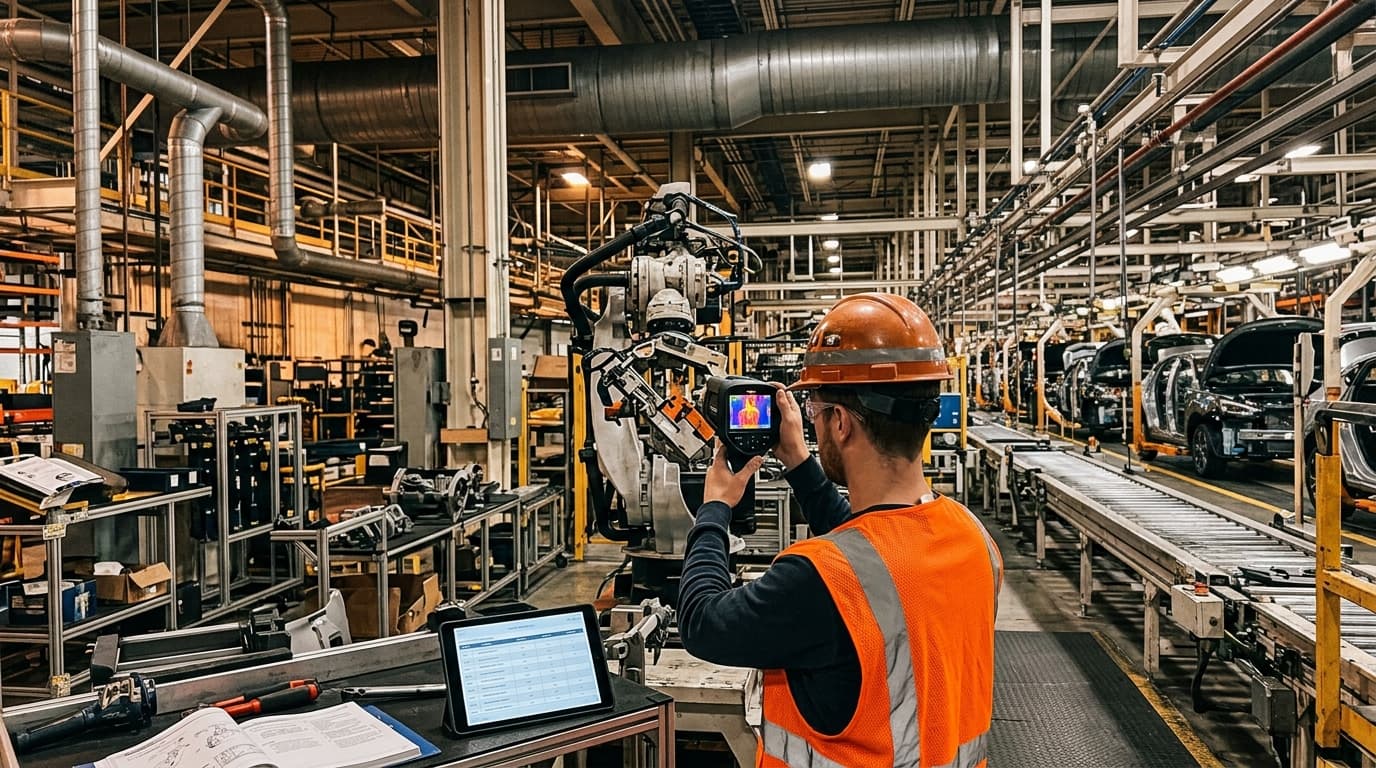
Identify where your plant is losing energy and quantify the savings potential — our audits map every heat source, sink, and waste stream in your facility.
The Regulatory Framework: Compliance, PSSR, and ESOS in the UK
Industrial steam networks in the UK are bound by strict statutory instruments governing safety and energy performance. Failing to comply with these regulations exposes manufacturers to criminal prosecution, catastrophic plant downtime and severe financial penalties.
The Pressure Systems Safety Regulations 2000 (PSSR)
The Pressure Systems Safety Regulations 2000 (PSSR) place direct legal duties on the owners and users of steam systems. Because steam stores an immense amount of energy and is classified as a relevant fluid under PSSR, these regulations apply to steam networks at any pressure, with no minimum threshold.
Compliance requires a Written Scheme of Examination (WSE), which must be certified by a Competent Person before the pressure system is operated. The WSE specifies the nature and frequency of periodic thorough examinations of steam boilers, pressure vessels, safety valves and protective pipework. Running a steam system without a valid, current WSE certificate is a criminal offence.
Safe Working Standards and Operator Competence Under PUWER
The Provision and Use of Work Equipment Regulations 1998 (PUWER), specifically the Approved Code of Practice L22, dictate that all industrial machinery and work equipment must be safe, properly maintained and regularly inspected.
For steam boiler houses, the UK Health and Safety Executive (HSE) enforces strict competence standards. Plant managers must prove that boiler operators possess the necessary practical training and technical knowledge to safely manage steam generation assets. Industry-standard frameworks, such as the Boiler Operation Accreditation Scheme (BOAS) and the BG01 guidance document, define the operational benchmarks required to prove operator competence under PUWER.
Compliance Timelines: ESOS Phase 4 and CCAs
Steam efficiency directly affects a manufacturer's standing under UK carbon reduction and energy reporting schemes.
- Energy Savings Opportunity Scheme (ESOS) Phase 4: Large UK food and beverage manufacturers, defined as businesses employing 250 or more people or having an annual turnover exceeding £44 million and a balance sheet over £38 million, must comply with ESOS Phase 4. The qualification snapshot date is 31 December 2026, and the final compliance notification deadline is 5 December 2027. Non-compliance can result in public naming and fines of up to £50,000.
- Climate Change Agreements (CCAs): Manufacturers that participate in CCAs receive up to a 92 per cent discount on the Climate Change Levy (CCL) on electricity and gas. To secure this benefit, sites must meet progressive energy efficiency targets, which are frequently tracked using the ISO 50001 (Energy Management Systems) standard.
Technical Benchmarks for Steam Plant Efficiency
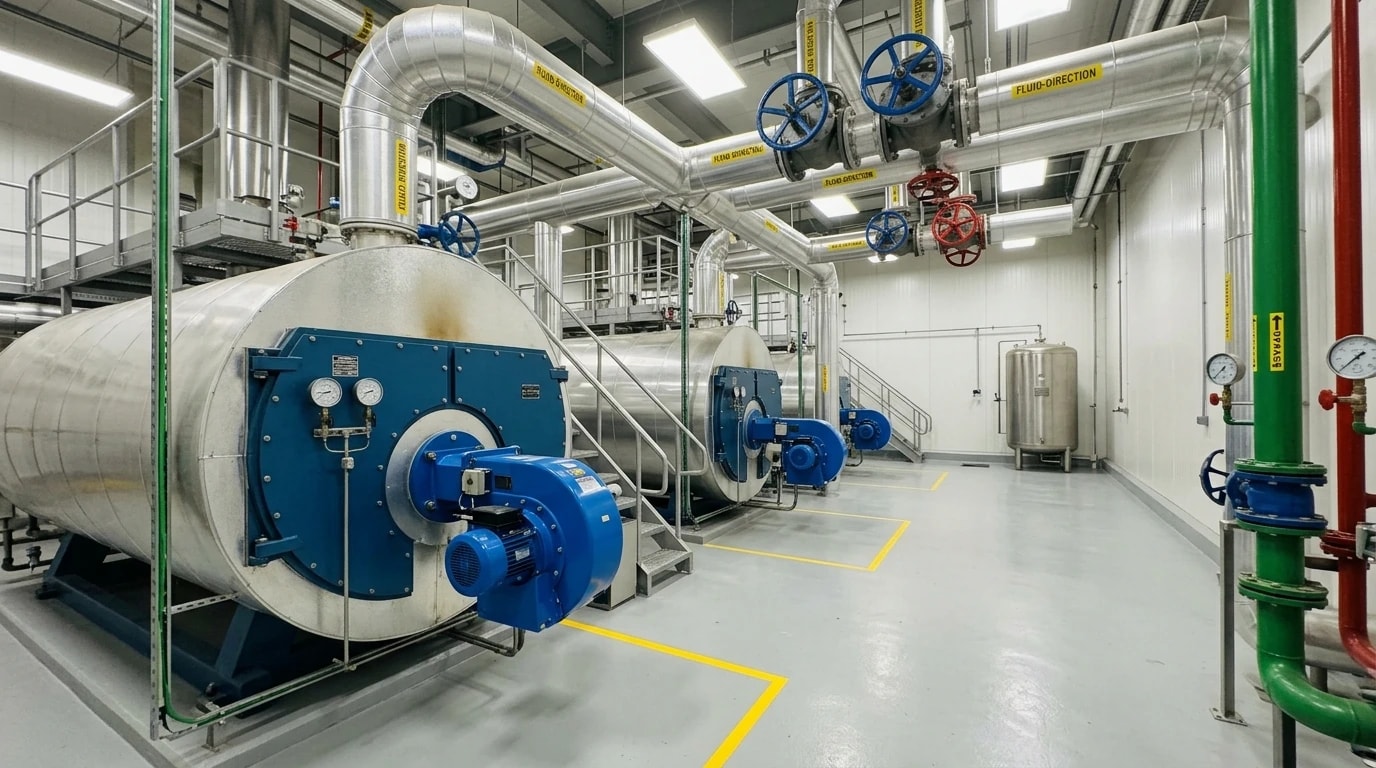
Operating a high-efficiency steam system requires the precise monitoring of several mechanical and thermodynamic variables. Stabilising these parameters protects equipment life and reduces fuel consumption.
Achieving a High Steam-to-Fuel Ratio
The steam-to-fuel ratio is a direct measure of boiler thermal performance, representing the mass of steam generated per unit of energy consumed. For natural-gas-fired shell boilers, process engineers aim for an operational target of approximately 85 Lbs/Therm (or roughly 13.5 kilograms of steam per cubic metre of natural gas).
If the steam-to-fuel ratio falls below 75 Lbs/Therm, it indicates energy losses, such as boiler scaling, poor heat transfer or excessive blowdown rates.
| Operational Parameter | Unoptimised Food Steam Plant | Optimised Food Steam Plant (Target Benchmark) |
|---|---|---|
| Steam-to-Fuel Ratio | 70 to 75 Lbs/Therm | Roughly 85 Lbs/Therm |
| Boiler Flue Gas Excess Oxygen | Above 6 per cent or under 2 per cent | 3 per cent to 4 per cent |
| Condensate Recovery Rate | Under 60 per cent | Above 85 per cent |
| Boiler Blowdown Control | Manual, scheduled basis | Automated, TDS sensor-driven |
| Steam Quality (Dryness Fraction) | Below 0.90 (Wet steam) | Above 0.95 (Dry steam) |
| Flue Gas Exhaust Temperature | Above 220°C | Below 140°C (with Economiser) |
Managing Boiler Flue Gas Excess Oxygen Levels
Combustion efficiency relies on maintaining the correct ratio of air to fuel inside the burner.
- Too much air: Excess air acts as a heat sink, drawing energy away from the boiler water and carrying it out of the flue stack.
- Too little air: Incomplete combustion occurs, producing toxic carbon monoxide and soot that coats boiler tubes, reducing heat transfer.
- Benchmark: Modern oxygen-trim control systems should keep excess oxygen levels in the flue gas strictly between 3 per cent and 4 per cent across the burner's firing range.
Minimising Steam Distribution Pressure Drops
A common operational error is running steam boilers at low pressure to save energy. However, steam at lower pressures has a higher specific volume, meaning it requires larger pipe diameters to distribute the same mass flow.
Operating boilers at their maximum design pressure reduces the specific volume of the steam, permitting smaller distribution pipework and minimising heat loss. It also ensures that steam is delivered dry to critical processes. Pressure-reducing valves should only lower the pressure at the point of use, immediately prior to heat exchangers or pasteurisers.

Identify where your plant is losing energy and quantify the savings potential — our audits map every heat source, sink, and waste stream in your facility.
EnerTherm's 7-Step Industrial Energy Audit Methodology
Addressing energy efficiency as a primary operating expense requires a structured, scientific approach. EnerTherm Engineering utilises a proprietary 7-step audit methodology to systematically identify, quantify and implement energy reduction measures without causing plant downtime.
Step 1 to 3: Scoping, Instrumentation and Baselining
The audit begins with a comprehensive scoping phase:
- Initial Consultation: Engineering teams collaborate with plant managers to establish the audit boundaries, define the utility profiles and align the audit timeline with production schedules to avoid disruptions.
- On-Site Assessment: Field engineers deploy portable, high-precision instrumentation directly onto active lines. Portable power analysers measure the electrical profiles of major feed pumps and burner fans. Consultants use ultrasonic leak detectors to test the operation of steam traps, and thermal imaging cameras inspect piping insulation, valves and flanges to locate radiation losses.
- Data Analysis: The collected thermal and electrical measurements are cross-referenced with historic utility billing data and production records. This step establishes a precise, baseline utility profile, accounting for seasonal variations in production volumes.
Step 4 and 5: Opportunity Modelling and Financial Engineering
With the baseline data established, the audit transitions to solution engineering:
- Opportunity Modelling: Thermodynamic modelling tools simulate potential modifications. These include heat recovery loops, flash steam capture systems and flue-gas-to-water heat exchangers (economisers).
- Report and Investment Case Preparation: Engineering findings are compiled into a comprehensive, board-ready investment case. Each proposed upgrade is detailed with capital cost estimations, projected fuel savings, Net Present Value (NPV), Internal Rate of Return (IRR) and simple payback periods.
Step 6 and 7: Operational Support and IPMVP Verification
The audit methodology extends beyond the reporting phase to guarantee performance:
- Implementation Support: Engineers oversee the procurement, installation and commissioning of the selected energy conservation measures. Work is scheduled during planned maintenance shutdowns to ensure zero production downtime.
- Ongoing Measurement and Verification (M&V): Savings are quantified and verified in accordance with the International Performance Measurement and Verification Protocol (IPMVP). Continuous data monitoring ensures that the target of up to 18 per cent energy savings and carbon reduction benchmarks are fully realised and maintained.
High-Impact Engineering Interventions for Food Processors
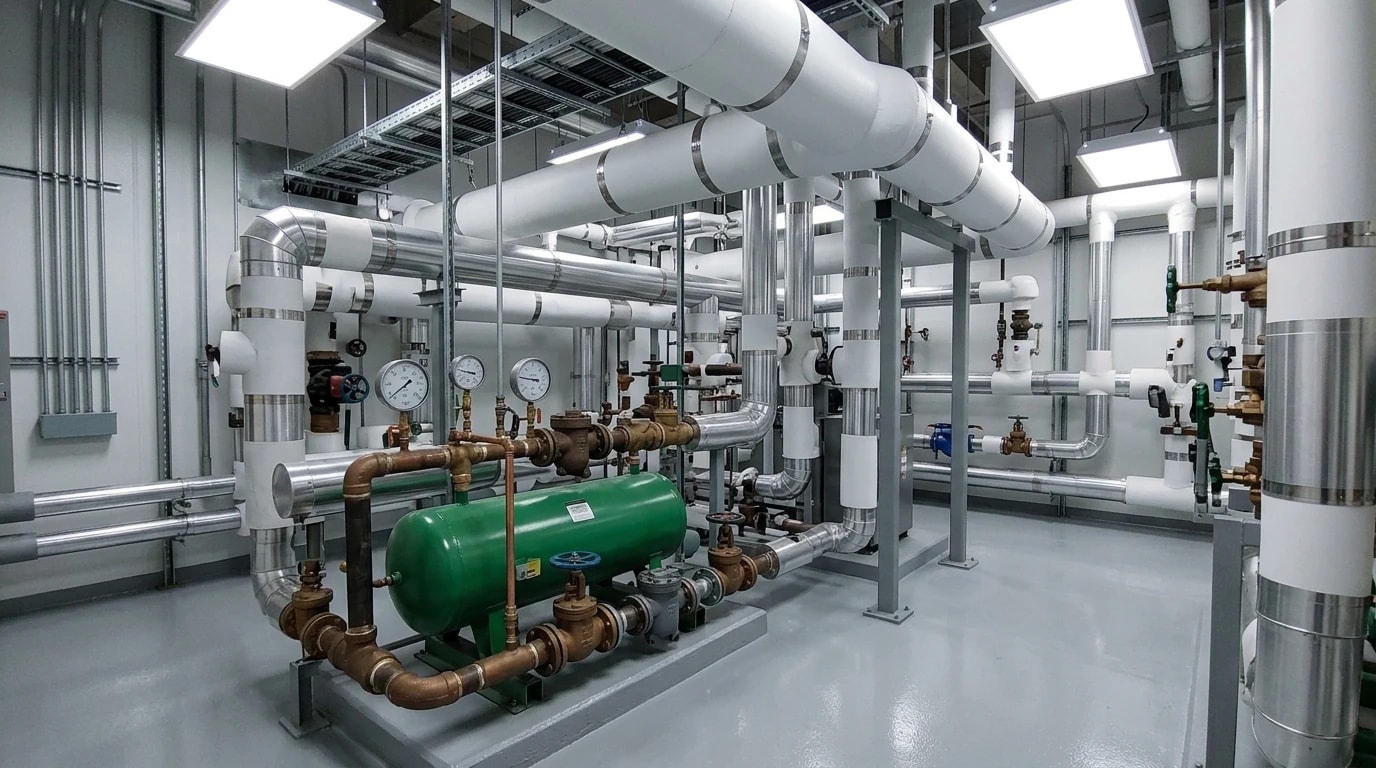
Executing a food industry steam system optimisation plan involves implementing targeted engineering interventions across the generation, distribution and heat-recovery stages of the steam cycle.
Advanced Condensate Recovery and Flash Steam Upgrades
Every kilogram of steam that condenses in a heat exchanger retains significant sensible heat, usually at a temperature of 90°C to 100°C. Returning this hot condensate to the boiler hotwell reduces the fuel required to heat cold make-up water, directly lowering energy bills.
When high-pressure condensate is discharged to a lower pressure, a portion of it re-evaporates as flash steam. Instead of venting this flash steam to the atmosphere, process engineers route it to a flash vessel to supply low-pressure heat to processes like bulk tank jacket heating or CIP water pre-heating.
Smart Boiler Blowdown and TDS Management
As water evaporates to form steam, dissolved solids in the feedwater remain behind and concentrate in the boiler shell. If Total Dissolved Solids (TDS) levels rise too high, priming and foaming occur, causing liquid water carryover into the steam main. This carryover ruins the dryness fraction and damages downstream control valves.
Manual blowdown schemes, where operators discharge hot boiler water on a timed basis, are highly inefficient. Replacing manual blowdown with automated TDS sensor-driven blowdown systems ensures that hot water is discharged only when TDS limits are exceeded. Installing a heat exchanger on the blowdown line allows the waste heat to pre-heat cold make-up water, capturing valuable energy before the water is sent to the drain.
Flue Gas Economiser Integration
Boiler flue gases exit the combustion chamber at temperatures often exceeding 200°C. An economiser, which is a gas-to-water heat exchanger installed inside the boiler exhaust stack, recovers this heat to pre-heat cold feedwater before it enters the boiler.
As a general rule, raising the boiler feedwater temperature by 6°C reduces fuel consumption by approximately 1 per cent. Economisers are highly effective in large-scale food plants with steady boiler load profiles, such as breweries or dairies.
Financial and Environmental Return on Investment Analysis
The technical viability of any energy efficiency project must be matched by a strong, board-ready financial case to secure corporate capital.
Board-Ready Investment Case Modelling
Corporate financial boards typically evaluate utility projects based on capital efficiency and risk mitigation:
- Simple Payback: Many low-cost interventions, such as installing insulation jackets on valves, repairing steam trap leaks and implementing oxygen-trim burner controls, deliver a simple payback of under 18 months. Major capital investments, including economisers and automated blowdown heat recovery systems, typically pay back within 2 to 3 years.
- Net Present Value (NPV) and Internal Rate of Return (IRR): Steam system upgrades represent low-risk investments with predictable returns. Over a standard 10-year equipment lifecycle, these thermal improvements yield an IRR exceeding 25 per cent, making them highly competitive against typical production capacity expansion projects.
Carbon Reduction Roadmaps and Scope 1 Decarbonisation
With the UK food and beverage manufacturing sector working towards stringent Net Zero emissions targets, reducing Scope 1 fossil fuel emissions is a corporate priority.
A typical food industry steam system optimisation project executed under the EnerTherm framework reduces fuel gas use by up to 18 per cent, yielding an average annual reduction of 850 tonnes of CO₂ emissions. This saving directly supports corporate environmental, social and governance (ESG) reporting, strengthens compliance with Climate Change Agreements and insulates food manufacturers from rising carbon costs and energy market volatility.
This article reflects the independent analysis and editorial opinion of EnerTherm Engineering. Product names, trademarks, and brands mentioned belong to their respective owners. EnerTherm Engineering is not affiliated with, endorsed by, or a licensee of any third-party software or product mentioned unless explicitly stated.

Technical Manager — EnerTherm Engineering
John Naranjo is Technical Manager at EnerTherm Engineering, bringing specialist expertise in chemical and environmental engineering. He recently led the implementation of Omni Vision, EnerTherm's real-time energy and utility monitoring platform. He holds an MSc in Environmental Engineering from the University of Huelva and a BSc in Chemical Engineering, with memberships in both the Energy Institute and IChemE.
