How Heat Mass Balance Finds Hidden Plant Energy Losses
Validated material and energy flows expose losses, bottlenecks and compliance gaps
A heat mass balance is an engineering account of every material stream and its associated thermal energy entering, leaving, accumulating within or lost from a defined process boundary.
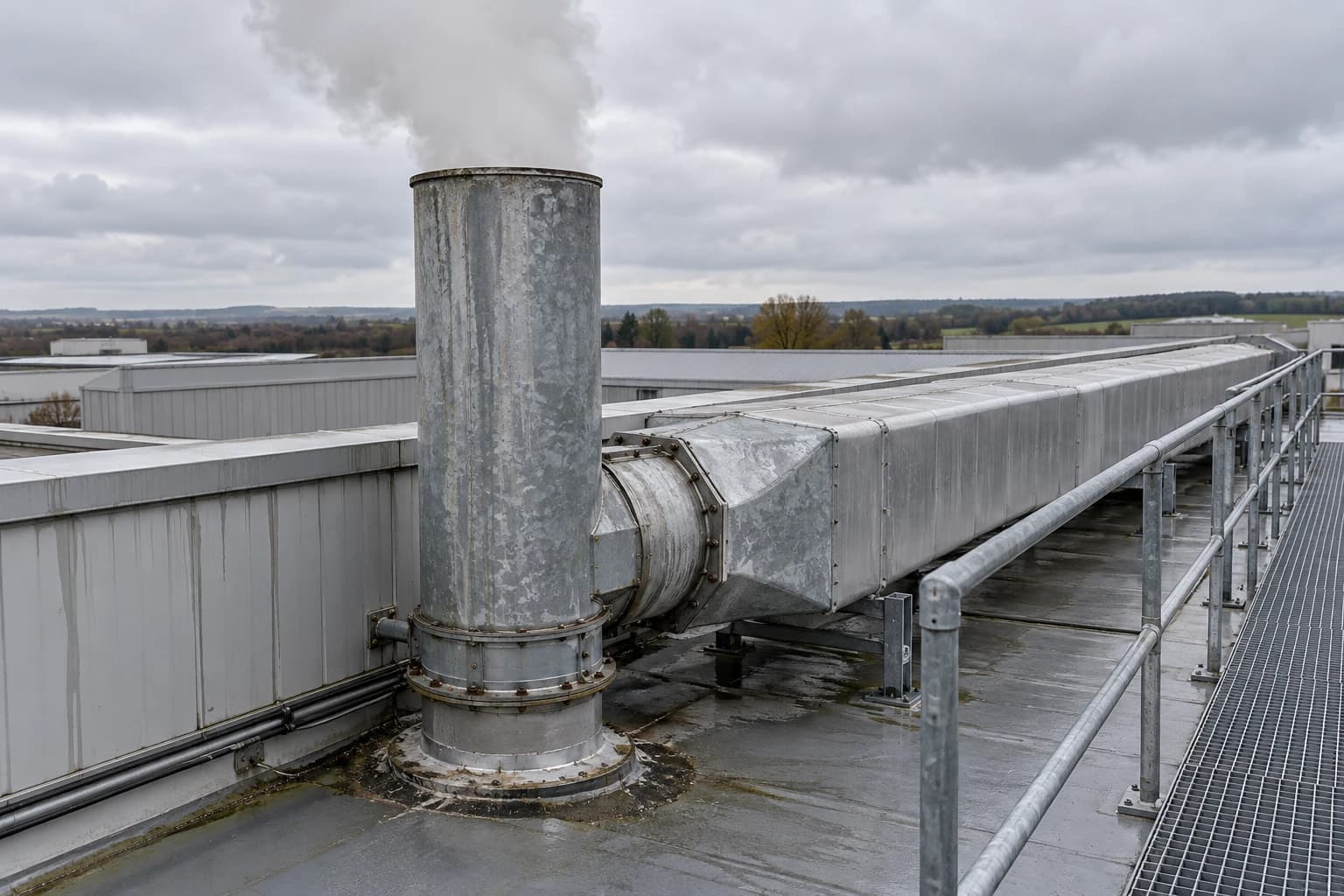
For a UK factory facing rising utility costs, it often exposes losses that meter data alone cannot explain. Steam demand may climb while production remains flat. A dryer may meet its throughput target while sending excessive water vapour and sensible heat to atmosphere. A distillation train may appear stable on the control system while condensate losses, poor heat recovery or off-spec feed composition inflate fuel use.
Heat and mass balance modelling turns these observations into quantified engineering evidence. It establishes what enters a process, what leaves it, where energy changes form and where the numbers fail to reconcile. The residual often signals an unmetered utility load, a leaking steam trap, unexpected evaporation, a process bypass, a faulty flow measurement or an incorrect operating assumption.
What does a heat mass balance measure?
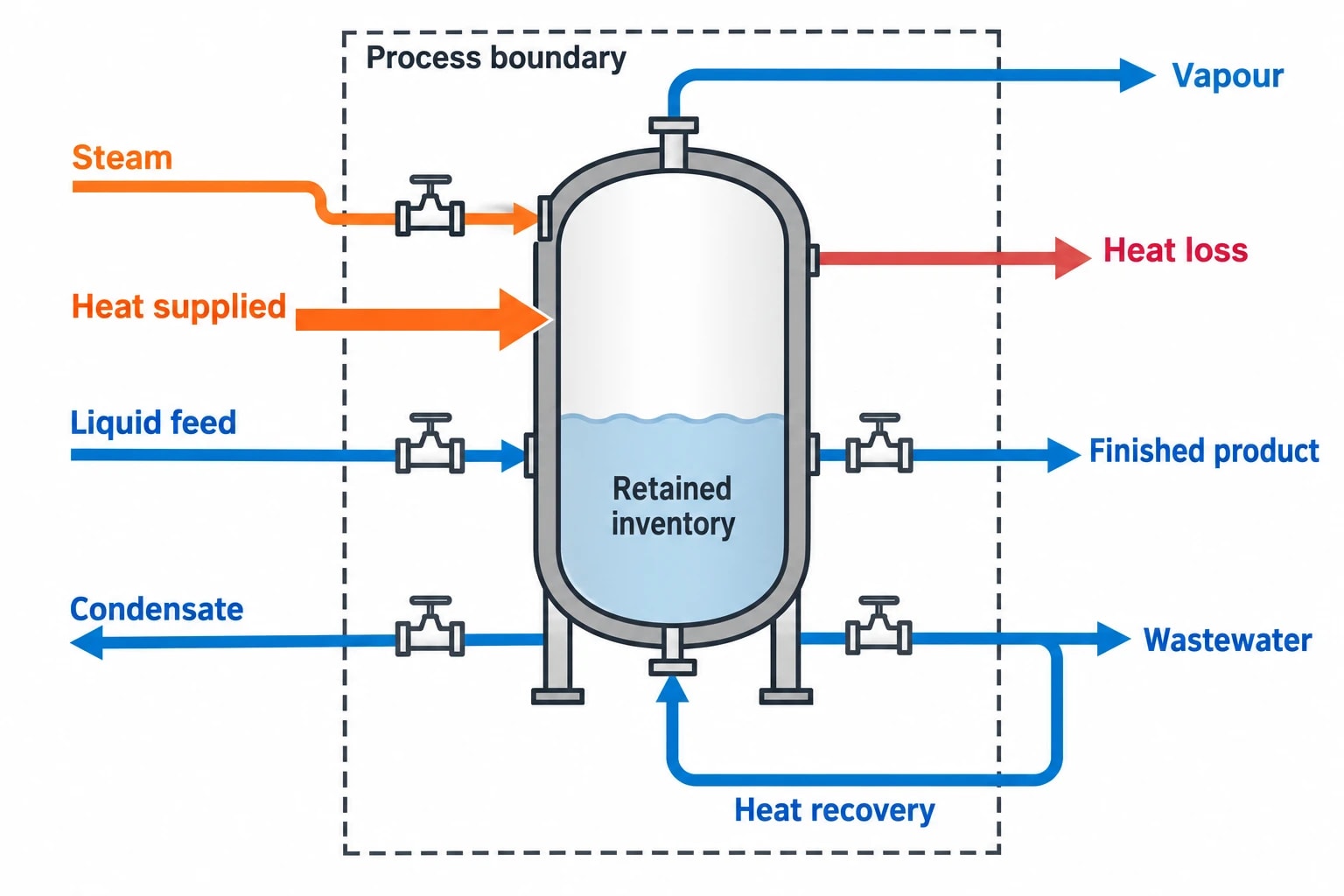
A heat mass balance examines conservation of mass and energy across a selected process boundary. The boundary may be a heat exchanger, dryer, evaporator, pasteuriser, reactor, boiler house, utility system or production line.
The mass balance tracks each relevant material entering and leaving the boundary. This can include product, water, solvents, air, fuel, steam, condensate, purge streams, emissions and solid residues. The energy balance assigns thermal and mechanical energy to those streams, alongside heat supplied by utilities and heat rejected to the surroundings.
The mass side of the balance
Mass cannot disappear. If a process receives 20 tonnes of liquid feed and discharges 18 tonnes of finished product, the remaining mass must be accounted for as vapour, wastewater, retained inventory, residue, sampling loss or another identified stream.
This principle is particularly useful where moisture drives energy consumption. Food drying, pulp production, evaporation, crystallisation and solvent recovery all require accurate water or solvent accounting. A small error in moisture content can create a large error in predicted steam demand because phase change requires substantial energy.
A useful mass balance records:
- Flowrate and totalised quantity
- Composition, including moisture, solids, solvent or key species
- Temperature and pressure
- Density where volumetric measurement requires conversion
- Sampling basis and laboratory uncertainty
- Inventory changes in tanks, vessels and pipelines
The heat side of the balance
The heat balance records energy carried by process streams and supplied or removed by utilities. It accounts for sensible heating and cooling, latent heat during evaporation or condensation, reaction heat where relevant, electrical input, fuel combustion, shaft work, heat recovery and heat loss.
Thermal modelling distinguishes between a process that needs energy and one that wastes it. A vessel may require steam to maintain a setpoint, but the balance can reveal whether heat enters the product, leaves with exhaust air, escapes through insulation or returns as condensate at a useful temperature.
A well-constructed balance should reconcile within an uncertainty range justified by the quality of available measurements. Engineers should investigate a persistent unexplained imbalance before using model outputs as a basis for capital investment.

Map every energy and material flow in your process with detailed heat and mass balance calculations — the foundation for any optimisation or design project.
Why hidden energy losses escape normal plant reporting
Site energy reports commonly show gas, electricity, steam generation and production output. These figures establish the scale of consumption, but do not identify the physical route taken by each kilowatt-hour.
A heat mass balance links utility data to process conditions. It tests whether measured utility use matches the heat duty implied by product flow, composition, temperature and phase change. Where it does not, the investigation becomes specific.
Common losses that a balance can expose
Hidden losses take different forms across industrial sectors, but several patterns recur.
| Balance finding | Likely physical cause | Engineering investigation |
|---|---|---|
| Steam input exceeds calculated process duty | Steam leakage, failed traps, poor condensate return, uninsulated surfaces | Survey steam and condensate system, verify pressure and trap condition |
| Exhaust carries more heat or moisture than expected | Excess air, high exhaust temperature, poor dryer control, air leakage | Measure exhaust temperature, humidity, flow and oxygen where applicable |
| Product mass does not reconcile | Unmeasured evaporation, waste, sampling error, incorrect moisture data | Verify weighing systems, laboratory methods and all discharge routes |
| Heat exchanger duty is below expectation | Fouling, bypassing, incorrect flow, temperature measurement error | Review temperature approach, pressure drop and flow distribution |
| Cooling duty rises without higher output | Refrigeration load, hot utility ingress, failed valves, process instability | Examine cooling-water, chilled-water and process temperature trends |
| Condensate quantity is lower than steam input | Flash steam loss, traps discharging to drain, vent losses, missing return lines | Map condensate destinations and measure flash recovery opportunities |
The balance also separates operational loss from design limitation. A heat exchanger may have insufficient area for current production, or sufficient area but poor performance because fouling has increased thermal resistance. These conditions require different action.
The value of reconciling conflicting data
Plants rarely start with perfect data. Flowmeters drift. Steam flow may be inferred from a boiler meter shared by several users. Product moisture results may arrive after the shift. Tank levels can change during a campaign.
Engineers reconcile data rather than accepting each measurement as exact. The process begins with instrument ranges, calibration records, laboratory methods and time alignment. It gives greater weight to high-confidence measurements while testing whether uncertain values can reasonably explain the gap.
This discipline prevents a familiar error: installing equipment to solve a loss caused by an inaccurate flow transmitter or an unrecognised change in raw-material composition.
Building a heat mass balance that engineers can trust
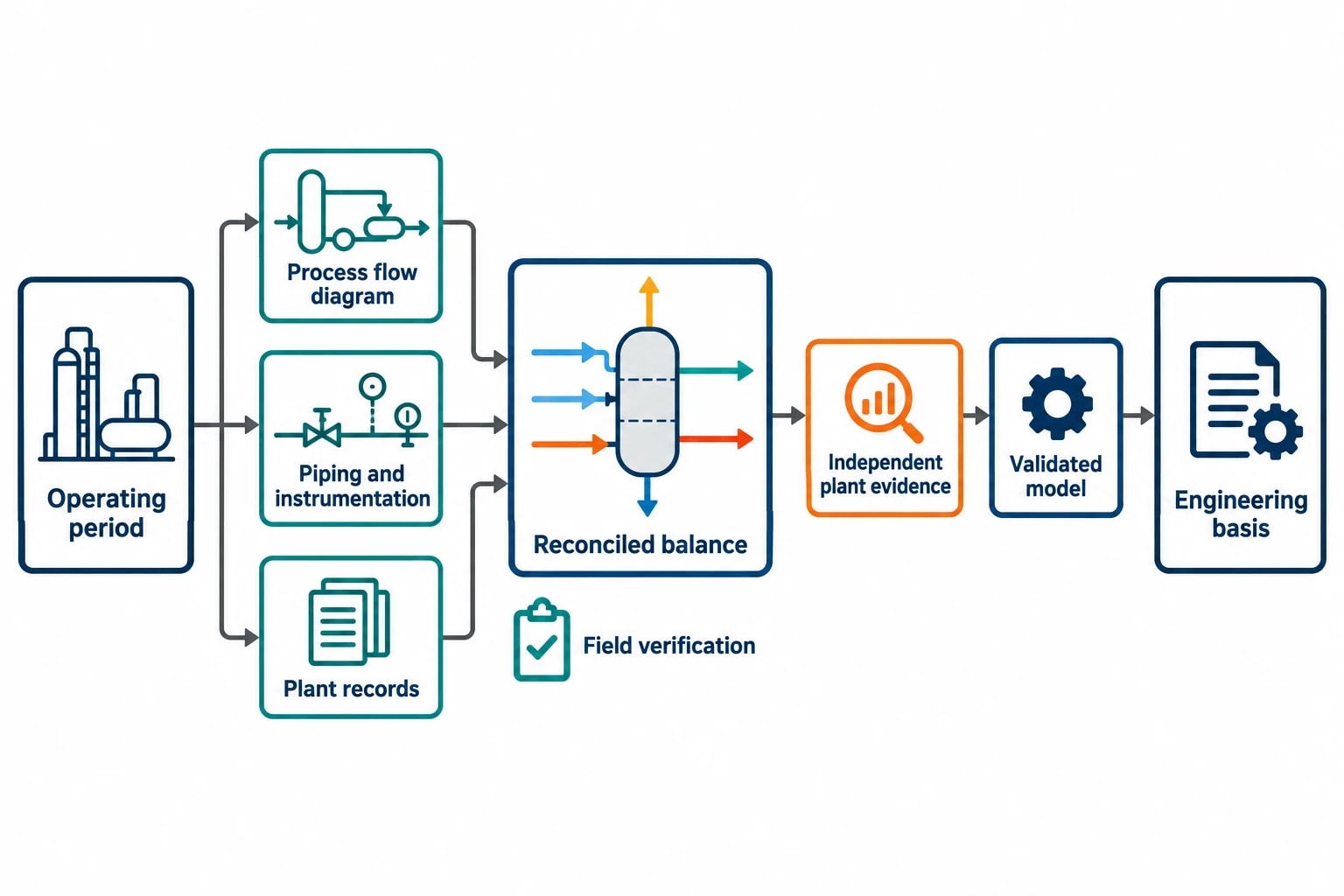
A useful model is rooted in the operating plant rather than a generic process diagram. It must describe a defined operating period and account for the conditions that applied during that period.
Set the boundary and operating case
Start with a question that has a physical boundary. Examples include:
- Why has steam use per tonne increased on a sauce line?
- How much heat does a spray dryer reject through its exhaust?
- Can a refinery preheat train recover more crude-feed duty?
- What utility duty will a pharmaceutical vessel require after a formulation change?
The operating case needs a clear time basis. A steady production period is often preferable to a weekly average because product grade changes, cleaning cycles, start-ups and shutdowns can distort the result. Batch processes need a batch-level balance with defined charging, reaction, hold, discharge and cleaning stages.
Collect the right plant evidence
Piping and instrumentation diagrams establish routes, valves, instruments and utility connections. Process flow diagrams provide the high-level equipment and stream structure. Historical trends, laboratory records, boiler data, fuel invoices and maintenance logs add operating context.
Field verification remains essential. Plant modifications can leave drawings behind reality. A temporary hose, an open bypass, a vent routed to drain or a duplicate condensate connection may undermine an otherwise careful model.
A practical site survey should confirm:
- Actual line routing and isolation positions
- Meter locations, ranges and maintenance status
- Utility pressure and temperature at the user, rather than only at the boiler house
- Vent, drain, purge and sampling arrangements
- Product and utility conditions during representative production
- Batch timing and changes in vessel inventory
Choose the right model resolution
A screening balance can identify dominant losses quickly. A detailed model may need species-level composition, phase equilibrium, reaction data, heat-transfer performance and equipment constraints.
The resolution should match the decision. A preliminary insulation project may require accurate surface temperature and operating hours. A new evaporator train requires a detailed representation of feed composition, boiling-point elevation, vapour recompression, condensate handling and fouling allowance.
EnerTherm Engineering applies an 11-step engineering methodology to move from data acquisition and plant evidence to validated steady-state or dynamic simulations. The final engineering basis can include a process flow diagram with stream tables, a reconciled heat and mass balance, and Sankey energy mapping. This gives operations, maintenance and investment teams a common technical reference rather than competing spreadsheet assumptions.
Validate before recommending action
Validation compares modelled conditions with independent plant evidence. Engineers can compare a calculated evaporator duty with steam flow, condensate flow and feed concentration data. A discrepancy may identify a missing stream or a real operational problem.
The validation record should state:
- The operating period represented
- Data sources and their uncertainty
- Assumptions about heat loss, composition and inventory
- Measurements excluded and the reason
- Remaining balance closure error
- Limits on the use of the model
This record matters when an early study develops into a project specification or capital request.
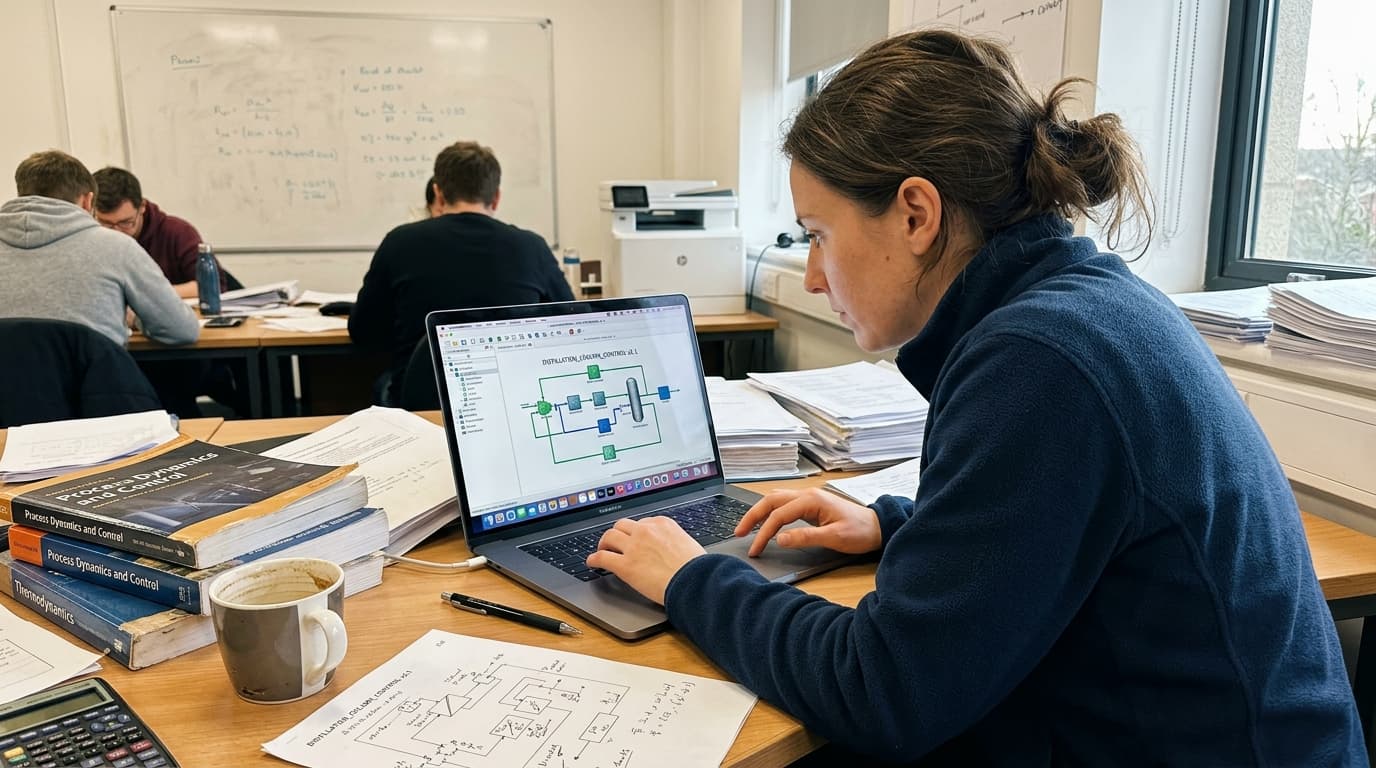
Map every energy and material flow in your process with detailed heat and mass balance calculations — the foundation for any optimisation or design project.
Where heat mass balance modelling finds energy savings
A heat mass balance does not prescribe a particular technology. It identifies the thermodynamic opportunity and the constraints around it. Productive opportunities often sit at interfaces between process units and utility systems.
Food, drink and milk processes
In food manufacturing, the balance often centres on water. Heating, cooling, evaporation, cleaning and drying depend on product moisture, solids concentration and recovery of heat from outgoing streams.
Commission Implementing Decision (EU) 2019/2031 sets BAT conclusions for food, drink and milk industries under the Industrial Emissions Directive. Its energy-efficiency techniques include regenerative heat exchange in pasteurisation, where incoming milk is preheated by hot milk leaving the pasteurisation section. It also identifies multi-stage drying in powder production, combining spray drying with a downstream dryer such as a fluidised-bed dryer.
A balance tests whether these concepts suit the actual duty. It quantifies available temperature difference, flow timing, contamination constraints, cleaning requirements and heat rejected in exhaust air. It can also show when poor heat recovery results from fouling or flow imbalance rather than insufficient heat-exchanger area.
Chemical and refining plants
Chemical plants and refineries contain interacting heat sources and sinks. Reactor feeds, distillation overheads, column bottoms, furnace flue gas, condensers and utility headers can produce numerous potential recovery matches.
The balance establishes the duty, temperature level, pressure and composition of each stream before a heat-exchanger-network study begins. It also shows the cost of bypassing hot streams, overcooling products before reheating them, or venting flash steam that could serve a lower-pressure user.
Reactive systems need additional care. Reaction enthalpy, composition changes and phase behaviour can affect both mass and heat closure. Process engineering teams often use simulation platforms such as Aspen Plus, Aspen HYSYS and DWSIM where the process requires detailed property methods and phase-equilibrium calculations. The selected property method must reflect the materials and operating conditions, especially for hydrocarbon, electrolyte or non-ideal chemical systems.
Pulp, paper and drying operations
Dryer sections show why a mass balance is inseparable from an energy balance. The quantity of water removed determines latent heat requirement, while sheet temperature, hood conditions, ventilation and condensate system performance determine how efficiently the duty is supplied.
The model should distinguish moisture removed from the sheet from dilution water, leaks and ventilation air. It should also map exhaust conditions, condensate pressure, flash steam and heat available for incoming air or water. This identifies whether the priority is dryer control, heat recovery, steam and condensate repair, hood performance or a change in operating target.
Pharmaceutical facilities
Pharmaceutical heat mass balance work must fit within the quality system. EU GMP EudraLex Volume 4, Annex 15 applies qualification and validation principles to facilities, utilities, equipment and manufacturing processes. Manufacturers must document planned changes that may affect product quality and assess their effect on validated status or control strategy.
A model supporting a change to vessel heating, clean-steam use, purified-water temperature or drying conditions therefore needs defined assumptions, traceable source data and documented impact assessment. The engineering case must address process capability and product-quality constraints alongside energy performance.
Heat mass balance and UK energy compliance
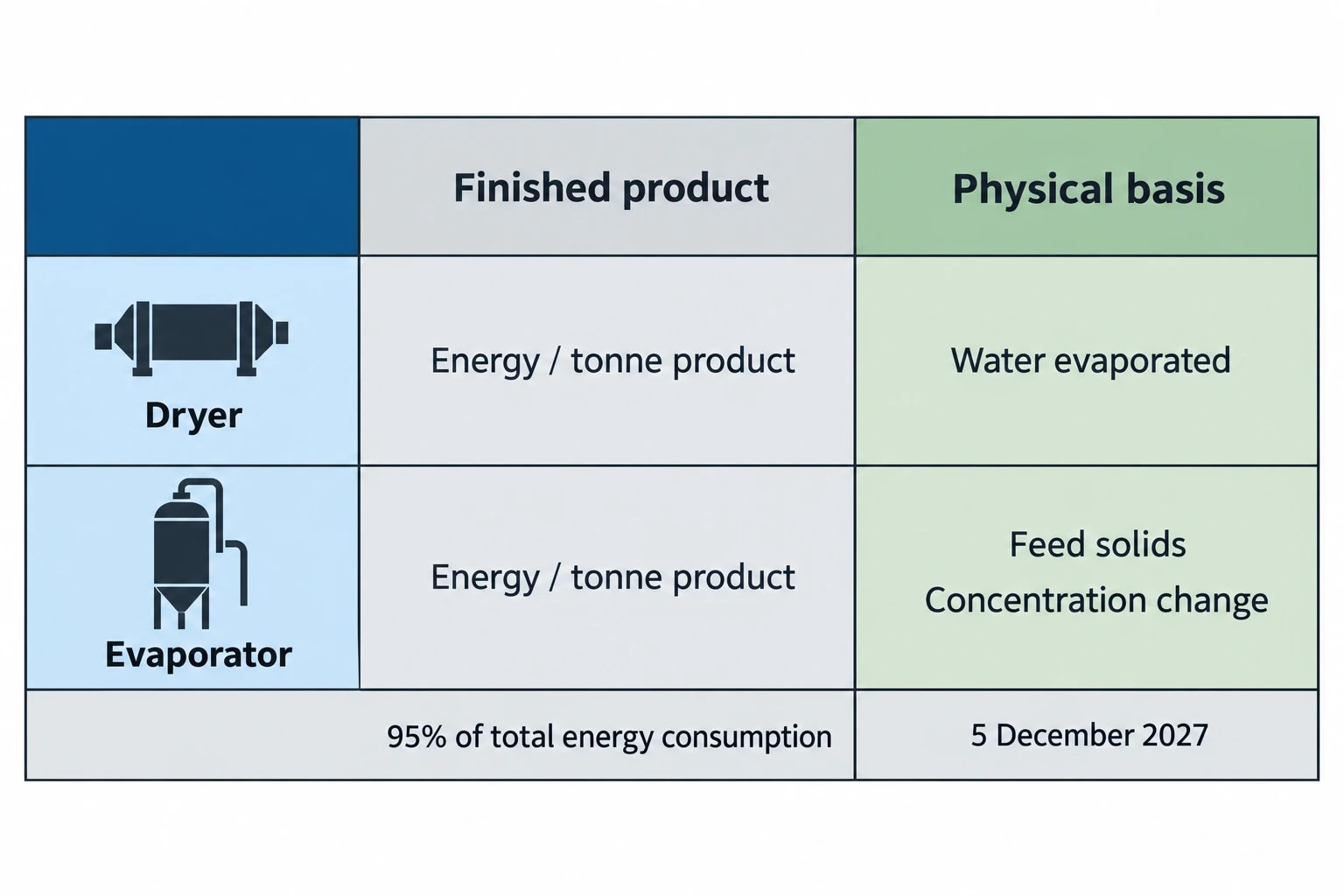
For qualifying organisations, ESOS Phase 4 adds urgency to better process energy evidence. The Energy Savings Opportunity Scheme requires organisations to identify areas of significant energy consumption accounting for at least 95% of total energy consumption. The notification of compliance deadline is 5 December 2027.
A heat mass balance can strengthen audit evidence for energy-intensive industrial processes. It moves the assessment from a broad utility total towards documented savings opportunities, their operating basis and their technical dependencies.
ISO 50001:2018 provides a framework for energy management systems and supports the use of energy performance indicators and energy baselines. A validated balance can improve these indicators because it normalises performance against relevant production conditions. Energy per tonne of product has limited meaning if feed moisture, product grade, ambient conditions or batch cycle vary materially.
For example, a dryer’s energy indicator may need to relate fuel or steam use to water evaporated, not solely tonnes of finished product. An evaporator may require a measure based on feed solids and concentration change. The balance supplies the physical variables needed to make those indicators credible.
Turning the model into an optimisation programme
The best balance studies produce an ordered engineering programme, not a list of generic ideas. Each opportunity should have a quantified duty, defined cause, technical constraint and verification method.
Prioritise by evidence and operability
The first actions often improve data and correct identifiable defects. These can include repairing leaks, returning condensate, correcting instrumentation, closing bypasses, cleaning fouled heat exchangers and adjusting process controls within approved limits.
Further measures may require process trials, hygiene review, hazardous-area assessment, design work or formal change control. Heat recovery schemes should be assessed for contamination risk, pressure drop, cleaning, turndown, availability and the destination for recovered heat.
Maintain the balance after the project
A model loses value if it remains a one-off report. Teams should update the balance after major operational changes, new equipment, raw-material changes or sustained deviations in energy intensity.
The strongest outcome is a living engineering baseline. It allows managers to compare present operation with a validated reference, test proposed changes before committing capital, and demonstrate whether an implemented measure delivered the expected energy reduction.
This article reflects the independent analysis and editorial opinion of EnerTherm Engineering. Product names, trademarks, and brands mentioned belong to their respective owners. EnerTherm Engineering is not affiliated with, endorsed by, or a licensee of any third-party software or product mentioned unless explicitly stated.

Senior Process Engineer — EnerTherm Engineering
Masab Javed is a Senior Process Engineer at EnerTherm Engineering with extensive expertise in chemical process design, decarbonisation, and sustainable industrial solutions. He holds an MSc from TUM School of Management and a BEng in Chemical Engineering from NUST, with experience spanning ammonia production, CO2 capture, and semiconductor manufacturing optimisation.
