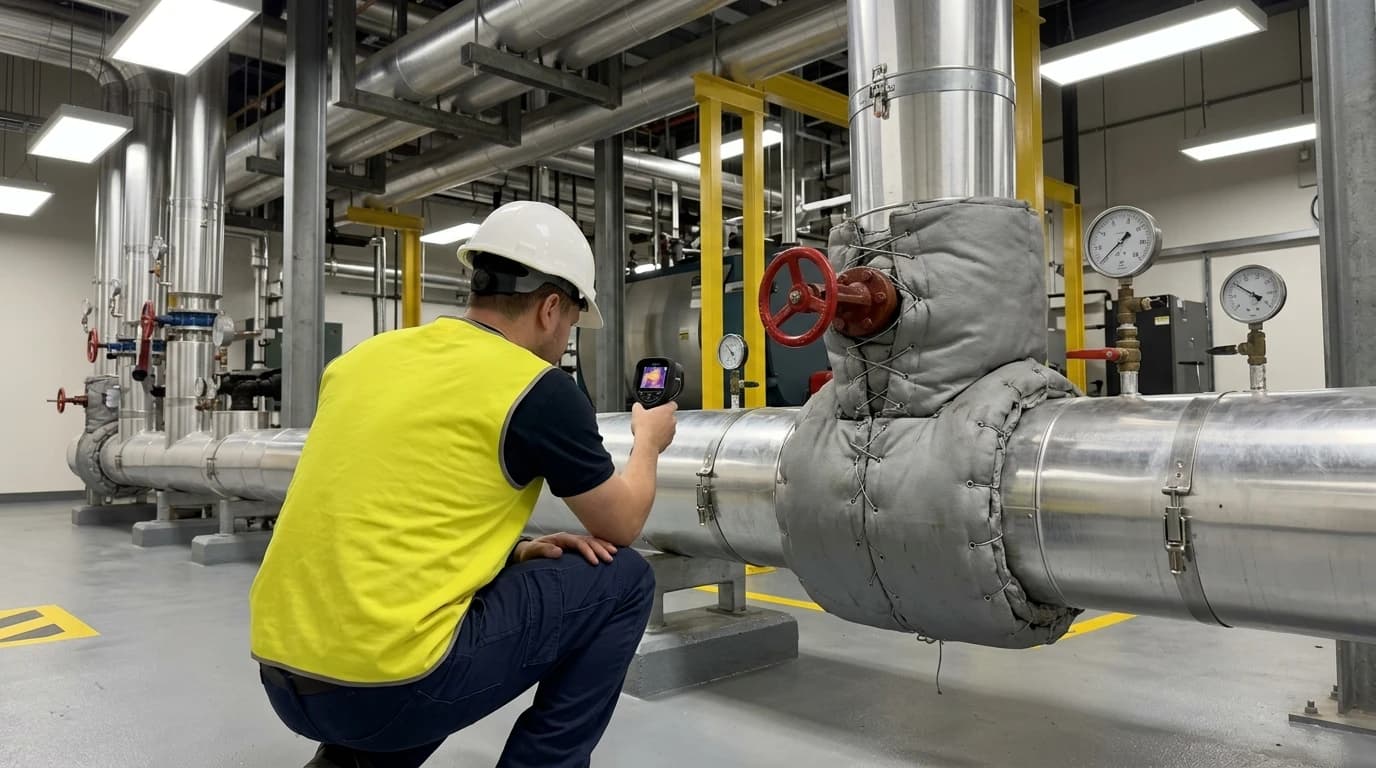
Industrial Decarbonisation Audits for ESOS Phase 4
Achieving ESOS Phase 4 compliance and cutting heat loss by up to 25% with BS EN 17956.
An industrial decarbonisation audit is a systematic engineering evaluation of a manufacturing plant's energy and process systems designed to identify deep carbon reduction pathways, optimise thermal efficiency and establish a compliant Net Zero transition roadmap. In the United Kingdom, where industrial processes contribute a significant portion of national greenhouse gas emissions, these audits serve as a critical mechanism for regulatory compliance and operational cost control. As energy-intensive sectors face escalating carbon taxes and stringent environmental mandates, understanding the technical execution and regulatory integration of these audits is paramount.
The implementation of the Energy Savings Opportunity Scheme (ESOS) Phase 4 marks a significant transition in how the UK government regulates industrial energy consumption. Rather than allowing companies to engage in passive reporting, the updated framework enforces a highly structured, action-oriented approach to carbon reduction. Large undertakings must move beyond basic energy accounting and adopt rigorous, thermal-focused auditing methodologies to identify and execute direct carbon mitigation strategies.
The Regulatory Driver: Aligning ESOS Phase 4 with Net Zero Deadlines
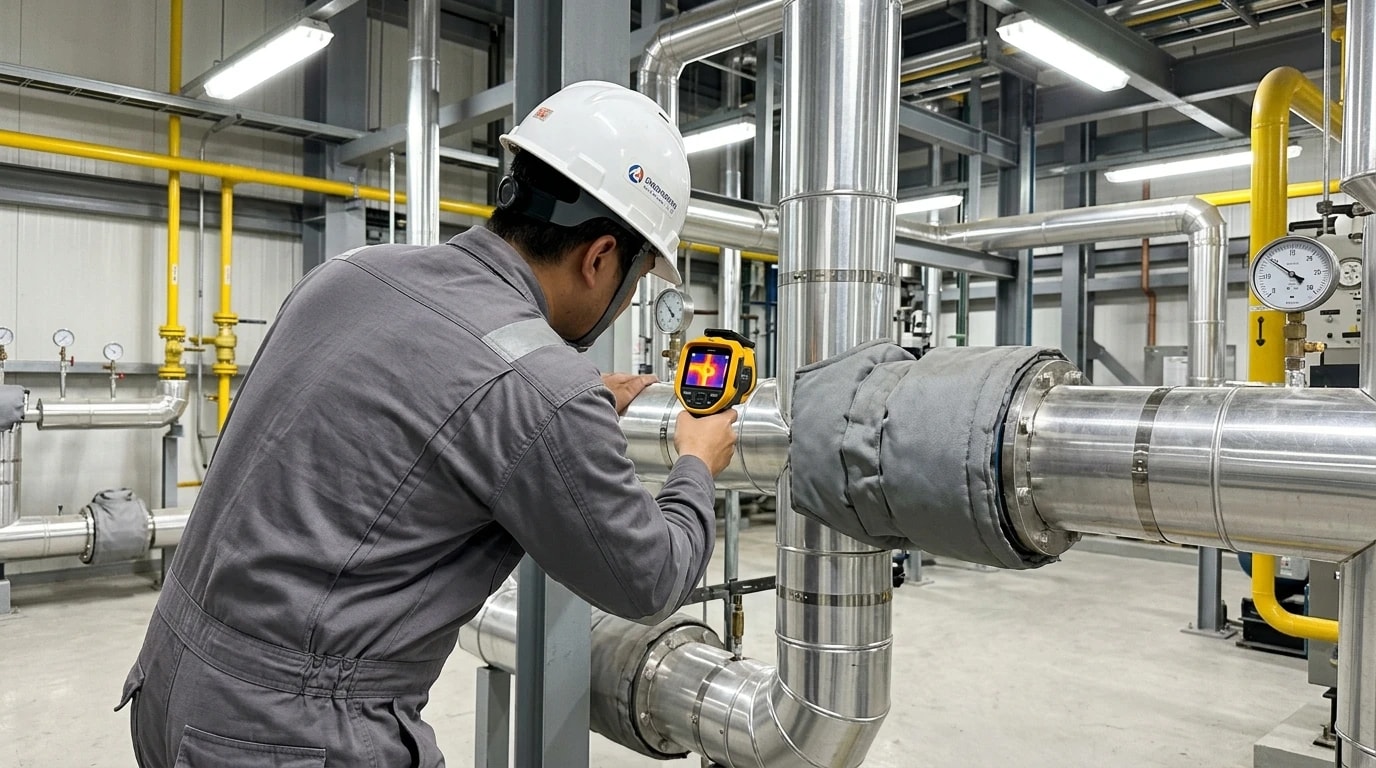
The Energy Savings Opportunity Scheme is a mandatory energy assessment scheme for large organisations in the UK. Administered by the Environment Agency, ESOS operates on a four-year compliance cycle. Phase 4 introduced substantial changes to the depth, scope and reporting criteria of audits, aligning corporate energy management directly with the UK's statutory Net Zero targets.
ESOS Phase 4 Scope and Mandatory Requirements
The qualification criteria for ESOS Phase 4 are determined on the qualification date of 31 December 2026. Organisations fall within the scope of Phase 4 if they qualify as a large undertaking. This includes any business registered or operating in the UK that meets either of the following criteria:
- Employs 250 or more people.
- Has an annual turnover exceeding £44 million and an annual balance sheet total exceeding £38 million.
For organisations within scope, the compliance deadline is 5 December 2027. Organisations must audit at least 95% of their total energy consumption, maintaining the strict threshold introduced in Phase 3, which reduced the de minimis exclusion to 5% (down from the 10% allowed in Phase 2). This scope ensures that previously overlooked energy streams, such as ancillary thermal utilities, transport fuel and minor process inputs, undergo rigorous engineering evaluation.
Transitioning from Passive Energy Auditing to Active Action Plans
In previous ESOS phases, many organisations treated the compliance submission as a passive, administrative exercise, often filing recommendations without committing to capital deployment. Phase 4 alters this dynamic by requiring organisations to publish formal, board-approved energy-saving and decarbonisation action plans.
These action plans must include concrete commitments, clear implementation timelines and verified energy intensity metrics (such as kWh per unit of manufacturing output or kWh per tonne of product). Following the submission of the action plan, organisations must submit mandatory annual progress updates. The Environment Agency monitors these reports, and failure to demonstrate progress or provide accurate energy intensity data can lead to substantial financial penalties and public non-compliance disclosure.
While the full integration of mandatory Net Zero assessments has been postponed to Phase 5, the Department for Energy Security and Net Zero (DESNZ) has introduced voluntary Net Zero standards for Phase 4. Forward-looking manufacturers utilise PAS 51215-1:2025 and PAS 51215-2:2025. These standards provide the process specifications and lead assessor competencies required to deliver combined energy and decarbonisation assessments, ensuring that current audits are fully compatible with future compliance requirements.
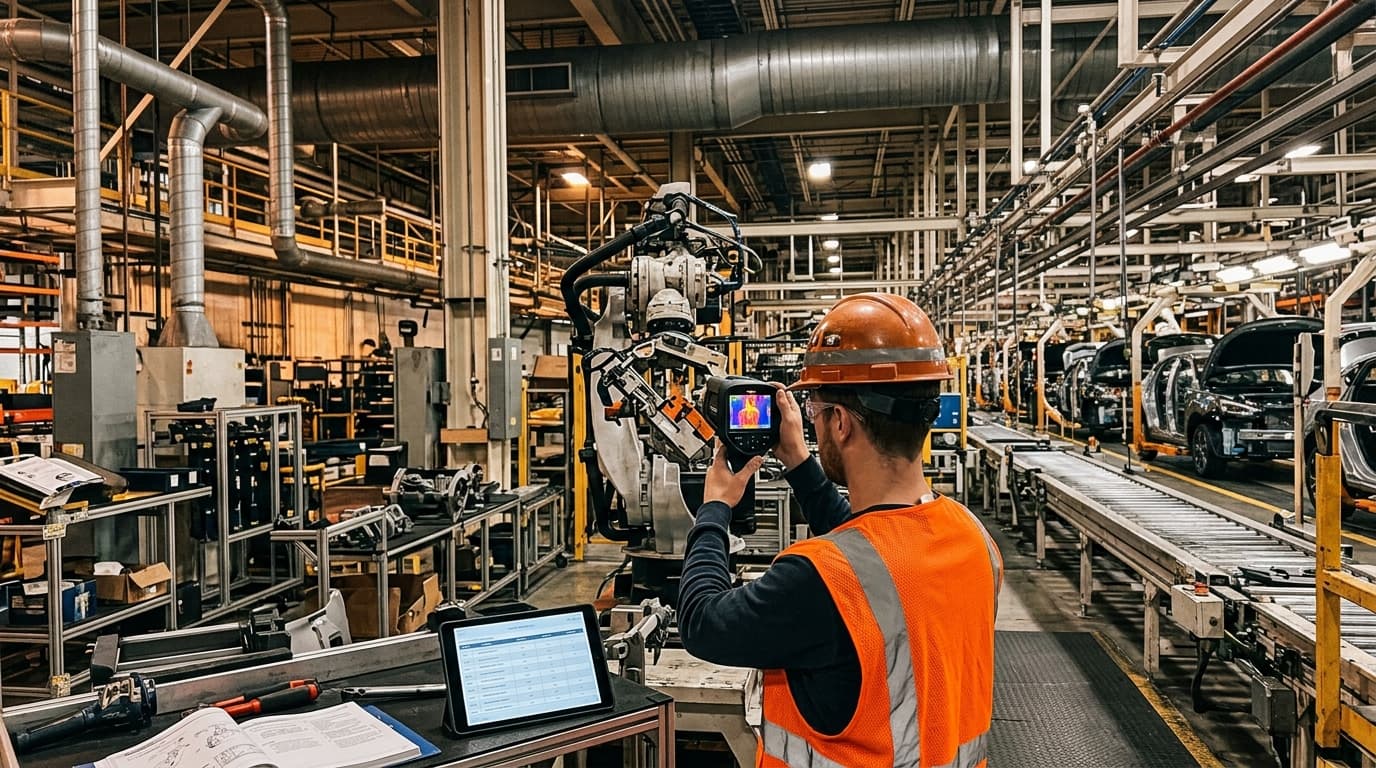
Identify where your plant is losing energy and quantify the savings potential — our audits map every heat source, sink, and waste stream in your facility.
Essential Standardisation Frameworks for Industrial Decarbonisation Audits
An effective industrial decarbonisation audit cannot rely on ad-hoc engineering assessments. It must be structured around established international and British standards to ensure data traceability, process safety and regulatory compliance.
Incorporating BS EN 16247-1 and ISO 50002-1:2025
Technical-focused decarbonisation audits build upon the foundational principles of energy auditing defined by BS EN 16247-1:2022 (general requirements), BS EN 16247-3:2022 (industrial processes) and the newly updated BS ISO 50002-1:2025 framework. Together, these standards establish a consistent, evidence-based process for planning, executing and documenting energy audits.
The BS ISO 50002-1:2025 standard provides general requirements and guidance for conducting energy audits, emphasising a chronological and iterative process:
By adhering to BS EN 16247-1:2022, BS EN 16247-3:2022 and BS ISO 50002-1:2025, auditing engineers ensure that all energy inputs are accurately balanced, measurement errors are quantified and recommendations are based on verifiable thermodynamic and economic calculations.
Long-Term Transition Strategies Under BS EN 18074:2025
For heavy processing plants in sectors like chemical manufacturing, paper and pulp, and food and beverage, short-term efficiency gains represent only the first stage of decarbonisation. Long-term corporate strategies must align with BS EN 18074:2025, which provides the newest requirements and guidelines for sectoral industrial decarbonisation and transition planning.
BS EN 18074:2025 guides manufacturers in developing structured, step-by-step pathways to eliminate Scope 1 and Scope 2 emissions over multi-decade horizons. The standard addresses sector-specific challenges, including:
- The technical feasibility of switching from fossil-fuelled combustion utilities to electrification or low-carbon hydrogen.
- The life-cycle carbon impact of process modifications.
- The integration of carbon capture, utilisation and storage (CCUS) systems.
- The identification of physical and infrastructure constraints, such as electrical grid capacity limits or local hydrogen pipeline availability.
By structuring the industrial decarbonisation audit to satisfy BS EN 18074:2025, operations directors can ensure that near-term capital expenditure on energy efficiency does not result in stranded assets as zero-carbon technologies mature.
Diagnostic Methods for Industrial Thermal Systems and Heat Loss
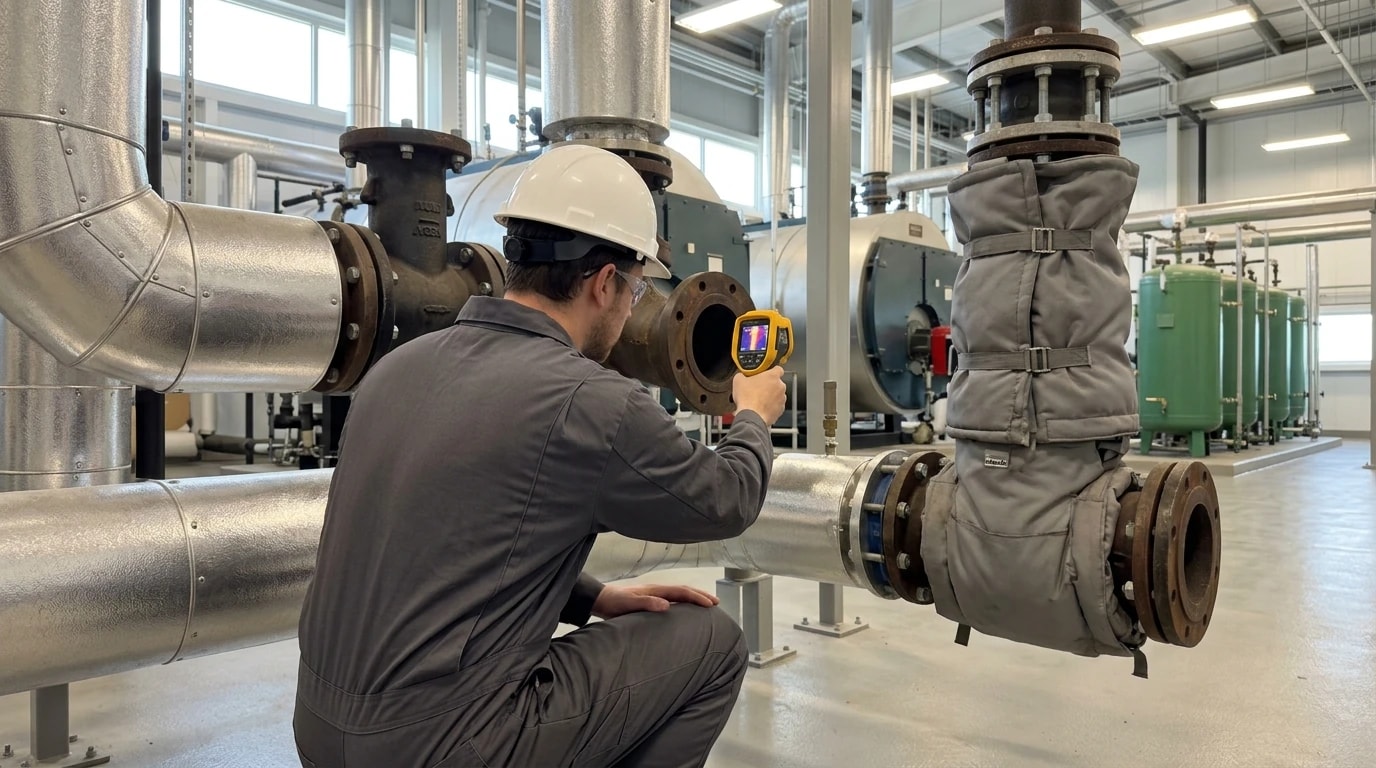
For energy-intensive manufacturing plants, thermal energy (steam, high-temperature hot water, thermal oil and direct process heat) typically constitutes 60% to 80% of total energy use. Consequently, the core of an effective industrial decarbonisation audit lies in the detailed analysis of thermal systems and the mitigation of heat loss.
Measuring Technical Insulation Performance with BS EN 17956
Uninsulated or poorly insulated pipework, flanges, valves and process vessels are major sources of avoidable thermal loss in heavy processing industries. Technical-focused decarbonisation audits integrate the BS EN 17956:2024 standard to evaluate the energy efficiency of industrial thermal insulation systems operating at temperatures up to 650°C.
BS EN 17956:2024 establishes a standardised A to G energy efficiency scale for technical insulation, providing a clear reference for industrial operators:
| Insulation Class | Efficiency Class Description | Heat Loss and Operational Characteristics |
|---|---|---|
| Class A | Maximum Technical Efficiency | Minimal allowable heat loss; utilises high-performance insulation materials and optimised thicknesses to maintain process temperature. |
| Class B | High Efficiency | Low heat loss; suitable for high-temperature applications where space or weight constraints prevent Class A installation. |
| Class C | Recommended Baseline | Standard commercial efficiency; recommended as the minimum baseline for new industrial assets and major system retrofits. |
| Class D | Moderate Efficiency | Standard historical insulation thickness; acceptable for low-temperature utilities but prone to economic heat loss in steam systems. |
| Class E | Low Efficiency | Sub-standard insulation thickness or degraded material; leads to measurable energy waste and elevated surface temperatures. |
| Class F | Very Low Efficiency | Severely degraded, water-logged or damaged insulation; presents high safety risks and significant thermal draught. |
| Class G | Minimal Efficiency | Uninsulated components, bare valves, flanges and fittings; heat radiates directly to the surrounding environment. |
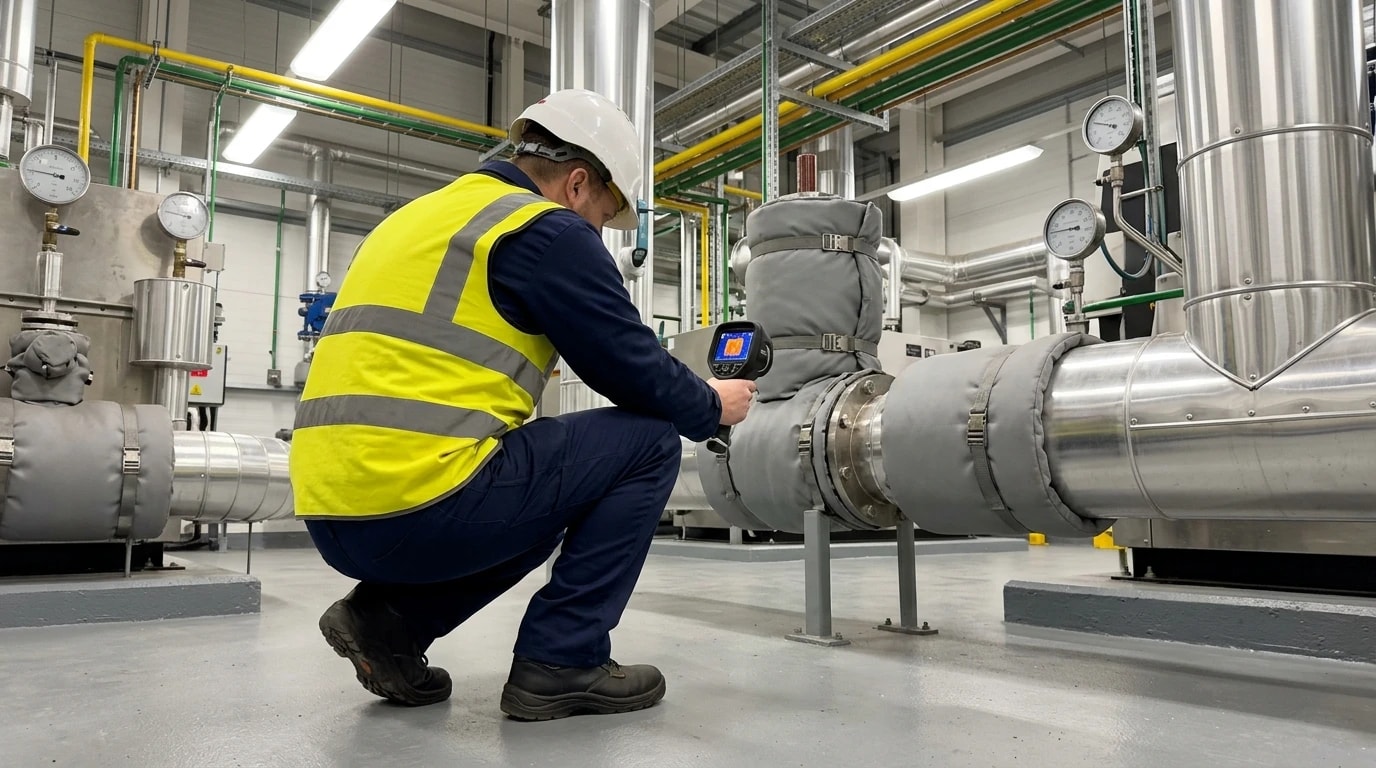
Auditing engineers execute technical insulation performance audits by conducting physical surveys of the plant's steam, condensate and thermal fluid lines. Thermal imaging cameras and surface temperature probes identify components operating with degraded or omitted insulation. The heat loss of each component is calculated in accordance with BS EN ISO 12241:2022 and categorised under the BS EN 17956:2024 A to G scale.
A single uninsulated valve on a steam line operating at 150°C can lose heat equivalent to the energy required to power an electric vehicle for 12,000 miles annually. In large chemical or food processing facilities with thousands of valves and flanges, upgrading uninsulated components to BS EN 17956:2024 Class C or Class A can yield substantial annual energy savings, with project payback periods often calculated in months.
Mapping Waste Heat with Pinch Analysis and Process Optimisation
To identify systemic thermodynamic inefficiencies, process engineers conduct a Pinch Analysis as part of the industrial decarbonisation audit. Pinch Analysis is a rigorous methodology that views the industrial facility as an integrated thermodynamic system, rather than a collection of isolated unit operations.
The analysis involves:
- Stream Identification: Identifying all hot streams (process fluids that require cooling) and cold streams (process fluids that require heating), along with their mass flow rates, specific heat capacities and source and target temperatures.
- Composite Curve Construction: Plotting cumulative heat loads against temperature to construct the Hot Composite Curve and Cold Composite Curve.
- Determining the Pinch Temperature: Identifying the point of closest approach between the two curves, defined as the minimum temperature difference (ΔTmin). This pinch point divides the process thermodynamically into two distinct zones: an area above the pinch (which requires only heating utilities) and an area below the pinch (which requires only cooling utilities).
- Heat Exchanger Network (HEN) Design: Designing or retrofitting the network of heat exchangers to maximise heat transfer between hot and cold streams, thereby minimising the consumption of external fossil-fuel utilities (such as steam boilers or gas-fired air heaters) and cooling systems (such as cooling towers or chillers).
By applying Pinch Analysis, chemical processing plants, paper mills and food and beverage facilities can recover significant quantities of low-to-medium-grade waste heat, directly reducing fuel consumption and operational carbon emissions.
Engineering Methodology and Data Requirements for Energy-Intensive Manufacturing
Executing a successful industrial decarbonisation audit requires a robust, data-driven methodology that captures the dynamic behaviour of complex manufacturing processes. Relying on spot measurements or historical utility bills is insufficient for high-temperature, continuous industrial operations.
Continuous Consumption Monitoring and Read-Only Data Tracking
To satisfy the audit requirements of BS ISO 50002-1:2025 and establish reliable baselines for ESOS Phase 4, process engineers require high-frequency, continuous energy data. This is achieved by installing smart meters, flow meters and clamp-on ultrasonic sensors linked to centralised data acquisition systems.
Industrial energy management teams often deploy dedicated, read-only consumption monitoring platforms, such as EnerTherm’s Ecolog system, to track energy use. These systems provide non-intrusive, read-only data tracking of critical utilities, including:
- Mass flow rates and temperatures of steam and condensate return lines.
- Volumetric flow and temperature differentials of hot water loops.
- Natural gas consumption at individual burners, boilers and combined heat and power (CHP) units.
- Three-phase electrical power quality, voltage imbalances and active/reactive power loads on heavy motor drives and compressors.
Because these systems operate in a read-only configuration, they capture real-time operational fluctuations without introducing control-loop risks or cybersecurity vulnerabilities to the plant's primary Distributed Control System (DCS) or Programmable Logic Controllers (PLCs). This continuous stream of operational data allows auditors to identify transient energy waste, such as utility systems remaining fully operational during plant idling, product changeovers or weekend shutdowns.
Establishing Representative Baselines and Energy Intensity Metrics
Once continuous data is captured, auditing engineers establish a representative energy baseline. This baseline correlates energy consumption with independent variables, such as production volume, raw material characteristics and ambient weather conditions.
Under ESOS Phase 4, organisations must define and report clear energy intensity metrics. In energy-intensive manufacturing, generic floor-area metrics are irrelevant. Instead, the audit must establish process-specific metrics:
- Chemical Processing: Megajoules (MJ) of thermal energy per tonne of product, or kWh of electricity per cubic metre of processed fluid.
- Paper and Pulp: Tonnes of steam consumed per air-dry tonne of paper produced.
- Food and Beverage: Megawatt-hours (MWh) of total energy per hectolitre of packaged beverage, or kWh per tonne of processed ingredients.
These metrics enable accurate benchmarking, track the effectiveness of implemented decarbonisation projects over time and fulfil the progress reporting requirements mandated by the Environment Agency.

Identify where your plant is losing energy and quantify the savings potential — our audits map every heat source, sink, and waste stream in your facility.
High-Value Thermal Engineering Outcomes and Decarbonisation Pathways
The ultimate deliverable of an industrial decarbonisation audit is an actionable, technically sound capital-investment roadmap. The identified opportunities are typically structured into a hierarchy of engineering interventions, progressing from low-cost optimisation to major capital retrofits.
Waste Heat Recovery and Low-Temperature Heat Integration
A primary engineering outcome of thermal-focused audits is the reclamation of waste heat that would otherwise be rejected to the atmosphere or local watercourses. Common thermal recovery interventions include:
- Boiler Economisers and Flue-Gas Condensers: Recovering sensible and latent heat from boiler exhaust stacks to pre-heat boiler feedwater or process make-up water, raising boiler thermal efficiency.
- Flash Steam Recovery: Capturing high-pressure condensate discharge and routing it to a flash vessel to generate low-pressure steam, which is then redirected to process heating loops or deaerators.
- Air Compressor Heat Recovery: Retrofitting water-glycol heat exchangers to air compressor oil cooling circuits, recovering up to 80% of the electrical input energy as hot water for space heating or washdown processes.
- Industrial Heat Pumps: Utilising waste heat from low-temperature sources (such as cooling towers or wastewater effluents at 30°C to 50°C) and elevating it using mechanical vapour compression to deliver useful process heat up to 120°C.
Electrification and Low-Carbon Fuels
As manufacturers transition away from fossil-fuelled combustion to comply with long-term BS EN 18074:2025 pathways, audits evaluate the feasibility of alternative utility technologies. This analysis includes:
- Electrification of Thermal Utilities: Replacing gas-fired steam boilers with high-efficiency electric steam generators or electrode boilers, particularly when green electricity contracts or on-site renewable generation are available.
- Hydrogen Readiness Assessments: Evaluating existing combustion equipment, burner configurations and gas train metallurgy to determine the feasibility of blending hydrogen into natural gas streams or converting entirely to 100% green hydrogen fuel.
- Biomass and Waste-to-Energy: Assessing the regional availability and technical compatibility of biomass, biogas or solid recovered fuels (SRF) for direct combustion in high-temperature kilns, furnaces or process air heaters.
Crucially, an industrial decarbonisation audit ensures that any planned electrification or fuel-switching project is preceded by deep energy efficiency and heat integration measures. By reducing the overall thermal demand of the manufacturing process through insulation upgrades and Pinch Analysis, the required thermal capacity of the new electric boiler or heat pump is minimised. This significantly reduces the initial capital expenditure of the low-carbon utility equipment and mitigates the risk of exceeding local electrical grid connection capacities.
Comparative Assessment: Conventional Energy Auditing vs. Technical Decarbonisation Auditing
To understand the value of a dedicated industrial decarbonisation audit, operations directors must distinguish its methodology and outcomes from a standard, compliant-only energy audit.
| Engineering Attribute | Standard Energy Audit (Compliant Only) | Technical Decarbonisation Audit |
|---|---|---|
| Regulatory Objective | Basic compliance with ESOS reporting requirements. | Alignment with ESOS Phase 4, PAS 51215-1:2025, PAS 51215-2:2025 and BS EN 18074:2025. |
| Scope of Evaluation | Spot measurements of major electricity and gas meters. | Continuous, high-frequency read-only data tracking across 95% of energy inputs. |
| Thermal Diagnostic Method | Visual inspection and review of annual fuel bills. | BS EN 17956:2024 technical insulation classification and process Pinch Analysis. |
| Analysis Focus | Individual unit operations (e.g., boiler burner efficiency). | Systemic process integration and total utility network thermodynamic optimisation. |
| Transition Planning | Short-term energy savings recommendations with static payback. | Long-term capital investment roadmaps and low-carbon transition pathway development. |
| Engineering Metrics | Flat annual energy consumption figures (kWh). | Dynamic energy intensity metrics linked to production output (kWh/tonne). |
While a standard energy audit may satisfy the minimum compliance requirements of the past, only a technical decarbonisation audit provides the data quality, standardisation and thermodynamic rigour required to deliver true Net Zero alignment.
Implementation Pathway: Executing the Audit
For UK-based energy-intensive manufacturing plants, the process of executing a compliant and high-value decarbonisation audit involves several key steps:
- Scope Definition and Lead Assessor Engagement: Define the physical and operational boundaries of the audit, ensuring coverage of at least 95% of total energy consumption to meet ESOS Phase 4 mandates. Appoint a qualified ESOS Lead Assessor with technical experience in heavy thermal utilities.
- Instrumentation and Continuous Monitoring: Deploy clamp-on metering, thermal sensors and read-only consumption tracking systems like EnerTherm's Ecolog to gather high-resolution energy profiles.
- On-Site Technical Diagnostics: Conduct a detailed site assessment, including a BS EN 17956:2024 insulation survey and a process stream mapping for Pinch Analysis.
- Thermodynamic and Economic Analysis: Construct process composite curves, run energy balances and model heat recovery and fuel-switching scenarios.
- Drafting the Decarbonisation Transition Plan: Formulate the energy-saving opportunities into a structured, board-approved action plan that complies with ESOS Phase 4 and aligns with BS EN 18074:2025 transition guidelines.
- Submission and Annual Progress Reporting: Submit the compliance notification to the Environment Agency before the 5 December 2027 deadline and establish the internal reporting structures required to deliver the mandatory annual progress updates.
By executing this structured engineering methodology, Sustainability Directors, Energy Managers and Operations Directors can turn a mandatory regulatory compliance obligation into a strategic asset. The resulting industrial decarbonisation audit not only secures compliance with ESOS Phase 4 but also reduces high carbon taxes, lowers volatile utility costs and establishes a clear, risk-managed pathway to zero-carbon manufacturing.
This article reflects the independent analysis and editorial opinion of EnerTherm Engineering. Product names, trademarks, and brands mentioned belong to their respective owners. EnerTherm Engineering is not affiliated with, endorsed by, or a licensee of any third-party software or product mentioned unless explicitly stated.

Managing Director — EnerTherm Engineering
Dr. François Pierrel is Managing Director of EnerTherm Engineering with over two decades of expertise in thermal design, heat transfer, and industrial energy optimisation. He holds a PhD in Heat Transfer from Cranfield University and a Post-Doctorate from Heriot-Watt University.
