Process Design Engineering Services Safeguard CAPEX Budgets
A cost-benefit analysis showing how rigorous FEED phases narrow AACE Class 4 margins.
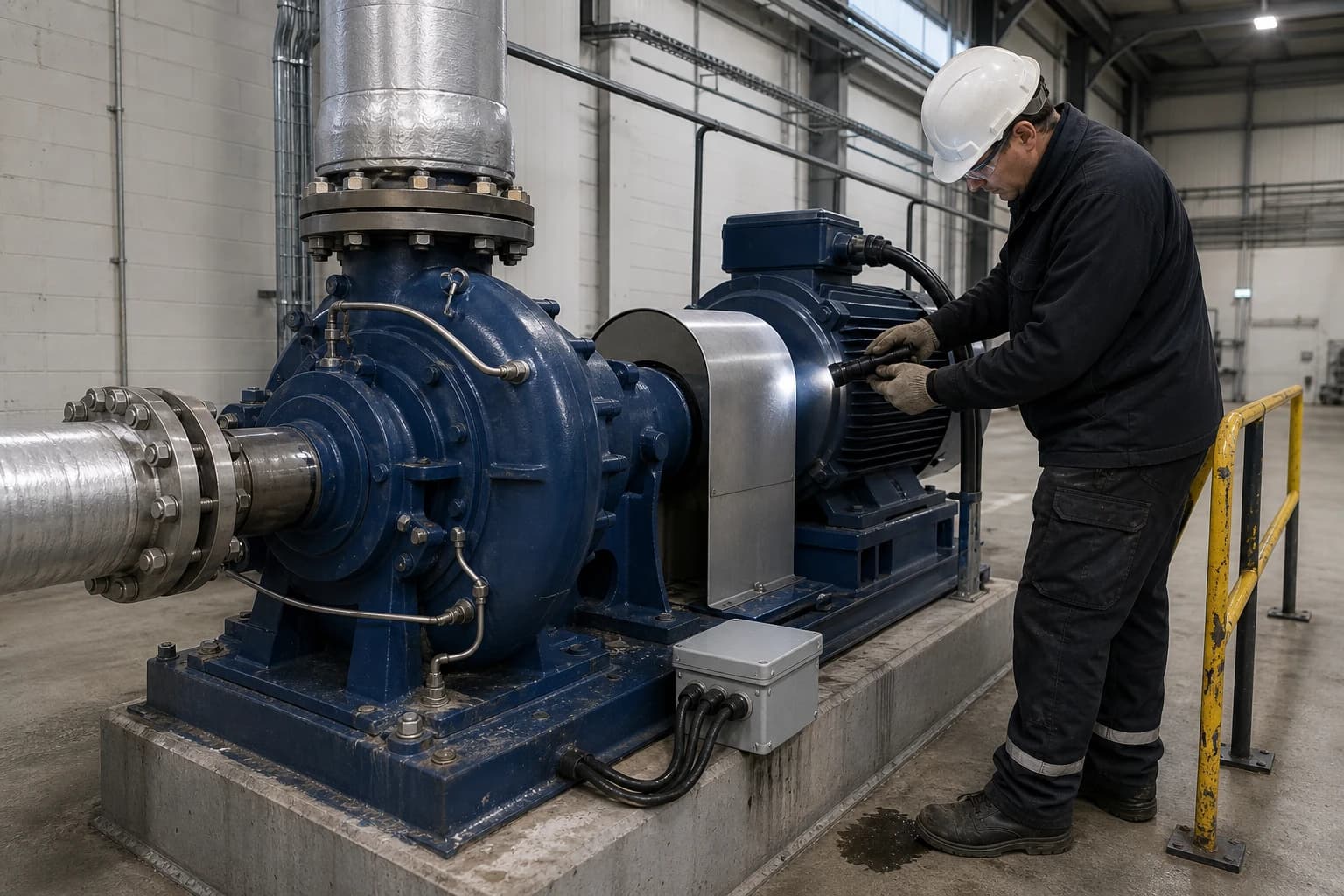
A major chemical processing facility in northern England recently delayed its plant start-up by five months. A recycle gas compressor suffered from liquid carryover during transient operations, a problem that cost the operator more than £1.2 million in unscheduled field modifications. The root cause lay not in the manufacturing quality of the compressor, but in a minor phase equilibrium calculation error during early process design.
In industrial plant design, capital expenditure (CAPEX) budgets are highly vulnerable to omissions in physical and thermodynamic design. When process operators commission new production lines or debottleneck existing operations, the temptation to accelerate the project timeline often results in premature procurement of physical hardware. Without a rigorous engineering foundation, hardware procurement becomes a high-risk gamble. Unresolved heat transfer coefficients, incorrect phase equilibria, and inaccurate pressure drop calculations lead to field modifications that quickly erode capital reserves. Outsourced process design engineering services systematically eliminate these risks by validating physical layouts, thermal duties, and chemical kinetics in a digital environment before any steel is cut.
The Cost-to-Change Dynamic in Front-End Engineering Design
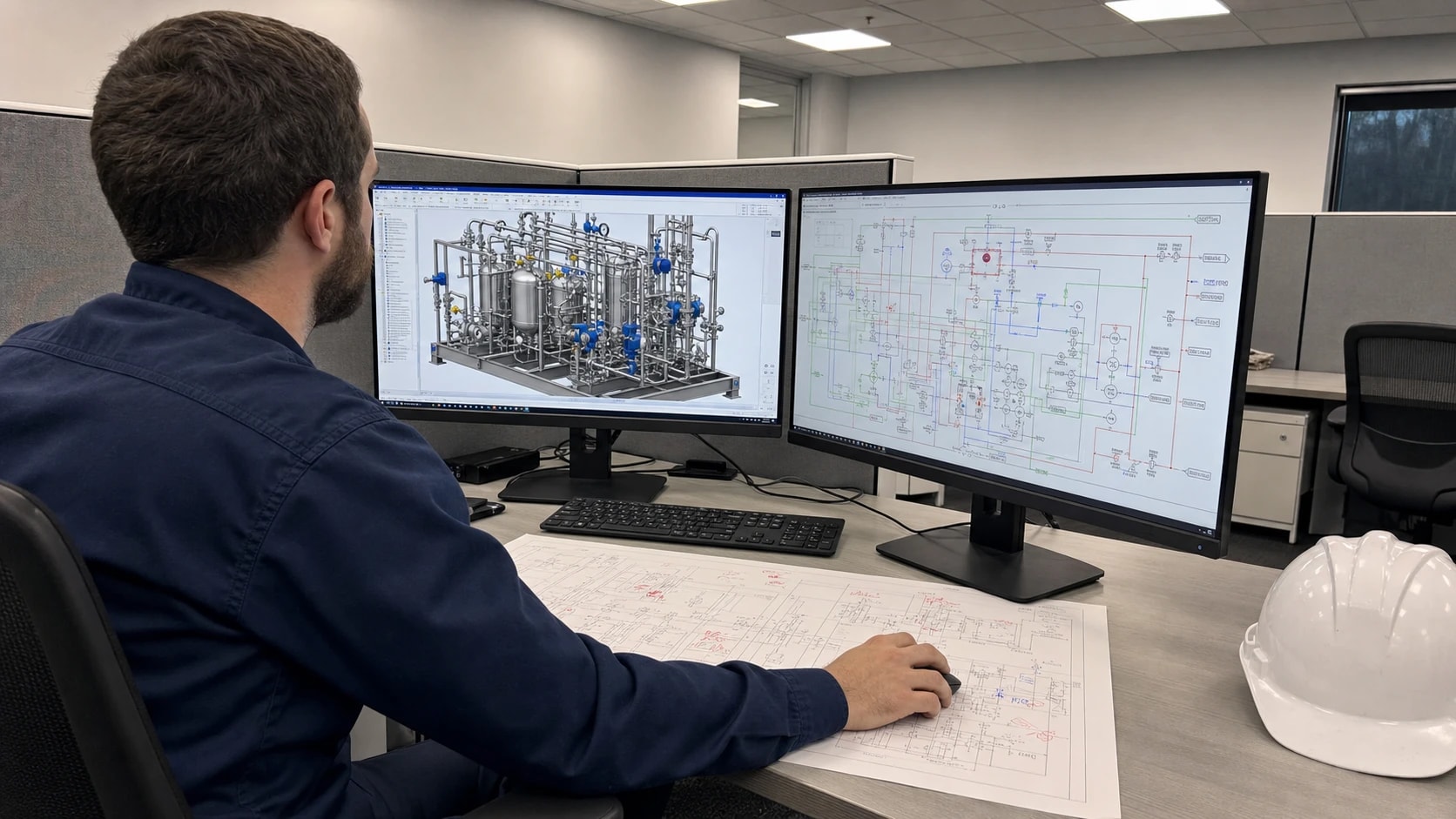
A comparative analysis of capital projects in the process industries reveals a stark imbalance between the cost of engineering and the cost of physical correction. Process engineering services generally account for 10 to 20 per cent of the Total Installed Cost (TIC) of a capital project. However, a structured Front-End Engineering Design (FEED) phase demands only 2 to 3 per cent of the TIC. This small front-end allocation provides a disproportionate cost-to-change advantage that governs the economic outcome of the entire project.
During the initial FEED phase, modifying a pipeline diameter, reconfiguring a distillation column feed tray, or adjusting heat exchanger surface areas on a process simulation map requires minimal effort. The cost is restricted to the engineering hours needed to update calculations and drawings. If the project progresses to the construction phase before identifying these thermal or hydraulic issues, the cost-to-change increases exponentially.
A late-stage design modification in the field requires hot-work permits, scaffolding hire, pipe cutting, weld inspections, and potentially structural reinforcing. It also introduces project delays and contractual disputes with installation contractors. Investing in detailed FEED ensures that design decisions are frozen while they exist entirely in a digital environment, protecting the remaining 80 to 90 per cent of the capital budget dedicated to equipment purchase and field installation.

Map every energy and material flow in your process with detailed heat and mass balance calculations — the foundation for any optimisation or design project.
Quantifying Project Certainty via AACE 18R-97 Classifications
Capital project managers frequently struggle to justify financial commitments when early cost estimates carry massive variances. To standardise the level of project definition and its corresponding financial accuracy, the Association for the Advancement of Cost Engineering (AACE) International established Recommended Practice 18R-97. This framework categorises cost estimates into five distinct classes based on the maturity of the design deliverables.
During the early feasibility and conceptual phase of a project, estimators operate under a Class 4 estimate. According to AACE 18R-97 guidelines, a Class 4 estimate carries an expected accuracy range of -15 to -30 per cent on the low side and +20 to +50 per cent on the high side. A plus-50 per cent variance on a £10 million processing line can stall or sink a project, forcing the parent company to hold millions of pounds in contingency funds that could otherwise fund other strategic initiatives.
By integrating comprehensive process simulation and a rigorous Heat and Mass Balance (HMB), engineers systematically narrow these wide margins. Detailed thermodynamic modelling enables the transition from a Class 4 estimate to a Class 3 or Class 2 estimate. Class 3 estimates narrow the expected accuracy range to -10 to -20 per cent on the low side and +10 to +30 per cent on the high side. Class 2 estimates narrow this further to -5 to -15 per cent on the low side and +5 to +20 per cent on the high side. This progression removes the need for large capital contingencies, freeing up capital for other operational priorities.
The following table compares the estimate classes defined by AACE Recommended Practice 18R-97, demonstrating how increasing project definition reduces financial exposure:
AACE Estimate ClassProject Definition LevelLow-Side Accuracy RangeHigh-Side Accuracy RangeTypical Project PhaseClass 50% to 2%-20% to -50%+30% to +100%Concept ScreeningClass 41% to 15%-15% to -30%+20% to +50%Feasibility StudyClass 310% to 40%-10% to -20%+10% to +30%Budget AuthorisationClass 230% to 75%-5% to -15%+5% to +20%Control / Bid / TenderClass 165% to 100%-3% to -10%+3% to +15%Check Estimate
Thermodynamic Integrity: Property Method Selection and Simulation Fidelity

To construct dependable HMB models, thermal design teams typically select industry-standard simulation software such as Aspen Plus, HYSYS, or DWSIM. These software suites allow process systems engineers to model fluid behaviours, phase changes, and reaction kinetics with extreme precision. However, the accuracy of these models depends on selecting the correct thermodynamic property method.
Choosing the wrong thermodynamic equation of state can result in massive errors in equipment sizing. For example, using the Ideal Gas law for high-pressure hydrocarbon systems or polar chemicals will lead to significant undersizing of vessels and relief systems. Process design engineers must choose property methods that match the specific physical behaviours of the chemicals involved:
Peng-Robinson (PR) Equation of State
This method is highly effective for non-polar or weakly polar hydrocarbons under high pressures and temperatures. It is widely used in oil refining and natural gas processing to model phase equilibria and density.
Non-Random Two-Liquid (NRTL) Model
This activity coefficient method is suitable for highly non-ideal chemical mixtures at low pressures, such as alcohol-water solutions or organic solvent mixtures in pharmaceutical manufacturing. It accurately predicts liquid-liquid and vapour-liquid equilibria.
UNIQUAC (Universal Quasi-Chemical)
This model is effective for highly polar mixtures and polymer solutions. It represents non-ideal mixtures where chemical interactions vary significantly based on molecular size and shape.
Selecting the correct thermodynamic model ensures that mass transfer rates, phase equilibria, and enthalpy changes are calculated accurately. This thermodynamic integrity ensures that purchased boilers, chillers, distillation columns, and heat exchangers perform exactly as specified in the field, preventing costly procurement errors.
The 11-Step Process Engineering Methodology
EnerTherm Engineering standardises the transition from initial data to high-fidelity steady-state and dynamic simulations through a proprietary 11-step engineering methodology. This process ensures that engineering assumptions match physical realities:
1. Initial Data Acquisition
Gathering existing piping and instrumentation diagrams (P&IDs), historical operating logs, and site-specific utility availability.
2. Property Method Selection
Deciding on the most appropriate thermodynamic property method, such as Peng-Robinson for hydrocarbons or NRTL for polar chemical systems, to ensure calculation accuracy.
3. Species-Level Mass Balances
Mapping all chemical species inputs and calculating their mass distribution across all process streams.
4. Thermodynamic Energy Accounting
Accounting for all thermal duties, including latent heat of vapourisation, sensible heat changes, and reaction enthalpies.
5. Hydraulic and Equipment Sizing
Checking existing heat exchangers, pumps, and control valves against the calculated process parameters to ensure physical compatibility.
6. Steady-State Model Construction
Building a baseline model representing normal continuous operating conditions to establish design points.
7. Dynamic Simulation and Transient Analysis
Simulating start-up, shutdown, and transient upset conditions to identify dynamic bottlenecks and control system vulnerabilities.
8. Constraint and Boundary Definition
Finding the physical limits of current equipment to define maximum debottlenecking capacities and safety margins.
9. Regulatory Verification
Cross-referencing thermodynamic and physical conditions with Clean-in-Place (CIP), hygiene, and emission limits.
10. Deliverable Compilation
Generating the final Process Flow Diagram (PFD) with embedded stream tables and Sankey energy maps, creating a single-source-of-truth document.
11. Investment and Payback Planning
Detailing structural, thermodynamic, and process control risks with proposed mitigation strategies to provide actionable data for capital investment planning.

Map every energy and material flow in your process with detailed heat and mass balance calculations — the foundation for any optimisation or design project.
Aligning Designs with UK and European Regulatory Frameworks
When a processing plant modifies its production lines, failing to comply with safety and public health standards represents a significant threat to the capital budget. Retrofitting an unhygienic piping run or an uncertified vessel after installation can double the initial installation cost.
Food and Beverage Manufacturing
In the food and beverage industry, outsourced process design teams must align every design with the European Hygienic Engineering & Design Group (EHEDG) guidelines and EU Regulation 1935/2004, which is retained in UK law as the Materials and Articles in Contact with Food (England) Regulations 2012. These regulations dictate that materials in contact with food must not transfer their constituents into the product in quantities that endanger human health or degrade food quality.
Process design engineers ensure compliance by specifying food-grade elastomers, verifying self-draining slopes in piping layouts, and calculating precise Clean-in-Place (CIP) fluid velocities. These parameters prevent bacterial growth and cross-contamination.
Pharmaceuticals and Life Sciences
In the pharmaceutical and life sciences sectors, capital projects must meet strict Good Manufacturing Practice (GMP) standards enforced by the Medicines and Healthcare products Regulatory Agency (MHRA). Design teams must validate aseptic operations, batch reactor kinetics, and contamination control strategies early in the FEED phase.
Applying process simulation helps operators design reliable CIP and Sterilise-in-Place (SIP) cycles, establish thermal profiles that kill pathogens without degrading sensitive active pharmaceutical ingredients (APIs), and document full material traceability. By performing these validation steps during the virtual design phase, companies avoid costly inspection failures, licensing delays, and post-installation modifications during MHRA audits.
Sector-Specific Applications of Thermodynamic and Species-Level Modelling
While risk mitigation and regulatory compliance protect capital budgets from unexpected costs, detailed process design engineering services also provide direct operational payback. By examining mass and energy balances, engineers identify inefficiencies that plant operators can eliminate through strategic equipment upgrades.
Food and Beverage Manufacturing
In food production, multi-zone thermal profiling is essential for pasteurisation and sterilisation. Inaccurate heat transfer modelling can lead to either under-processing (which violates HACCP standards) or over-processing (which degrades product texture and wastes energy). Detailed HMB simulations allow engineers to design multi-stage heat recovery networks, capturing waste heat from the hot product stream to preheat incoming raw materials. This reduces boiler fuel consumption and cooling utility requirements simultaneously.
Pulp and Paper Mills
The dryer section of a paper mill consumes up to 60 per cent of the facility's total thermal energy. Process engineering teams model the complex mass transfer of moisture evaporation alongside the condensation of high-pressure steam inside dryer cans. Resolving steam-condensate system imbalances reduces the steam demand per tonne of paper produced, lowering operating costs and CO₂ emissions.
Chemical Processing Plants
In chemical facilities, reactive distillation combines reaction and separation into a single vessel. This process requires precise control of kinetics, vapour-liquid equilibria, and column hydraulics. Designing these systems using dynamic simulations prevents catalyst poisoning, column flooding, and off-spec product runs, protecting the capital budget from buying incorrectly sized columns.
Pharmaceutical Facilities
Batch reactor vessels require precise temperature profiles to sustain reaction kinetics and control crystallisation. Process systems engineering calculates the heat transfer coefficients of reactor jackets and internal coils under varying agitation speeds. Accurate dynamic modelling ensures the heating and cooling utility systems can match the fast heat-up and cool-down rates required, improving yield and preventing batch failures.
Oil Refineries
Refineries must adapt to varying crude oil compositions. Process simulation models crude assays, enabling engineers to predict the performance of crude distillation units (CDUs) and design optimised heat-exchanger networks using Pinch Analysis. This maximises preheat temperatures and reduces fuel gas consumption in direct-fired heaters.
The Risk of the 'As-Built' Trap in Debottlenecking
Plant managers often attempt to increase production capacity by modifying existing piping networks based on historical "as-built" documentation. Over years of operation, actual plant behaviour deviates from original designs due to piping modifications, fouling in heat exchangers, pump impeller wear, and changes in raw material compositions.
Relying on outdated data is a major cause of project cost overruns. Process design engineering services mitigate this risk by conducting comprehensive site audits, historical operational log reviews, and actual physical data matching before running simulations. This creates a reliable baseline of current plant operations, ensuring that new equipment is sized for physical reality rather than theoretical design.
Outsourcing process design engineering provides capital project managers with the analytical tools needed to de-risk investment decisions. By securing thermodynamic validation and regulatory compliance during the FEED phase, facilities can safely execute debottlenecking and expansion projects within budget and on schedule.
This article reflects the independent analysis and editorial opinion of EnerTherm Engineering. Product names, trademarks, and brands mentioned belong to their respective owners. EnerTherm Engineering is not affiliated with, endorsed by, or a licensee of any third-party software or product mentioned unless explicitly stated.

Senior Process Engineer — EnerTherm Engineering
Masab Javed is a Senior Process Engineer at EnerTherm Engineering with extensive expertise in chemical process design, decarbonisation, and sustainable industrial solutions. He holds an MSc from TUM School of Management and a BEng in Chemical Engineering from NUST, with experience spanning ammonia production, CO2 capture, and semiconductor manufacturing optimisation.
