Why Refineries Use Pinch Analysis to Cut Fuel Costs
A cost-benefit view of lower fuel, steam and power use under refinery BAT rules.
A refinery’s fired heaters, boilers and steam systems consume fuel every hour of every operating day, so a small avoidable heat demand can become a material annual cost. Pinch Analysis gives refinery teams a disciplined way to find that demand, set realistic utility targets and identify projects that reduce fuel, steam, electricity and emissions without eroding throughput or process safety.
For operators seeking refinery energy optimisation services, the attraction is clear. A refinery already contains large hot streams that must be cooled and large cold streams that must be heated. Crude preheat trains, fractionation systems, hydrotreaters, reformers, FCC units, product rundown and utility networks all exchange heat. Yet historical modifications, fouling, changing crude slates, new product specifications and equipment constraints can leave valuable heat unrecovered.
Pinch Analysis treats the refinery as an integrated thermal system rather than a collection of individual heat exchangers and furnaces. That distinction matters when fuel cost, steam balance and carbon exposure sit on the same operating agenda.
Pinch Analysis sets a refinery-wide fuel target
Commission Implementing Decision 2014/738/EU identifies Pinch Analysis as a best available technique for efficient energy use in mineral oil and gas refining. The method calculates thermodynamic targets for minimising process energy consumption and evaluates total-system design.
How refinery heat integration works
The study begins by identifying process streams that release heat and those that require heat. A hot stream might be a fractionator product, reactor effluent or flue-gas recovery duty. A cold stream might be crude feed, boiler feedwater, charge to a hydrotreater or a process side stream requiring vapourisation.
The analysis establishes the heat available from hot streams, the heat required by cold streams, and the temperature levels at which each duty occurs. It then calculates the minimum external heating and cooling the process requires under stated operating conditions.
That result differs from a heat-exchanger inspection. An inspection might identify one underperforming heat exchanger. Pinch Analysis asks whether the whole heat-exchanger network uses available heat at the right temperature and in the right place.
The pinch point defines the constraint
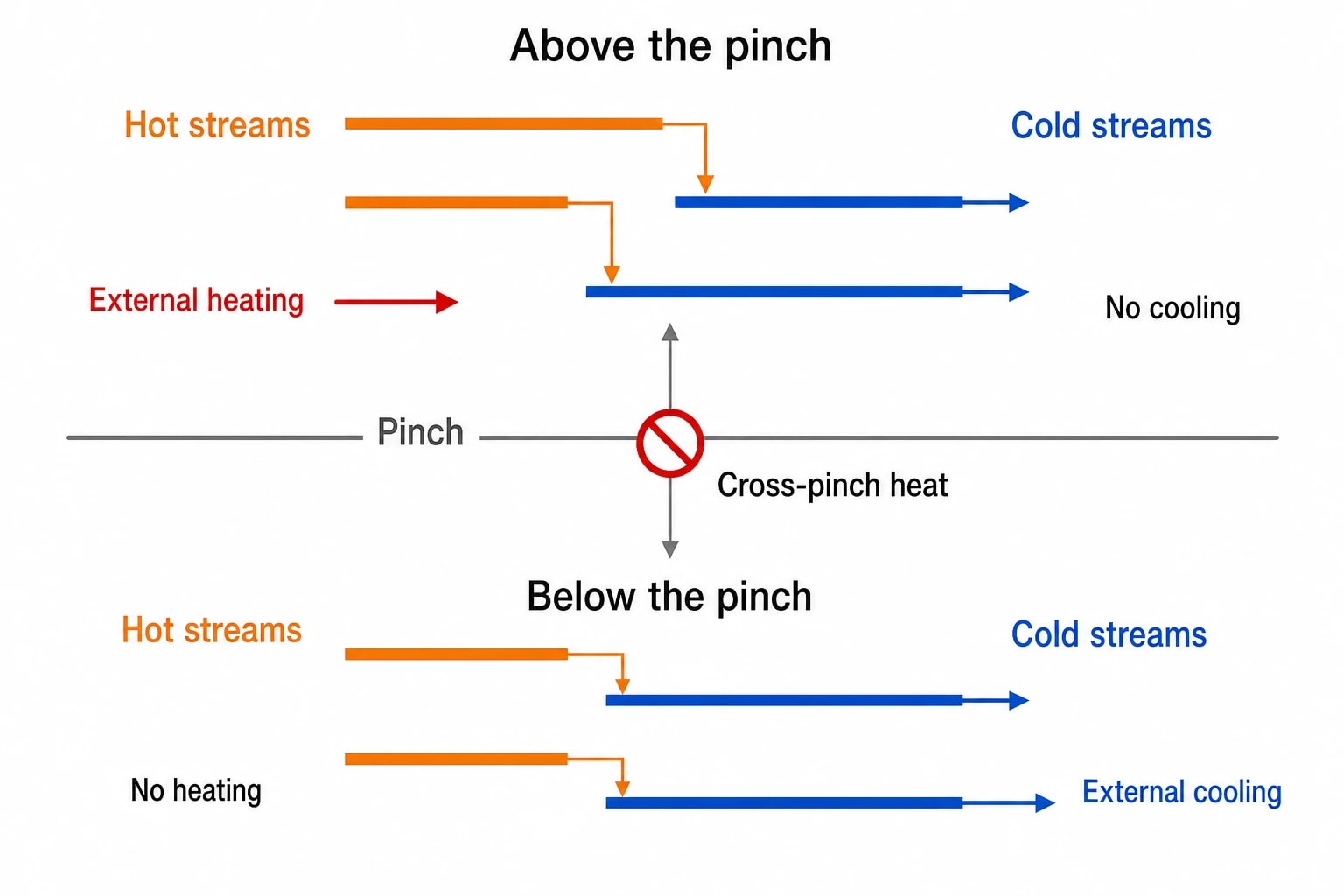
The pinch is the temperature region where the thermal system is most constrained. It separates the process into two zones with strict design implications:
- Above the pinch, unnecessary cooling increases heating demand.
- Below the pinch, unnecessary heating increases cooling demand.
- Heat transfer across the pinch can increase the minimum utility requirement.
This does not mean every existing heat exchanger must be rearranged around a theoretical target. Refineries have pressure-drop limits, contamination risks, control requirements, metallurgy limits, maintenance access and turnaround windows. The method quantifies the gap between current utility use and the practical target, then ranks changes that close that gap safely.

Pinch analysis identifies the thermodynamic minimum energy requirement of your process — then designs the heat exchanger network to achieve it.
Why fuel costs expose poor refinery heat recovery
Fuel cost is the most visible reason to commission refinery energy optimisation services. Every additional megawatt of heater duty or supplementary boiler firing has a direct commercial consequence. The same waste can also alter steam generation, export power, purchased electricity and emissions performance.
Fired heaters sit at the centre of the cost case
A heater often supplies heat that a better-integrated heat-exchanger network could recover from a process stream. Pinch Analysis tests that relationship before a team spends money on a furnace upgrade, a new heat exchanger or a major revamp.
The study can reveal whether the priority is:
- Increasing crude preheat before a furnace
- Recovering heat from reactor or fractionator effluent
- Reconfiguring heat-exchanger matches that operate at poor temperature levels
- Reducing cooling demand that forces extra process heating elsewhere
- Adjusting steam use where process heat recovery can displace a steam consumer
- Recovering FCC-unit energy through an appropriate heat and power recovery option
Commission Implementing Decision 2014/738/EU also covers refinery-fuel combustion units and identifies heat integration, heat and power recovery, process optimisation, steam-demand management and cogeneration among the techniques relevant to efficient refinery operation. The economic case therefore extends beyond one furnace’s fuel rate.
Steam is a utility cost and a thermal signal
Steam networks can conceal poor heat integration. A refinery may use medium-pressure or low-pressure steam to heat a process stream while a nearby hot process stream rejects equivalent energy to cooling water or air coolers. Steam remains necessary for stripping, tracing, drivers and process duties, but Pinch Analysis distinguishes essential steam use from heat the process could supply itself.
Reducing steam demand can release boiler capacity, lower refinery-fuel firing, reduce treated-water and chemical demand, and alter the site’s power balance. Those interactions require a utilities model, particularly where a combined heat and power plant, let-down turbine or multiple pressure levels influence the marginal cost of steam.
Electricity effects need to be valued at site level
A heat-integration project can affect electricity in more than one direction. Lower boiler firing may reduce steam available to a turbine generator. A waste-heat boiler may increase steam generation. A reduced cooling-water load may reduce pump or fan power. The correct economic measure is the site’s marginal energy cost under the expected operating mode, not a single headline tariff.
That is why refinery energy optimisation services need process engineering and utilities expertise in the same assessment. A project that saves fuel but reduces more valuable power export may need a different configuration. Another may become more attractive during periods of purchased power.
A cost-benefit study must separate targets from projects
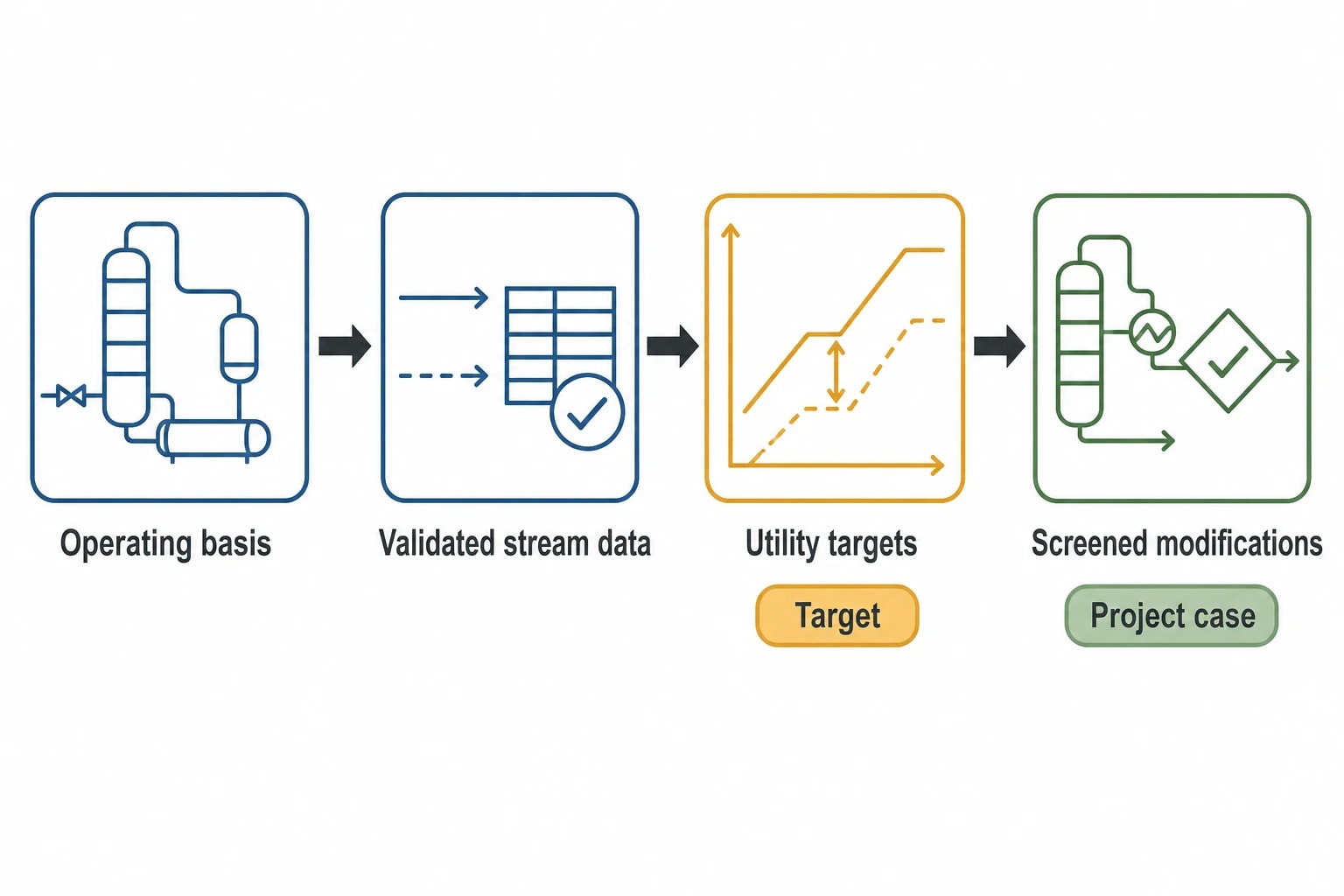
Pinch Analysis provides an energy target. Capital planning requires a project case. Confusing the two is a common source of disappointment.
The practical study sequence
A credible refinery study usually moves through four stages.
-
Establish the operating basis. Teams select representative crude slates, throughput cases, product specifications, ambient conditions and unit constraints. They must also decide whether to study normal operation, a constrained mode, a future revamp case or several cases.
-
Build and validate stream data. Temperatures, flowrates, heat capacities, phase changes, heat-exchanger duties, furnace duties and utility consumption require reconciliation against plant data and engineering documentation. Fouling allowances and known heat-exchanger limitations should remain explicit.
-
Set utility targets. The analysis identifies the minimum heating and cooling requirements for each defined case, using an economically appropriate minimum temperature approach.
-
Develop and screen modifications. Engineers convert the target gap into practicable changes, then assess capital cost, outage requirements, operability, process safety, maintenance and expected savings.
A paper target with no route to implementation has limited financial value. Equally, a familiar modification can look attractive until the analysis shows that it transfers heat at the wrong temperature level or shifts the cost into another utility system.
What a refinery investment case should include
| Cost or benefit area | Questions for the project team |
|---|---|
| Fuel reduction | Which fired duty falls, and what refinery fuel is displaced? |
| Steam balance | Which pressure level changes, and what happens to boiler firing or turbine generation? |
| Electricity | Does the project affect imported power, exported power, pumps, fans or compressors? |
| Capital and turnaround | Can work fit a planned shutdown, or does it require an unplanned production interruption? |
| Reliability | Will added exchangers increase fouling, pressure-drop or availability risk? |
| Emissions | How will lower combustion affect CO₂ and regulated combustion emissions? |
| Measurement | Which operating data will demonstrate savings after start-up? |
The value of avoided fuel should be calculated from the marginal fuel and operating mode, not a long-term average that bears little resemblance to dispatch decisions. Teams should also test sensitivity to fuel price, electricity price, throughput and heat-exchanger availability. A project with a marginal case under one utility-price assumption may have a strong case under another, but management needs to see the range.

Pinch analysis identifies the thermodynamic minimum energy requirement of your process — then designs the heat exchanger network to achieve it.
Refinery constraints decide whether a heat-integration project is bankable
Refineries are continuous, safety-critical plants. A heat-exchanger network does more than save energy. It controls feed temperatures, protects reactors, supports fractionation and determines hydraulic behaviour. Pinch Analysis needs engineering judgement at each stage.
Fouling and pressure drop can change the answer
Crude preheat trains commonly face fouling, particularly as crude composition changes. A heat-exchanger arrangement that gives an attractive clean-design target may create unacceptable pressure drop or shortened run length in operation. Engineers therefore need to assess existing fouling margins, cleaning strategy, heat-exchanger type and the likely effect of any additional duty.
A modification that moves heat recovery upstream can also affect fouling temperature profiles. That may be positive or negative depending on crude properties and heat-exchanger surfaces. The financial appraisal should reflect expected availability and maintenance, rather than assume nameplate heat transfer throughout the run.
Safety and control require defined boundaries
Changes to heat recovery can alter temperatures at heater inlets, reactor feeds, column feeds and downstream coolers. Process safety review should examine consequences for relief systems, metallurgy, corrosion, hot spots, stability and control response.
Hydrogen-containing services, high-temperature hydrocarbon streams and unstable process conditions need particular care. A heat-integration concept should identify the required safeguards, bypass arrangements and operating procedures before it receives a capital ranking. Savings that rely on a narrow control margin rarely survive plant acceptance.
Turnaround timing shapes project economics
Tie-ins, heat-exchanger bundle changes, piping reroutes and instrument modifications may depend on a turnaround. That affects both capital cost and the start date for savings. Projects delivered during planned maintenance often have a stronger business case than technically similar changes requiring a separate outage.
A staged programme can help. Operations teams may first correct bypass leakage, control set-points, heat-exchanger cleaning practices or steam misuse. Larger heat-exchanger network changes can follow once plant data has confirmed the target and a turnaround scope exists.
Regulation gives the work added commercial weight
Pinch Analysis is an economic tool, but UK and EU energy policy gives refinery operators additional reasons to quantify and deliver savings.
UK ESOS reporting requires credible industrial-process evidence
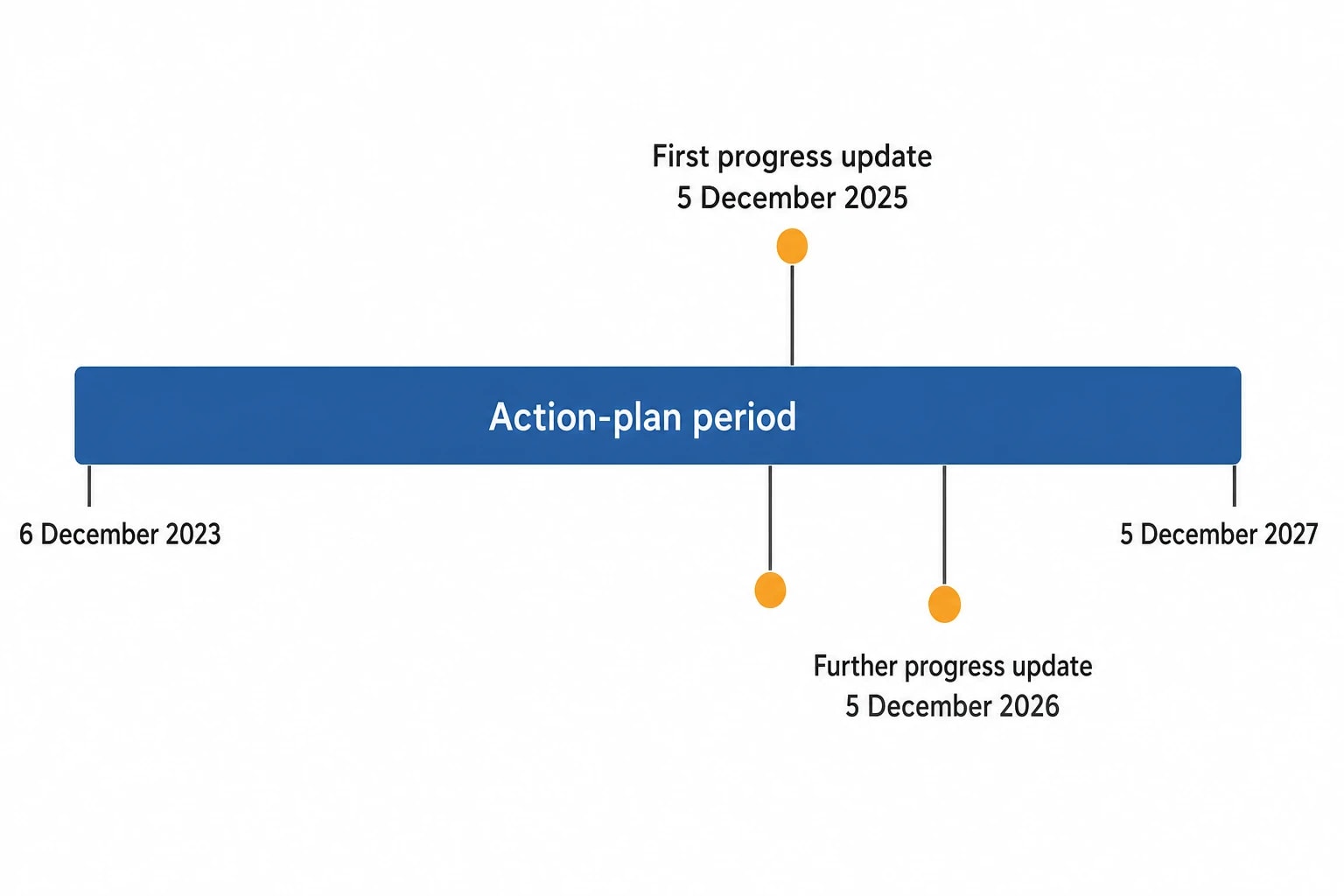
The Energy Savings Opportunity Scheme Regulations 2014, as amended by the Energy Savings Opportunity Scheme (Amendment) Regulations 2023, require qualifying large undertakings to assess energy used in buildings, transport and industrial processes. For Phase 3, the action-plan period runs from 6 December 2023 to 5 December 2027.
The first Phase 3 progress update was due on 5 December 2025. The further update is due on 5 December 2026. Participants report measures implemented, whether action-plan commitments were met, estimated energy savings in the relevant period, and the method used to estimate those savings.
For a UK refinery, a Pinch Analysis study can provide the engineering basis for a more defensible industrial-process measure. The study should preserve the operating basis, stream data, utility assumptions, proposed changes and measurement method. This gives the organisation a clearer route from audit findings to reported results.
EU energy-efficiency policy favours lower utility demand
Directive (EU) 2023/1791 establishes the recast Energy Efficiency Directive and its energy-efficiency-first principle. For EU refinery operators, that framing matters during major investment decisions. Lower fuel, steam and electricity demand can reduce operating cost and combustion-related emissions before a site considers additional energy supply capacity.
Commission Implementing Decision 2014/738/EU remains especially relevant to refinery permits because its BAT conclusions cover mineral oil and gas refining, including combustion units for energy production that burn refinery fuels. A Pinch Analysis programme can support evidence-based discussions around furnace efficiency, boiler firing, heat recovery, cogeneration and integrated refinery energy management.
Regulatory alignment does not replace project economics. It makes accurate economics more valuable, because operators need to show how identified opportunities translate into measured energy reduction.
How refinery energy optimisation services turn analysis into savings
The strongest programmes combine a thermal target with a delivery plan owned by refinery operations, maintenance and utilities teams.
Start with the highest-value operating cases
A single annual average can obscure the conditions that drive fuel use. Refineries should test crude slates, seasonal conditions and throughput modes that occur often enough to affect annual cost. They should also identify future cases linked to debottlenecking, new feedstocks or product changes.
A study can then distinguish between:
- Improvements that save energy across most operating cases
- Modifications that benefit only a particular crude slate
- Opportunities that release a utility constraint
- Changes that require a wider revamp to realise their value
This avoids approving a project whose expected saving exists only at an infrequent operating point.
Measure results after implementation
Savings verification begins before construction. The project team should define baseline conditions, required plant measurements, normalisation factors, performance-test periods and responsibility for reviewing results. Fuel flow, steam balance, heater duty, process flow and key temperatures commonly form part of the evidence base.
Operations leaders also need a routine for sustaining gains. A heat-exchanger network can drift away from its intended performance as fouling develops, bypasses are opened, control strategies change or unit conditions move. Periodic review of heat duties and utility consumption turns the original study into an operating reference rather than an archived report.
This article reflects the independent analysis and editorial opinion of EnerTherm Engineering. Product names, trademarks, and brands mentioned belong to their respective owners. EnerTherm Engineering is not affiliated with, endorsed by, or a licensee of any third-party software or product mentioned unless explicitly stated.

Managing Director — EnerTherm Engineering
Dr. François Pierrel is Managing Director of EnerTherm Engineering with over two decades of expertise in thermal design, heat transfer, and industrial energy optimisation. He holds a PhD in Heat Transfer from Cranfield University and a Post-Doctorate from Heriot-Watt University.
