Paper Mill Steam Savings Cut Energy by up to 14%
Dryer steam upgrades in UK paper mills yield a capital payback period of 1.9 years.
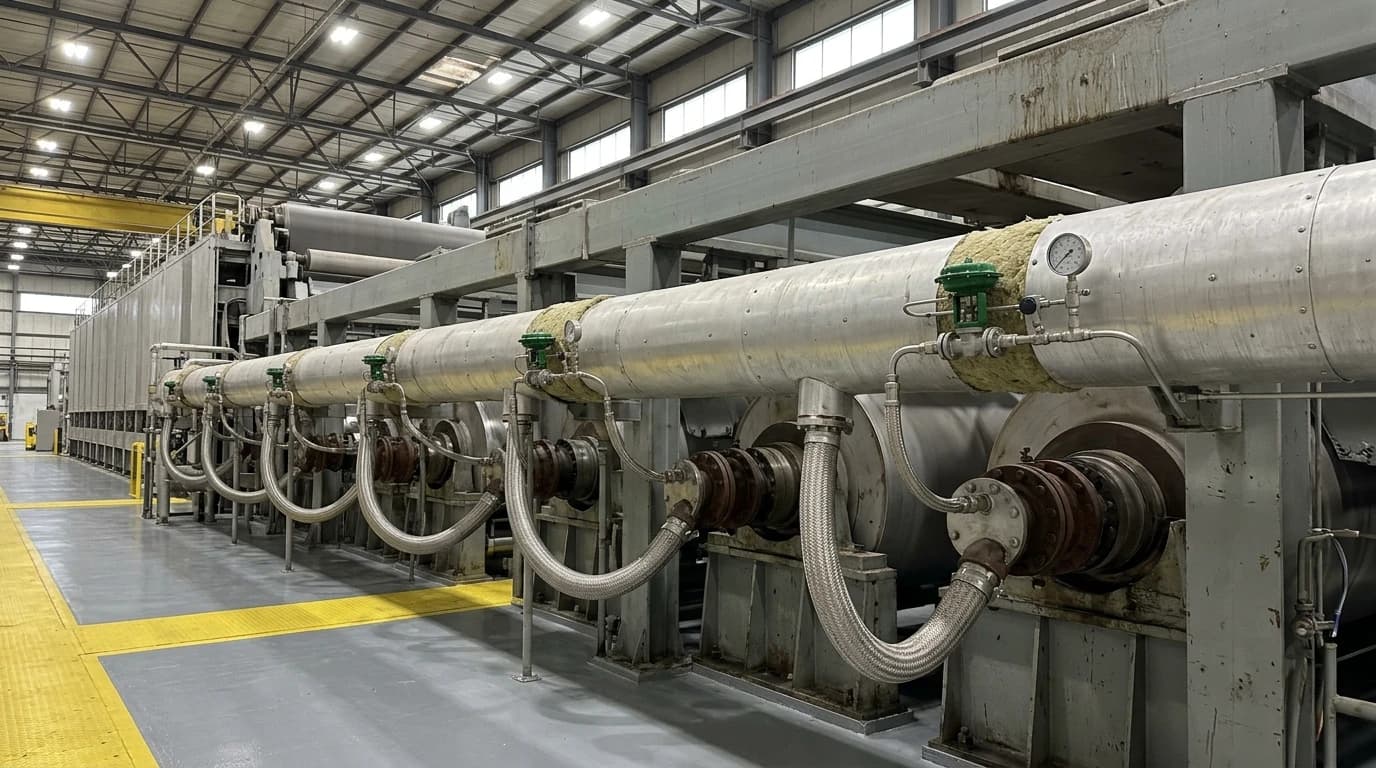
The pulp and paper manufacturing sector is one of the most energy-intensive industries in the United Kingdom, with the drying section of a paper machine consuming between 80% and 90% of a mill's total thermal energy. High-pressure steam drives water evaporation in multi-cylinder drying systems, yet historic system configurations allow a substantial portion of this heat to escape as low-pressure exhaust vapour or unrecovered condensate. Systematic thermal energy audits indicate that structured steam system upgrades can reduce a paper mill's primary energy consumption by up to 14%. Implementing these engineering interventions delivers an average capital payback period of 1.9 years, helping mills reduce operating expenditures and lower their carbon footprint.
The Pressing Need for Steam Savings in UK Paper Mills
Heat-Intensive Operations Under Economic Strain
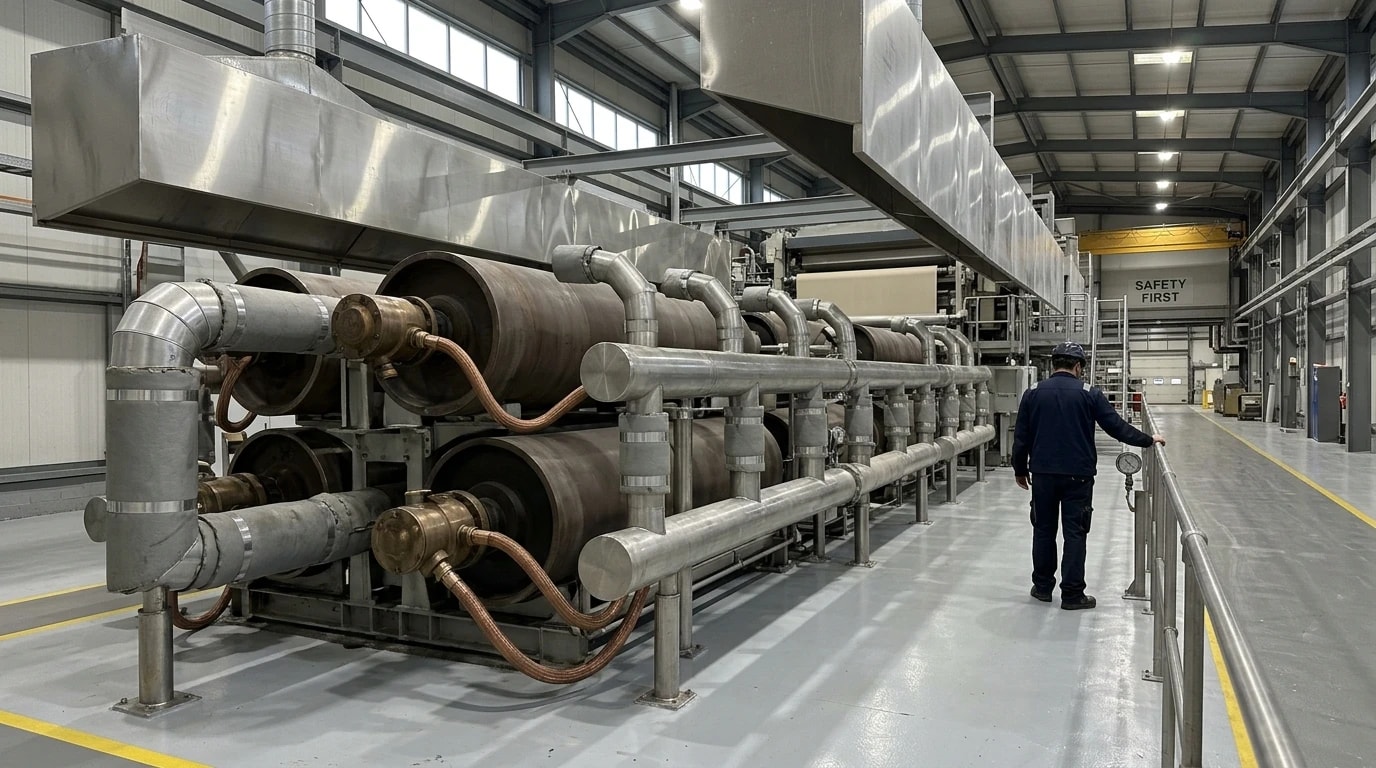
Papermaking requires vast quantities of thermal energy to remove moisture from the pulp slurry. When the paper sheet is formed on the wire, it consists of approximately 99% water. Mechanical press sections and vacuum systems remove the bulk of this water, bringing the sheet dryness to approximately 50% before it enters the drying section. To reduce the final moisture content to the target level of 8%, the sheet must pass over a series of steam-heated drying cylinders.
This thermal drying process accounts for approximately 70% of the entire fossil fuel consumption of a paper mill. Operating these systems requires high boiler firing rates, exposing mill operators directly to volatile fuel prices and escalating operating costs. Energy costs represent between 10% and 40% of the total manufacturing cost for an average UK mill. Because steam represents such a large share of conversion costs, any reduction in boiler fuel requirements directly improves the commercial viability of the site.
The Limitations of Electricity-Focused Support
The Confederation of Paper Industries (CPI) highlights the severe cost pressures facing the UK pulp and paper manufacturing sector. High utility prices have contributed to the closure of several UK paper mills. While government support mechanisms offer some relief, these policies do not address the thermal energy needs of the sector. The high cost of electricity in the UK remains a persistent challenge for domestic manufacturing. However, most government interventions address power costs rather than thermal demand. Consequently, gas-reliant mills that depend on steam for drying receive limited direct support for their primary fuel source, highlighting why local steam conservation measures are indispensable for survival.

Pinch analysis identifies the thermodynamic minimum energy requirement of your process — then designs the heat exchanger network to achieve it.
Strategic Policy Drivers: UK ETS, CCAs, and the Supercharger Scheme
Compliance Pressure and Carbon Offsets
UK pulp and paper manufacturers operate under strict regulatory frameworks designed to drive down industrial carbon emissions. Large installations must comply with the UK Emissions Trading Scheme (UK ETS), which applies a financial penalty to direct carbon emissions. In addition to the UK ETS, mills participate in Climate Change Agreements (CCAs), administered by the Environment Agency. Under these agreements, paper installations receive a substantial reduction on the Climate Change Levy (CCL) in exchange for meeting specific energy efficiency or carbon reduction targets. Because the displacement of boiler fuel directly reduces Scope 1 carbon dioxide emissions, steam saving initiatives help mills avoid costly UK ETS allowance purchases and secure their CCL discounts.
The 'Supercharger' Relief Gap
To protect energy-intensive industries from international competition, the UK government launched the British Industry Supercharger scheme. Under this framework, the Department for Business and Trade (DBT) has increased the Network Charging Compensation (NCC) discount from 60% to 90% from April 2026. This measure reduces electricity grid charges, such as Transmission Network Use of System (TNUoS) and Distribution Use of System (DUoS) fees.
| Relief Element | 2026 Status | Estimated Value (p / kWh) |
|---|---|---|
| Renewable Levies (CfD, RO, FiT) | 100% Exemption | ~5.0 |
| Capacity Market Costs | 100% Exemption | ~0.5 |
| Network Charging Compensation (NCC) | 90% Discount | ~2.5 |
| Total Relief Package | Strategic Support | ~8.0 |
This scheme brings electricity costs closer to those faced by European competitors. However, the Supercharger scheme addresses only the electricity portion of a mill's utility bill. The thermal demands of papermaking, which rely almost exclusively on steam generated from fossil gas or biomass, receive no equivalent network charge offset. Because paper machine dryer groups require four to six times more thermal energy than electrical energy, relying on power discounts is insufficient. Mill utility engineers must actively pursue steam savings to address the largest and most exposed cost centre on the balance sheet.
Applying Pinch Analysis to Optimise Mill-Wide Thermal Networks
Moving Beyond Isolated Unit Operations
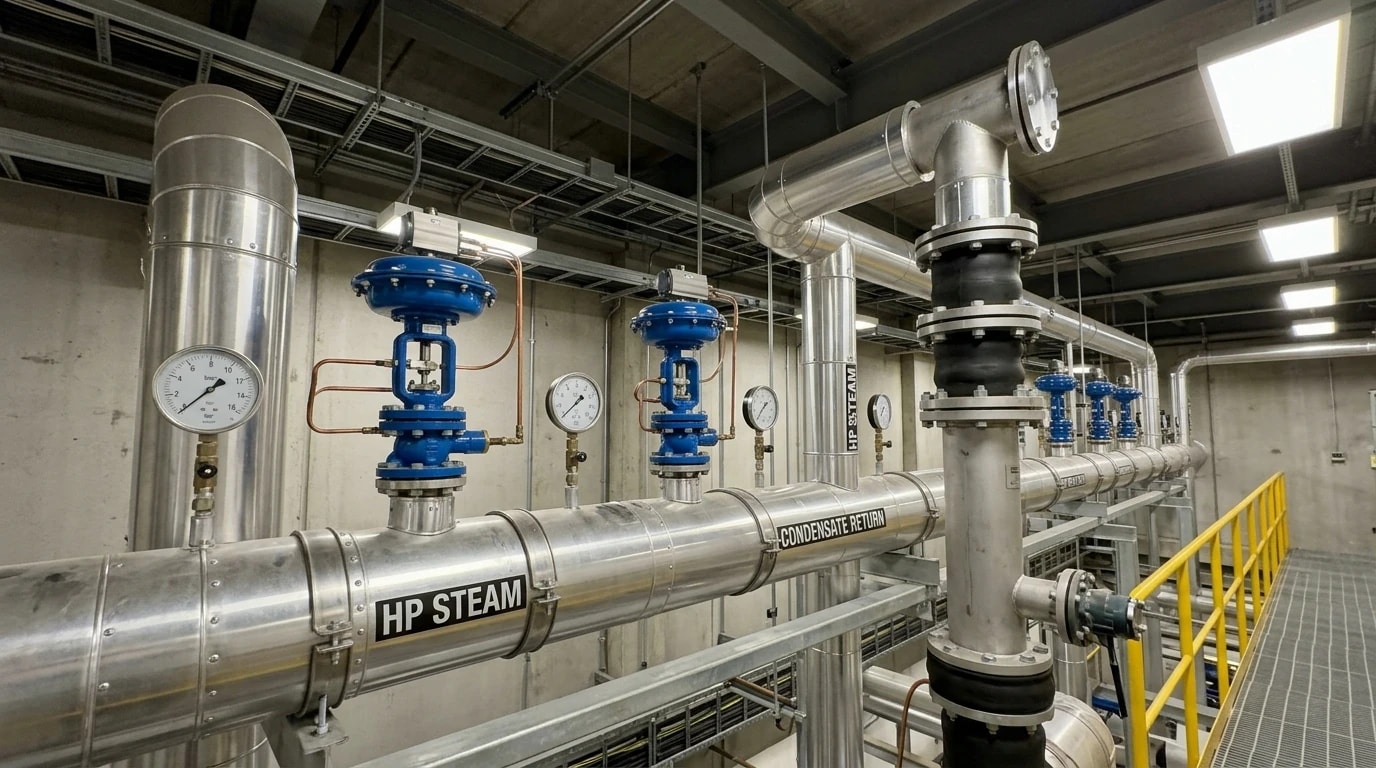
Historically, plant engineers tried to lower energy bills by upgrading individual pieces of equipment in isolation. For example, upgrading a single heat exchanger in a bleaching plant might reduce steam consumption locally. However, this modification often cools down an effluent stream that is destined to heat another process further down the line. This action merely shifts the heating load elsewhere, resulting in zero net fuel savings for the facility. Pinch Analysis avoids these errors by treating the entire paper mill as an integrated thermodynamic system. Rather than examining individual components, process engineers analyse the overall network to balance hot and cold process streams systematically.
Identifying the Thermodynamic Pinch Point
To perform a Pinch Analysis, engineers gather temperature and flow rate data from all process streams that require heating or cooling. These streams are combined mathematically into Hot and Cold Composite Curves. Plotting these curves against temperature and heat flow reveals the thermodynamic "pinch point", which represents the region of closest temperature approach.
The pinch point divides the process into two distinct thermodynamic zones:
- Above the pinch: A heat sink region that requires external hot utilities, such as high-pressure steam.
- Below the pinch: A heat source region that requires external cold utilities, such as cooling water.
To achieve minimum utility consumption, process design teams must follow three fundamental rules:
- Do not transfer heat across the pinch point.
- Do not use external cooling utilities above the pinch point.
- Do not use external heating utilities below the pinch point.
By designing the heat exchanger network to respect these boundaries, mills can capture excess heat from black liquor coolers or paper machine ventilation exhaust and redirect it to preheat boiler feedwater, fresh water, or pocket ventilation air. This systematic process integration typically reduces a mill's net steam demand by 15% to 30%.

Pinch analysis identifies the thermodynamic minimum energy requirement of your process — then designs the heat exchanger network to achieve it.
Critical Dryer Section Engineering Interventions
Optimising the steam and condensate system within the paper machine dryer section provides the most direct path to thermal energy reduction. Several key engineering interventions can be applied to the multi-cylinder drying process to capture and reuse energy.
Steam Jet Thermocompressors for Low-Pressure Vapour Recovery
Dryer cylinders require constant steam flow to maintain high heat transfer rates. During operation, steam condenses inside the rotating cylinders, forming a layer of water that acts as a thermal barrier. To sweep this condensate out, engineers feed blow-through steam through the cylinders. This action generates large volumes of low-pressure flash steam.
Instead of venting this flash steam or condensing it using cooling water, mills can install steam jet thermocompressors. A thermocompressor acts as a jet ejector that uses high-pressure motive steam to draw in the low-pressure suction steam. The high-pressure steam expands through a nozzle, converting pressure energy into velocity. This high-velocity jet draws in the low-pressure flash steam, and the mixture passes through a diffuser to recompress the combined flow to an intermediate, usable pressure. This recycled steam is then fed directly back into the drying cylinders. By automating the motive steam nozzle needle, the thermocompressor dynamically adjusts to grade changes and machine speed variations, cutting live steam demand by up to 15%.
Implementing Venturi Steam Traps to Eliminate Live Steam Loss
Conventional paper machines rely on hundreds of mechanical steam traps to remove condensate while preventing live steam from escaping. However, mechanical steam traps with moving parts are highly prone to failure. In typical industrial environments, between 15% and 20% of mechanical steam traps fail in an open position within a few years of operation, resulting in massive, continuous losses of live steam.
Replacing these mechanical traps with venturi steam traps eliminates moving parts entirely. Venturi traps utilise a precisely engineered internal constriction that allows slow-moving condensate to pass through freely, while restricting the passage of fast-moving steam. Because steam has a much lower density and higher velocity than condensate, the venturi effect creates a high pressure drop that restricts steam flow while continuously discharging condensate. Removing mechanical traps and installing venturi traps reduces steam consumption, lowers maintenance requirements, and helps stabilise pressure differentials across the dryer groups.
Dryer Hood Exhaust Heat Recovery and Pocket Ventilation
The moisture evaporated from the paper web is collected by a large, insulated dryer hood. This hood exhausts high-temperature, highly humid air. Without heat recovery, this exhaust represents a substantial waste of latent and sensible heat.
Modern drying sections utilise multi-stage air-to-air and air-to-water heat exchangers installed in the hood exhaust ducting. This system recovers heat from the wet exhaust air and uses it to preheat incoming pocket ventilation air. Pocket ventilation systems blow hot, dry air into the spaces between the drying cylinders, sweep away the boundary layer of water vapour, and speed up the drying rate. Additionally, recovered heat can preheat process water for the wet end of the machine or warm up the boiler feedwater. Optimising the hood exhaust humidity and air balance reduces steam consumption in the air heating system by 10% to 12%.
Cost-Benefit Analysis and Capital Payback
Achieving the 1.9-Year Average Payback
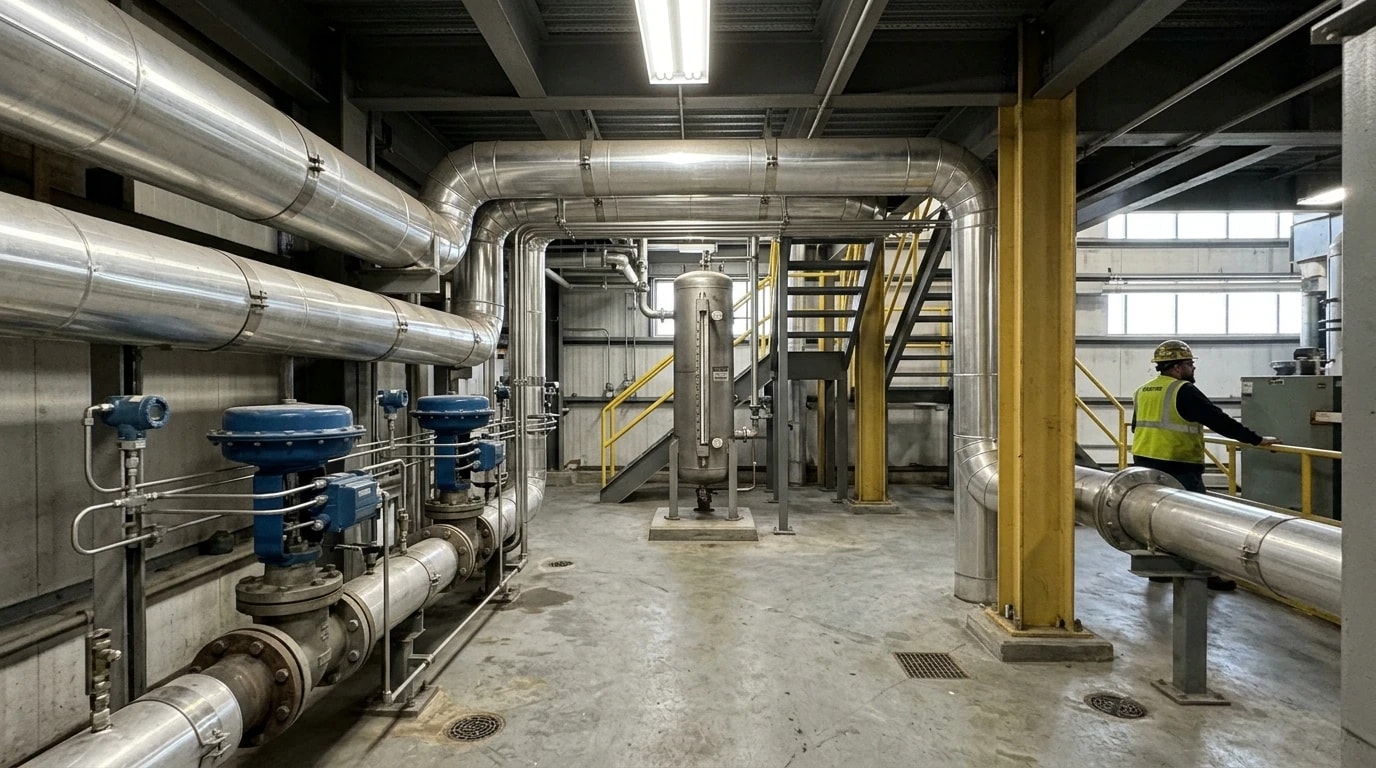
For operations directors and financial managers, the primary barrier to energy efficiency upgrades is the capital requirement. However, steam saving projects in the pulp and paper sector consistently demonstrate strong economic returns. Data compiled from more than 300 paper mill thermal upgrades globally shows that structured steam system modifications deliver this 1.9-year average payback.
The initial phase of an upgrade involves a detailed thermal energy audit and a Pinch Analysis, which typically represent a minor fraction of the total budget. The major capital expenditure goes towards hardware, such as new thermocompressor units, piping modifications, venturi steam traps, and air-to-air heat exchangers. Because these systems directly reduce primary steam demand, the reduction in boiler fuel costs yields immediate operational savings that quickly offset the initial investment.
Quantifying Carbon Reductions and Financial Returns
By decreasing primary energy consumption by up to 14%, a typical medium-sized UK paper mill can expect to save millions of kilowatt-hours of thermal energy annually.
Assuming a mill consumes 150,000 MWh of natural gas per year to generate steam, a 14% saving translates to a reduction of 21,000 MWh of gas consumption. At current industrial gas prices, this reduction yields substantial annual financial savings.
Furthermore, this fuel saving directly reduces direct carbon dioxide emissions. Because natural gas combustion releases approximately 0.184 kg of CO₂ per kWh, a 21,000 MWh reduction prevents 3,864 tonnes of CO₂ from entering the atmosphere annually. For mills operating under the UK ETS, this reduction directly lowers carbon allowance compliance costs. Additionally, it helps mills comfortably meet their Climate Change Agreement targets, ensuring they retain their CCL discounts.
Implementing Steam Saving Projects in UK Mills
Conducting a Structured Thermal Audit
Before deploying capital, process engineers must establish a clear thermal baseline of the facility. A comprehensive thermal energy audit involves installing temporary flow meters, measuring steam temperatures and pressures at various header stations, and assessing the condition of existing condensate return lines. This baseline data serves as the foundation for the subsequent Pinch Analysis, ensuring that any proposed heat exchanger retrofits are sized correctly for the actual process dynamics rather than theoretical design conditions.
Sourcing Funding and Grants
To accelerate the adoption of these energy-saving technologies, UK manufacturers can explore various government funding channels. The UK government's Industrial Energy Transformation Fund (IETF) Phase 3, which was launched to help businesses with high energy use transition to a low-carbon future, has provided up to £185 million in funding. Although some competition windows have closed, the fund highlights the type of targeted capital support available to energy-intensive manufacturing sites, including paper mills, for deploying energy-efficient technologies. These schemes can fund feasibility studies and energy efficiency deployment projects, helping companies overcome upfront capital barriers.
This article reflects the independent analysis and editorial opinion of EnerTherm Engineering. Product names, trademarks, and brands mentioned belong to their respective owners. EnerTherm Engineering is not affiliated with, endorsed by, or a licensee of any third-party software or product mentioned unless explicitly stated.

Managing Director — EnerTherm Engineering
Dr. François Pierrel is Managing Director of EnerTherm Engineering with over two decades of expertise in thermal design, heat transfer, and industrial energy optimisation. He holds a PhD in Heat Transfer from Cranfield University and a Post-Doctorate from Heriot-Watt University.
