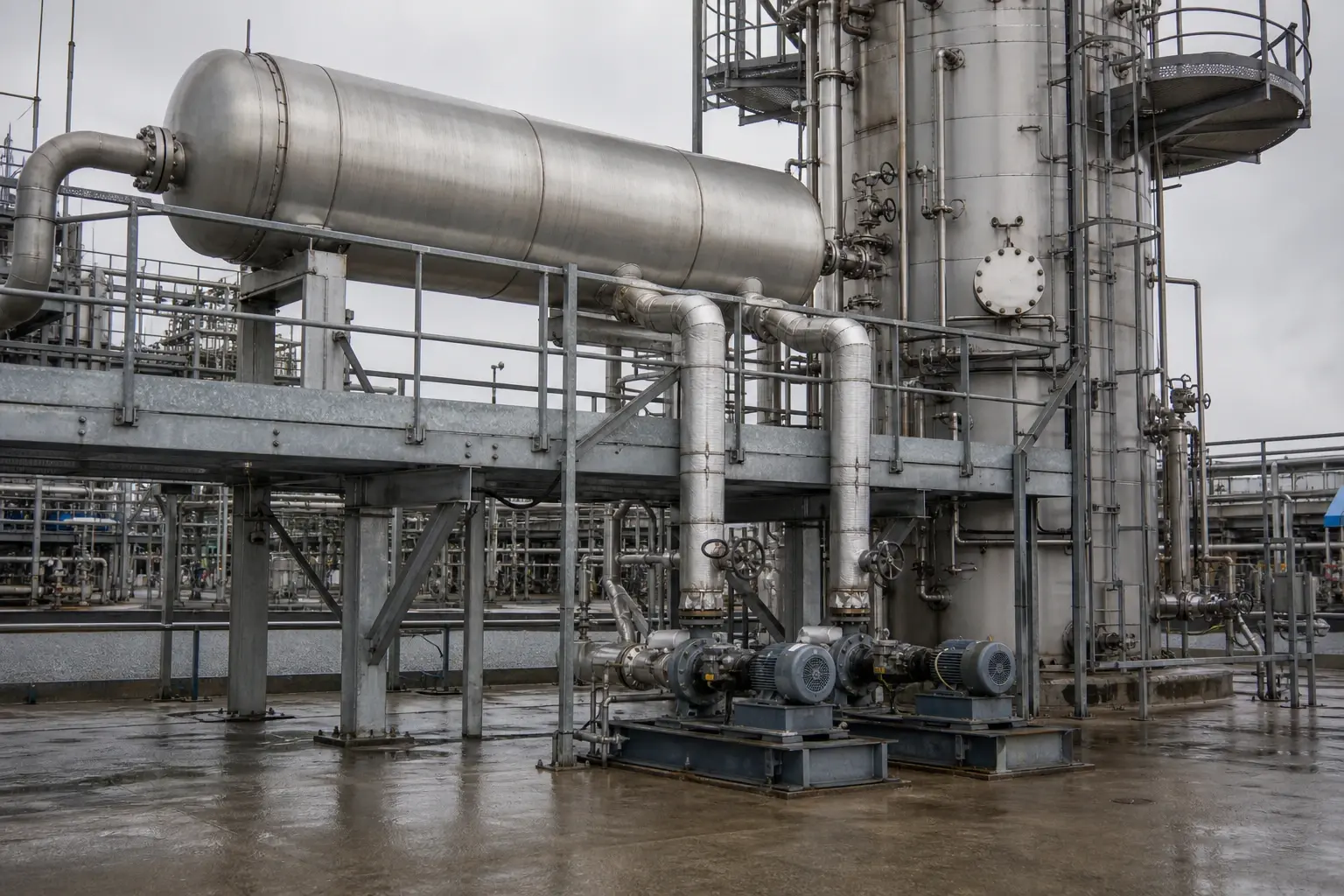
// IMAGE_UNAVAILABLEHow Distillation Column Optimisation Cuts Utility Demand1687[Heat & Mass Balance for Chemical Processing]How Distillation Column Optimisation Cuts Utility DemandCut distillation utility demand by 20-60% using reflux optimisation, heat integration and validated simulation-led operating targets.// August 21, 2026Open →
// IMAGE_UNAVAILABLESteam Header Reconciliation Exposes Turbine and PRV Losses1686[Heat & Mass Balance for Paper & Pulp]Steam Header Reconciliation Exposes Turbine and PRV LossesSteam header reconciliation tracks turbine extractions, PRV bypasses and condensate returns to expose fuel loss and missed power generation.// August 21, 2026Open →
// IMAGE_UNAVAILABLEWhy the Organic Rankine Cycle Pinch Point Sets Power Output1685[Pinch Analysis for Power Generation]Why the Organic Rankine Cycle Pinch Point Sets Power OutputORC pinch points of 20 K and 5 K set heat recovery, source cooling and net power output - balance approach temperature with exchanger area.// August 20, 2026Open →
// IMAGE_UNAVAILABLEHow Pinch Analysis Cuts Pharmaceutical HVAC Energy Use1684[Pinch Analysis for Pharmaceutical]How Pinch Analysis Cuts Pharmaceutical HVAC Energy UseFour-site study shows pinch analysis can cut pharmaceutical HVAC energy use by up to 70%, pairing heat recovery with GMP compliance requirements.// August 20, 2026Open →
// IMAGE_UNAVAILABLETMP Mill Pinch Analysis Cuts Clean Steam by up to 34%1683[Pinch Analysis for Paper & Pulp]TMP Mill Pinch Analysis Cuts Clean Steam by up to 34%Cut clean-steam demand by up to 34% with TMP mill pinch analysis, matching refiner steam and paper-machine heat recovery to process needs.// August 20, 2026Open →
// IMAGE_UNAVAILABLEWhy Crude Preheat Train Optimisation Cuts CDU Fuel Use1682[Pinch Analysis for Oil Refining]Why Crude Preheat Train Optimisation Cuts CDU Fuel UseA 2021 CDU retrofit cut energy use 8% through crude preheat train optimization, reducing refinery fired-heater fuel gas and stack emissions.// August 19, 2026Open →