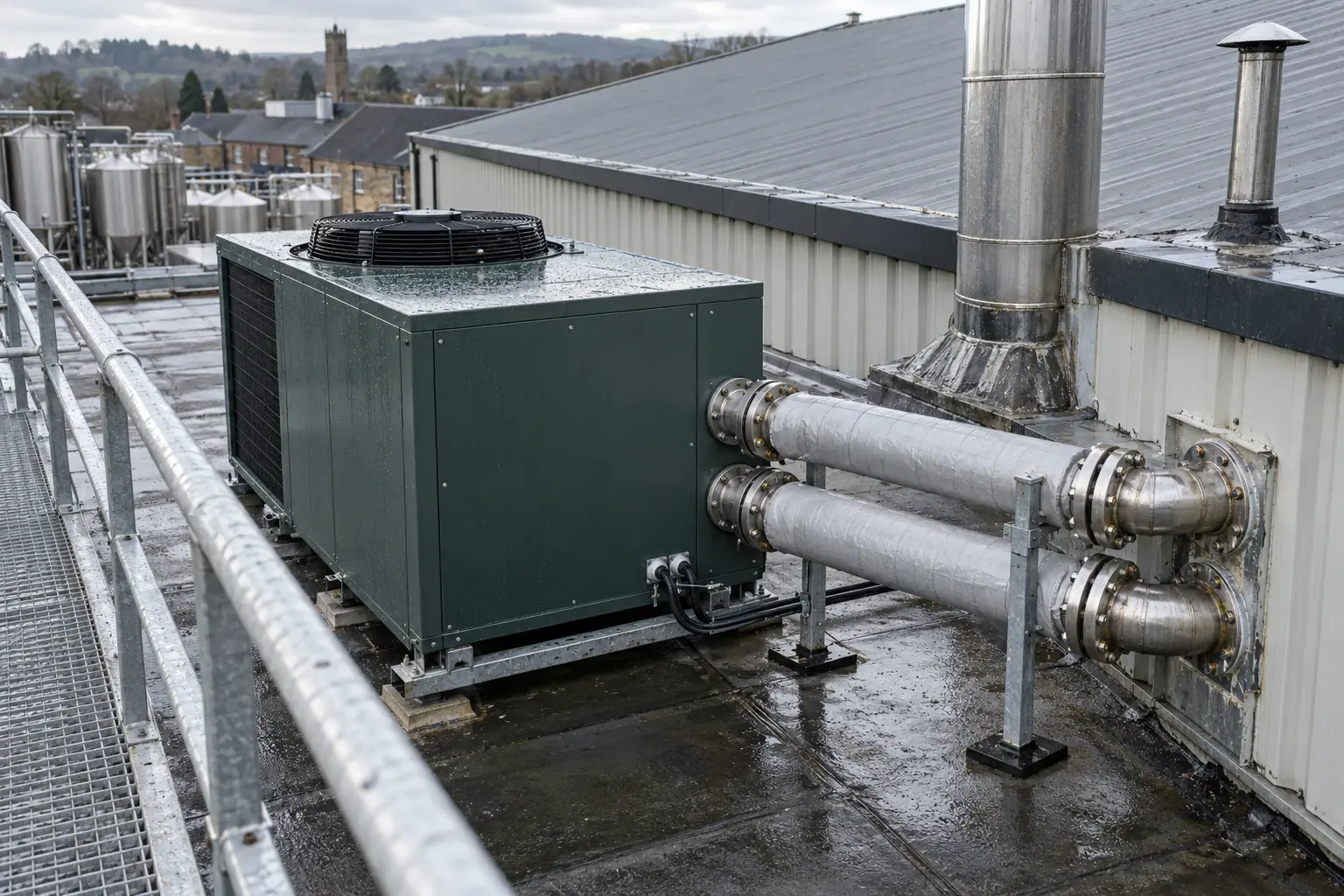
// IMAGE_UNAVAILABLEHow Waste Heat Recovery Cuts Gas Use in UK Food Plants1765[Pinch Analysis for Food & Beverage]How Waste Heat Recovery Cuts Gas Use in UK Food PlantsUK brewery recovers up to 300 kWth by upgrading 100°C wort vapour to 130°C, cutting gas use in food processing plants.// September 30, 2026Open →
// IMAGE_UNAVAILABLEHow a Grand Composite Curve Sets Utility Targets1764[Pinch Analysis for Chemical Processing]How a Grand Composite Curve Sets Utility TargetsGrand Composite Curve sets minimum steam and cooling targets, locates the pinch, and guides utility placement at feasible temperature levels.// September 29, 2026Open →
// IMAGE_UNAVAILABLEWhy UK Plants Are Auditing Process Heat Losses1763[Industrial Energy Audit]Why UK Plants Are Auditing Process Heat LossesUK manufacturers audit process heat losses to unlock 1.51 TWh in annual savings and build ESOS evidence ahead of the December 2026 deadline.// September 29, 2026Open →
// IMAGE_UNAVAILABLEThermal Process Benchmarking: ISO 50006 EnPIs1762[Pinch Analysis]Thermal Process Benchmarking: ISO 50006 EnPIsISO 50006 EnPIs benchmark thermal energy per unit of output, guiding retrofit CAPEX and plant efficiency decisions.// September 29, 2026Open →
// IMAGE_UNAVAILABLEMoisture Balance Calculations Industrial Dryer Control1761[Heat & Mass Balance for Food & Beverage]Moisture Balance Calculations Industrial Dryer ControlCalculate industrial dryer water removal in kg/h with dry-solids moisture balances to reduce fuel use, stabilize final moisture and increase throughput.// September 28, 2026Open →
// IMAGE_UNAVAILABLEIndustrial Process Troubleshooting: 11 Steps to Find Losses1760[Heat And Mass Balance]Industrial Process Troubleshooting: 11 Steps to Find LossesFind throughput, energy and quality losses with an 11-step industrial process troubleshooting method using heat and mass balances to diagnose root causes.// September 28, 2026Open →